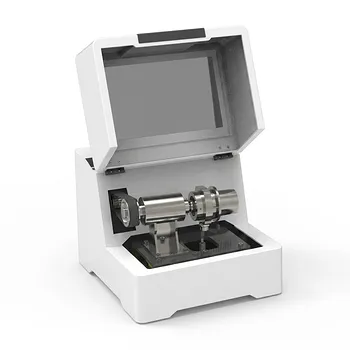
What is the role of a planetary ball mill in the preparation of near-spherical alumina powder? Optimize Morphology.
Updated 5 months ago
The planetary ball mill is the primary engine for chemical homogenization and morphological regulation during the preparation of near-spherical alumina. By leveraging high-speed rotation to generate intense mechanical impact and shear forces, the mill ensures the thorough dispersion of precursors and mineralizers. This process creates a uniform aluminum hydroxide gel matrix, which is essential for allowing mineralizers to consistently regulate the final crystal shape into a near-spherical geometry.
The core role of a planetary ball mill is to transition raw materials into a highly reactive, microscopically homogeneous state. This ensures that shape-controlling additives can interact uniformly with the alumina precursor, preventing irregular grain growth and ensuring consistent spherical morphology.
Achieving Morphological Control Through Homogenization
High-Energy Mixing and Dispersion
The planetary ball mill utilizes powerful mechanical impact forces to ensure the thorough mixing of $\rho$-Al2O3 precursor powder, deionized water, and ammonium fluoroborate (NH4BF4) mineralizers. This high-energy environment breaks down sub-micron agglomerates that standard mixing cannot reach.
Establishing the Uniform Gel Matrix
During the subsequent hydration phase, the high degree of dispersion achieved by the mill establishes a uniform aluminum hydroxide gel matrix. Because the components are mixed at a microscopic level, the mineralizer can act evenly across the entire matrix.
Regulation of Crystal Morphology
The consistent presence of mineralizers throughout the precursor is what ultimately regulates crystal morphology. Without the intensive mixing of a planetary ball mill, mineralizer concentration would vary locally, leading to a mixture of spherical and irregular alumina particles.
Enhancing Material Reactivity and Structure
Mechanical Activation of the Powder
Beyond simple mixing, high-energy milling induces mechanical activation by increasing the concentration of structural defects on the powder surface. This lowers the activation energy barrier for chemical reactions during subsequent processing.
Promoting Uniform Phase Transitions
The intense collisions and shear forces facilitate a more uniform distribution of components, which can lower phase transition temperatures. This ensures that the conversion to the final alumina phase occurs simultaneously across the batch, preserving structural consistency.
Refinement of Grain Size
The milling process can drive particles through repeated cycles of fracturing and cold welding, refining the grain size to the nanometer scale. This refinement is fundamental to achieving high densification rates and superior microhardness in the final sintered body.
Understanding the Trade-offs and Pitfalls
Risk of Media Contamination
The high-impact nature of planetary milling can lead to the wear of the grinding media (balls and jars). This wear can introduce impurities into the alumina powder, which may negatively impact the transparency or dielectric properties of the final material.
Thermal Management Challenges
The mechanical energy converted during high-speed rotation generates significant internal heat. If not managed through intermittent milling or cooling cycles, this heat can cause premature hydration or undesired phase changes in the precursor.
Potential for Over-Milling
Extended milling times can lead to excessive particle refinement, which may increase the surface energy of the powder to a point where it re-agglomerates. This can negate the initial benefits of dispersion and lead to inconsistencies in the final proppant or ceramic body.
How to Apply This to Your Project
Recommendations for Process Optimization
When integrating planetary ball milling into your alumina preparation workflow, your specific objectives should dictate your milling parameters.
- If your primary focus is maximum spherical uniformity: Prioritize the homogenization of mineralizers at moderate speeds to ensure an even gel matrix without excessive particle fracturing.
- If your primary focus is lower sintering temperatures: Utilize high-energy settings to maximize mechanical activation and surface defects, effectively lowering the chemical reaction threshold.
- If your primary focus is high-purity applications: Use high-purity alumina or zirconia milling media and implement shorter, high-intensity milling intervals to minimize contamination from wear.
By precisely controlling the mechanical energy of the planetary ball mill, you can transform raw alumina precursors into a highly engineered material ready for precision shaping and sintering.
Summary Table:
| Function | Impact on Alumina Powder | Key Benefit |
|---|---|---|
| High-Energy Mixing | Thorough dispersion of mineralizers | Uniform spherical morphology |
| Mechanical Activation | Increased structural surface defects | Lowered phase transition temperatures |
| Grain Refinement | Reduction to nanometer scale | Higher densification and hardness |
| Gel Matrix Formation | Homogeneous precursor distribution | Consistent grain growth control |
| Process Optimization | Controlled milling intervals | Minimized contamination and heat |
Elevate Your Material Research with Precision Powder Solutions
Achieving the perfect near-spherical alumina morphology requires precise control over homogenization and mechanical activation. At [Brand Name], we provide complete laboratory sample preparation solutions for material science, specializing in high-performance powder processing and compaction equipment.
Our extensive product line is designed to support your entire workflow:
- Advanced Milling: Planetary ball mills, jet mills, cryogenic grinders, and rotor mills for superior dispersion.
- Sizing & Mixing: Sieve shakers (vibratory/air-jet) and high-efficiency powder or defoaming mixers.
- Compaction Excellence: A full spectrum of hydraulic presses, including Cold/Warm Isostatic Presses (CIP/WIP), standard lab presses, XRF pellet presses, and vacuum hot presses.
Whether you are refining grain size or optimizing sintering temperatures, our expertise ensures you get the most out of your precursors. Contact us today to discuss your project requirements and discover how our equipment can enhance your lab's efficiency and material performance!
References
- Wei Yi, Zuohua Liu. Preparation and Properties of Micron Near-Spherical Alumina Powders from Hydratable Alumina with Ammonium Fluoroborate. DOI: 10.3390/ma18194589
Mentioned Products
- Vertical Semi Circular Planetary Ball Mill for Laboratory Precision Grinding
- High Energy Planetary Ball Mill for Nano Scale Grinding and Mechanical Alloying
- Vertical Production Planetary Ball Mill for High Throughput Powder Processing
- Heavy Duty Horizontal Planetary Ball Mill for Efficient Industrial Grinding and Sample Preparation
- 360° Rotating Omnidirectional Laboratory Planetary Ball Mill for Homogeneous Ultra-Fine Grinding and Mixing
People Also Ask
- What role does a planetary ball mill play in the synthesis of Li6PS5Cl (LPSCl)? Unlock High Ionic Conductivity
- Why is a planetary ball mill essential for SiBCN-rGO wet-spinning? Achieve Superior Dispersion and Spinnability
- Why is an intermittent grinding process required for perovskites in a planetary ball mill? Ensure Stability & Purity
- Why is a planetary ball mill required for PET micronization? Ensure Accurate Chemical Analysis of Reprocessed PET
- How does mechanized planetary ball milling compare to manual agate grinding? Optimize sulfide standard material precision.

Tech Team · PowderPreparation
Last updated on May 14, 2026
Related Products
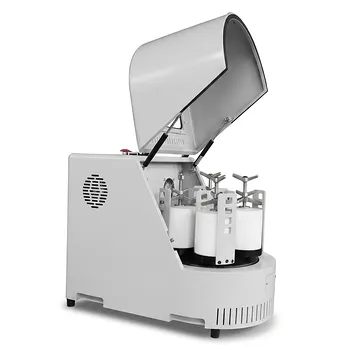
Vertical Semi Circular Planetary Ball Mill for Laboratory Precision Grinding

High Energy Planetary Ball Mill for Nano Scale Grinding and Mechanical Alloying

Vertical Production Planetary Ball Mill for High Throughput Powder Processing

Heavy Duty Horizontal Planetary Ball Mill for Efficient Industrial Grinding and Sample Preparation
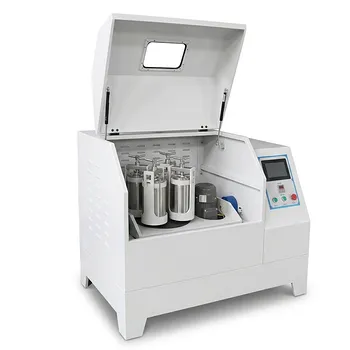
360° Rotating Omnidirectional Laboratory Planetary Ball Mill for Homogeneous Ultra-Fine Grinding and Mixing

Vertical Square Planetary Ball Mill for Laboratory Sample Preparation and Nanoscale Grinding

Miniature Planetary Ball Mill with Vacuum Grinding and High Efficiency for Laboratory Sample Preparation
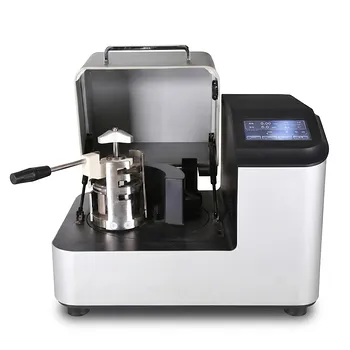
High Energy Laboratory Planetary Ball Mill for Nano Grinding and Material Science Sample Preparation

High Energy Omnidirectional Planetary Ball Mill 16L
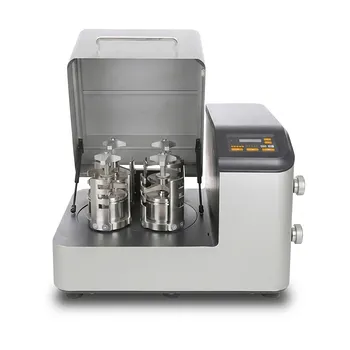
High Energy Planetary Ball Mill for Nano Scale Grinding and Colloidal Mixing in Material Science Research
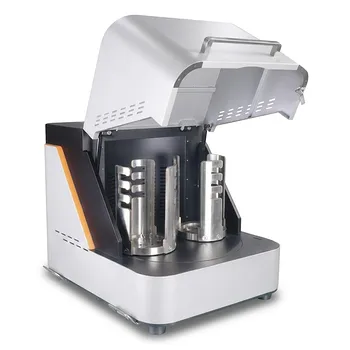
High Energy Laboratory Planetary Ball Mill for Nano Grinding and Colloidal Mixing of Hard and Brittle Materials
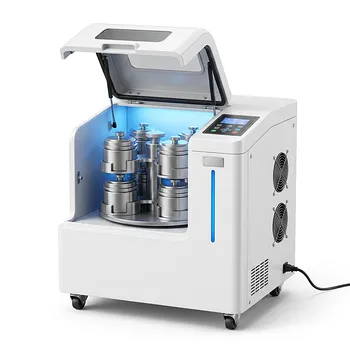
High Energy Omnidirectional Planetary Ball Mill 20L
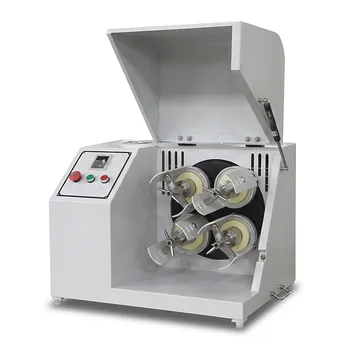
Horizontal Light Duty Planetary Ball Mill for Laboratory Sample Preparation
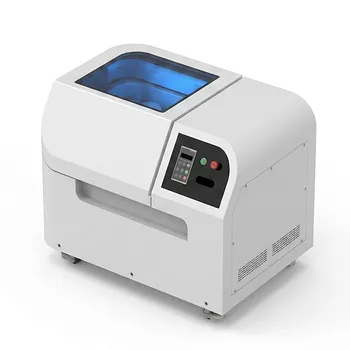
8L Planetary Ball Mill for Laboratory Grinding and Sample Preparation
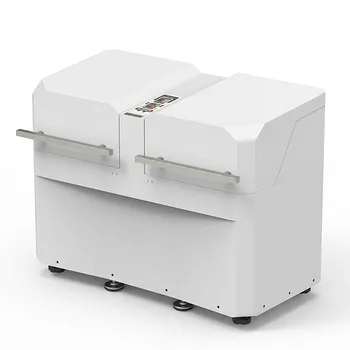
Dual Station Planetary Ball Mill 24L
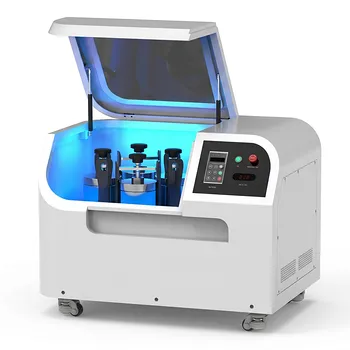
Planetary Ball Mill 12L

Nano High Energy Vibratory Ball Mill for Laboratory Sample Preparation
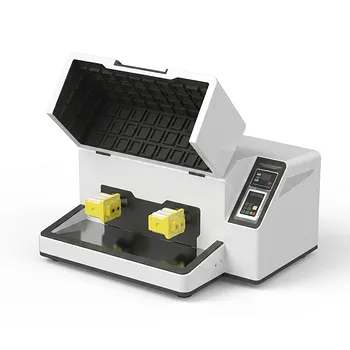
Multi-Platform Nanoscale High-Energy Vibratory Ball Mill
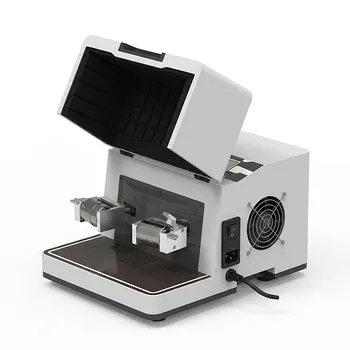
High Energy Hybrid Vibratory Ball Mill for Grinding Mixing and Cell Disruption