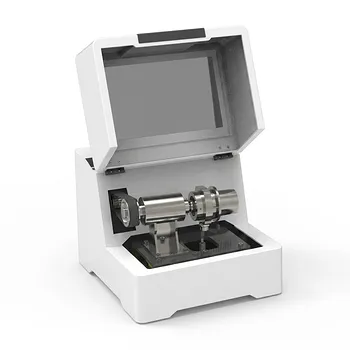
What is the role of a planetary ball mill in the preparation of fly ash-based aerated concrete? Mechanical Activation
Updated 5 months ago
The planetary ball mill serves as a high-energy mechanical activator that simultaneously grinds and chemically modifies the fly ash and cement mixture. By applying intense impact and shear forces, the mill increases the specific surface area of the materials to approximately 450 m²/kg, breaking down the inert lattice structures of the fly ash to accelerate the hydration process and enhance the final strength of the aerated concrete.
Core Takeaway: The planetary ball mill is not merely a grinder; it is a critical tool for mechanical activation that transforms relatively inert fly ash into a highly reactive precursor, ensuring the structural integrity and uniform pore distribution of aerated concrete.
The Mechanism of Mechanical Activation
Breaking the Lattice Structure
The high-speed rotation of the planetary ball mill generates powerful mechanical forces that do more than reduce size; they disrupt the internal crystalline structures of the fly ash. Specifically, the milling process breaks down stable phases like mullite and quartz, making the aluminum and silicon atoms within more accessible for chemical reactions.
Creating Surface Defects
Mechanical impact increases the number of lattice defects and active sites on the surface of the fly ash particles. These defects lower the energy barrier required for the fly ash to react with calcium hydroxide during hydration, significantly boosting its pozzolanic reactivity.
Enhancing Interfacial Adhesion
The milling process roughens the particle surfaces and induces plastic deformation. This physical change improves the contact performance and interfacial adhesion between the fly ash particles and the surrounding cementitious matrix or other additives.
Refining Particle Size and Surface Area
Achieving Micron-to-Nano Scale Reduction
Planetary ball mills are capable of deep refinement, reducing raw fly ash from a median size of 60 microns down to 5 microns or even nanometer scales (20-50 nm). This drastic reduction transforms the fly ash into a high-activity reinforcing additive that disperses more effectively within the concrete slurry.
Maximizing Specific Surface Area
By grinding fly ash and cement together, the mill reaches a targeted specific surface area of roughly 450 m²/kg. This increased surface area ensures that a larger portion of the material is exposed to the liquid phase, facilitating a more rapid and complete dissolution of mineral phases.
Improving Slurry Homogeneity
The high-intensity grinding ensures that all components, including fillers and chemical activators, are uniformly dispersed. This uniformity is vital for creating a slurry with ideal rheological properties, which directly influences the stability of the bubbles and the final pore structure of the aerated concrete.
Understanding the Trade-offs
Energy Consumption and Throughput
While planetary ball mills are highly effective, they are energy-intensive compared to traditional stirring or low-energy milling. This high energy requirement can increase operational costs, making it essential to optimize milling time and rotational speeds (e.g., 300 rpm) to balance activity gains with power usage.
Risk of Material Agglomeration
Over-milling or excessive energy input can lead to agglomeration, where fine particles begin to clump together due to electrostatic forces. This can negate the benefits of a high surface area and result in poor dispersion within the concrete matrix if not carefully monitored.
Heat Generation
The high-frequency impacts within the mill generate significant thermal energy. If not managed, this heat can potentially alter the properties of certain additives or the cement itself before the actual mixing stage begins.
How to Apply This to Your Project
Making the Right Choice for Your Goal
To maximize the benefits of a planetary ball mill in aerated concrete production, consider your primary performance target:
- If your primary focus is early-stage strength development: Utilize high-energy milling to reduce particle size to approximately 5 microns, which accelerates the consumption of calcium hydroxide.
- If your primary focus is utilizing low-quality or "inert" fly ash: Prioritize mechanical activation to disrupt the mullite/quartz lattice, effectively "unlocking" the silicon and aluminum for the hydration reaction.
- If your primary focus is achieving a ultra-fine pore structure: Focus on reaching a high specific surface area (~450 m²/kg) to ensure the slurry has the pseudoplastic consistency required for stable aeration.
Through the strategic application of mechanical activation, the planetary ball mill converts industrial waste into a high-performance building material.
Summary Table:
| Key Function | Mechanical Impact | Impact on Concrete Quality |
|---|---|---|
| Mechanical Activation | Breaks mullite/quartz lattice structures | Increases pozzolanic reactivity and hydration speed |
| Size Reduction | Refines particles to 5μm or nanometer scale | Increases specific surface area to ~450 m²/kg |
| Surface Modification | Creates lattice defects and surface roughness | Enhances interfacial adhesion with cement matrix |
| Homogenization | Uniformly disperses fillers and activators | Ensures stable pore distribution and slurry stability |
Elevate Your Material Synthesis with Precision Milling Solutions
Are you looking to optimize fly ash reactivity or develop high-performance aerated concrete? At our company, we provide complete laboratory sample preparation solutions for material science, specializing in advanced powder processing and compaction equipment.
Our high-performance planetary ball mills are engineered to deliver the intense energy required for mechanical activation and micron-to-nano scale refinement. Beyond milling, we offer a comprehensive range of equipment to support your entire workflow:
- Milling & Grinding: Jet mills, disc mills, and cryogenic grinders for temperature-sensitive samples.
- Sieving & Mixing: Sieve shakers and defoaming mixers to ensure perfect slurry homogeneity.
- Compaction & Pressing: A full spectrum of hydraulic presses, including Cold/Warm Isostatic Presses (CIP/WIP), XRF pellet presses, and vacuum hot presses.
Whether you are refining industrial waste or developing next-generation building materials, our equipment ensures reliability, precision, and superior results.
Contact us today to find the perfect solution for your lab!
References
- STUDY OF THE INFLUENCE OF TECHNOLOGICAL FACTORS ON THE DENSITY AND STRENGTH OF ASH-GAS CONCRETE. DOI: 10.32014/2024.2518-170x.364
Mentioned Products
- Vertical Semi Circular Planetary Ball Mill for Laboratory Precision Grinding
- High Energy Planetary Ball Mill for Nano Scale Grinding and Mechanical Alloying
- Vertical Production Planetary Ball Mill for High Throughput Powder Processing
- Heavy Duty Horizontal Planetary Ball Mill for Efficient Industrial Grinding and Sample Preparation
- 360° Rotating Omnidirectional Laboratory Planetary Ball Mill for Homogeneous Ultra-Fine Grinding and Mixing
People Also Ask
- What role does a planetary ball mill play in the synthesis of Li6PS5Cl (LPSCl)? Unlock High Ionic Conductivity
- Why is a planetary ball mill essential for SiBCN-rGO wet-spinning? Achieve Superior Dispersion and Spinnability
- Why is an intermittent grinding process required for perovskites in a planetary ball mill? Ensure Stability & Purity
- Why is a planetary ball mill required for PET micronization? Ensure Accurate Chemical Analysis of Reprocessed PET
- How does mechanized planetary ball milling compare to manual agate grinding? Optimize sulfide standard material precision.

Tech Team · PowderPreparation
Last updated on May 14, 2026
Related Products
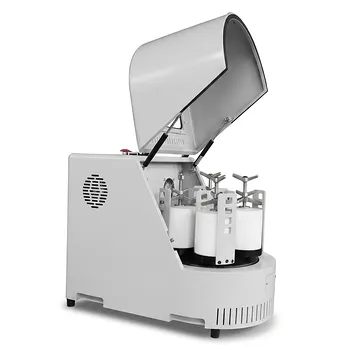
Vertical Semi Circular Planetary Ball Mill for Laboratory Precision Grinding

High Energy Planetary Ball Mill for Nano Scale Grinding and Mechanical Alloying

Vertical Production Planetary Ball Mill for High Throughput Powder Processing

Heavy Duty Horizontal Planetary Ball Mill for Efficient Industrial Grinding and Sample Preparation

360° Rotating Omnidirectional Laboratory Planetary Ball Mill for Homogeneous Ultra-Fine Grinding and Mixing

Vertical Square Planetary Ball Mill for Laboratory Sample Preparation and Nanoscale Grinding

Miniature Planetary Ball Mill with Vacuum Grinding and High Efficiency for Laboratory Sample Preparation

High Energy Laboratory Planetary Ball Mill for Nano Grinding and Material Science Sample Preparation

High Energy Omnidirectional Planetary Ball Mill 16L
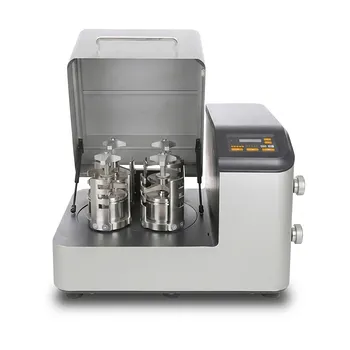
High Energy Planetary Ball Mill for Nano Scale Grinding and Colloidal Mixing in Material Science Research
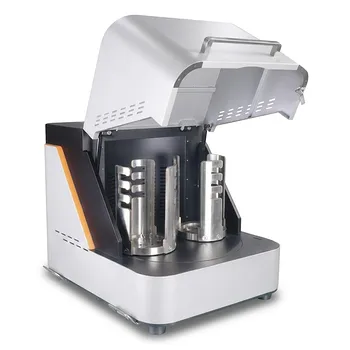
High Energy Laboratory Planetary Ball Mill for Nano Grinding and Colloidal Mixing of Hard and Brittle Materials
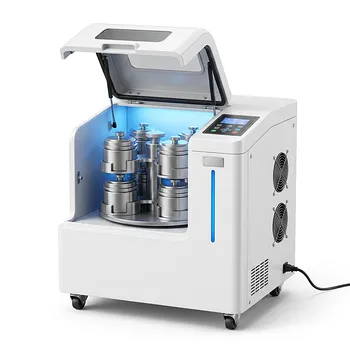
High Energy Omnidirectional Planetary Ball Mill 20L
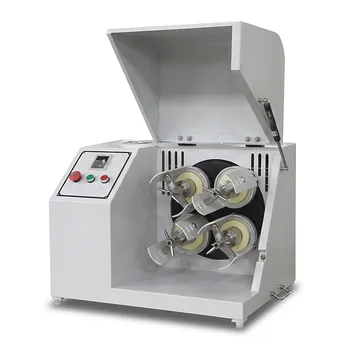
Horizontal Light Duty Planetary Ball Mill for Laboratory Sample Preparation

8L Planetary Ball Mill for Laboratory Grinding and Sample Preparation
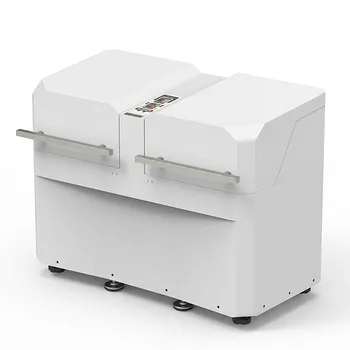
Dual Station Planetary Ball Mill 24L
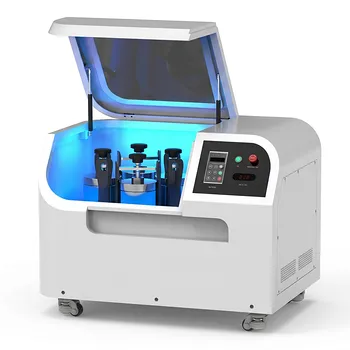
Planetary Ball Mill 12L

Nano High Energy Vibratory Ball Mill for Laboratory Sample Preparation
Multi-Platform Nanoscale High-Energy Vibratory Ball Mill
High Energy Hybrid Vibratory Ball Mill for Grinding Mixing and Cell Disruption