What is the role of a planetary ball mill in the preparation of AAC-SEMRW? Optimize Waste Recycling & Matrix Strength
Updated 5 months ago
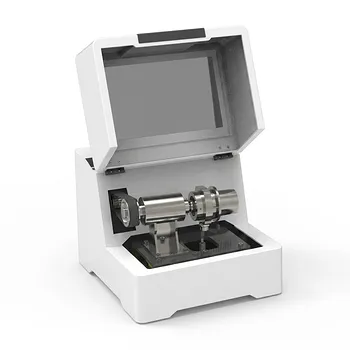
The planetary ball mill acts as the primary mechanical catalyst in the synthesis of Autoclaved Aerated Concrete containing Semiconductor Electronic Packaging Resin Waste (AAC-SEMRW).
Its fundamental role is to transform rigid, inert resin waste into a fine, reactive powder through high-energy mechanical impact and friction. This pretreatment ensures the waste can function as a qualified recycled aggregate, effectively substituting for sand while maintaining the structural integrity of the concrete matrix.
Core Takeaway: The planetary ball mill is the essential bridge between raw industrial waste and functional construction material, providing the particle refinement and homogenization necessary for the resin to integrate into the aerated concrete structure.
Transforming Waste into Functional Aggregate
Achieving Micron-Level Particle Refinement
The planetary ball mill utilizes high-speed rotation to generate intense centrifugal impact and shear forces. These forces break down the complex polymer and filler structures of semiconductor electronic packaging resin into a fine powder. This refinement is critical, as it allows the waste to reach the micron-level fineness required to mimic the behavior of traditional fine aggregates like sand.
Increasing Specific Surface Area and Reactivity
By grinding the resin, the mill exponentially increases the total surface area available for chemical and physical bonding. This process provides "mechanical activation," which can increase defects in the particle surfaces and improve the material's interaction with the cementitious binder. High surface area ensures that the resin particles do not act as structural "islands" but instead bond effectively within the concrete matrix.
Optimizing the Concrete Matrix
Ensuring Homogeneous Dispersion
Uniformity is the most critical factor in the production of aerated concrete, where inconsistent density leads to structural failure. The planetary ball mill ensures that SEMRW particles are finely dispersed, preventing the formation of clusters or agglomerates. This molecular-level mixing is vital for achieving a consistent pore structure during the aeration and autoclaving phases.
Enhancing Solid-State Reaction Activity
During the autoclaving process, the materials undergo complex hydration reactions to form the concrete's final strength. The fine particles produced by the mill facilitate these reactions by providing more contact points for the lime, cement, and water. This ensures that the inclusion of resin waste does not negatively impact the hydration kinetics or the eventual development of the material's compressive strength.
Understanding the Trade-offs and Pitfalls
Energy Consumption and Heat Generation
High-energy milling is a power-intensive process that can significantly increase the operational costs of AAC production. Additionally, the friction generated during long milling cycles produces heat, which may cause certain resin components to soften or become "gummy." If the temperature is not managed, the powder can re-agglomerate, defeating the purpose of the milling process.
Equipment Wear and Material Contamination
Semiconductor resin waste often contains hard fillers that can be abrasive to the milling media (balls and jars). Over time, this leads to wear and tear that can introduce small amounts of media material into the concrete mix. Operators must balance the need for high-frequency impact with the longevity of the equipment to ensure the economic viability of the recycling process.
How to Apply This to Your Project
When integrating a planetary ball mill into your AAC-SEMRW workflow, your approach should shift based on your specific material goals.
- If your primary focus is Maximum Strength: Use longer milling durations to reach a higher specific surface area (e.g., 450 m²/kg), which maximizes the mechanical activation of the resin particles.
- If your primary focus is Cost Efficiency: Optimize the milling speed to the minimum required to reach 200-325 mesh fineness, reducing energy consumption and equipment wear.
- If your primary focus is Material Uniformity: Prioritize the "wet milling" method using a medium like ethanol to prevent powder agglomeration and ensure a highly homogenized slurry.
By precisely controlling the mechanical pretreatment of resin waste, you turn a problematic industrial byproduct into a high-performance component of sustainable aerated concrete.
Summary Table:
| Function | Impact on AAC-SEMRW | Optimization Strategy |
|---|---|---|
| Particle Refinement | Reduces resin to micron-level for sand substitution. | Adjust milling speed to reach 200-325 mesh. |
| Surface Activation | Increases specific surface area for better chemical bonding. | Extend milling duration for maximum strength. |
| Homogenization | Prevents agglomeration and ensures uniform pore structure. | Use wet milling (e.g., ethanol) for slurry consistency. |
| Reaction Activity | Facilitates solid-state reactions during autoclaving. | Balance impact energy with heat management. |
Elevate Your Material Synthesis with Specialized Laboratory Solutions
Turning industrial waste into high-performance construction materials requires precision at every step. At KINTEK, we provide complete laboratory sample preparation solutions for material science, specializing in high-efficiency powder processing and compaction equipment.
Whether you are refining resin waste or synthesizing advanced ceramics, our extensive product line supports your entire workflow:
- Advanced Milling: Planetary ball mills, jet mills, and cryogenic grinders for micron-level refinement.
- Preparation & Sizing: Jaw crushers, sieve shakers, and high-precision mixers.
- Compaction Excellence: A full spectrum of hydraulic presses, including Cold/Warm Isostatic Presses (CIP/WIP), vacuum hot presses, and XRF pellet presses.
Ready to optimize your AAC-SEMRW production or research? Contact our experts today to find the ideal equipment configuration for your specific material requirements and achieve superior structural integrity in your sustainable products.
References
- Nur Farisyah Hidayah Zambri, Akhtar Ali. The Effects of Direct Fire and Strength on Autoclaved Aerated Concrete Containing Semiconductor Electronic Molding Resin Waste (AAC-SEMRW) on Partition Panel Application. DOI: 10.37934/sijmr.2.1.2537a
Mentioned Products
- Vertical Semi Circular Planetary Ball Mill for Laboratory Precision Grinding
- High Energy Planetary Ball Mill for Nano Scale Grinding and Mechanical Alloying
- Vertical Production Planetary Ball Mill for High Throughput Powder Processing
- Heavy Duty Horizontal Planetary Ball Mill for Efficient Industrial Grinding and Sample Preparation
- 360° Rotating Omnidirectional Laboratory Planetary Ball Mill for Homogeneous Ultra-Fine Grinding and Mixing
People Also Ask
- What role does a planetary ball mill play in the synthesis of Li6PS5Cl (LPSCl)? Unlock High Ionic Conductivity
- Why is a planetary ball mill essential for SiBCN-rGO wet-spinning? Achieve Superior Dispersion and Spinnability
- Why is an intermittent grinding process required for perovskites in a planetary ball mill? Ensure Stability & Purity
- Why is a planetary ball mill required for PET micronization? Ensure Accurate Chemical Analysis of Reprocessed PET
- How does mechanized planetary ball milling compare to manual agate grinding? Optimize sulfide standard material precision.

Tech Team · PowderPreparation
Last updated on May 14, 2026
Related Products
Vertical Semi Circular Planetary Ball Mill for Laboratory Precision Grinding
High Energy Planetary Ball Mill for Nano Scale Grinding and Mechanical Alloying
Vertical Production Planetary Ball Mill for High Throughput Powder Processing
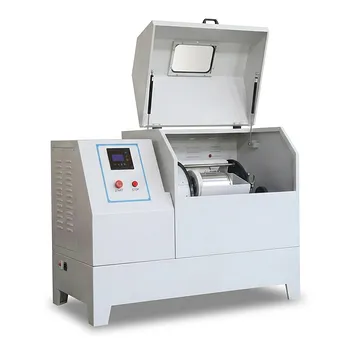
Heavy Duty Horizontal Planetary Ball Mill for Efficient Industrial Grinding and Sample Preparation
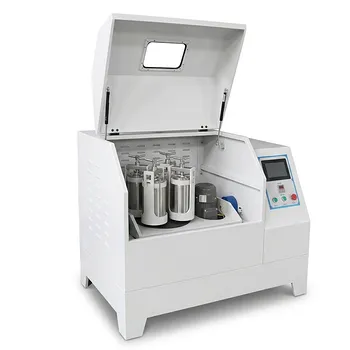
360° Rotating Omnidirectional Laboratory Planetary Ball Mill for Homogeneous Ultra-Fine Grinding and Mixing
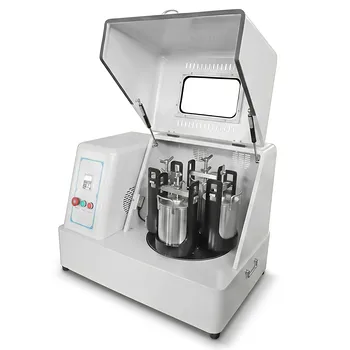
Vertical Square Planetary Ball Mill for Laboratory Sample Preparation and Nanoscale Grinding
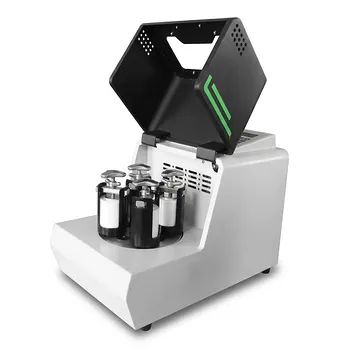
Miniature Planetary Ball Mill with Vacuum Grinding and High Efficiency for Laboratory Sample Preparation
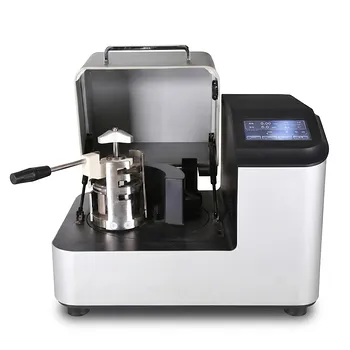
High Energy Laboratory Planetary Ball Mill for Nano Grinding and Material Science Sample Preparation
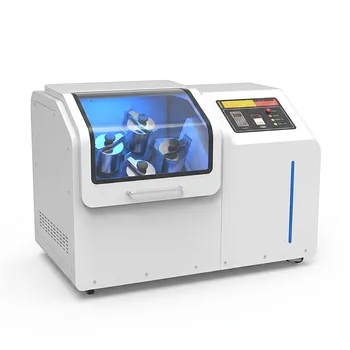
High Energy Omnidirectional Planetary Ball Mill 16L
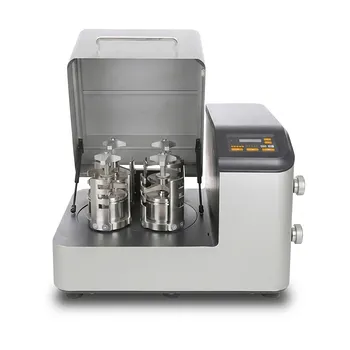
High Energy Planetary Ball Mill for Nano Scale Grinding and Colloidal Mixing in Material Science Research
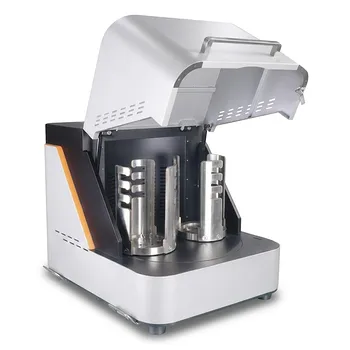
High Energy Laboratory Planetary Ball Mill for Nano Grinding and Colloidal Mixing of Hard and Brittle Materials
High Energy Omnidirectional Planetary Ball Mill 20L
Horizontal Light Duty Planetary Ball Mill for Laboratory Sample Preparation
8L Planetary Ball Mill for Laboratory Grinding and Sample Preparation
Dual Station Planetary Ball Mill 24L
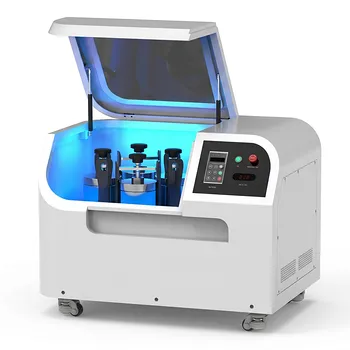
Planetary Ball Mill 12L

Nano High Energy Vibratory Ball Mill for Laboratory Sample Preparation

Multi-Platform Nanoscale High-Energy Vibratory Ball Mill

High Energy Hybrid Vibratory Ball Mill for Grinding Mixing and Cell Disruption