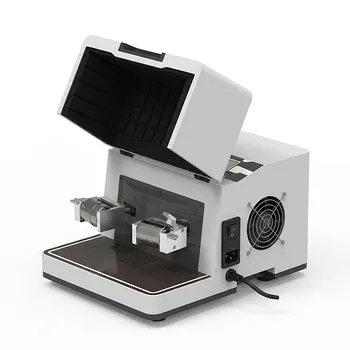
What is the role of a planetary ball mill in Al-Al2O3 FGM? Master Microscopic Mixing & Gradient Control
Updated 5 months ago
The planetary ball mill is the primary equipment used to achieve a uniform microscopic distribution of alumina (Al2O3) particles within an aluminum (Al) metallic matrix. By utilizing high-energy impact and shear forces, it breaks down powder agglomerates and ensures that the disparate properties of ductile metal and brittle ceramic do not lead to segregation. This intensive mixing stage is the foundation for establishing the precise composition gradients and property continuity required in Functionally Graded Materials (FGM).
Core Takeaway: The planetary ball mill serves as the critical bridge between raw powder components and a cohesive FGM, using high-energy mechanical forces to ensure compositional precision and microstructural stability throughout the sintering process.
Achieving Microscopic Mixing Uniformity
Breaking Down Powder Agglomerates
Raw ceramic and metallic powders often form clusters or agglomerates due to van der Waals forces or moisture. The planetary ball mill utilizes high-speed rotation to generate intense impact energy that physically shatters these clusters.
This breakdown is essential because any remaining agglomerates would create "weak spots" or voids in the final Al-Al2O3 structure. Achieving a fine, de-agglomerated state allows the ceramic particles to be distributed evenly at a molecular or sub-micron level.
Homogenizing Heterogeneous Materials
Aluminum is a ductile metal, while alumina is a hard, brittle ceramic; their differing densities and mechanical behaviors make them difficult to blend using standard methods. The planetary ball mill overcomes this through simultaneous shear and impact forces that "force" the particles into a homogeneous mixture.
This deep physical mixing ensures that the ceramic reinforcement phase is perfectly embedded within the metal matrix. Without this high-energy processing, the powders would likely separate during handling or subsequent forming stages.
Facilitating the Gradient Structure
Precise Compositional Control
The "Graded" in FGM refers to a transition in material composition across the volume of the part. The planetary ball mill allows for the preparation of specific powder batches with exact Al-to-Al2O3 molar ratios for each layer of the gradient.
By ensuring each batch is perfectly mixed, the manufacturer can guarantee that the transition from a metal-rich zone to a ceramic-rich zone is smooth and controlled. This precision is what allows FGMs to balance toughness and hardness effectively.
Prevention of Sintering Segregation
During the high-temperature sintering process, poorly mixed powders tend to migrate or segregate, leading to uneven material properties. The high-energy mixing provided by the mill creates a stable "mixed charge" that resists this migration.
This stability is critical for maintaining the intended gradient. It ensures that the final component possesses the continuous property transitions required for high-stress applications, such as nuclear components or aerospace heat shields.
Mechanical Activation and Particle Refinement
Particle Size Reduction and Morphology
Beyond mere mixing, the planetary ball mill can refine raw materials to sub-micron or even nanometer scales. This reduction in particle size increases the surface-area-to-volume ratio of the powders.
Refined particles lead to a more uniform microstructure in the final product. In Al-Al2O3 composites, smaller ceramic particles generally provide better reinforcement and a higher elastic modulus compared to larger, coarser grains.
Enhancing Surface Reactivity
High-speed energy transfer during milling induces "mechanical activation" on the surface of the powder particles. This process increases the surface energy and reactivity of both the aluminum and the alumina.
Increased reactivity facilitates better phase transformations and bonding during thermal treatment. This results in stronger interfaces between the metal matrix and the ceramic reinforcement, which is vital for the mechanical integrity of the FGM.
Understanding the Trade-offs and Pitfalls
Risk of Media Contamination
The high-energy nature of planetary ball milling means that the milling balls and the jar itself are subject to wear. Over time, small fragments of the milling media (often zirconia or stainless steel) can contaminate the Al-Al2O3 mixture.
This contamination can alter the chemical purity of the FGM and negatively impact its performance. Choosing media with similar hardness to the ceramic component or using high-wear-resistant materials is a necessary precaution.
Thermal Management and Oxidation
The friction and impact within the mill generate significant heat, which can be problematic for aluminum powder. Aluminum is highly reactive and can oxidize rapidly if the internal temperature of the mill rises too high or if the atmosphere is not controlled.
To mitigate this, many processes utilize "wet milling" in fluids like distilled water or ethanol, or perform the milling under an inert gas shield. Failure to control these variables can result in a powder that is too oxidized to sinter correctly.
Applying This to Your Material Preparation
Making the Right Choice for Your Goal
- If your primary focus is Maximum Hardness and Strength: Utilize longer milling times at higher speeds to achieve sub-micron particle refinement and high mechanical activation.
- If your primary focus is Compositional Gradient Precision: Prioritize short, high-intensity mixing cycles for each gradient layer to ensure homogeneity without excessive media wear or contamination.
- If your primary focus is Manufacturing Scalability: Implement wet ball milling to control temperatures and reduce dust, facilitating a more stable environment for large-batch powder preparation.
By masterfully controlling the planetary ball milling process, you establish the microstructural foundation necessary for high-performance Al-Al2O3 Functionally Graded Materials.
Summary Table:
| Milling Function | Key Mechanism | Impact on Al-Al2O3 FGM |
|---|---|---|
| De-agglomeration | High-energy impact/shear | Eliminates voids and "weak spots" in the matrix |
| Homogenization | Deep physical blending | Prevents segregation of ductile Al and brittle Al2O3 |
| Particle Refinement | Sub-micron scaling | Enhances reinforcement and elastic modulus |
| Mechanical Activation | Increased surface energy | Promotes stronger bonding during the sintering stage |
| Gradient Control | Precise batch mixing | Ensures smooth transition between material layers |
Elevate Your Material Research with Professional Sample Preparation
Achieving the perfect gradient in Al-Al2O3 materials requires precision at every step. We provide complete laboratory sample preparation solutions tailored for material science, specializing in high-performance powder processing and compaction equipment.
Our extensive product lines are designed to meet the rigorous demands of FGM development:
- Advanced Milling: Planetary ball mills, jet mills, rotor mills, and liquid nitrogen cryogenic grinders for perfect particle refinement.
- Sizing & Mixing: Vibratory/air-jet sieve shakers, powder mixers, and defoaming mixers to ensure compositional uniformity.
- Compaction & Sintering Prep: A full spectrum of hydraulic presses, including Cold/Warm Isostatic Presses (CIP/WIP), vacuum hot presses, and XRF pellet presses.
- Primary Processing: Heavy-duty jaw and roll crushers for raw material preparation.
Ready to optimize your FGM microstructures? Contact us today to discuss how our specialized equipment can enhance your laboratory's efficiency and material performance.
References
- Pravin Malik, Permi Jagadish. Static Deflection and Free Vibration Analysis of Functionally Graded Al-Al₂O₃ Clamped-Free Beams Fabricated by Powder Metallurgy. DOI: 10.7759/s44388-025-03835-2
Mentioned Products
- Vertical Semi Circular Planetary Ball Mill for Laboratory Precision Grinding
- High Energy Planetary Ball Mill for Nano Scale Grinding and Mechanical Alloying
- Vertical Production Planetary Ball Mill for High Throughput Powder Processing
- Heavy Duty Horizontal Planetary Ball Mill for Efficient Industrial Grinding and Sample Preparation
- 360° Rotating Omnidirectional Laboratory Planetary Ball Mill for Homogeneous Ultra-Fine Grinding and Mixing
People Also Ask
- What role does a planetary ball mill play in the synthesis of Li6PS5Cl (LPSCl)? Unlock High Ionic Conductivity
- Why is a planetary ball mill essential for SiBCN-rGO wet-spinning? Achieve Superior Dispersion and Spinnability
- Why is an intermittent grinding process required for perovskites in a planetary ball mill? Ensure Stability & Purity
- Why is a planetary ball mill required for PET micronization? Ensure Accurate Chemical Analysis of Reprocessed PET
- How does mechanized planetary ball milling compare to manual agate grinding? Optimize sulfide standard material precision.

Tech Team · PowderPreparation
Last updated on May 14, 2026
Related Products
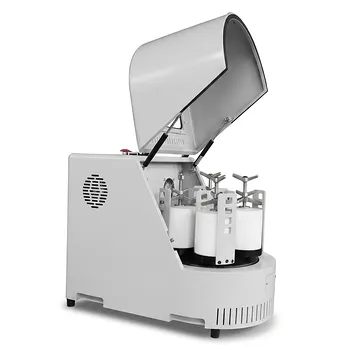
Vertical Semi Circular Planetary Ball Mill for Laboratory Precision Grinding
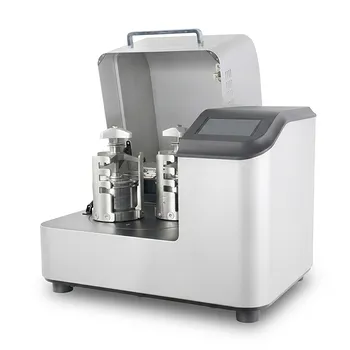
High Energy Planetary Ball Mill for Nano Scale Grinding and Mechanical Alloying
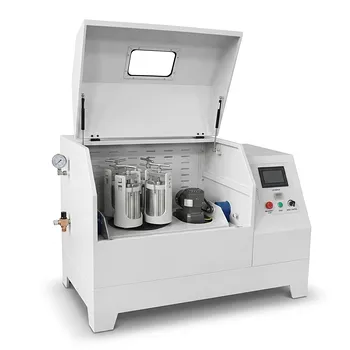
Vertical Production Planetary Ball Mill for High Throughput Powder Processing
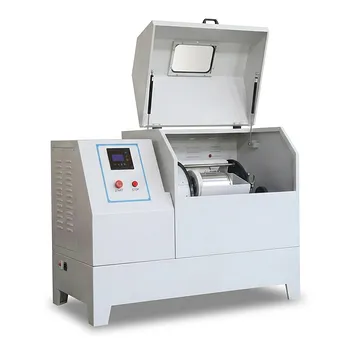
Heavy Duty Horizontal Planetary Ball Mill for Efficient Industrial Grinding and Sample Preparation
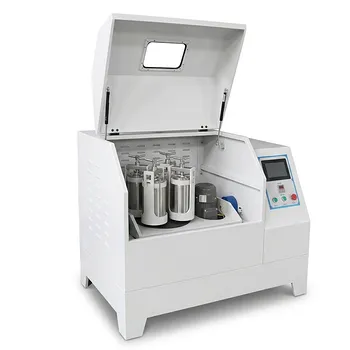
360° Rotating Omnidirectional Laboratory Planetary Ball Mill for Homogeneous Ultra-Fine Grinding and Mixing
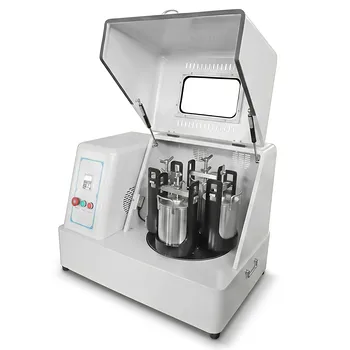
Vertical Square Planetary Ball Mill for Laboratory Sample Preparation and Nanoscale Grinding
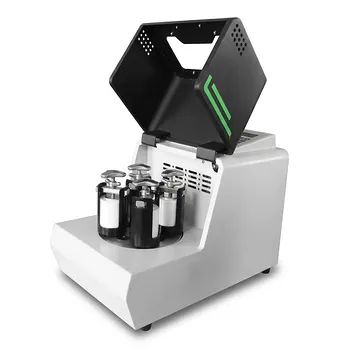
Miniature Planetary Ball Mill with Vacuum Grinding and High Efficiency for Laboratory Sample Preparation
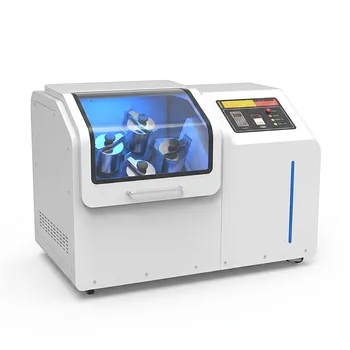
High Energy Omnidirectional Planetary Ball Mill 16L
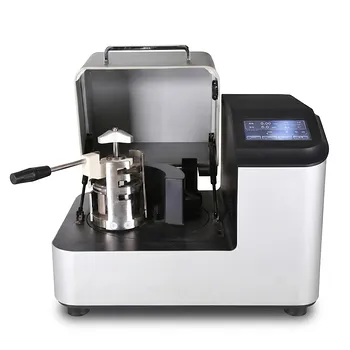
High Energy Laboratory Planetary Ball Mill for Nano Grinding and Material Science Sample Preparation
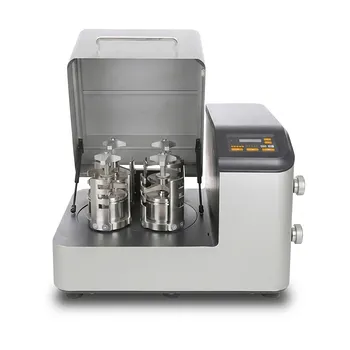
High Energy Planetary Ball Mill for Nano Scale Grinding and Colloidal Mixing in Material Science Research
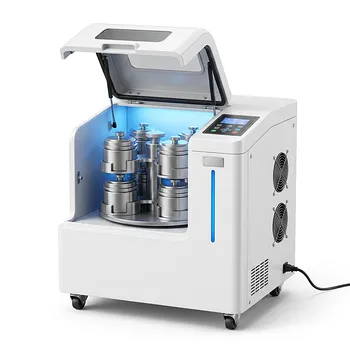
High Energy Omnidirectional Planetary Ball Mill 20L
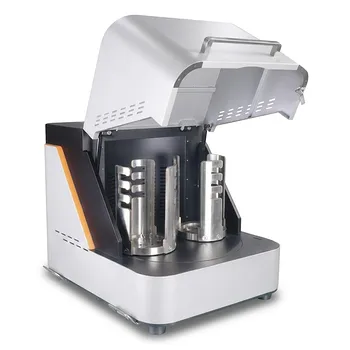
High Energy Laboratory Planetary Ball Mill for Nano Grinding and Colloidal Mixing of Hard and Brittle Materials
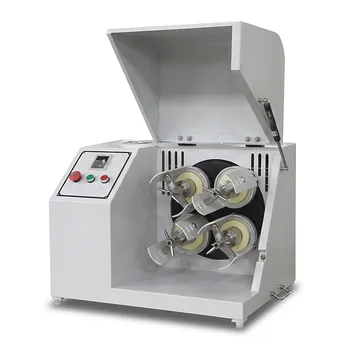
Horizontal Light Duty Planetary Ball Mill for Laboratory Sample Preparation

8L Planetary Ball Mill for Laboratory Grinding and Sample Preparation
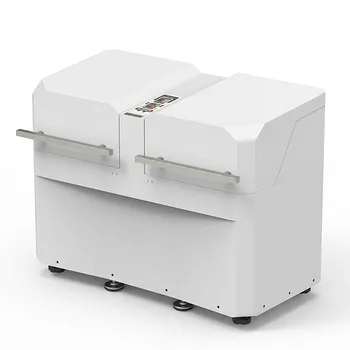
Dual Station Planetary Ball Mill 24L
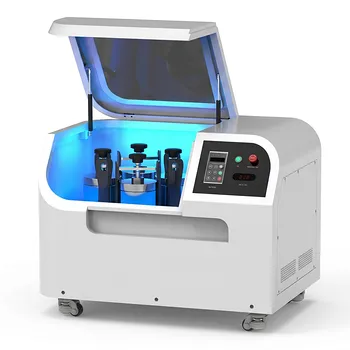
Planetary Ball Mill 12L

Multi-Platform Nanoscale High-Energy Vibratory Ball Mill

Nano High Energy Vibratory Ball Mill for Laboratory Sample Preparation
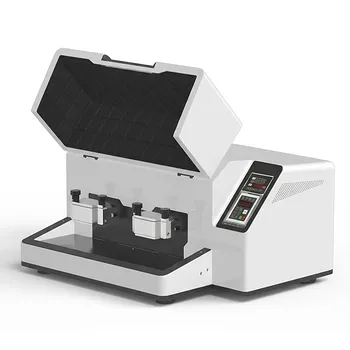
Nanoscale High-Energy Vibratory Ball Mill for Laboratory Sample Preparation, Mechanochemistry, and Mechanical Alloying