What is the role of a planetary ball mill in the modification of MWCNTs? Enhance Dispersion & Surface Reactivity
Updated 5 months ago
The planetary ball mill serves as a high-energy mechanical processor that physically modifies the morphology and surface characteristics of multi-walled carbon nanotubes (MWCNTs). By utilizing high-speed rotation to generate intense impact and shear forces, it de-agglomerates nanotube bundles, reduces their length, and increases their specific surface area. This mechanical treatment is a critical precursor step that improves dispersion stability in solvents and creates the necessary active sites for subsequent chemical functionalization.
The primary role of a planetary ball mill is to convert entangled, inert MWCNT aggregates into a highly dispersed and reactive state through mechanical energy. This process optimizes the nanotubes for uniform integration into composites and enhances their ability to undergo chemical modification.
Mechanisms of Mechanical Modification
High-Energy Impact and Shear Forces
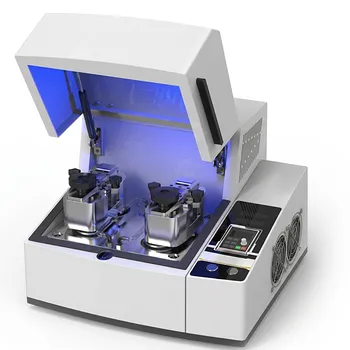
The planetary ball mill operates through a complex motion where the grinding jars rotate around their own axis while simultaneously orbiting a central sun wheel. This dual rotation generates massive centrifugal forces that propel grinding media against the MWCNTs. These high-frequency impacts overcome the strong Van der Waals forces that typically cause nanotubes to clump together.
Dimensional Control and Shortening
Raw MWCNTs are often extremely long and prone to entanglement, which complicates processing. The mechanical grinding action effectively "cuts" the nanotubes, reducing their aspect ratio. This shortening is essential for lowering the viscosity of suspensions and ensuring the nanotubes can be evenly distributed within a matrix.
Increasing Specific Surface Area
As aggregates are broken down and nanotubes are shortened, the total surface area available for interaction increases significantly. This higher specific surface area allows for better contact between the nanotubes and the surrounding medium. It is the fundamental driver behind improved sedimentation resistance in aqueous solutions.
Enhancing Chemical and Physical Integration
Creation of Active Sites
The intense mechanical stress applied during milling can induce localized structural defects or "open" bonds on the carbon lattice. These sites act as high-energy points that are more chemically reactive than the pristine, inert surface of the nanotube. This makes the MWCNTs far more receptive to the attachment of functional groups during later chemical processing.
Mechanical Alloying and Embedding
In metal or ceramic matrix composites, the mill facilitates a process known as mechanical alloying. The equipment uses repeated plastic deformation, fracture, and cold welding to embed MWCNTs directly into the interior of matrix particles. This creates a robust physical bond between the reinforcement phase and the matrix, which is vital for enhancing mechanical and thermal properties.
Facilitating Conductive Networks
For applications like electromagnetic shielding or antistatic materials, the mill ensures the uniform distribution of the conductive phase. By breaking down agglomerates, the planetary ball mill helps establish a consistent percolative network throughout a polymer or ceramic matrix. This uniformity prevents "hot spots" and ensures reliable electrical performance.
Understanding the Trade-offs
Structural Damage vs. Dispersion Quality
While milling improves dispersion, there is a delicate balance between de-agglomeration and structural degradation. Excessive milling time or energy can lead to the "amorphization" of the carbon nanotubes, where the crystalline structure is destroyed. This can significantly reduce the electrical conductivity and mechanical strength of the final material.
Contamination from Grinding Media
High-energy ball milling involves constant wear on the grinding jars and balls. Depending on the material used (e.g., stainless steel, zirconia, or tungsten carbide), small amounts of impurities can be introduced into the MWCNT sample. For high-purity electronic or medical applications, these trace contaminants must be carefully managed or removed through post-processing.
How to Apply This to Your Project
Optimizing Milling Parameters for Your Goals
Successful modification depends on aligning the milling intensity with your specific performance requirements.
- If your primary focus is Chemical Functionalization: Prioritize shorter milling durations at moderate speeds to create surface defects without destroying the overall tube structure.
- If your primary focus is Composite Dispersion: Use higher energy settings and specialized grinding aids to ensure the complete breakdown of aggregates for a uniform conductive network.
- If your primary focus is Mechanical Alloying (Metal Matrix): Employ longer milling cycles with controlled atmosphere jars to facilitate the deep embedding of nanotubes into metal powders while preventing oxidation.
By precisely controlling the mechanical energy of the planetary ball mill, you can transform MWCNTs from a difficult-to-handle raw material into a high-performance additive tailored for advanced applications.
Summary Table:
| Key Role | Mechanism | Primary Outcome |
|---|---|---|
| De-agglomeration | High-energy impact & shear | Breaks Van der Waals forces for uniform distribution |
| Dimensional Control | Mechanical cutting/grinding | Reduced aspect ratio; lower suspension viscosity |
| Surface Activation | Structural defect induction | Creation of reactive sites for chemical functionalization |
| Mechanical Alloying | Cold welding & fracture | Direct embedding of MWCNTs into matrix particles |
| Network Formation | Homogeneous dispersion | Establishment of consistent percolative conductive paths |
Precision Equipment for Advanced MWCNT Modification
Transform your raw carbon nanotubes into high-performance additives with our industry-leading processing tools. [Your Brand Name] specializes in providing complete laboratory sample preparation solutions for material science, focusing on powder processing and compaction equipment.
Our extensive equipment line supports every stage of your workflow:
- Grinding & Milling: High-energy planetary ball mills, jet mills, and liquid nitrogen cryogenic grinders for superior de-agglomeration.
- Sizing & Mixing: Sieve shakers (vibratory/air-jet) and specialized powder or defoaming mixers.
- Consolidation: A full spectrum of hydraulic presses, including Cold/Warm Isostatic Presses (CIP/WIP), vacuum hot presses, and XRF pellet presses.
Enhance your research efficiency and material quality with solutions tailored to your specific application. Contact our experts today to find the ideal equipment for your lab!
References
- Baasandulam Tserengombo, Se-Dong Kim. Effects of Functionalization in Different Conditions and Ball Milling on the Dispersion and Thermal and Electrical Conductivity of MWCNTs in Aqueous Solution. DOI: 10.3390/nano11051323
Mentioned Products
- High Energy Planetary Ball Mill for Nano Scale Grinding and Mechanical Alloying
- Vertical Square Planetary Ball Mill for Laboratory Sample Preparation and Nanoscale Grinding
- Vertical Semi Circular Planetary Ball Mill for Laboratory Precision Grinding
- 360° Rotating Omnidirectional Laboratory Planetary Ball Mill for Homogeneous Ultra-Fine Grinding and Mixing
- High Energy Laboratory Planetary Ball Mill for Nano Grinding and Colloidal Mixing of Hard and Brittle Materials
People Also Ask
- Why is a high-energy planetary ball mill used for nano-milling As4Se3? Achieve Expert Structural Transformation
- What role do high-energy planetary ball mills play in FDM composite filament preparation? Optimize Material Performance
- What is the role of a high-energy planetary ball mill in the exfoliation of modified WSe2? Achieve Nano-Precision
- What is the function of a planetary ball mill in glass-ceramic sintering? Optimize Reactivity and Uniformity
- What is the role of a high-energy planetary ball mill in the preparation of high-performance nano-ceramics? Key Guide

Tech Team · PowderPreparation
Last updated on May 14, 2026
Related Products

High Energy Planetary Ball Mill for Nano Scale Grinding and Mechanical Alloying
Vertical Square Planetary Ball Mill for Laboratory Sample Preparation and Nanoscale Grinding

Vertical Semi Circular Planetary Ball Mill for Laboratory Precision Grinding
360° Rotating Omnidirectional Laboratory Planetary Ball Mill for Homogeneous Ultra-Fine Grinding and Mixing

High Energy Laboratory Planetary Ball Mill for Nano Grinding and Colloidal Mixing of Hard and Brittle Materials
Vertical Production Planetary Ball Mill for High Throughput Powder Processing

High Energy Laboratory Planetary Ball Mill for Nano Grinding and Material Science Sample Preparation
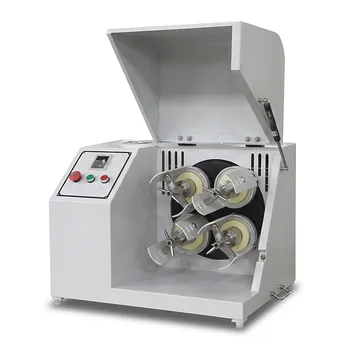
Horizontal Light Duty Planetary Ball Mill for Laboratory Sample Preparation
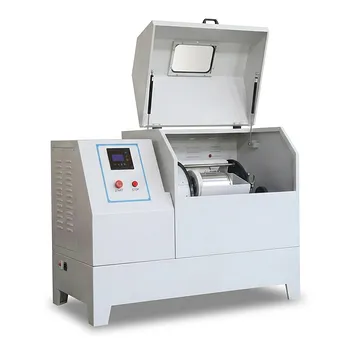
Heavy Duty Horizontal Planetary Ball Mill for Efficient Industrial Grinding and Sample Preparation

Miniature Planetary Ball Mill with Vacuum Grinding and High Efficiency for Laboratory Sample Preparation

8L Planetary Ball Mill for Laboratory Grinding and Sample Preparation
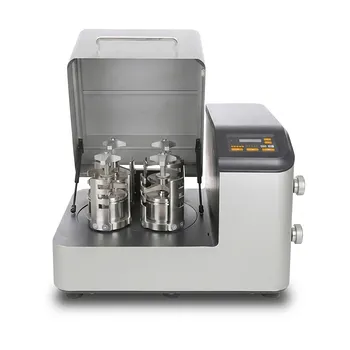
High Energy Planetary Ball Mill for Nano Scale Grinding and Colloidal Mixing in Material Science Research
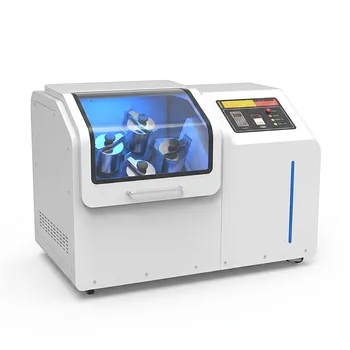
High Energy Omnidirectional Planetary Ball Mill 16L
High Energy Omnidirectional Planetary Ball Mill 20L
Planetary Ball Mill 12L
Dual Station Planetary Ball Mill 24L

Multi-Platform Nanoscale High-Energy Vibratory Ball Mill

Nanoscale High-Energy Vibratory Ball Mill for Laboratory Sample Preparation, Mechanochemistry, and Mechanical Alloying

High Throughput Micro Ball Mill for Cryogenic Grinding and Laboratory Cell Disruption