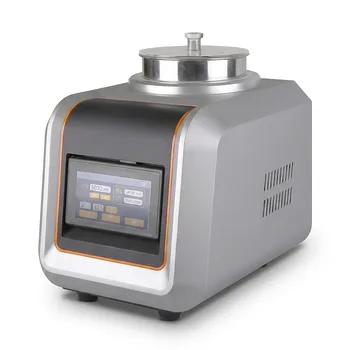
What is the role of a mechanical sieve shaker in the particle size fractionation of road dust samples? Guide to Precision
Updated 5 months ago
The mechanical sieve shaker serves as the automated engine for standardized particle separation in road dust research. By utilizing high-frequency vibration to drive a vertical stack of test sieves, the equipment partitions raw road surface particles into distinct physical components, typically ranging from 10 mm down to less than 0.063 mm. This process ensures the consistency and repeatability necessary for accurate elemental concentration analysis across specific particle size intervals.
A mechanical sieve shaker automates the grading of road dust samples by applying uniform mechanical force, which eliminates human error and provides a precise, repeatable foundation for chemical and morphological analysis.
Standardizing the Fractionation Process
High-Frequency Vibration and Particle Rearrangement
The primary role of the shaker is to provide high-frequency mechanical energy that rapidly rearranges dust particles on the sieve surface. This continuous vibration ensures that each particle has multiple opportunities to present its smallest dimension to the sieve apertures.
Precision in Multi-Layer Grading
The equipment supports a stack of standard test sieves, allowing for the simultaneous separation of a single sample into multiple fractions. This mechanized approach facilitates the movement of fine particles through the stack within a specific, controlled timeframe, such as 10 minutes.
Achieving High Recovery Rates
Advanced electromagnetic shakers utilize three-dimensional motion—combining vertical vibration with rotation—to maximize screening efficiency. This high-precision method can achieve a recovery rate of over 98%, ensuring that the resulting data accurately represents the original sample composition.
Enhancing Analytical Accuracy and Repeatability
Eliminating Manual Variability
Compared to manual sieving, mechanical shakers provide a standardized vibration frequency and force. This consistency is critical for longitudinal studies where data must be compared across different batches or research locations without the interference of human error.
Preparing Samples for Elemental Analysis
By creating a standardized sample base, the shaker allows researchers to conduct elemental characterization on specific size segments. This is vital for understanding how heavy metals or pollutants are distributed throughout different particle sizes in the road environment.
Preventing Material Contamination
In sensitive heavy metal enrichment studies, the choice of sieve material used with the shaker is paramount. Utilizing nylon sieves instead of metal prevents the introduction of trace element interference caused by friction, preserving the scientific integrity of the analysis.
Supporting Advanced Wear Particle Research
Identifying Tire and Road Wear Particles
Mechanical fractionation is the foundational step for identifying Tire-Road Wear Particles (TRWPs) and Asphalt Pavement Wear Particles (APWPs). By dividing samples into precise intervals (e.g., 20 μm to 1,000 μm), researchers can perform targeted morphological and quantitative assessments.
Distinguishing Pavement Material Sources
The ability to screen dust into specific fractions helps in analyzing the fine particulate content generated by different road materials. This allows for a clear distinction between the dust profiles of asphalt and concrete surfaces, which is essential for urban air quality modeling.
Understanding the Trade-offs
The Risk of Sieve Blinding
One common pitfall is sieve blinding, where near-sized particles become wedged in the mesh, obstructing the flow of smaller particles. While high-frequency vibration reduces this risk, extremely cohesive or moist dust samples may still require specialized anti-blinding accessories or pre-drying.
Material Wear and Tear
Continuous mechanical stress can lead to the deformation of sieve apertures over time, especially with metal sieves. Regular calibration and inspection are necessary to ensure that the "standardized" separation remains accurate throughout the life of the equipment.
Sample Volume Limitations
Mechanical shakers have specific load capacities; overloading the sieves can lead to "cushioning," where a thick layer of material prevents fine particles from reaching the mesh. This necessitates a balance between throughput efficiency and the precision of the fractionation.
Making the Right Choice for Your Goal
To ensure your road dust research yields high-quality data, tailor your sieving strategy to your specific analytical objectives.
- If your primary focus is heavy metal enrichment analysis: Use a high-frequency vibratory shaker equipped with nylon sieves to prevent metal-on-metal friction and sample contamination.
- If your primary focus is high-volume bulk dust screening: Utilize an electromagnetic shaker with a 3D motion mode to ensure high recovery rates and efficient processing of large samples.
- If your primary focus is identifying tire and road wear particles: Prioritize a stackable sieve system that allows for narrow intervals between 20 μm and 1,000 μm for detailed morphological classification.
By standardizing the physical separation of road dust, the mechanical sieve shaker provides the essential technical foundation for understanding the complex environmental impacts of pavement wear and urban pollution.
Summary Table:
| Feature | Role in Fractionation | Key Benefit |
|---|---|---|
| High-Frequency Vibration | Rapidly rearranges particles on mesh | Ensures particles present smallest dimension |
| 3D Motion (Electromagnetic) | Combines vertical vibration with rotation | High recovery rates (>98%) for bulk samples |
| Multi-Layer Stacking | Simultaneous grading of one sample | Efficient separation into multiple size intervals |
| Standardized Timing | Eliminates manual variability | Guaranteed repeatability for longitudinal studies |
| Material Compatibility | Use of Nylon sieves for dust analysis | Prevents trace element/heavy metal contamination |
Elevate Your Material Analysis with Expert Sample Preparation
Achieve unparalleled precision in road dust research and material science with our comprehensive laboratory solutions. We specialize in providing complete sample preparation equipment designed for accuracy and repeatability.
Our extensive product line includes:
- Sieve Shakers: Vibratory and air-jet models with a full range of test sieves and meshes.
- Milling & Grinding: Planetary ball mills, jet mills, rotor mills, and liquid nitrogen cryogenic grinders.
- Crushing: Industrial-grade jaw and roll crushers.
- Powder Processing: Advanced mixers (powder/defoaming) and a full spectrum of Hydraulic Presses (CIP/WIP, standard lab presses, XRF pellet presses, and vacuum hot presses).
Whether you are quantifying tire-road wear particles (TRWPs) or conducting detailed elemental characterization, our equipment is built to meet the most rigorous scientific standards.
Ready to optimize your laboratory workflow? Contact us today to discuss your specific requirements!
References
- Wioletta Rogula–Kozłowska, Barbara Błaszczak. Assessment of differences in elemental concentrations in particulate matter from road surfaces near and outside noise barriers in Poland. DOI: 10.24425/aep.2025.153753
Mentioned Products
- 三维电磁微量振动筛分仪
- Vibratory Sieve Shaker Electromagnetic 3D Motion Powder Particle Size Analyzer for Dry and Wet Sieving
- Laboratory Dry and Wet Three Dimensional Vibratory Sieve Shaker for Particle Analysis
- Small Laboratory Vibrating Sieve Shaker for Precise Particle Size Analysis
- Stainless Steel Laboratory Vibratory Test Sieve Shaker
People Also Ask
- Why is a standard sieve shaker essential for CBA powders in geopolymers? Enhance Reactivity & Material Strength
- Why are standard metal sieves and sieve shakers necessary for 5-aminotetrazole mixtures? Optimize Thermal & Kinetic Data
- Why Use Sieve Shakers for Gangue Slurry Experiments? Optimize Particle Grading for Superior Results
- What are the advantages of mechanical vs. manual sieving for road dust analysis? Achieve Superior Data Standardization.
- How do high-precision sieve shakers and powder mixers facilitate material circularity in metal PBF? Optimize AM Cycles

Tech Team · PowderPreparation
Last updated on May 14, 2026
Related Products
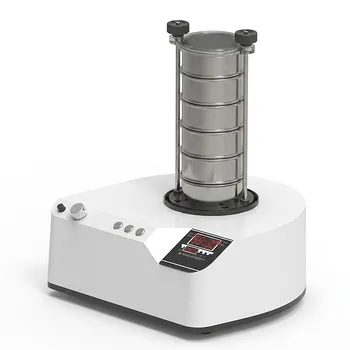
三维电磁微量振动筛分仪
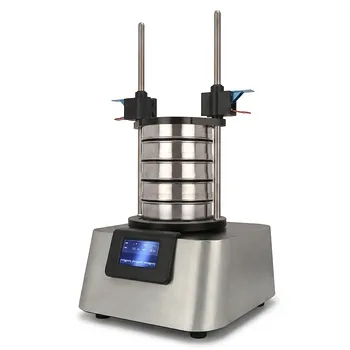
Vibratory Sieve Shaker Electromagnetic 3D Motion Powder Particle Size Analyzer for Dry and Wet Sieving
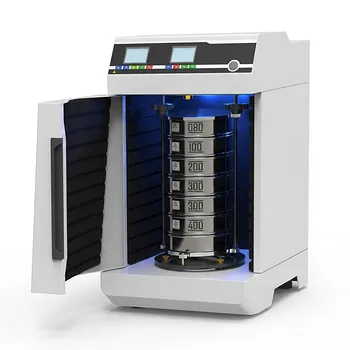
Laboratory Dry and Wet Three Dimensional Vibratory Sieve Shaker for Particle Analysis

Small Laboratory Vibrating Sieve Shaker for Precise Particle Size Analysis
Stainless Steel Laboratory Vibratory Test Sieve Shaker

Heavy Duty Dry Three Dimensional Vibratory Sieve Shaker for Particle Separation
Dry Three Dimensional Vibratory Sieve Shaker
Small Laboratory Vibratory Sieve Shaker for Powder Gradation and Particle Size Analysis

Laboratory Vibratory Test Sieve Shaker for Precision Particle Size Analysis and Powder Grading
High Frequency Wet Three-Dimensional Vibrating Sieve Shaker for Dry and Wet Particle Size Analysis
Tapping Oscillating Sieve Shaker for Dry and Wet Particle Size Analysis
High Frequency Cabinet Type Three-Dimensional Rotary Vibrating Sieve Shaker for Dry Sieving and Particle Classification

Stainless Steel Rotary Vibrating Sieve High Precision Circular Vibratory Separator Industrial Powder Grading Machine Multi Layer Sifting Equipment

Three Dimensional Rotary Vibrating Sieve