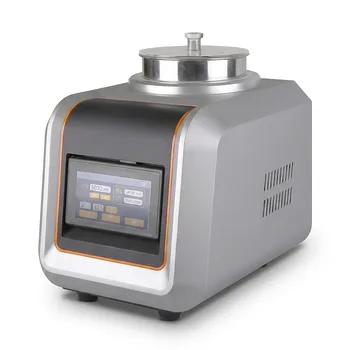
What is the primary function of an electromagnetic vibratory sieve shaker in the preparation of composite solid propellants?
Updated 4 months ago
The primary function of an electromagnetic vibratory sieve shaker in the preparation of composite solid propellants is the precise classification of ground Ammonium Perchlorate (AP) into specific particle size ranges. By utilizing high-frequency vibrations and standardized test sieves, the equipment isolates particles—typically between 63 and 125 micrometers—to ensure the raw material meets strict distribution requirements. This process is a fundamental precursor to mixing, as the size of the oxidizer particles directly dictates the propellant's physical and chemical behavior during combustion.
Core Takeaway: The electromagnetic vibratory sieve shaker acts as a critical quality control gate that ensures particle size uniformity, which is the primary driver of predictable packing density and consistent internal ballistic performance in solid rocket motors.
The Impact of Particle Size on Ballistic Performance
Controlling Combustion Surface Area
In composite propellants, the burn rate is determined by the total surface area of the oxidizer exposed to the flame front. Precise particle sizing allows engineers to calculate and control the combustion rate, ensuring the rocket produces a steady, predictable thrust profile.
Optimizing Packing Density
To achieve high energy output, solid propellants require a high loading of solid particles within the polymer binder. Using a sieve shaker to create specific size fractions allows for bimodal or trimodal distributions, where smaller particles fill the gaps between larger ones, significantly increasing the propellant's density and structural integrity.
Ensuring Chemical Homogeneity
Variations in particle size can lead to localized "hot spots" or uneven burning if the oxidizer is not distributed uniformly. By screening out oversized aggregates or fine dust, the vibratory shaker guarantees that the propellant grain remains chemically homogeneous throughout its entire volume.
The Mechanism of Electromagnetic Classification
Three-Dimensional Throwing Motion
Unlike simple mechanical shakers, electromagnetic versions generate a controlled 3D motion that combines vertical acceleration with a slight circular shift. This ensures the sample is distributed evenly across the entire mesh surface, preventing material from simply bouncing in place and increasing the probability of a particle passing through the aperture.
High-Frequency Precision
The electromagnetic drive allows for high-frequency vibrations that are essential for processing fine powders like ground AP. This energy overcomes the inter-particle friction and static cling often found in micron-scale energetic materials, facilitating a faster and more accurate separation process.
Multi-Stage Fractioning
The equipment can support a "stack" of multiple sieves, allowing a single batch of raw material to be separated into several distinct size grades simultaneously. This efficiency is vital in industrial settings where different propellant formulations may require different AP "cuts" for specific mission profiles.
Understanding the Trade-offs and Pitfalls
The Risk of Mesh Blinding
When dealing with fine powders, particles can become lodged in the sieve openings, a phenomenon known as blinding. If the shaker is not properly calibrated or if the material is slightly damp, this can lead to inaccurate grading and reduced throughput.
Material Sensitivity and Safety
Ammonium Perchlorate is an energetic material that can be sensitive to friction and static discharge. While electromagnetic shakers are generally more controlled than mechanical ones, operators must ensure the equipment is properly grounded and that the vibration intensity does not generate excessive heat or mechanical stress on the AP crystals.
Sieve Wear and Calibration
Over time, the precision mesh of the sieves can stretch or degrade, leading to "size creep" where larger particles pass through than intended. Regular calibration and inspection of the sieves are mandatory to maintain the integrity of the ballistic calculations.
How to Apply This to Your Project
Making the Right Choice for Your Goal
To achieve the best results in propellant preparation, your approach to sieving should align with your specific performance requirements.
- If your primary focus is Maximum Thrust (High Loading): Use the sieve shaker to create distinct coarse and fine fractions to optimize the "space-filling" capacity of the grain.
- If your primary focus is Burn Rate Predictability: Prioritize narrow "cuts" (e.g., exactly 63–90μm) to ensure the combustion surface area remains constant throughout the burn.
- If your primary focus is Manufacturing Efficiency: Utilize a multi-sieve stack with high-amplitude electromagnetic settings to process larger batches of raw AP without manual intervention.
By mastering the precise classification of raw materials, you ensure that the final composite propellant is not only powerful but, more importantly, predictable and safe.
Summary Table:
| Key Feature | Role in Propellant Preparation | Impact on Performance |
|---|---|---|
| Precise Classification | Isolates specific AP particle size ranges (63-125μm) | Ensures predictable combustion and thrust |
| 3D Throwing Motion | Distributes material evenly across the mesh | Maximizes separation accuracy and efficiency |
| Multi-Stage Fractioning | Creates bimodal or trimodal size distributions | Optimizes packing density and energy output |
| High-Frequency Drive | Overcomes inter-particle friction in fine powders | Guarantees chemical homogeneity of the grain |
Optimize Your Material Preparation with Our Precision Equipment
Achieving consistent ballistic performance starts with superior powder processing. We provide complete laboratory sample preparation solutions tailored for material science and energetic material research.
Our extensive product line is designed to give you total control over your raw materials:
- Powder Processing: High-performance planetary ball mills, jet mills, and cryogenic grinders for fine particle reduction.
- Precision Sieving: Electromagnetic vibratory and air-jet sieve shakers with standardized test sieves for exact size classification.
- Mixing & Homogenization: Specialized powder and defoaming mixers to ensure chemical uniformity.
- Advanced Compaction: A full spectrum of hydraulic presses, including Cold/Warm Isostatic Presses (CIP/WIP), vacuum hot presses, and XRF pellet presses for high-density grain formation.
Whether you are refining oxidizer distributions or developing new composite formulations, our equipment delivers the reliability and safety you need. Contact our technical team today to find the perfect solution for your laboratory’s specific requirements!
References
- R. Mukesh, Satish Kumar Kanhar. Studies on the Internal Ballistics of Composite Solid Rocket Propellants Incorporating Nano-Structured Catalysts. DOI: 10.4236/aast.2017.24005
Mentioned Products
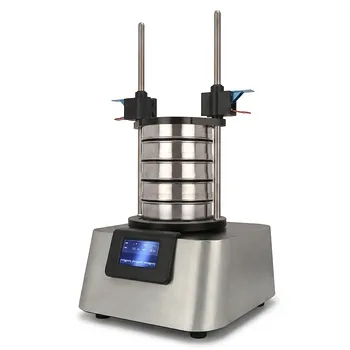
- Vibratory Sieve Shaker Electromagnetic 3D Motion Powder Particle Size Analyzer for Dry and Wet Sieving
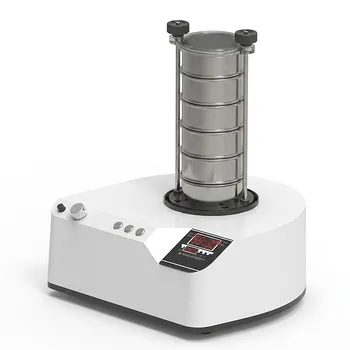
- 三维电磁微量振动筛分仪
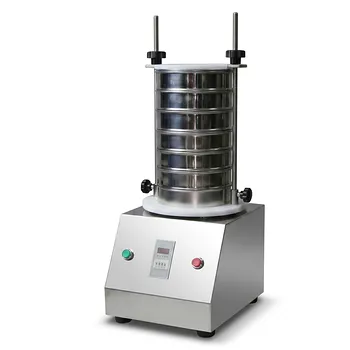
- Small Laboratory Vibratory Sieve Shaker for Powder Gradation and Particle Size Analysis
- Laboratory Vibratory Test Sieve Shaker for Precision Particle Size Analysis and Powder Grading
- Small Laboratory Vibrating Sieve Shaker for Precise Particle Size Analysis
People Also Ask
- How does a vibratory sieve shaker contribute to optimizing the performance of activated carbon? Enhance Adsorption Precision
- Why is a laboratory vibratory sieve shaker necessary for processing magnesium-based borate precursor powders? Boost Activity
- Why use a vibratory sieve shaker to verify coarse aggregate grading in rubberized concrete? Ensure Structural Integrity
- What function do vibratory sieve shakers and standard test sieves serve in the preparation of adsorbents? Key Guide
- What role does a vibratory sieve shaker play in the particle size analysis of ground corn products? Enhance QC Precision

Tech Team · PowderPreparation
Last updated on Jun 03, 2026
Related Products
Vibratory Sieve Shaker Electromagnetic 3D Motion Powder Particle Size Analyzer for Dry and Wet Sieving
三维电磁微量振动筛分仪
Small Laboratory Vibratory Sieve Shaker for Powder Gradation and Particle Size Analysis

Laboratory Vibratory Test Sieve Shaker for Precision Particle Size Analysis and Powder Grading

Small Laboratory Vibrating Sieve Shaker for Precise Particle Size Analysis
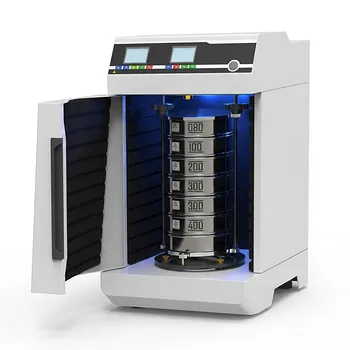
Laboratory Dry and Wet Three Dimensional Vibratory Sieve Shaker for Particle Analysis
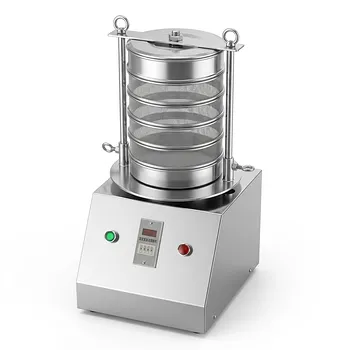
Stainless Steel Laboratory Vibratory Test Sieve Shaker

Heavy Duty Dry Three Dimensional Vibratory Sieve Shaker for Particle Separation
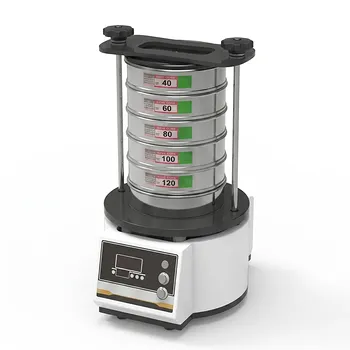
Dry Three Dimensional Vibratory Sieve Shaker
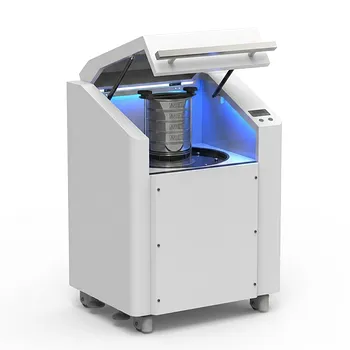
High Frequency Cabinet Type Three-Dimensional Rotary Vibrating Sieve Shaker for Dry Sieving and Particle Classification
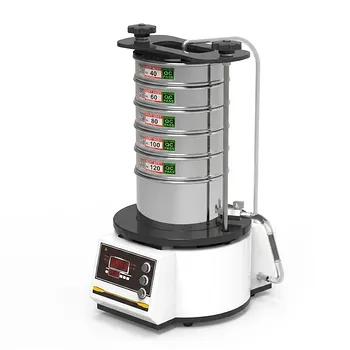
High Frequency Wet Three-Dimensional Vibrating Sieve Shaker for Dry and Wet Particle Size Analysis
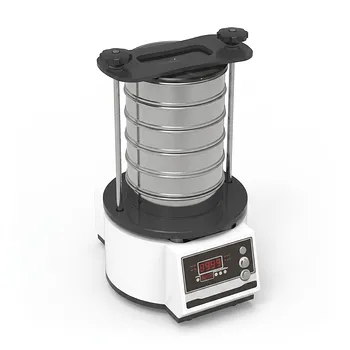
Tapping Oscillating Sieve Shaker for Dry and Wet Particle Size Analysis

Stainless Steel Rotary Vibrating Sieve High Precision Circular Vibratory Separator Industrial Powder Grading Machine Multi Layer Sifting Equipment

Three Dimensional Rotary Vibrating Sieve
Automatic Vibrating Powder Feeder for Laboratory Material Processing Precision Vibratory Hopper Feeder for Granular and Powder Material Handling Industrial Grade Vibrating Tray Feeder for Consistent Material Sample Preparation
Small Vibrating Ultrafine Grinder for Traditional Chinese Medicine
Vibratory Superfine Grinder for Ultra Fine Laboratory Powder Milling
Vibratory Disc Mill for Rapid Fine Grinding and High Throughput Sample Preparation of Hard and Brittle Materials