What is the role of a mechanical sieve shaker in granulation? Ensure Particle Uniformity & Ofloxacin Tablet Quality
Updated 4 months ago
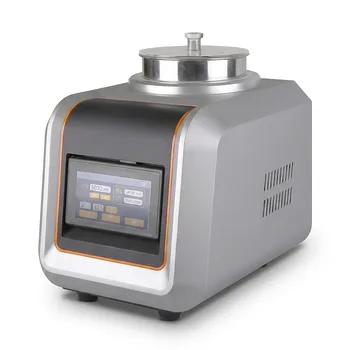
The mechanical sieve shaker is the primary tool for ensuring particle size uniformity during the post-granulation stage of Ofloxacin production. It classifies dried granules into a narrow, consistent range to optimize flow and ensure that the tablet press fills evenly. This process is critical for maintaining strict weight variation compliance and dosage accuracy in the final Ofloxacin tablets.
A mechanical sieve shaker utilizes standardized vibrations to classify dried granules, ensuring a uniform particle size distribution. This uniformity is the foundation for consistent hopper filling and is essential for meeting regulatory standards for tablet weight and quality.
Optimizing Particle Size Distribution (PSD)
Classification of Dried Granules
After the wet granulation and drying phases, Ofloxacin granules often possess irregular sizes, ranging from fine powders to large aggregates. The mechanical sieve shaker uses standardized, continuous vibration to pass these granules through a stack of sieves with specific aperture sizes.
This mechanical separation removes oversized "clumps" and excessive "fines" that could compromise the integrity of the final tablet. By isolating a narrow particle size distribution, the manufacturer ensures that the material is optimized for the high-speed environment of a tablet press.
Improving Flow and Filling Consistency
Uniform granules flow more predictably from the tablet press hopper into the die cavities. When particles are consistent in size, they achieve optimal packing density, which prevents air pockets or uneven filling during the compression stage.
If the granules are not properly classified, the resulting tablets may suffer from significant weight variation. For Ofloxacin orally disintegrating tablets, this consistency is vital to ensure that every tablet contains the exact therapeutic dose required.
Technical Advantages Over Manual Methods
Standardized Vibration and Repeatability
Unlike manual sieving, a mechanical shaker provides a consistent frequency and force that remains the same across every batch. This automation reduces human error and ensures that the gradation process is highly repeatable, which is a core requirement of Good Manufacturing Practices (GMP).
Enhanced Separation Efficiency
Mechanical shakers often employ three-dimensional vibration or tapping actions to keep the material in motion. This prevents "blinding"—where particles clog the sieve mesh—and ensures that fine particles accurately pass through to the lower collection pans within a specific timeframe.
The use of a mechanized system allows for a precise classification of granules into coarse, medium, and fine fractions. This data provides the foundational metrics needed to analyze the efficiency of the initial granulation and drying steps.
Understanding the Trade-offs
Potential for Granule Attrition
While mechanical shaking is efficient, excessive vibration intensity or prolonged shaking times can lead to granule breakage. If the granules are fragile, the mechanical force may create more "fines," which can cause "capping" or "lamination" issues during the tableting phase.
Equipment Maintenance and Calibration
To maintain accuracy, sieve stacks must be regularly inspected for mesh deformation or wear. Over time, the standardized aperture sizes can shift, leading to inaccurate grading and potential batches that fail to meet weight variation specifications.
Applying This to Your Production Process
Selecting the Right Approach
- If your primary focus is regulatory compliance: Prioritize a shaker with programmable vibration settings to ensure the highest level of repeatability and documented PSD data.
- If your primary focus is production throughput: Utilize a high-precision electromagnetic shaker that offers continuous operation and anti-blinding technology to minimize downtime.
- If your primary focus is granule integrity: Opt for a shaker with adjustable amplitude to provide the gentlest possible motion that still achieves effective classification.
Precise mechanical sieving is the bridge between raw granulation and a high-quality, compliant Ofloxacin tablet.
Summary Table:
| Key Function | Technical Benefit | Impact on Quality |
|---|---|---|
| Granule Classification | Isolates narrow particle size distribution (PSD) | Ensures consistent therapeutic dosage |
| Flow Optimization | Prevents air pockets and uneven die filling | Minimizes tablet weight variation |
| Standardized Vibration | High repeatability and automated processing | Maintains strict GMP compliance |
| Blinding Prevention | Continuous 3D motion/tapping action | Increases separation efficiency and throughput |
Elevate Your Tablet Production Precision
Achieving consistent granule quality is vital for pharmaceutical and material science excellence. [Company Name] provides complete laboratory sample preparation solutions tailored for powder processing and compaction.
Our extensive range includes vibratory and air-jet sieve shakers with precision test sieves, ensuring your Ofloxacin granules or material powders meet exact specifications. We also offer specialized equipment to complete your workflow:
- Milling & Grinding: Planetary ball mills, jet mills, and cryogenic grinders.
- Mixing: High-efficiency powder and defoaming mixers.
- Compaction: A full spectrum of hydraulic presses, including Cold/Warm Isostatic Presses (CIP/WIP), hot presses, and XRF pellet presses.
Optimize your particle size distribution and tablet integrity today. Contact our technical experts for a customized solution.
References
- Badrinath Pralhadrao Mohite, Jasmine G. Avari. Development and evaluation of ofloxacin orally disintegrating tablets. DOI: 10.1590/s1984-82502012000200005
Mentioned Products
- 三维电磁微量振动筛分仪
- Vibratory Sieve Shaker Electromagnetic 3D Motion Powder Particle Size Analyzer for Dry and Wet Sieving
- Laboratory Dry and Wet Three Dimensional Vibratory Sieve Shaker for Particle Analysis
- Small Laboratory Vibrating Sieve Shaker for Precise Particle Size Analysis
- Stainless Steel Laboratory Vibratory Test Sieve Shaker
People Also Ask
- Why is a standard sieve shaker essential for CBA powders in geopolymers? Enhance Reactivity & Material Strength
- Why are standard metal sieves and sieve shakers necessary for 5-aminotetrazole mixtures? Optimize Thermal & Kinetic Data
- Why Use Sieve Shakers for Gangue Slurry Experiments? Optimize Particle Grading for Superior Results
- What are the advantages of mechanical vs. manual sieving for road dust analysis? Achieve Superior Data Standardization.
- How do high-precision sieve shakers and powder mixers facilitate material circularity in metal PBF? Optimize AM Cycles

Tech Team · PowderPreparation
Last updated on Jun 03, 2026
Related Products
三维电磁微量振动筛分仪
Vibratory Sieve Shaker Electromagnetic 3D Motion Powder Particle Size Analyzer for Dry and Wet Sieving
Laboratory Dry and Wet Three Dimensional Vibratory Sieve Shaker for Particle Analysis
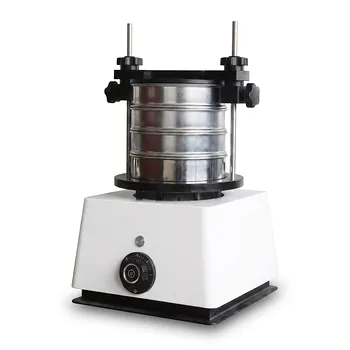
Small Laboratory Vibrating Sieve Shaker for Precise Particle Size Analysis
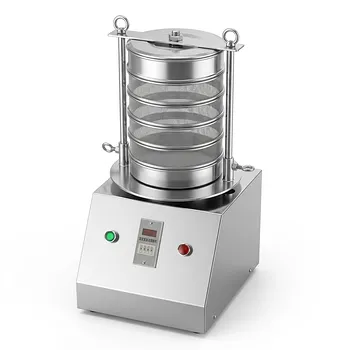
Stainless Steel Laboratory Vibratory Test Sieve Shaker
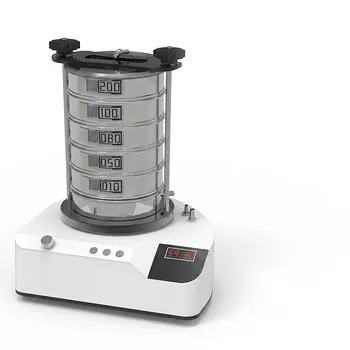
Heavy Duty Dry Three Dimensional Vibratory Sieve Shaker for Particle Separation
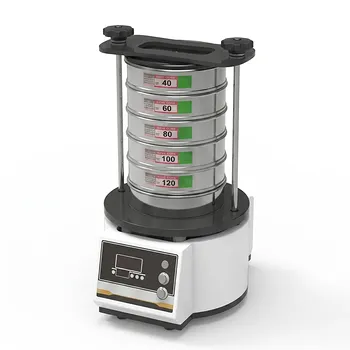
Dry Three Dimensional Vibratory Sieve Shaker
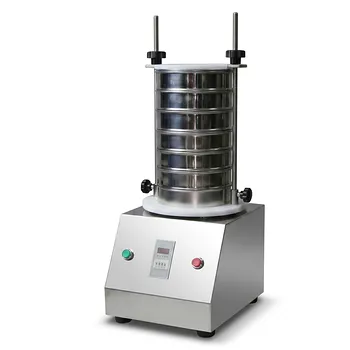
Small Laboratory Vibratory Sieve Shaker for Powder Gradation and Particle Size Analysis
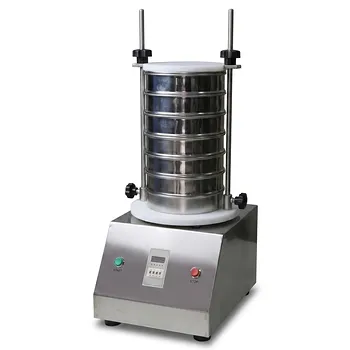
Laboratory Vibratory Test Sieve Shaker for Precision Particle Size Analysis and Powder Grading
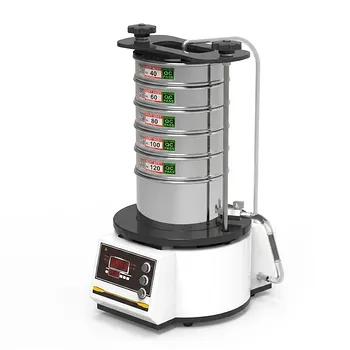
High Frequency Wet Three-Dimensional Vibrating Sieve Shaker for Dry and Wet Particle Size Analysis
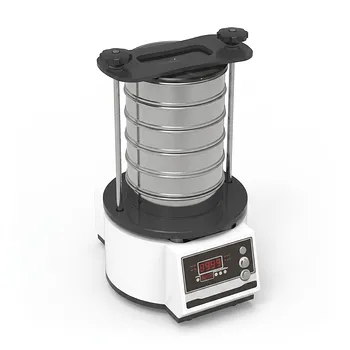
Tapping Oscillating Sieve Shaker for Dry and Wet Particle Size Analysis
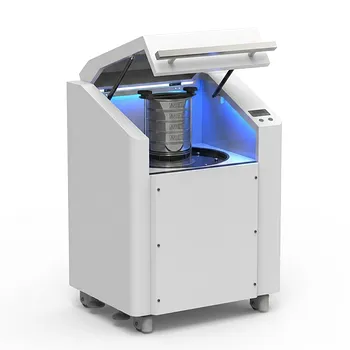
High Frequency Cabinet Type Three-Dimensional Rotary Vibrating Sieve Shaker for Dry Sieving and Particle Classification
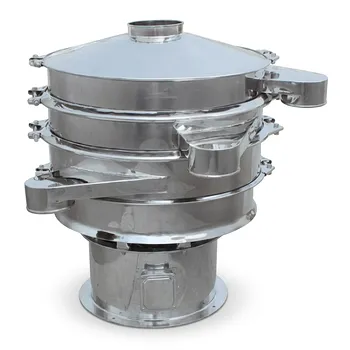
Stainless Steel Rotary Vibrating Sieve High Precision Circular Vibratory Separator Industrial Powder Grading Machine Multi Layer Sifting Equipment
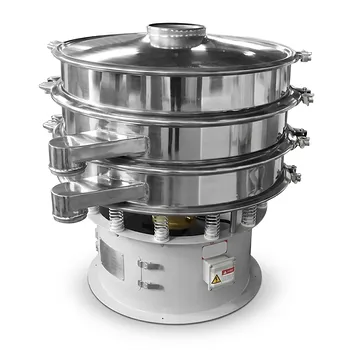
Three Dimensional Rotary Vibrating Sieve