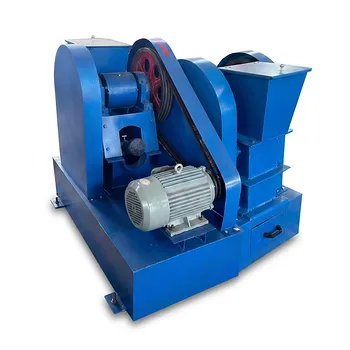
What is the role of a laboratory hydraulic press in aluminum briquetting? Maximize Material Density and Yield
Updated 5 months ago
The laboratory hydraulic press is the primary instrument used to compact loose aluminum raw materials into dense, manageable blocks known as briquettes. This process utilizes high-precision axial pressure to induce plastic deformation, transforming sliced ingots or powders into "green compacts" with a significantly higher bulk density. By consolidating the material, the press optimizes crucible space and creates a physical barrier against rapid oxidation during subsequent melting.
Briquetting serves as a vital pre-processing step that maximizes furnace throughput and protects material purity. By reducing the surface-area-to-volume ratio of the aluminum, a laboratory hydraulic press ensures more efficient thermal processing and higher metal yield.
Enhancing Production Efficiency and Throughput
Increasing Bulk Density
The primary role of the hydraulic press is to eliminate large voids between aluminum particles or slices through mechanical force. By applying high pressure, the press forces the raw material to occupy the minimum possible volume, effectively increasing its bulk density.
Optimizing Crucible Volume
Loose aluminum slices or powders are bulky and inefficient to melt in their raw state. Briquetting allows a significantly larger mass of aluminum to be loaded into a single crucible melt, which directly improves the production efficiency per cycle.
Preserving Material Integrity and Yield
Mitigating Oxidation Loss
Aluminum is highly susceptible to oxidation when exposed to air at high temperatures. Briquetting reduces the total exposed surface area of the particles; with less surface area available for chemical reaction, the amount of material lost to "dross" or oxide scale during melting is drastically minimized.
Establishing Mechanical Interlocking
Under the high-pressure environment of the press—often reaching hundreds of Megapascals—aluminum particles undergo plastic deformation. This causes the particles to rearrange and interlace, creating a tight mechanical interlocking structure that provides the briquette with the radial compressive strength needed for handling.
The Role of Precise Pressure Control
Achieving Dimensional Stability
A laboratory hydraulic press provides continuous and controllable pressure, which is essential for creating briquettes with consistent geometric shapes. This consistency ensures that the green bodies remain stable and do not crumble during transport or when placed into high-temperature environments.
Ensuring Consistency in Experimental Samples
In a research setting, the ability to apply exact pressures (such as 300 kg/cm² or specific MPa ratings) is vital for reducing experimental error. Precise control ensures that every sample has a uniform green density, which is a critical variable when testing material properties or atomic diffusion efficiency.
Understanding the Trade-offs and Pitfalls
The Risk of Entrapped Contaminants
While briquetting increases density, it can also trap surface contaminants, oils, or moisture within the compact. If these are not removed or accounted for, they can lead to porosity issues or internal defects during the final melting or sintering phase.
Pressure Limits and "Springback"
Every aluminum alloy has a limit to its plastic deformation; applying pressure beyond the material's limit can cause internal stress. Upon release from the die, the material may experience "springback," where it expands slightly, potentially leading to micro-cracks that compromise the briquette's structural integrity.
Making the Right Choice for Your Goal
To maximize the utility of a laboratory hydraulic press in your briquetting workflow, consider your primary objective:
- If your primary focus is Maximizing Melt Yield: Prioritize a press that can achieve high enough pressures to minimize surface area, as this is the most effective way to reduce oxidation loss.
- If your primary focus is Material Research and Testing: Invest in a press with high-precision digital pressure gauges to ensure consistent green density across all test samples.
- If your primary focus is Production Throughput: Select a high-tonnage press and specialized multi-cavity dies to produce multiple high-density briquettes in a single cycle.
By mastering the briquetting process, you transform volatile raw materials into a stable, high-density format ready for efficient industrial processing.
Summary Table:
| Key Function | Role in Briquetting Process | Primary Benefit |
|---|---|---|
| High-Pressure Compaction | Eliminates voids in loose slices or powders | Maximizes bulk density and crucible efficiency |
| Surface Area Reduction | Creates a dense physical barrier | Mitigates oxidation loss and protects material purity |
| Plastic Deformation | Induces mechanical interlocking | Ensures dimensional stability and structural integrity |
| Precision Control | Maintains exact pressure (MPa/kg) | Guarantees consistent green density for research |
Optimize Your Material Preparation with KINTEK
Elevate your laboratory's efficiency and material yield with KINTEK’s precision-engineered solutions. Providing complete laboratory sample preparation solutions for material science, we specialize in high-performance powder processing and compaction equipment designed to meet the most rigorous standards.
Our extensive product line includes:
- Advanced Hydraulic Presses: A full spectrum including Cold/Warm Isostatic Presses (CIP/WIP), standard lab presses, XRF pellet presses, hot presses, and vacuum hot presses.
- Size Reduction & Milling: Precision crushers (jaw/roll), liquid nitrogen cryogenic grinders, and diverse mills (planetary ball, jet, sand/bead, disc, rotor).
- Analysis & Mixing: Sieve shakers (vibratory/air-jet) with various meshes, plus specialized powder and defoaming mixers.
Whether you are maximizing melt yield or conducting high-precision material research, our specialists are ready to provide the tools you need for superior results. Contact us today to find your perfect solution!
References
- O. I. Sekunowo, D.V. Obasa. Effects of Iron-Millscale Addition on the Electrical and Thermal Properties of Aluminum-Nickel Alloy. DOI: 10.5281/zenodo.5805154
Mentioned Products
- 6-Ton Small Single-Punch Tablet Press — Laboratory Powder & Granule Tableting Equipment / Tablet Forming Machine
- 5 Ton Single Punch Tablet Press Laboratory Small Batch Production
- Manual Tablet Press with Dual Scale Pressure Gauge for Pharmaceutical Food Chemical Laboratory Sample Preparation
- 6 Ton Variable Frequency Single Punch Tablet Press
- High Shear Laboratory Emulsifier for Mixing and Homogenization
People Also Ask
- What is the function of a laboratory press in Cr-Ti alloy evaluation? Quantify Fracture Stress & Strength
- What is the function of a laboratory press in assessing the hydrophobic performance of modified vermiculite fillers?
- What is the core function of a laboratory press in the forming of ceramic filter element green bodies? Maximize Density.
- What is the function of a laboratory press in the preparation of ceramic feed rods? Master Density and Precision
- Why is vacuum sealing and flexible packaging necessary for Aluminum Titanate powders during CIP? Ensure Peak Density

Tech Team · PowderPreparation
Last updated on May 14, 2026
Related Products
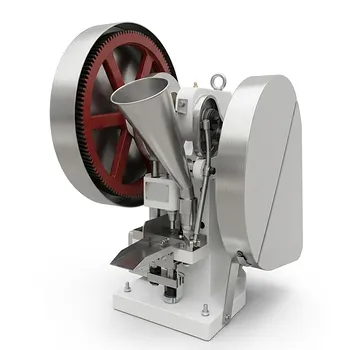
6-Ton Small Single-Punch Tablet Press — Laboratory Powder & Granule Tableting Equipment / Tablet Forming Machine
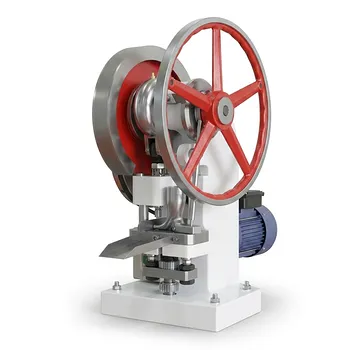
5 Ton Single Punch Tablet Press Laboratory Small Batch Production
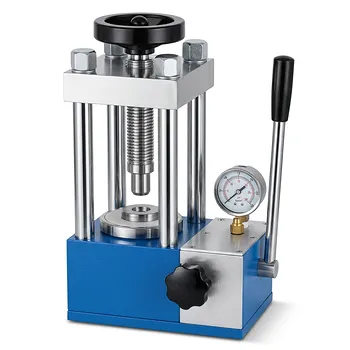
Manual Tablet Press with Dual Scale Pressure Gauge for Pharmaceutical Food Chemical Laboratory Sample Preparation
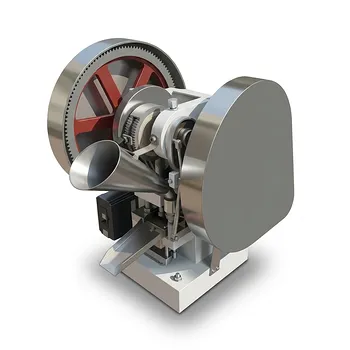
6 Ton Variable Frequency Single Punch Tablet Press
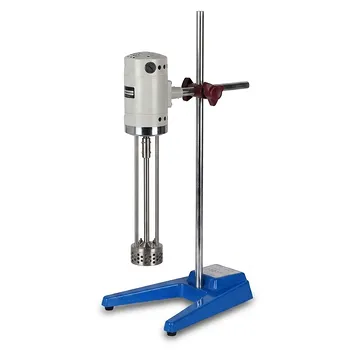
High Shear Laboratory Emulsifier for Mixing and Homogenization
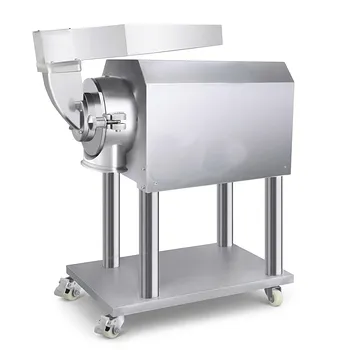
High Speed Small Laboratory Crusher for Dry Material Sample Preparation
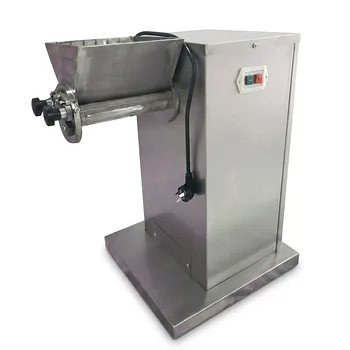
Small Laboratory Oscillating Granulator for Wet and Dry Granulation Processing
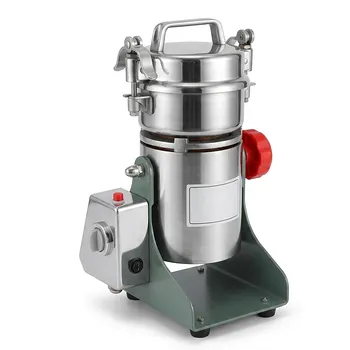
High Speed Swing Type Laboratory Pulverizer for Fine Powder Grinding and Sample Preparation