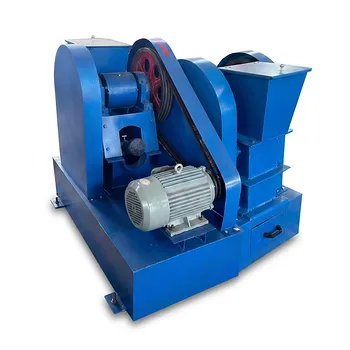
What is the role of a laboratory high-pressure hydraulic press and stainless steel molds in GO densification?
Updated 5 months ago
The role of a laboratory high-pressure hydraulic press and stainless steel molds is to provide the uniaxial force and precise containment necessary to collapse the loose, porous structure of Graphene Oxide (GO) into a dense, ordered solid. By applying pressures often exceeding several hundred megapascals, these tools force individual GO sheets to stack tightly, expel trapped air and moisture, and ensure the resulting bulk material maintains a consistent shape and dimensional stability.
To achieve high-density Graphene Oxide solids, mechanical compaction is essential for transforming disordered flakes into a coherent bulk material. This process relies on high-pressure hydraulic systems to drive particle rearrangement and precision molds to maintain structural integrity and shape regularity.
The Mechanics of Pressure-Driven Densification
Uniaxial Force and Sheet Alignment
The primary function of the laboratory hydraulic press is to apply uniaxial pressure, which forces Graphene Oxide platelets to rearrange from a disordered state into a parallel alignment. As the sheets align, the internal volume of the material decreases significantly, leading to a massive increase in volumetric density.
Expulsion of Trapped Moisture and Air
Graphene Oxide structures often contain residual moisture and air pockets that prevent high-density formation. The high-pressure environment—frequently reaching 89 MPa to 250 MPa—effectively squeezes out these fluids, reducing internal porosity and preventing defects in the final solid.
Mechanical Interlocking and Particle Flow
Under extreme loads, GO particles undergo plastic flow and mechanical interlocking. This increases the contact stress between individual layers, allowing them to bind tightly and form a "green body" or a preformed tablet that is structurally sound enough for further processing or testing.
The Strategic Role of Stainless Steel Molds
Precision and Dimensional Stability
High-precision stainless steel molds are used to contain the material during compression, ensuring that the force is distributed evenly across the GO mass. This containment is critical for achieving shape regularity and ensuring the final product meets exact dimensional specifications, such as specific diameters or heights.
Resisting High Mechanical Loads
Densifying GO requires pressures that would deform or break standard containers. Stainless steel molds provide the necessary material hardness and fatigue resistance to withstand hundreds of megapascals without warping, ensuring the pressure is focused entirely on the densification of the GO powder.
Creating a Physical Foundation for Sintering
The mold facilitates the creation of a dense "green body," which serves as the physical foundation for subsequent high-temperature sintering or chemical reduction. Without the precise compaction provided by the mold, the material would lack the structural integrity required to survive thermal processing without cracking or losing its shape.
Understanding the Trade-offs and Pitfalls
Pressure Limits and Material Deformation
While higher pressure generally increases density, exceeding the material's limits can lead to internal micro-cracking or "capping" (where the top of the pellet delaminates). Finding the optimal pressure—balancing maximum densification against structural failure—is a critical technical challenge.
Mold Friction and Ejection Issues
Friction between the GO powder and the stainless steel mold walls can lead to uneven density distributions within the solid. If the mold surfaces are not sufficiently polished or lubricated, the final solid may become stuck or sustain surface damage during the ejection process.
Moisture Management
If moisture is expelled too rapidly or trapped within a poorly vented mold, it can create internal pressure pockets. This can lead to the "explosion" of the pellet once the external hydraulic pressure is released, ruining the structural integrity of the sample.
Applying Compaction Techniques to Your Project
Recommendations Based on Research Goals
- If your primary focus is maximizing electrical conductivity: Use high axial loads (above 135 MPa) to ensure maximum parallel alignment of GO platelets, which facilitates better electron transport.
- If your primary focus is structural hardness or composite reinforcement: Prioritize a hydraulic press that can maintain stable, high-energy pressure to maximize mechanical interlocking and eliminate all residual air.
- If your primary focus is producing consistent test samples: Invest in precision-machined stainless steel molds to ensure every sample has identical dimensions and density for repeatable experimental data.
Effective densification of Graphene Oxide requires the careful synchronization of high-magnitude uniaxial pressure and rigid, precision containment to transform loose flakes into high-performance bulk solids.
Summary Table:
| Component | Role in GO Densification | Key Benefit |
|---|---|---|
| Hydraulic Press | Applies high uniaxial force (89–250 MPa) | Aligns GO sheets & expels trapped air |
| Stainless Steel Mold | Provides rigid, high-load containment | Ensures dimensional stability & shape regularity |
| Uniaxial Pressure | Drives particle rearrangement | Increases volumetric density & conductivity |
| Precision Tooling | Resists mechanical deformation | Creates a solid "green body" for sintering |
Optimize Your Material Research with Expert Compaction Solutions
At [Your Brand Name], we provide complete laboratory sample preparation solutions for material science, specializing in precision powder processing and high-performance compaction equipment. Whether you are densifying Graphene Oxide or developing advanced ceramics, our tools are engineered to deliver the structural integrity and repeatable results your research demands.
Our extensive product range includes:
- Hydraulic Presses: A full spectrum featuring standard lab presses, XRF pellet presses, hot presses, and vacuum hot presses.
- Isostatic Pressing: Advanced Cold/Warm Isostatic Presses (CIP/WIP) for uniform density.
- Milling & Grinding: Planetary ball mills, jet mills, liquid nitrogen cryogenic grinders, and more.
- Sample Preparation: Sieve shakers (vibratory/air-jet), powder mixers, and defoaming mixers.
Achieve superior densification and material performance today. Contact our technical experts to find the ideal equipment for your laboratory and experience the precision of our powder processing solutions!
References
- Che-Ning Yeh, Jiaxing Huang. Binder-free graphene oxide doughs. DOI: 10.1038/s41467-019-08389-6
Mentioned Products
- 6-Ton Small Single-Punch Tablet Press — Laboratory Powder & Granule Tableting Equipment / Tablet Forming Machine
- 5 Ton Single Punch Tablet Press Laboratory Small Batch Production
- Manual Tablet Press with Dual Scale Pressure Gauge for Pharmaceutical Food Chemical Laboratory Sample Preparation
- 6 Ton Variable Frequency Single Punch Tablet Press
- High Shear Laboratory Emulsifier for Mixing and Homogenization
People Also Ask
- What is the function of a laboratory press in Cr-Ti alloy evaluation? Quantify Fracture Stress & Strength
- What is the function of a laboratory press in assessing the hydrophobic performance of modified vermiculite fillers?
- What is the core function of a laboratory press in the forming of ceramic filter element green bodies? Maximize Density.
- What is the function of a laboratory press in the preparation of ceramic feed rods? Master Density and Precision
- Why is vacuum sealing and flexible packaging necessary for Aluminum Titanate powders during CIP? Ensure Peak Density

Tech Team · PowderPreparation
Last updated on May 14, 2026
Related Products
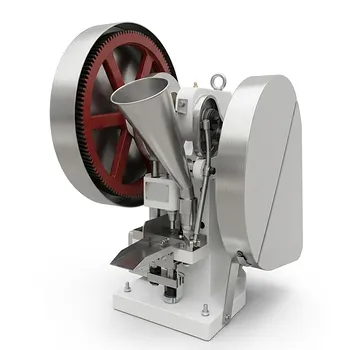
6-Ton Small Single-Punch Tablet Press — Laboratory Powder & Granule Tableting Equipment / Tablet Forming Machine
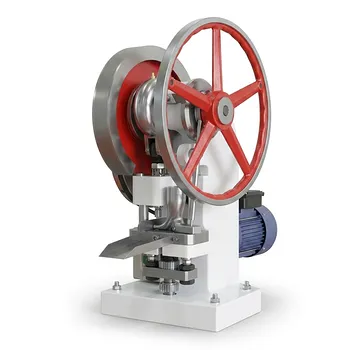
5 Ton Single Punch Tablet Press Laboratory Small Batch Production
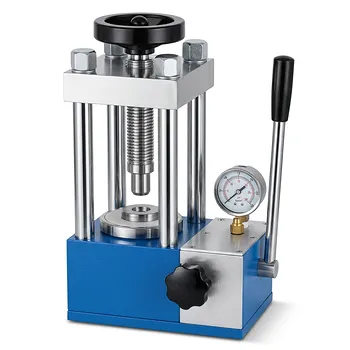
Manual Tablet Press with Dual Scale Pressure Gauge for Pharmaceutical Food Chemical Laboratory Sample Preparation
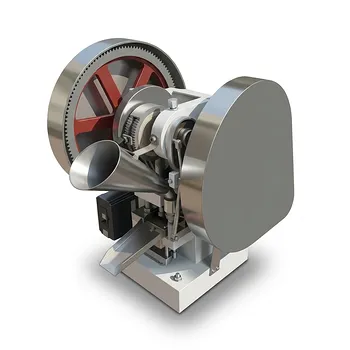
6 Ton Variable Frequency Single Punch Tablet Press
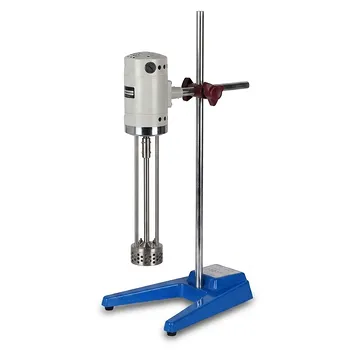
High Shear Laboratory Emulsifier for Mixing and Homogenization
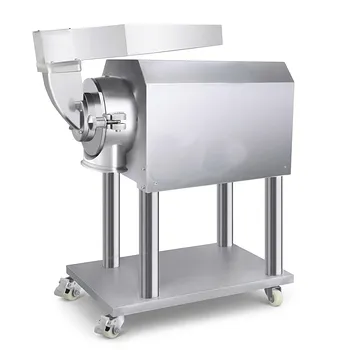
High Speed Small Laboratory Crusher for Dry Material Sample Preparation
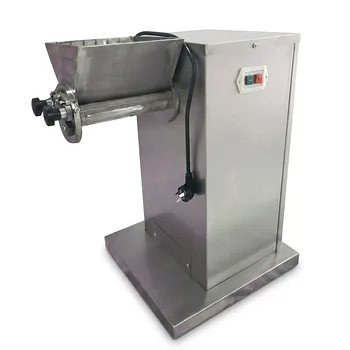
Small Laboratory Oscillating Granulator for Wet and Dry Granulation Processing
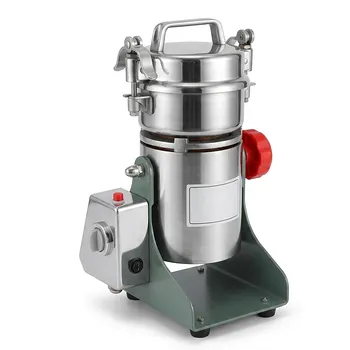
High Speed Swing Type Laboratory Pulverizer for Fine Powder Grinding and Sample Preparation