What is the role of a laboratory ball mill in determining BWI? Quantifying Ore Grindability for Industrial Mill Sizing
Updated 4 months ago
The laboratory ball mill is the standardized engine used to quantify ore grindability. It simulates industrial-scale dry grinding by applying controlled mechanical impact and attrition to an ore sample under strictly defined conditions. Its primary role is to establish a stable circulating load through multiple grinding cycles, allowing for the measurement of the Bond Ball Mill Work Index (BWI)—the industry standard for sizing industrial mills and forecasting energy requirements.
The laboratory ball mill serves as a calibrated proxy for industrial energy consumption, translating a material's resistance to breakage into a quantifiable "Work Index." This index represents the kilowatt-hours per tonne required to reduce an ore from theoretically infinite size to 100 microns.
Simulating the Industrial Comminution Environment
Standardized Mechanical Action
The laboratory ball mill, typically measuring 300 mm x 300 mm, provides a controlled environment where a specific charge of steel balls pulverizes the ore. It uses a combination of impact and attrition forces to mimic the power consumption mechanisms found in large-scale industrial circuits.
Consistency Through Calibration
By operating at a standardized rotational speed and using a specific distribution of grinding media, the mill ensures that results are reproducible across different laboratories. This standardization is what allows the Bond Work Index to remain a reliable benchmark for global mining projects.
Transitioning from Batch to Continuous Logic
While the lab mill operates in batches, the testing procedure involves multiple grinding cycles to simulate a continuous industrial circuit. This process continues until a constant circulating load (typically 250%) is established, representing the equilibrium found in a closed-circuit plant.
Quantifying Ore Resistance and Energy Needs
Measuring Net Grams per Revolution ($G_{bp}$)
One of the most critical roles of the mill is determining the grindability ($G_{bp}$), which is the mass of undersize product produced per revolution of the mill. This value is a direct measurement of how much "work" is required to break the ore to the target fineness.
The Foundation of the Bond Formula
The data generated by the laboratory mill—specifically the $G_{bp}$ and the particle size distribution of the feed and product—is plugged into the Bond Equation. This calculation provides the technical parameters necessary for engineers to select the motor power and dimensions for full-scale grinding equipment.
Comparative Grindability Analysis
In methods like the Berry and Bruce comparison, the laboratory mill provides an identical environment for both a reference mineral and a test ore. By comparing how each material responds to the same mechanical energy, researchers can determine the relative energy requirements of complex or new ore bodies.
Understanding the Trade-offs and Limitations
Lab-to-Plant Scalage Gaps
While the laboratory ball mill is the gold standard, it operates under idealized dry grinding conditions. Real-world industrial mills often operate wet and are influenced by factors like slurry density and liner wear, which the standard Bond test does not perfectly replicate.
Sensitivity to Sample Preparation
The accuracy of the BWI is highly dependent on the integrity of the feed sample. If the ore provided to the laboratory mill is not representative of the actual mine block, the resulting Work Index will lead to significantly oversized or undersized industrial equipment.
Limitations of Static Energy Assumptions
The Bond Work Index assumes a linear relationship between size reduction and energy. However, for extremely fine grinding or highly heterogeneous ores, the laboratory mill may not capture the non-linear energy surges required to achieve liberation.
How to Apply These Findings to Your Project
Making the Right Choice for Your Goal
To ensure the laboratory ball mill data provides the highest value for your operation, consider your primary objective:
- If your primary focus is Equipment Sizing: Ensure the laboratory mill uses a standardized steel ball charge and reaches a stable 250% circulating load to ensure the Bond formula remains valid.
- If your primary focus is Energy Optimization: Utilize the Berry and Bruce comparative method within the lab mill to benchmark your ore against a known reference mineral like granite or silica sand.
- If your primary focus is Ore Variability Mapping: Conduct "short-form" Bond tests across multiple samples to identify hard and soft zones within the deposit before finalizing plant design.
The laboratory ball mill is not merely a grinder, but a precision instrument that translates mineral hardness into the economic language of power and throughput.
Summary Table:
| Key Feature | Role in BWI Determination | Industrial Significance |
|---|---|---|
| Standardized Dimensions | Uses 300mm x 300mm mill to ensure global reproducibility. | Provides a calibrated benchmark for all mining projects. |
| Circulating Load | Simulates continuous circuits by reaching a 250% equilibrium. | Predicts how ore behaves in a closed-circuit plant. |
| Grindability ($G_{bp}$) | Measures net grams of undersize produced per mill revolution. | Quantifies the "work" required for specific size reduction. |
| Energy Calculation | Provides data ($G_{bp}$, feed/product size) for Bond Formula. | Determines motor power and sizing for full-scale mills. |
Optimize Your Material Preparation with Precision Equipment
Accurate Bond Work Index (BWI) testing starts with superior sample preparation. At [Brand Name], we specialize in providing complete laboratory solutions for material science, ensuring your ore analysis is precise and reproducible.
Whether you are characterizing ore bodies or optimizing powder processing, our extensive range of equipment supports every stage of your workflow:
- Size Reduction: Heavy-duty jaw and roll crushers for primary preparation, followed by advanced mills (planetary ball, jet, disc, and rotor mills) and liquid nitrogen cryogenic grinders for fine processing.
- Classification & Mixing: Vibratory and air-jet sieve shakers for precise particle sizing, along with high-efficiency powder and defoaming mixers.
- Compaction & Pelletizing: A full spectrum of hydraulic presses, including Cold/Warm Isostatic Presses (CIP/WIP), standard lab presses, and XRF pellet presses for analytical samples.
Ready to enhance your lab's efficiency and accuracy? Contact our technical experts today to find the perfect equipment solution for your material processing needs.
References
- Nnaemeka Stanislaus Nzeh, A.P.I. Popoola. Grindability characterization and work index determination of alluvial ferro-columbite deposits for efficient mineral processing. DOI: 10.37190/ppmp/170297
Mentioned Products
- 360° Rotating Omnidirectional Laboratory Planetary Ball Mill for Homogeneous Ultra-Fine Grinding and Mixing
- Vertical Semi Circular Planetary Ball Mill for Laboratory Precision Grinding
- High Energy Laboratory Planetary Ball Mill for Nano Grinding and Material Science Sample Preparation
- Laboratory Nano High Energy Ball Mill Ultrafine Grinding Mechanical Alloying
- Vertical Square Planetary Ball Mill for Laboratory Sample Preparation and Nanoscale Grinding
People Also Ask
- What role does an omni-directional planetary ball mill play in brass/cobalt antimonide pretreatment? Achieve Nano-Scale Homogeneity.
- What is the function of an omni-directional planetary ball mill? Achieve Streak-Free Glass Homogenization
- Why is an intermittent grinding process required for perovskites in a planetary ball mill? Ensure Stability & Purity
- Why is a planetary ball mill essential for SiBCN-rGO wet-spinning? Achieve Superior Dispersion and Spinnability
- What role does a planetary ball mill play in the synthesis of Li6PS5Cl (LPSCl)? Unlock High Ionic Conductivity

Tech Team · PowderPreparation
Last updated on Jun 03, 2026
Related Products
360° Rotating Omnidirectional Laboratory Planetary Ball Mill for Homogeneous Ultra-Fine Grinding and Mixing
Vertical Semi Circular Planetary Ball Mill for Laboratory Precision Grinding
High Energy Laboratory Planetary Ball Mill for Nano Grinding and Material Science Sample Preparation
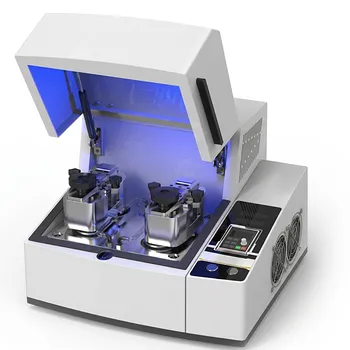
Laboratory Nano High Energy Ball Mill Ultrafine Grinding Mechanical Alloying
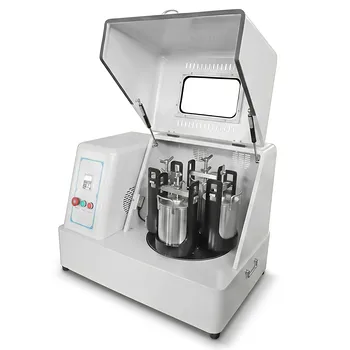
Vertical Square Planetary Ball Mill for Laboratory Sample Preparation and Nanoscale Grinding
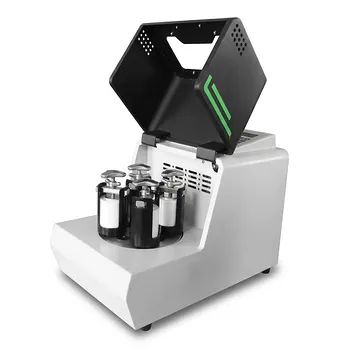
Miniature Planetary Ball Mill with Vacuum Grinding and High Efficiency for Laboratory Sample Preparation
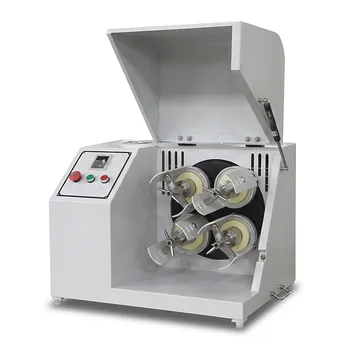
Horizontal Light Duty Planetary Ball Mill for Laboratory Sample Preparation
Nano High Energy Vibratory Ball Mill for Laboratory Sample Preparation
Single Tank High Energy Vibratory Ball Mill for Laboratory Grinding and Mixing
8L Planetary Ball Mill for Laboratory Grinding and Sample Preparation
Nanoscale High-Energy Vibratory Ball Mill for Laboratory Sample Preparation, Mechanochemistry, and Mechanical Alloying
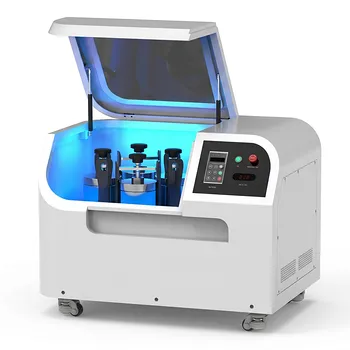
Planetary Ball Mill 12L
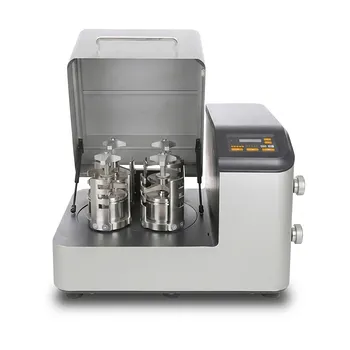
High Energy Planetary Ball Mill for Nano Scale Grinding and Colloidal Mixing in Material Science Research
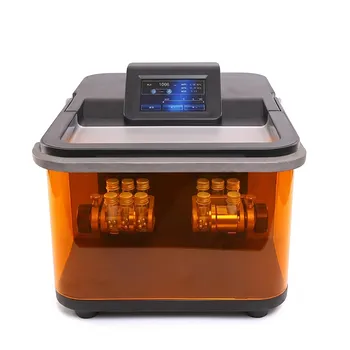
High Throughput Micro Ball Mill for Cryogenic Grinding and Laboratory Cell Disruption
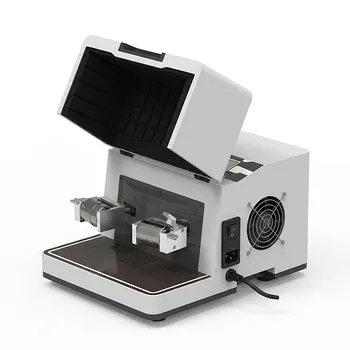
High Energy Hybrid Vibratory Ball Mill for Grinding Mixing and Cell Disruption
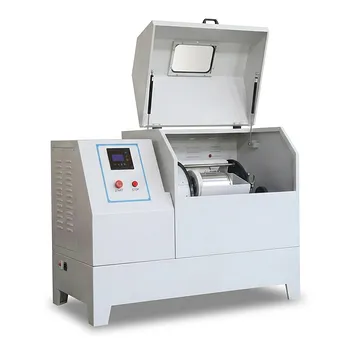
Heavy Duty Horizontal Planetary Ball Mill for Efficient Industrial Grinding and Sample Preparation
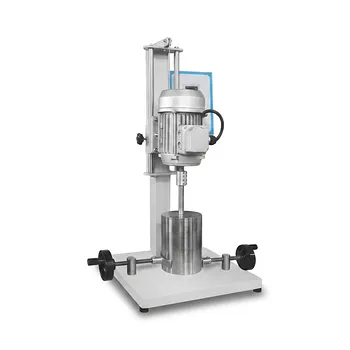
Laboratory Basket Sand Mill for Wet Grinding and Dispersion of Viscous Slurries
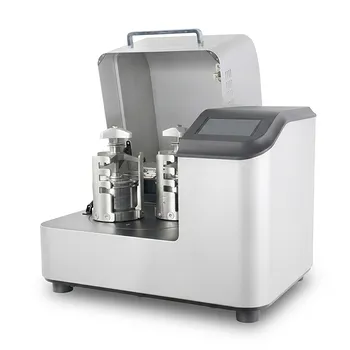
High Energy Planetary Ball Mill for Nano Scale Grinding and Mechanical Alloying
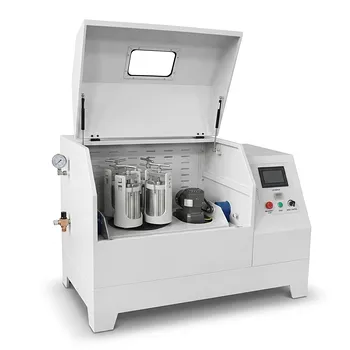
Vertical Production Planetary Ball Mill for High Throughput Powder Processing