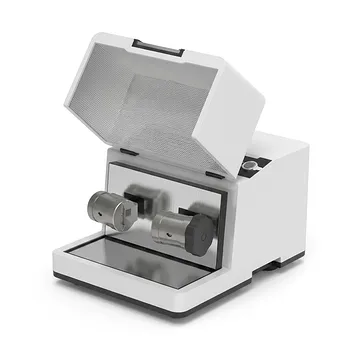
What is the role of a high-energy stirred mill (attrition mill) in the pretreatment of SiAlON composite powders?
Updated 5 months ago
The high-energy stirred mill is the foundational tool for optimizing SiAlON powder reactivity. In the pretreatment phase, this equipment applies intense shear and impact forces to raw materials—typically silicon nitride, aluminum nitride, and various oxide additives—to achieve molecular-level uniform mixing. By refining particle size and increasing surface activity, the mill ensures that subsequent sintering reactions proceed efficiently to create a dense, high-performance ceramic composite.
The primary role of a high-energy stirred mill is to transform heterogeneous raw powders into a highly reactive, homogeneous precursor. This mechanical activation is the critical prerequisite for achieving uniform densification and a consistent microstructure during the final sintering stage.
Mechanisms of High-Energy Pretreatment
Intense Shear and Impact Forces
The mill utilizes high-speed rotation to drive grinding media, creating a chaotic environment of high-frequency impacts. These forces are significantly more powerful than traditional ball milling, allowing for the rapid breakdown of tough ceramic particles.
Molecular-Level Homogeneity
For SiAlON composites to form correctly, the silicon, aluminum, oxygen, and nitrogen components must be in intimate contact. The stirred mill ensures deep mixing at the micron level, preventing the localized phase imbalances that lead to material defects.
Increasing Surface Activity
The mechanical energy transferred during milling does more than just break particles; it increases the surface energy of the powder. This heightened state of activity lowers the energy barrier for subsequent chemical reactions during the sintering process.
Improving Powder Characteristics
De-agglomeration and Refinement
Raw ceramic powders often form clusters or "agglomerates" that resist uniform processing. The stirred mill effectively breaks down these agglomerates, reducing the primary particle size to a range typically between 1 and 3 micrometers.
Particle Size Uniformity
By continuously circulating the slurry—often using deionized water as a medium—the mill ensures a narrow particle size distribution. This uniformity is essential for achieving a high green density during the granulation and pressing stages.
Interfacial Bonding Strength
By refining the reinforcement phases, the mill increases the specific surface area available for bonding. This ensures that the matrix and reinforcement phases achieve a high level of interfacial integrity, which is vital for the composite's mechanical strength.
Understanding the Trade-offs
Media Contamination
The intense energy required for refinement inevitably leads to wear on the grinding balls and mill liner. If not carefully managed, debris from the milling media can introduce impurities into the SiAlON powder, potentially degrading its thermal or mechanical properties.
Thermal Management
High-energy milling generates significant heat through friction and impact. Without proper cooling, this temperature rise can cause unwanted oxidation or phase changes in sensitive powders like aluminum nitride.
Processing Time vs. Reactivity
While longer milling times increase surface activity and refinement, there is a point of diminishing returns. Over-milling can lead to excessive particle "cold welding" or such high surface energy that the powder becomes difficult to handle due to extreme atmospheric sensitivity.
How to Apply This to Your Project
Recommendation Checklist
- If your primary focus is Maximum Densification: Prioritize longer milling cycles to achieve sub-micron particle sizes and maximize the surface energy required for high-density sintering.
- If your primary focus is Material Purity: Utilize high-purity alumina or silicon nitride grinding media and liners to match the composite chemistry and minimize the impact of wear-related contamination.
- If your primary focus is Process Scalability: Use a wet-milling approach with deionized water to ensure consistent slurry flow and easier transition to industrial spray-drying or granulation stages.
Ultimately, the high-energy stirred mill serves as the mechanical engine that bridges the gap between raw chemical components and a sophisticated, high-performance SiAlON microstructure.
Summary Table:
| Key Mechanism | Action in Pretreatment | Impact on SiAlON Composite |
|---|---|---|
| Intense Shear/Impact | High-speed media rotation | Rapid breakdown of tough ceramic particles |
| Molecular Mixing | Deep micron-level blending | Prevents localized defects and phase imbalance |
| Surface Activation | Increased surface energy | Lowers energy barrier for sintering reactions |
| De-agglomeration | Breakdown of powder clusters | Ensures narrow particle size distribution (1-3μm) |
| Interfacial Bonding | Increased specific surface area | Enhances mechanical strength and matrix integrity |
Optimize Your Advanced Ceramic Production with Precision Equipment
Achieving the perfect SiAlON microstructure requires high-performance sample preparation. At our core, we provide complete laboratory sample preparation solutions for material science, specializing in the equipment you need for superior powder processing and compaction.
Our extensive product lines are designed to handle every stage of your workflow:
- Powder Processing: High-energy stirred mills, planetary ball mills, jet mills, and rotor mills for molecular-level refinement.
- Mixing & Sifting: Powder mixers, defoaming mixers, and vibratory/air-jet sieve shakers for uniform precursors.
- Advanced Compaction: A full spectrum of hydraulic presses, including Cold/Warm Isostatic Presses (CIP/WIP), standard lab presses, and high-temperature vacuum hot presses for maximum densification.
Whether you are aiming for sub-micron refinement or high-density sintering, our experts are here to support your research and production goals.
Contact us today to discuss your project!
References
- Erhan Ayas. Mechanical, Electrical and Thermal Properties of α/β SiAlON-SiC Composites Fabricated by Gas Pressure Sintering Method. DOI: 10.18038/aubtda.279850
Mentioned Products
- High Speed Laboratory Powder Grinder Small Batch Sample Preparation Mill
- High Speed Laboratory Grinder Efficient Stainless Steel Powder Pulverizer Universal Material Science Mill for Sample Preparation
- Industrial High Speed Small Sample Pulverizer Swing Type Laboratory Grinder for Powder Processing
- Vertical Production Planetary Ball Mill for High Throughput Powder Processing
- Ultra Centrifugal Mill for Rapid Laboratory Sample Preparation and Fine Powder Grinding
People Also Ask
- What role does a laboratory grinder play in the pretreatment of sunflower seed shell-based adsorbents? Boost Efficiency.
- How does a laboratory grinder or mill enhance the adsorption performance of agricultural waste materials? Boost Surface Area
- What is the function of a laboratory high-speed pulverizer in the preparation of eggshell powder? Essential Pretreatment
- What is the role of laboratory grinding equipment in the preparation of waste glass powder for eco-friendly red bricks?
- Why is grinding equipment necessary for SnO2-Sb2O3 xerogels? Maximize surface area and photocatalytic activity.

Tech Team · PowderPreparation
Last updated on May 14, 2026
Related Products
High Speed Laboratory Powder Grinder Small Batch Sample Preparation Mill
High Speed Laboratory Grinder Efficient Stainless Steel Powder Pulverizer Universal Material Science Mill for Sample Preparation
Industrial High Speed Small Sample Pulverizer Swing Type Laboratory Grinder for Powder Processing

Vertical Production Planetary Ball Mill for High Throughput Powder Processing
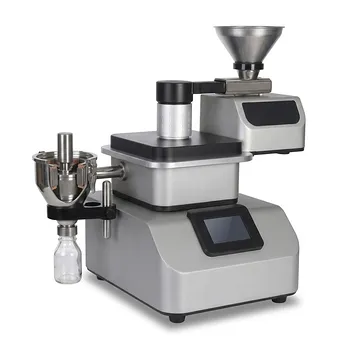
Ultra Centrifugal Mill for Rapid Laboratory Sample Preparation and Fine Powder Grinding
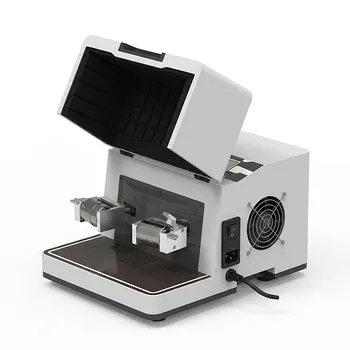
High Energy Hybrid Vibratory Ball Mill for Grinding Mixing and Cell Disruption
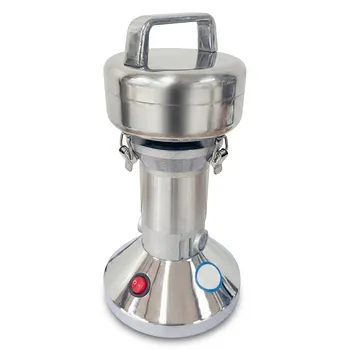
Small Trace Sample High Speed Pulverizer Grinder Laboratory Powder Mill
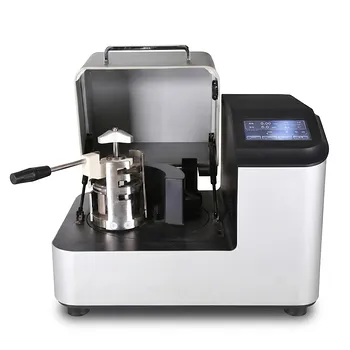
High Energy Laboratory Planetary Ball Mill for Nano Grinding and Material Science Sample Preparation
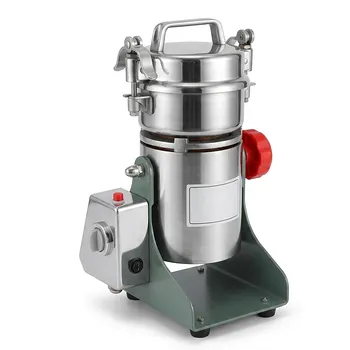
High Speed Swing Type Laboratory Pulverizer for Fine Powder Grinding and Sample Preparation
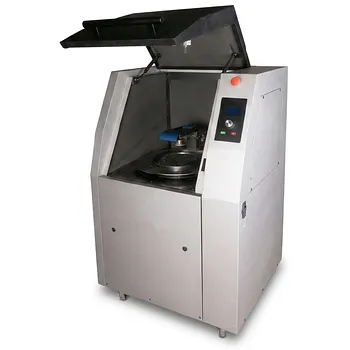
High Speed Vibratory Disc Mill for Spectral Analysis Sample Preparation and Rapid Powder Grinding
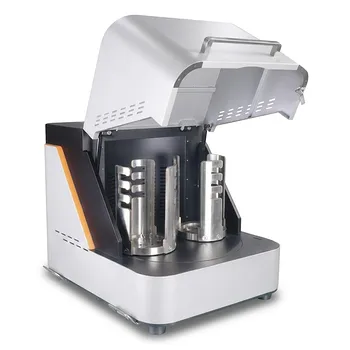
High Energy Laboratory Planetary Ball Mill for Nano Grinding and Colloidal Mixing of Hard and Brittle Materials
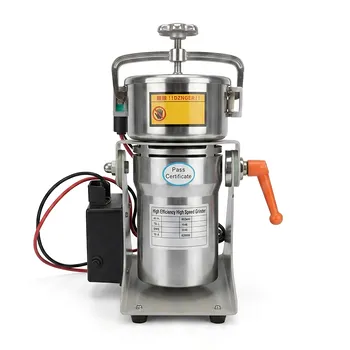
High Efficiency High Speed Grinder Laboratory Mill 1300W 25000rpm
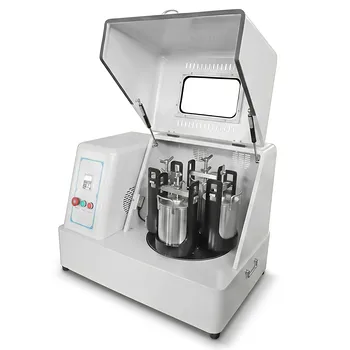
Vertical Square Planetary Ball Mill for Laboratory Sample Preparation and Nanoscale Grinding
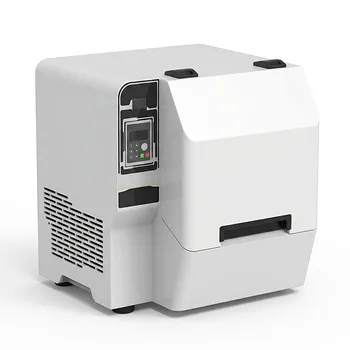
Nano High Energy Vibratory Ball Mill for Laboratory Sample Preparation
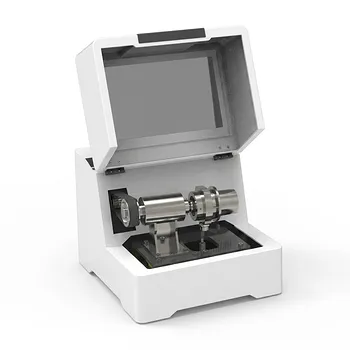
Single Tank High Energy Vibratory Ball Mill for Laboratory Grinding and Mixing

High Energy Planetary Ball Mill for Nano Scale Grinding and Mechanical Alloying
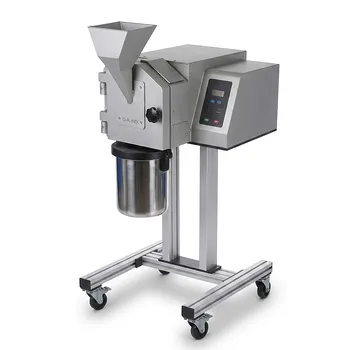
Industrial Rotor Beater Mill for High Speed Impact and Shear Grinding in Laboratory Sample Preparation
Ultra Centrifugal Mill High Speed Laboratory Grinder for Fibrous and Brittle Sample Preparation
Small High-Speed Grinder for Efficient Laboratory Sample Preparation