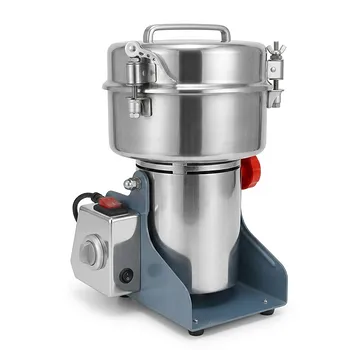
What is the role of a disk mill in the sample preparation of natural clinoptilolite? Enhance Reactivity & Precision
Updated 4 months ago
The primary role of a disk mill in clinoptilolite preparation is the mechanical reduction of bulk volcanic minerals into a fine, high-surface-area powder. This process transforms raw, inert rock into a reactive state, which is essential for ensuring effective ion exchange and chemical reactivity in subsequent research or industrial applications.
Disk milling acts as a critical bridge between raw mineral extraction and precise laboratory analysis. By maximizing the specific surface area of the material, it unlocks the reactive potential of the clinoptilolite framework, ensuring both chemical accessibility and analytical consistency.
Enhancing Reactivity through Surface Area Expansion
Breaking Down Bulk Mineral Structures
Natural clinoptilolite typically arrives from the field as medium-hard, bulk volcanic ore. A disk mill utilizes intense mechanical force—often a combination of impact, friction, and shear—to pulverize these fragments into fine particles.
This reduction is a fundamental prerequisite for any process that requires the mineral to interact with liquid or gaseous phases. Without this initial crushing stage, the internal structure of the zeolite remains largely inaccessible.
Maximizing Ion Exchange Potential
The efficiency of clinoptilolite in applications like water filtration or soil remediation depends on its ion exchange capacity. By grinding the material into a fine powder, the disk mill significantly increases the exposed specific surface area.
Higher surface area directly correlates to higher reactive activity. This allows for faster and more complete ion exchange experiments, as more exchange sites are exposed to the surrounding reagents.
Ensuring Analytical and Physical Homogeneity
Uniformity for Spectroscopic Analysis
In laboratory settings, disk mills are essential for preparing samples for X-ray diffraction (XRD) or X-ray fluorescence (XRF). These analytical techniques require a homogeneous sample with a consistent particle size to produce accurate, repeatable data.
A vibratory disk mill can often achieve particle sizes below 74 µm. This level of refinement ensures that the mineral phases detected are representative of the entire bulk sample, rather than a single, localized fragment.
Creating a Consistent Experimental Baseline
Research often involves comparing clinoptilolite samples from various geographical sources. Using a disk mill ensures that all samples start at a consistent initial particle size and physical state.
This uniformity eliminates "particle size" as a variable in subsequent tests, such as thermal activation or bacterial leaching kinetics. It allows researchers to focus purely on the chemical and structural differences between mineral types.
Understanding the Trade-offs and Limitations
Risk of Structural Degradation
While fine grinding increases reactivity, excessive milling can lead to amorphization. If the mechanical energy is too high, the delicate crystalline framework of the zeolite may begin to collapse, potentially reducing its ion exchange efficiency.
Heat Generation and Moisture Loss
Disk mills generate significant heat during the grinding process due to high-frequency friction. For natural zeolites, which contain zeolitic water within their pores, this temperature rise can inadvertently trigger dehydration or alter the mineral's initial state before testing begins.
Potential for Sample Contamination
The grinding tools (disks) are subject to wear and tear over time. Depending on the material of the disks—such as tungsten carbide or chrome steel—minor amounts of elemental contamination can be introduced into the clinoptilolite powder, which may interfere with high-sensitivity trace element analysis.
How to Apply This to Your Project
Recommendations Based on Your Objectives
- If your primary focus is Ion Exchange Capacity: Prioritize a grind that maximizes surface area without over-milling; a fine powder is necessary to ensure reagents can access the zeolite’s internal channels quickly.
- If your primary focus is Mineralogical Characterization (XRD/XRF): Utilize a vibratory disk mill to achieve a uniform particle size of less than 74 µm to ensure sample homogeneity and reduce preferred orientation effects during analysis.
- If your primary focus is Industrial Scale-Up: Use the disk mill to establish a baseline for the mechanical energy required to reach a specific mesh size, which will help in calculating the throughput and power requirements for larger grinding circuits.
Properly executed disk milling ensures that natural clinoptilolite is transformed from a raw geological specimen into a high-performance technical material.
Summary Table:
| Feature | Role in Clinoptilolite Preparation | Impact on Material Performance |
|---|---|---|
| Size Reduction | Pulverizes bulk ore into fine powder (<74 µm) | Increases specific surface area and chemical reactivity |
| Homogenization | Creates uniform particle size distribution | Ensures repeatable XRD/XRF data and representative samples |
| Ion Exchange | Unlocks the internal zeolite framework | Maximizes cation exchange capacity (CEC) for filtration |
| Process Control | Standardizes experimental baselines | Eliminates particle size as a variable in leaching kinetics |
| Risk Mitigation | Managed mechanical energy input | Prevents crystal amorphization and zeolitic water loss |
Optimize Your Mineral Analysis with Expert Sample Prep
Achieving the perfect particle size is critical for the reactive performance of natural zeolites. At [Your Brand Name], we provide complete laboratory sample preparation solutions tailored for material science. From initial reduction using our rugged jaw and roll crushers to achieving analytical fineness with our high-performance vibratory disk mills and planetary ball mills, we ensure your samples are research-ready.
Our expertise extends beyond milling; we offer a full spectrum of powder processing and compaction equipment, including:
- Sieve Shakers: Vibratory and air-jet options for precise particle size analysis.
- Hydraulic Presses: Standard lab presses, XRF pellet presses, and advanced Cold/Warm Isostatic Presses (CIP/WIP).
- Thermal Processing: Vacuum hot presses and standard hot presses for material synthesis.
Unlock the full potential of your materials. Contact our technical team today to discuss how our specialized powder processing equipment can enhance your lab's efficiency and data accuracy!
References
- Andrius Jaskūnas, Rasa Šlinkštienė. Adsorption of potassium ions on natural zeolite: kinetic and equilibrium studies. DOI: 10.6001/chemija.2015.26.2.1
Mentioned Products
- Laboratory Disc Mill Medium Hard Material Grinding Coal Coke Ore Pulverizer
- Vibratory Disc Mill for Rapid Fine Grinding and High Throughput Sample Preparation of Hard and Brittle Materials
- High Speed Vibratory Disc Mill for Spectral Analysis Sample Preparation and Rapid Powder Grinding
- Laboratory Disc Mill for Ore and Mineral Sample Preparation
- Laboratory Disc Mill for Fine Sample Preparation of Hard and Brittle Materials
People Also Ask
- What is the primary function of a laboratory disc mill for oyster shells? Boost Reactivity & Analytical Precision
- What is the function of a laboratory mill in Cassia tora L. seed analysis? Master Precision Thermal Data Prep.
- What is the purpose of using a laboratory mill to grind dried precipitates? Optimize TiO2/AuNRs Catalyst Homogeneity
- What role does a laboratory mill play in the study of lignite coal co-combustion? Optimizing Fuel Blends and Reactivity
- What function does a laboratory mill serve in corn starch saccharification experiments? Optimize Surface Area & Reactions

Tech Team · PowderPreparation
Last updated on Jun 03, 2026
Related Products
Laboratory Disc Mill Medium Hard Material Grinding Coal Coke Ore Pulverizer
Vibratory Disc Mill for Rapid Fine Grinding and High Throughput Sample Preparation of Hard and Brittle Materials
High Speed Vibratory Disc Mill for Spectral Analysis Sample Preparation and Rapid Powder Grinding
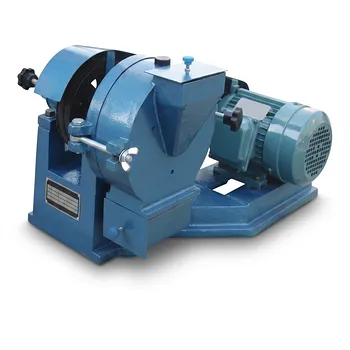
Laboratory Disc Mill for Ore and Mineral Sample Preparation
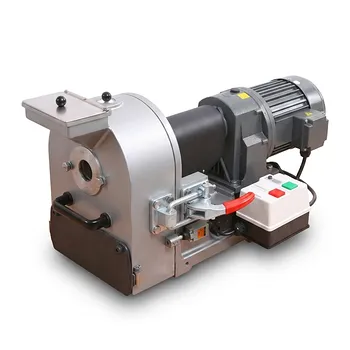
Laboratory Disc Mill for Fine Sample Preparation of Hard and Brittle Materials
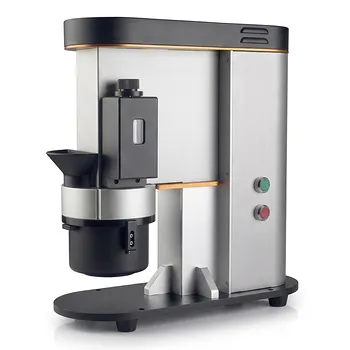
Precision Soil Disc Mill for Laboratory Fine Grinding and Environmental Sample Preparation
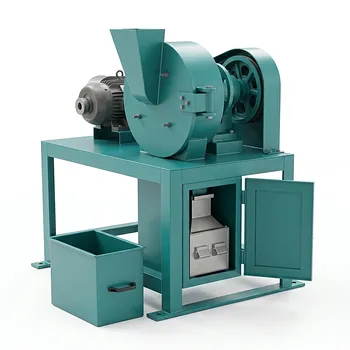
Sealed Disc Pulverizer Customized Model
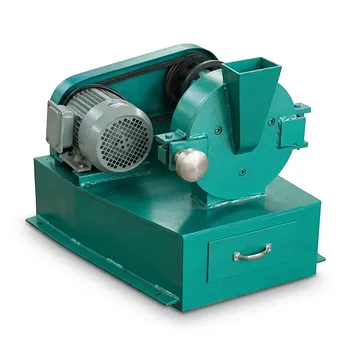
Medium Hardness Material Disc Pulverizer for Coal Ore Sample Preparation
Small Ceramic Structure Laboratory Sand Mill Nanoscale Grinding Dispersion Equipment Seal-less Screen-less Design
Heating Temperature Controlled High Energy Vibratory Ball Mill
Nano Laboratory Bead Mill Desktop Sub Micron Sand Mill Screenless Seal Less Powder Grinder

360° Rotating Omnidirectional Laboratory Planetary Ball Mill for Homogeneous Ultra-Fine Grinding and Mixing
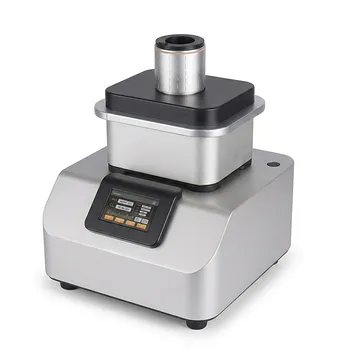
Ultra Centrifugal Mill High Speed Laboratory Grinder for Fibrous and Brittle Sample Preparation
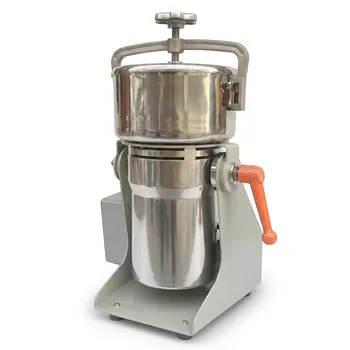
High Speed Laboratory Grinder Efficient Stainless Steel Powder Pulverizer Universal Material Science Mill for Sample Preparation
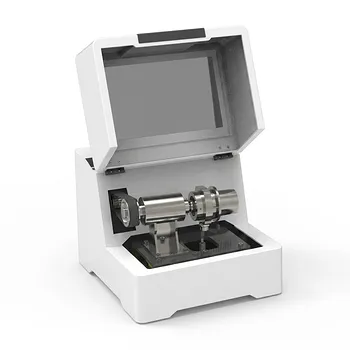
Single Tank High Energy Vibratory Ball Mill for Laboratory Grinding and Mixing
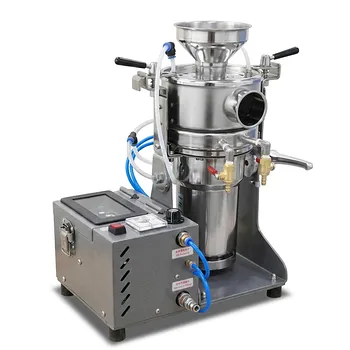
Water Cooled Pulse Jet Ultrafine Grinder
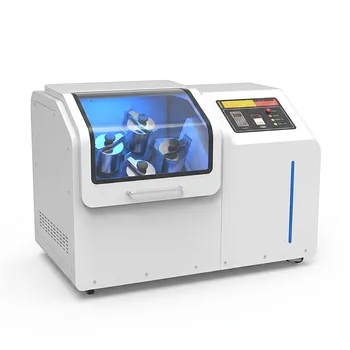
High Energy Omnidirectional Planetary Ball Mill 16L
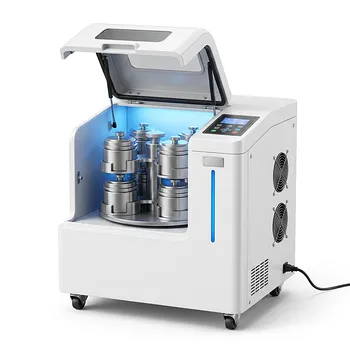
High Energy Omnidirectional Planetary Ball Mill 20L
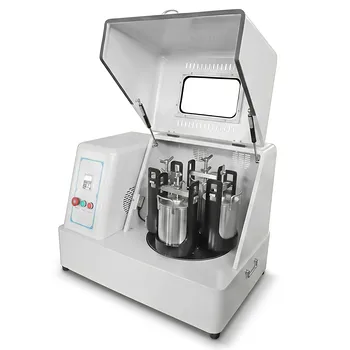
Vertical Square Planetary Ball Mill for Laboratory Sample Preparation and Nanoscale Grinding