What is the role of a ball mill in the raw material pretreatment of Adobe Bricks? Optimize Reactivity and Strength
Updated 4 months ago
In the production of high-performance adobe bricks, the ball mill acts as the primary engine for mechanical activation and material homogenization.
The equipment is utilized to pulverize dried soil clods and finely grind additives such as Rice Husk Ash (RHA) into a uniform, fine powder. By applying mechanical impact and grinding forces, the ball mill significantly reduces particle size and increases the specific surface area of the raw materials. This process is essential for enhancing the reactivity of the amorphous silica within the ash, ensuring a robust physical and chemical bond with the soil particles.
The ball mill transforms raw, heterogeneous earth and additives into a standardized, high-reactivity precursor by optimizing particle size and surface area. This mechanical pretreatment is the critical foundation for ensuring the structural integrity and chemical stability of the final adobe brick.
Mechanical Activation and Surface Area Optimization
Pulverization of Soil Clods
Raw soil naturally forms dense clumps or clods during the drying process that are unsuitable for uniform mixing. The ball mill uses high-energy impact to break these clods down into a fine, workable powder. This step is necessary to ensure the material can be consistently measured and integrated with stabilizers.
Increasing Specific Surface Area
Reducing the particle size of raw materials exponentially increases the total surface area available for bonding. In adobe bricks, a higher surface area allows for more contact points between the soil and binders. This increased contact is what facilitates the transition from a simple mud mixture to a consolidated masonry unit.
Enhancing Chemical Reactivity
Activation of Amorphous Silica
Rice Husk Ash (RHA) is a common stabilizer in modern adobe, but its effectiveness depends on the accessibility of its amorphous silica. Fine grinding in a ball mill exposes this silica at the molecular level. This exposure accelerates the chemical reactions required to form a strong matrix between the ash and the soil.
Inducing Mechanochemical Reactions
High-energy ball milling can go beyond simple physical size reduction to induce mechanochemical reactions. These reactions create "active precursors" in the raw materials. These precursors are more prone to forming stable mineral bonds during the curing process, leading to a more durable final product.
Material Homogenization and Uniformity
Eliminating Heterogeneity
Natural clay and soil are inherently inconsistent in their mineral distribution. The ball mill ensures a micron-level uniform distribution of key components like silicon dioxide and aluminum oxide. This elimination of heterogeneity ensures that every brick produced has predictable and standardized structural properties.
Uniform Binder Distribution
When binders or dry stabilizers are added, the ball mill performs a high-uniformity dry mixing function. The shearing action of the grinding balls ensures that stabilizers coat the soil particles evenly. This prevents the formation of "weak spots" within the brick that could lead to premature cracking or failure.
Understanding the Trade-offs
Energy Consumption vs. Material Gain
Ball milling is an energy-intensive process that can increase the cost of production. While it significantly improves brick quality, the duration of milling must be optimized. For basic construction, the cost of ultra-fine grinding may outweigh the structural benefits provided.
Risk of Particle Agglomeration
If materials are milled for an excessive amount of time, ultra-fine particles may begin to stick together again due to electrostatic forces. This agglomeration can negate the benefits of the grinding process. Finding the "sweet spot" in milling time is essential for maintaining a high-reactivity powder.
Making the Right Choice for Your Project
Selecting the appropriate milling strategy depends on your specific performance requirements and available resources.
- If your primary focus is maximum structural strength: Prioritize the high-energy grinding of Rice Husk Ash to maximize silica reactivity and bond density.
- If your primary focus is material consistency: Use the ball mill to standardize naturally heterogeneous clay sources to ensure a predictable production run.
- If your primary focus is cost-effective production: Limit the ball mill usage to the brief pulverization of soil clods rather than ultra-fine grinding to save on energy costs.
By precisely controlling the ball milling process, you transition from traditional earth construction to a sophisticated material science approach that ensures long-lasting adobe masonry.
Summary Table:
| Pretreatment Phase | Action of Ball Mill | Key Benefit for Adobe Bricks |
|---|---|---|
| Soil Pulverization | Breaks down dense clods | Ensures uniform mixing and consistent measurement. |
| Surface Area Optimization | Increases contact points | Enhances bonding density and final structural integrity. |
| Mechanical Activation | Exposes amorphous silica | Accelerates chemical bonding for a more durable matrix. |
| Material Homogenization | Eliminates mineral inconsistency | Provides predictable, standardized brick performance. |
Elevate Your Material Science Research with Precision Equipment
At [Your Brand Name], we provide complete laboratory sample preparation solutions for material science, specializing in high-performance powder processing and compaction equipment. Whether you are optimizing adobe brick durability or researching advanced ceramics, our equipment is designed to deliver the precision your project demands.
Our extensive product lines include:
- Advanced Milling: Planetary ball mills, jet mills, and disc mills for superior particle size reduction and activation.
- Material Grading: Sieve shakers (vibratory/air-jet) and high-efficiency powder mixers.
- Precision Compaction: A full spectrum of hydraulic presses, including Cold/Warm Isostatic Presses (CIP/WIP), vacuum hot presses, and XRF pellet presses.
Transform your raw materials into high-performance precursors with our industry-leading solutions. Contact us today to discuss your specific laboratory needs and discover how our expertise can drive your research forward!
References
- Win Ei Ei Tun, Khin Mya Thwin. PREPARATION OF ADOBE BRICK BY MIXING WITH RICE HUSH ASH. DOI: 10.30780/ijtrs.v3.i6.2018.004
Mentioned Products
- Heavy Duty Horizontal Planetary Ball Mill for Efficient Industrial Grinding and Sample Preparation
- Vertical Semi Circular Planetary Ball Mill for Laboratory Precision Grinding
- Vertical Production Planetary Ball Mill for High Throughput Powder Processing
- High Energy Planetary Ball Mill for Nano Scale Grinding and Mechanical Alloying
- Vertical Square Planetary Ball Mill for Laboratory Sample Preparation and Nanoscale Grinding
People Also Ask
- Why grind lime-pozzolan specimens for TG/DTA for 3 mins? Master sample prep for high-precision thermal analysis.
- What is the role of a planetary ball mill in the mechanical activation of ZTA powder? Boost Sintering Performance
- What is the function of a planetary ball mill in wollastonite ceramic prep? Achieve Molecular Homogenization & Reactivity
- How does a planetary ball mill contribute to the homogenization of trace elements? Achieve Sub-Micron Uniformity
- What is the function of a high-performance planetary ball mill in AMZ laminates? Master Ceramic Homogenization.

Tech Team · PowderPreparation
Last updated on Jun 03, 2026
Related Products
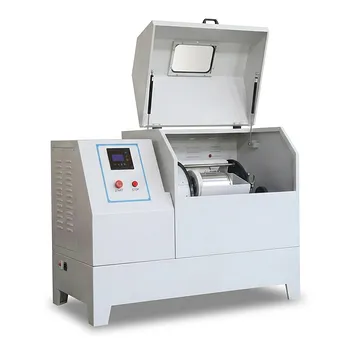
Heavy Duty Horizontal Planetary Ball Mill for Efficient Industrial Grinding and Sample Preparation
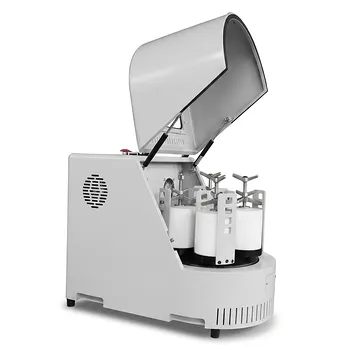
Vertical Semi Circular Planetary Ball Mill for Laboratory Precision Grinding

Vertical Production Planetary Ball Mill for High Throughput Powder Processing

High Energy Planetary Ball Mill for Nano Scale Grinding and Mechanical Alloying
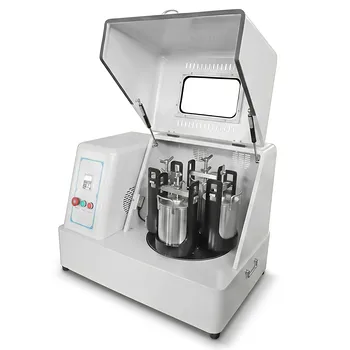
Vertical Square Planetary Ball Mill for Laboratory Sample Preparation and Nanoscale Grinding
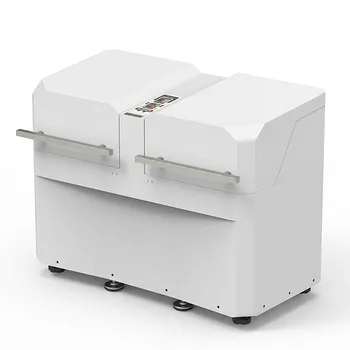
Dual Station Planetary Ball Mill 24L
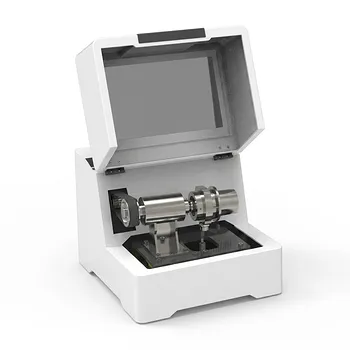
Single Tank High Energy Vibratory Ball Mill for Laboratory Grinding and Mixing
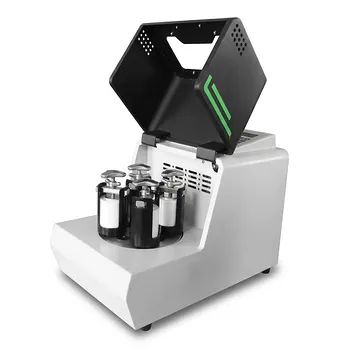
Miniature Planetary Ball Mill with Vacuum Grinding and High Efficiency for Laboratory Sample Preparation
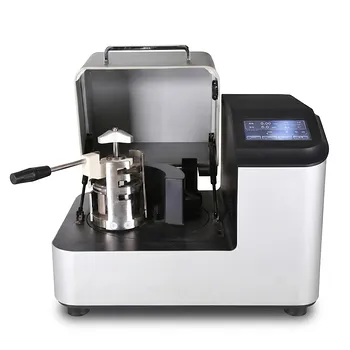
High Energy Laboratory Planetary Ball Mill for Nano Grinding and Material Science Sample Preparation

High Energy Omnidirectional Planetary Ball Mill 16L
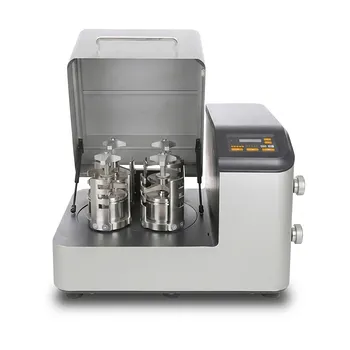
High Energy Planetary Ball Mill for Nano Scale Grinding and Colloidal Mixing in Material Science Research
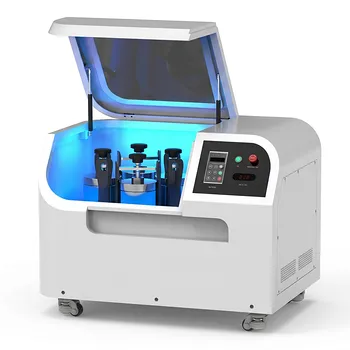
Planetary Ball Mill 12L
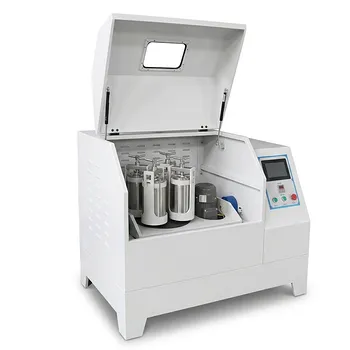
360° Rotating Omnidirectional Laboratory Planetary Ball Mill for Homogeneous Ultra-Fine Grinding and Mixing
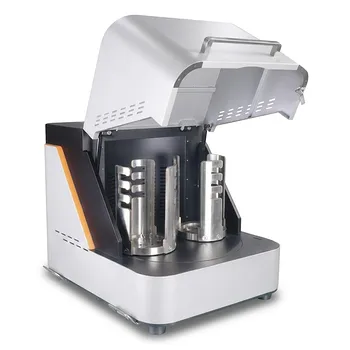
High Energy Laboratory Planetary Ball Mill for Nano Grinding and Colloidal Mixing of Hard and Brittle Materials
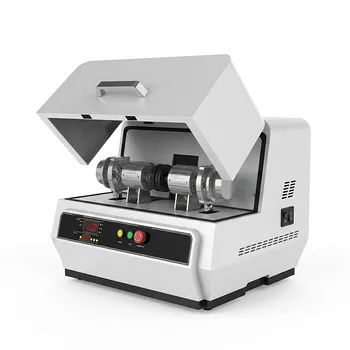
Dual Jar High Energy Vibratory Ball Mill

Multi-Platform Nanoscale High-Energy Vibratory Ball Mill
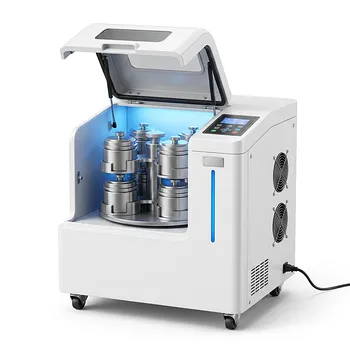
High Energy Omnidirectional Planetary Ball Mill 20L

8L Planetary Ball Mill for Laboratory Grinding and Sample Preparation

Nano High Energy Vibratory Ball Mill for Laboratory Sample Preparation