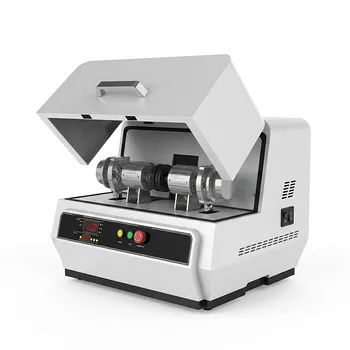
What is the role of a ball mill in the preparation of (Mg,Co)(Ti,Sn)O3 ceramic raw materials? Key to Phase Purity
Updated 4 months ago
In the synthesis of (Mg,Co)(Ti,Sn)O3 ceramics, the ball mill serves as the critical tool for mechanochemical activation and atomic-level homogenization. By applying intense impact and shear forces to high-purity oxide powders—specifically MgO, CoO, TiO2, and SnO2—the ball mill reduces particle sizes and increases surface energy. This process ensures that the different chemical components are perfectly distributed, which is a fundamental requirement for the subsequent solid-state reaction and calcination phases.
The ball mill transforms a coarse mixture of oxides into a highly reactive, homogeneous precursor by maximizing atomic contact and specific surface area. This preparation is the primary factor in achieving a pure phase perovskite structure and high densification during the final sintering process.
Achieving Microscopic Homogeneity
Atomic-Scale Distribution of Components
The primary role of the ball mill is to ensure that the magnesium, cobalt, titanium, and tin oxides are not merely mixed, but uniformly distributed at the atomic scale.
Through extended mechanical grinding, the impact of the grinding media forces these distinct chemical species into close proximity. This high degree of uniformity is essential for preventing the formation of secondary, unwanted phases during the solid-state synthesis.
Breaking Agglomerates in High-Purity Powders
Raw oxide materials often contain agglomerates—clusters of particles that can lead to chemical inhomogeneities in the final ceramic.
The high-energy environment of a planetary or stirred ball mill effectively breaks these clusters down. This ensures that the precursor powder maintains a consistent chemical composition throughout the entire volume of the material.
Mechanochemical Activation and Reactivity
Increasing Specific Surface Area
Ball milling reduces raw material particles from hundreds of micrometers down to the micrometer or nanometer scale.
This drastic reduction in size significantly increases the specific surface area of the powder. A higher surface area provides more contact points for chemical reactions, which lowers the energy barrier required for the oxides to react during calcination.
Facilitating Perovskite Phase Formation
For complex ceramics like (Mg,Co)(Ti,Sn)O3, achieving a pure perovskite phase is a major technical challenge.
The mechanical energy imparted by the ball mill induces lattice strains and defects in the oxide crystals. This "activation" allows the ions to diffuse more easily at high temperatures, ensuring the material achieves the desired crystal structure efficiently.
Understanding the Trade-offs
Contamination from Grinding Media
While intensive milling is necessary, the friction between the balls and the jar can introduce impurities into the ceramic powder.
To mitigate this, technical experts must carefully select grinding media, such as yttria-stabilized zirconia, that match the hardness of the oxides. Using media with high wear resistance is critical to maintaining the high purity required for advanced electronic or structural ceramics.
Over-milling and Re-agglomeration
Excessive milling duration or energy can lead to a phenomenon where ultra-fine particles begin to re-agglomerate due to Van der Waals forces.
This can negatively impact the flowability of the slurry and the density of the green body. Finding the "sweet spot" in milling time is essential to balance high reactivity with a manageable particle size distribution.
How to Optimize Milling for Your Project
Achieving the best results in (Mg,Co)(Ti,Sn)O3 preparation requires aligning your milling parameters with your final material requirements.
- If your primary focus is Phase Purity: Increase the milling duration to ensure every oxide component is in intimate contact, which minimizes the risk of unreacted secondary phases.
- If your primary focus is High Sintered Density: Utilize high-energy planetary ball milling to achieve a nanometer-scale particle size, which provides the driving force for rapid densification during sintering.
- If your primary focus is Electrical Performance: Prioritize the use of high-purity ceramic jars and media to prevent metallic or silica contamination that could degrade the ceramic's dielectric properties.
By mastering the mechanical refinement of your raw oxides, you create the essential physical foundation for high-performance advanced ceramics.
Summary Table:
| Milling Function | Physical/Chemical Impact | Outcome for Ceramics |
|---|---|---|
| Atomic Homogenization | Uniform distribution of Mg, Co, Ti, and Sn | Prevents secondary phases; ensures pure perovskite |
| Particle Size Reduction | Decreases particles to micrometer/nanometer scale | Increases specific surface area and reactivity |
| Agglomerate Breaking | Disperses clusters in high-purity oxide powders | Ensures consistent chemical composition throughout |
| Mechanical Activation | Induces lattice strains and crystal defects | Lowers calcination energy and facilitates ion diffusion |
Optimize Your Ceramic Synthesis with Expert Solutions
Achieving the perfect perovskite phase requires precision at every step. We provide complete laboratory sample preparation solutions for material science, specializing in high-performance powder processing and compaction equipment.
Our extensive product lines are designed to help you master (Mg,Co)(Ti,Sn)O3 preparation:
- Advanced Milling: Planetary ball mills, jet mills, and cryogenic grinders for nanometer-scale homogenization.
- Precision Compaction: A full spectrum of hydraulic presses, including Cold/Warm Isostatic Presses (CIP/WIP), vacuum hot presses, and XRF pellet presses for maximum densification.
- Sizing & Mixing: Vibratory sieve shakers and high-efficiency defoaming mixers to ensure powder consistency.
Ready to enhance your lab's efficiency and material performance? Contact our technical experts today to find the ideal equipment for your research goals!
References
- Hameed Ullah. Effect of Calcium Titanate Addition on the Phase, Microstructure, and Microwave Dielectric Properties of (Mg0.95Co0.05) (Ti0.95 Sn0.05)O3 Ceramics Calcined at 1200 °C for 5h.. DOI: 10.52783/tjjpt.v46.i01.8873
Mentioned Products
- Heavy Duty Horizontal Planetary Ball Mill for Efficient Industrial Grinding and Sample Preparation
- Vertical Semi Circular Planetary Ball Mill for Laboratory Precision Grinding
- Vertical Square Planetary Ball Mill for Laboratory Sample Preparation and Nanoscale Grinding
- High Energy Planetary Ball Mill for Nano Scale Grinding and Mechanical Alloying
- Vertical Production Planetary Ball Mill for High Throughput Powder Processing
People Also Ask
- Why grind lime-pozzolan specimens for TG/DTA for 3 mins? Master sample prep for high-precision thermal analysis.
- What is the role of a planetary ball mill in the mechanical activation of ZTA powder? Boost Sintering Performance
- What is the function of a planetary ball mill in wollastonite ceramic prep? Achieve Molecular Homogenization & Reactivity
- How does a planetary ball mill contribute to the homogenization of trace elements? Achieve Sub-Micron Uniformity
- What is the function of a high-performance planetary ball mill in AMZ laminates? Master Ceramic Homogenization.

Tech Team · PowderPreparation
Last updated on May 14, 2026
Related Products
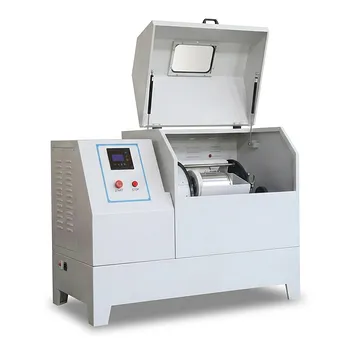
Heavy Duty Horizontal Planetary Ball Mill for Efficient Industrial Grinding and Sample Preparation
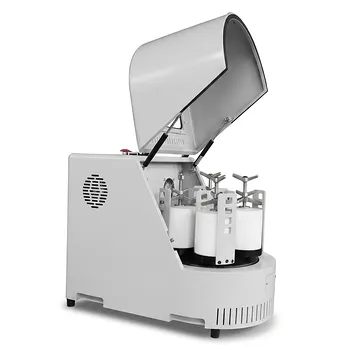
Vertical Semi Circular Planetary Ball Mill for Laboratory Precision Grinding
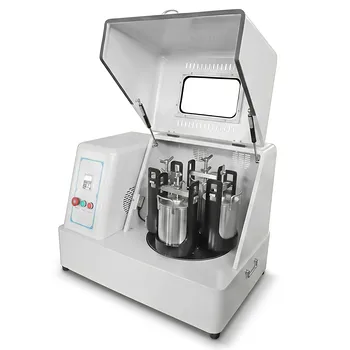
Vertical Square Planetary Ball Mill for Laboratory Sample Preparation and Nanoscale Grinding
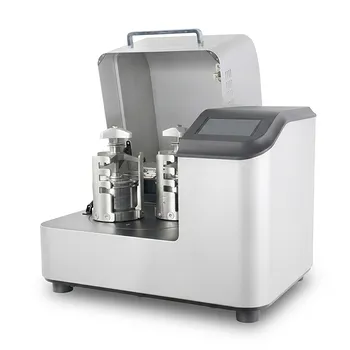
High Energy Planetary Ball Mill for Nano Scale Grinding and Mechanical Alloying
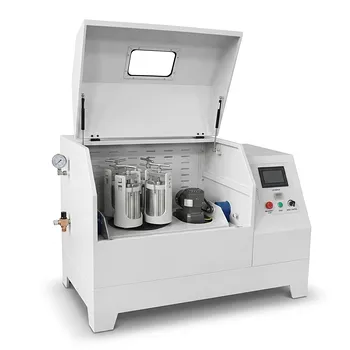
Vertical Production Planetary Ball Mill for High Throughput Powder Processing
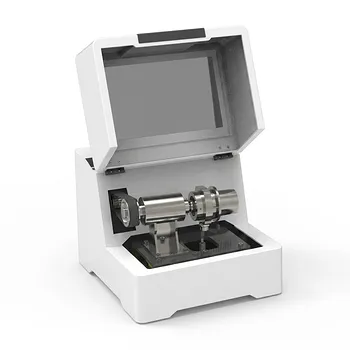
Single Tank High Energy Vibratory Ball Mill for Laboratory Grinding and Mixing
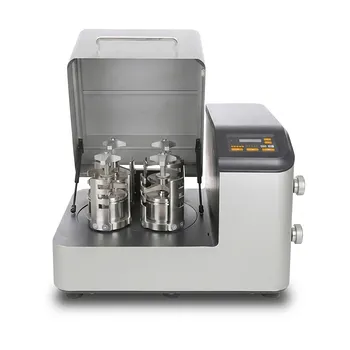
High Energy Planetary Ball Mill for Nano Scale Grinding and Colloidal Mixing in Material Science Research
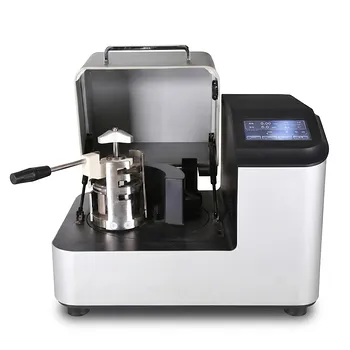
High Energy Laboratory Planetary Ball Mill for Nano Grinding and Material Science Sample Preparation
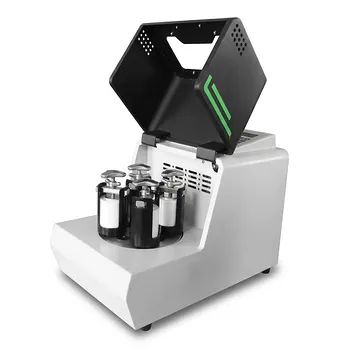
Miniature Planetary Ball Mill with Vacuum Grinding and High Efficiency for Laboratory Sample Preparation
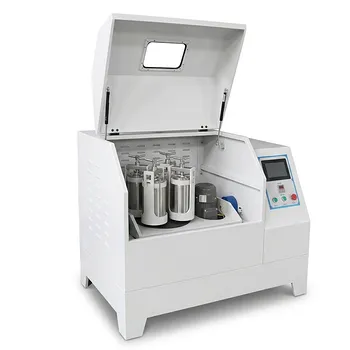
360° Rotating Omnidirectional Laboratory Planetary Ball Mill for Homogeneous Ultra-Fine Grinding and Mixing
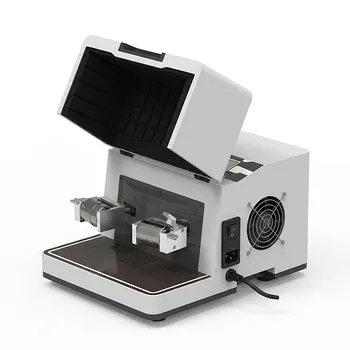
High Energy Hybrid Vibratory Ball Mill for Grinding Mixing and Cell Disruption
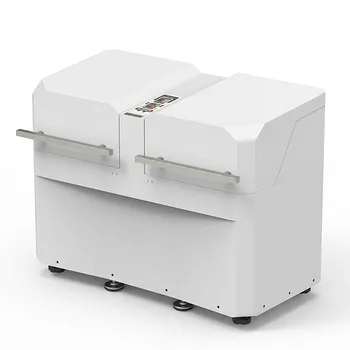
Dual Station Planetary Ball Mill 24L
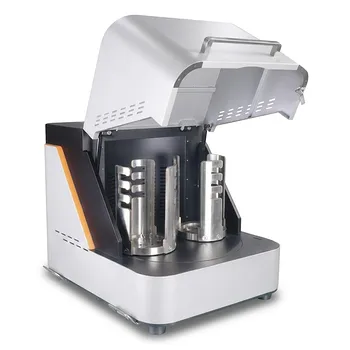
High Energy Laboratory Planetary Ball Mill for Nano Grinding and Colloidal Mixing of Hard and Brittle Materials
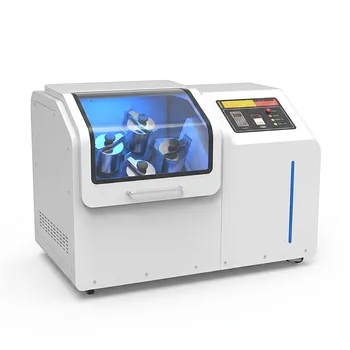
High Energy Omnidirectional Planetary Ball Mill 16L
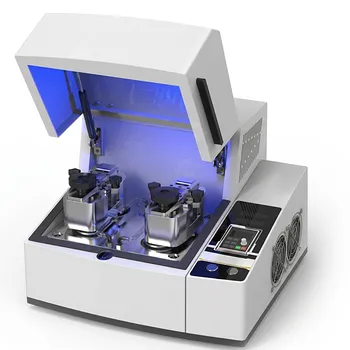
Laboratory Nano High Energy Ball Mill Ultrafine Grinding Mechanical Alloying
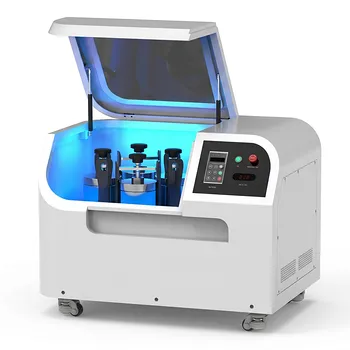
Planetary Ball Mill 12L

High Throughput Micro Ball Mill for Cryogenic Grinding and Laboratory Cell Disruption
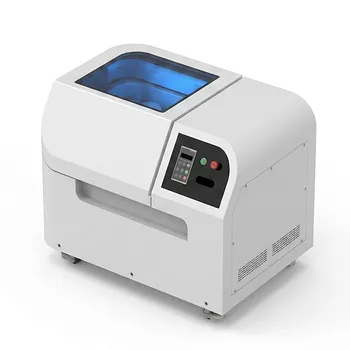
8L Planetary Ball Mill for Laboratory Grinding and Sample Preparation
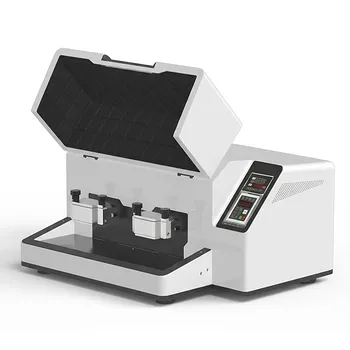
Nanoscale High-Energy Vibratory Ball Mill for Laboratory Sample Preparation, Mechanochemistry, and Mechanical Alloying