What is the purpose of using standard test sieves after the ball milling of B@NiF2? Key Benefits for Material Stability
Updated 4 months ago
The use of standard test sieves after ball milling B@NiF2 is a critical quality control step designed to eliminate large-sized agglomerates. This process ensures a uniform particle size distribution, which is essential for creating consistent contact between the B@NiF2 particles and oxidizers like ammonium perchlorate (AP). Ultimately, this standardization dictates the combustion stability and performance reliability of the final composite material.
Sieving transforms raw, milled powder into a precision-engineered precursor by removing physical inconsistencies. This ensures that the chemical energy stored in the B@NiF2 is released predictably and efficiently during subsequent applications.
Enhancing Material Homogeneity
Eliminating Milling Agglomerates
High-energy ball milling often causes particles to fuse or cluster into large-sized agglomerates due to local heat and pressure. Using a standard test sieve physically intercepts these oversized clusters, preventing them from contaminating the final batch.
Standardizing Particle Size
A consistent particle size is the foundation of material science in energetic composites. By ensuring every particle falls within a narrow diameter range, you eliminate variables that could lead to inconsistent chemical reactions later in the process.
Facilitating Homogeneous Mixing
When B@NiF2 is eventually combined with an oxidizer like ammonium perchlorate (AP), uniform particles allow for a more intimate and even distribution. This high level of "interfacial contact" is what allows the fuel and oxidizer to react simultaneously and completely.
Impact on Combustion and Performance
Improving Performance Stability
Inconsistent particle sizes lead to erratic burn rates, which can be catastrophic in specialized applications. Sieving ensures that the combustion micro-units behave identically, leading to a stable and predictable energy release.
Optimizing Surface Area
The reactivity of a powder is largely determined by its surface-area-to-volume ratio. By using sieves to maintain a specific micron-scale size, you ensure the optimal surface area is available for rapid oxidation during combustion.
Enhancing Powder Flowability
Agglomerates and oversized particles significantly hinder the flow of powder through manufacturing equipment. Removal of these particles ensures excellent powder flowability, which is critical for the stable and continuous feeding of material during secondary processing.
Understanding the Trade-offs
Material Loss and Yield
Strict sieving protocols naturally result in some material loss, as oversized agglomerates are discarded or must be re-milled. This can increase production costs and processing time if the milling parameters are not perfectly tuned.
Static and Clogging Issues
High-precision, fine-mesh sieves are susceptible to blinding or clogging, especially with reactive powders that may carry a static charge. This requires careful maintenance and specific sieving techniques (such as ultrasonic assistance) to ensure accuracy.
Sieve Wear and Contamination
Over time, the friction of abrasive powders can degrade the mesh of the sieve, potentially introducing trace metal contaminants into the B@NiF2 sample. Regular calibration and the use of high-quality stainless steel sieves are necessary to mitigate this risk.
How to Apply This to Your Project
Recommendations for Precision Grading
- If your primary focus is combustion consistency: Use a high-precision mesh (such as 400-mesh) to ensure the maximum particle size is strictly capped, facilitating perfect contact with oxidizers.
- If your primary focus is manufacturing throughput: Prioritize sieving immediately after milling to improve flowability and prevent equipment blockages in subsequent automated stages.
- If your primary focus is quality benchmarking: Utilize a series of graduated sieves to plot a cumulative distribution curve, allowing you to calculate the exact efficiency of your ball milling process.
By implementing a rigorous sieving protocol, you move from a variable raw product to a stabilized technical material ready for high-performance applications.
Summary Table:
| Key Purpose | Benefit to Material | Impact on Performance |
|---|---|---|
| Agglomerate Removal | Eliminates fused clusters from milling | Prevents inconsistent chemical reactions |
| Size Standardization | Ensures uniform particle distribution | Optimizes burn rate and energy release |
| Enhanced Flowability | Prevents equipment blockages | Facilitates stable and continuous feeding |
| Homogeneous Mixing | Improves interfacial contact with oxidizers | Ensures predictable and reliable combustion |
Elevate Your Material Research with Precision Powder Solutions
Achieving consistent results in material science requires more than just milling; it demands precision at every stage of sample preparation. At [Brand Name], we provide complete laboratory solutions tailored for powder processing and compaction. Our expertise ensures that your B@NiF2 samples and energetic composites achieve the homogeneity and performance stability necessary for high-stakes applications.
Our Specialized Equipment Includes:
- Advanced Milling: Planetary ball mills, jet mills, and cryogenic grinders for optimal particle size reduction.
- Precision Sieving: Vibratory and air-jet sieve shakers with a wide range of test sieves to eliminate agglomerates and ensure uniformity.
- Homogeneous Mixing: High-efficiency powder and defoaming mixers for perfect interfacial contact between fuels and oxidizers.
- Compaction Solutions: A full spectrum of hydraulic presses, including Cold/Warm Isostatic Presses (CIP/WIP), XRF pellet presses, and vacuum hot presses.
Don't let particle size variability compromise your combustion data. Contact our technical experts today to find the perfect equipment for your laboratory and optimize your material processing workflow!
References
- Jiaqi Cao, Jie Liu. Preparation and Performance of Core–Shell Structured B@NiF2/AP Composite Micro-Units. DOI: 10.3390/app152312495
Mentioned Products
- Stainless Steel Laboratory Vibratory Test Sieve Shaker
- Laboratory Vibratory Test Sieve Shaker for Precision Particle Size Analysis and Powder Grading
- Small Laboratory Vibrating Sieve Shaker for Precise Particle Size Analysis
- Small Laboratory Vibratory Sieve Shaker for Powder Gradation and Particle Size Analysis
- 三维电磁微量振动筛分仪
People Also Ask
- What function does a laboratory vibratory sieve shaker serve in the production process of metakaolin? Optimize Reactivity
- Why is a precision laboratory vibratory sieve shaker necessary for particle size control? Optimize Biomass Carbonization
- What is the function of a laboratory vibratory sieve shaker? Enhance Coal Particle Size Distribution (PSD) Analysis
- What role do laboratory vibratory sieve shakers and test sieves play before the molding of Nb-Cu composite powders?
- What is the primary function of a laboratory vibratory sieve shaker in the evaluation of sand liquefaction potential?

Tech Team · PowderPreparation
Last updated on Jun 03, 2026
Related Products

Stainless Steel Laboratory Vibratory Test Sieve Shaker

Laboratory Vibratory Test Sieve Shaker for Precision Particle Size Analysis and Powder Grading

Small Laboratory Vibrating Sieve Shaker for Precise Particle Size Analysis

Small Laboratory Vibratory Sieve Shaker for Powder Gradation and Particle Size Analysis

三维电磁微量振动筛分仪
Laboratory Air Jet Sieving Machine for Fine Powder Particle Size Analysis and Deagglomeration

Stainless Steel Rotary Vibrating Sieve High Precision Circular Vibratory Separator Industrial Powder Grading Machine Multi Layer Sifting Equipment
Laboratory Dry and Wet Three Dimensional Vibratory Sieve Shaker for Particle Analysis

Three Dimensional Rotary Vibrating Sieve
High Frequency Cabinet Type Three-Dimensional Rotary Vibrating Sieve Shaker for Dry Sieving and Particle Classification

Vibratory Sieve Shaker Electromagnetic 3D Motion Powder Particle Size Analyzer for Dry and Wet Sieving

High Frequency Wet Three-Dimensional Vibrating Sieve Shaker for Dry and Wet Particle Size Analysis
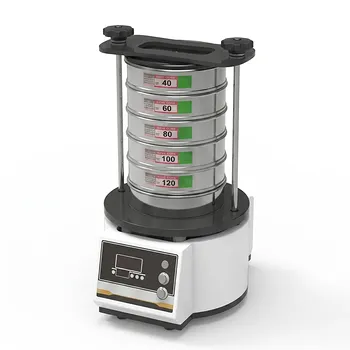
Dry Three Dimensional Vibratory Sieve Shaker
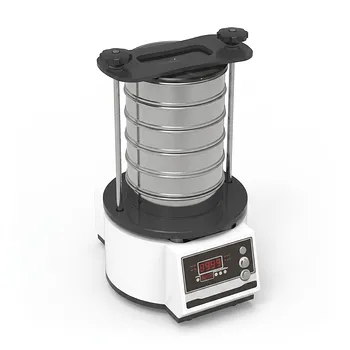
Tapping Oscillating Sieve Shaker for Dry and Wet Particle Size Analysis

Heavy Duty Dry Three Dimensional Vibratory Sieve Shaker for Particle Separation
Small High-Speed Grinder for Efficient Laboratory Sample Preparation
Small High-Speed Laboratory Grinder for Rapid Sample Preparation
Small High-Speed Swing Grinder for Laboratory Sample Preparation
Multifunctional High Efficiency High Speed Laboratory Grinder