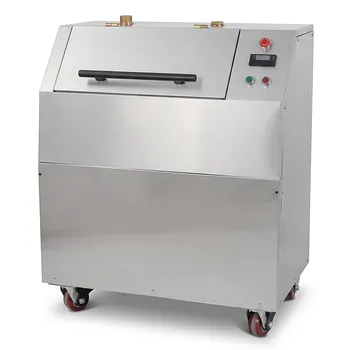
How does an air-jet mill enhance the performance of Mo2N when used as an electrocatalyst? Optimize Electrode Efficiency
Updated 5 months ago
Air-jet milling optimizes Mo2N performance by converting bulk material into ultra-fine, high-purity powder through supersonic particle-to-particle collisions. This process drastically increases the available surface area and active site density, directly improving electrochemical kinetics for pseudocapacitors and catalytic reactions.
Air-jet milling provides a contamination-free method to achieve the high surface-to-volume ratio required for high-performance Mo2N electrodes. By leveraging fluid energy instead of physical grinding media, it preserves the chemical integrity of the molybdenum nitride while maximizing its reactive interface.
The Mechanics of Supersonic Attrition
Air-jet mills operate on the principle of fluid energy. This approach differs fundamentally from traditional mechanical milling, which relies on heavy machinery and physical impactors.
High-Velocity Particle Collisions
The mill utilizes supersonic airflows to accelerate Mo2N particles to extreme speeds. These particles collide with one another rather than against the walls of the machine, leading to intense fracture and size reduction.
Elimination of Grinding Media Contamination
Traditional ball milling often introduces impurities from the grinding balls or the lining of the mill. Air-jet milling is self-grinding, ensuring that the Mo2N remains chemically pure, which is critical for maintaining consistent catalytic properties.
Precision in Particle Size Distribution
The process allows for the creation of ultra-fine powders with a narrow size distribution. This uniformity ensures that the electrode material reacts predictably across its entire surface when integrated into a battery or catalyst bed.
Structural Evolution and Electrochemical Gain
The primary reason Mo2N benefits from this processing is the direct relationship between physical structure and electrochemical efficiency.
Maximizing Specific Surface Area
Electrochemical reactions occur at the interface between the electrode and the electrolyte. By reducing bulk Mo2N to fine powders, the specific surface area increases exponentially, providing more space for charge storage and reaction.
Enhancing Active Site Exposure
In catalytic applications, the number of exposed active sites determines the reaction rate. Air-jet milling breaks down large aggregates, unearthing "hidden" sites that were previously buried within the bulk material.
Optimization for Pseudocapacitors
For pseudocapacitors, Mo2N relies on fast redox reactions at the surface. The high surface-to-volume ratio achieved via air-jet milling facilitates faster ion diffusion and better charge-transfer kinetics.
Understanding the Trade-offs
While air-jet milling is highly effective, it is not a "one-size-fits-all" solution. Engineers must balance the benefits of fine particles against the practicalities of industrial processing.
Energy Consumption and Throughput
Air-jet milling is an energy-intensive process compared to some mechanical methods. The requirement for high-pressure, high-velocity air means that the cost per kilogram of material can be higher.
Handling and Agglomeration
Ultra-fine powders have high surface energy, which can cause them to re-agglomerate during storage or during the slurry-making process. Proper stabilization and handling techniques are required to maintain the benefits of the milling.
Material Loss in Exhaust
Because the particles are extremely fine, specialized filtration and collection systems are necessary. Without precise control, a percentage of the high-value Mo2N may be lost in the airflow exhaust.
How to Apply This to Your Project
When deciding how to process Mo2N for your specific application, consider the following goals:
- If your primary focus is High Catalytic Activity: Prioritize air-jet milling to maximize the exposure of active sites and ensure zero contamination from grinding media.
- If your primary focus is Pseudocapacitor Energy Density: Use air-jet milling to achieve the highest possible specific surface area, which directly correlates to charge storage capacity.
- If your primary focus is Scalable Manufacturing Cost: Evaluate if a hybrid approach—initial mechanical crushing followed by a final air-jet mill pass—can achieve the required fineness with lower energy overhead.
By utilizing air-jet milling, you ensure that the inherent electrochemical potential of Mo2N is fully realized through a cleaner, more reactive physical structure.
Summary Table:
| Feature | Benefit for Mo2N Processing | Impact on Electrochemical Performance |
|---|---|---|
| Supersonic Collisions | Ultra-fine particle size with narrow distribution | Faster ion diffusion and improved kinetics |
| Media-Free Milling | Zero contamination from grinding balls/liners | Maintains high chemical purity and catalytic integrity |
| Fluid Energy Process | Massive increase in specific surface area | Higher charge storage capacity for pseudocapacitors |
| High Attrition | Increased exposure of "hidden" active sites | Enhanced reaction rates for catalytic applications |
Unlock the Full Potential of Your Materials with Precision Prep
Achieving peak performance in Mo2N and advanced electrocatalysts requires uncompromising purity and particle precision. We provide complete laboratory sample preparation solutions for material science, specializing in professional powder processing and compaction equipment.
Our extensive product lines are designed to support every stage of your research:
- Advanced Milling: Including air-jet mills, planetary ball mills, jet mills, and liquid nitrogen cryogenic grinders for contamination-free results.
- Sizing & Mixing: Sieve shakers (vibratory/air-jet), powder mixers, and defoaming mixers.
- High-Pressure Compaction: A full spectrum of hydraulic presses, including Cold/Warm Isostatic Presses (CIP/WIP), standard lab presses, XRF pellet presses, and vacuum hot presses.
Whether you are refining battery electrodes or developing next-generation catalysts, our expertise ensures your materials reach their theoretical limits. Contact our technical team today to find the perfect solution for your lab!
References
- Lauren N. Walters, James M. Rondinelli. Metallicity and chemical bonding in anti-anatase Mo<sub>2</sub>N. DOI: 10.1039/d3cp05054h
Mentioned Products
- Benchtop Micro Air Jet Mill for Ultrafine Grinding of High Value Powders
- Small Airflow Ultra-Fine Grinder for Laboratory Sample Preparation
- High Speed Air Induced Ultrafine Pulverizer Laboratory Superfine Powder Mill for Pharmaceutical and Material Science Sample Preparation
- Airflow Ultrafine Pulverizer for Laboratory Ultra-fine Grinding
- Laboratory Air Jet Sieving Machine for Fine Powder Particle Size Analysis and Deagglomeration
People Also Ask
- Why is secondary jet milling necessary for products processed through HME? Achieve Precision for Inhalation Delivery
- Why is a jet mill used for the co-milling of inhalable Itraconazole microparticles? Optimize Pulmonary Drug Delivery
- What are the advantages of a jet mill vs. a ball mill for high-purity ceramics? Achieve superior purity and precision.
- What are the advantages of using a jet mill compared to a ball mill for Sm-Co magnets? Purity vs. Performance
- How does a laboratory jet mill function in the processing of crude char into rCB? Master High-Purity Particle Refinement

Tech Team · PowderPreparation
Last updated on May 14, 2026
Related Products
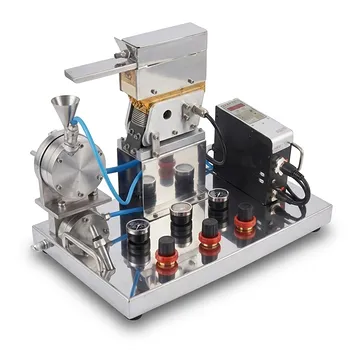
Benchtop Micro Air Jet Mill for Ultrafine Grinding of High Value Powders
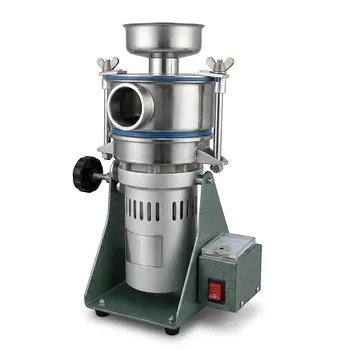
Small Airflow Ultra-Fine Grinder for Laboratory Sample Preparation
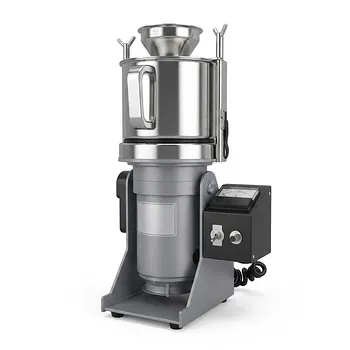
High Speed Air Induced Ultrafine Pulverizer Laboratory Superfine Powder Mill for Pharmaceutical and Material Science Sample Preparation
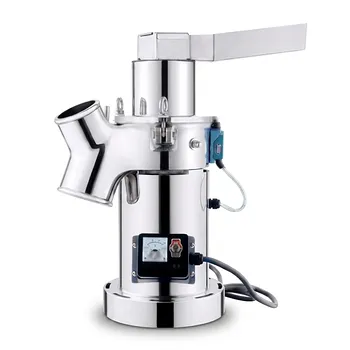
Airflow Ultrafine Pulverizer for Laboratory Ultra-fine Grinding
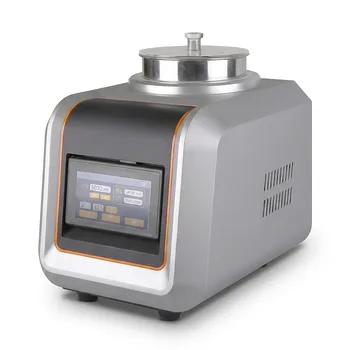
Laboratory Air Jet Sieving Machine for Fine Powder Particle Size Analysis and Deagglomeration
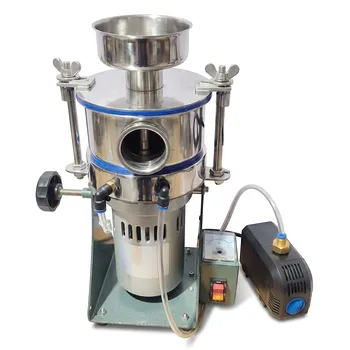
Water Cooled Airflow Ultra Fine Grinder for Low Temperature Material Processing
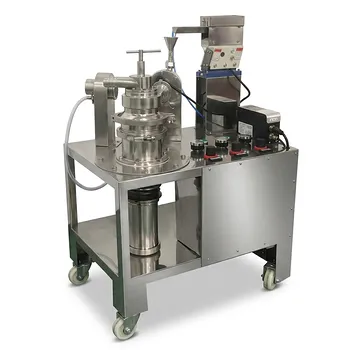
Laboratory Classification Jet Mill for Ultrafine Powder Grinding
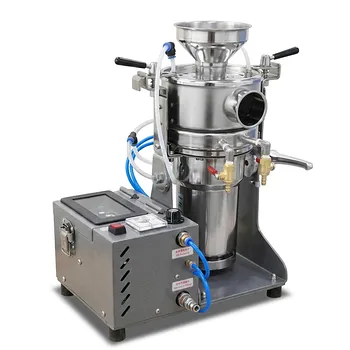
Water Cooled Pulse Jet Ultrafine Grinder
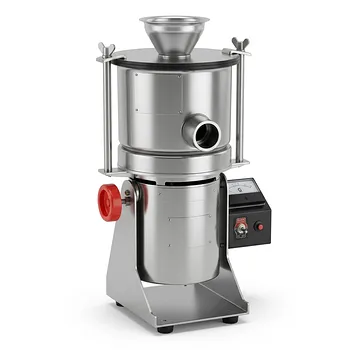
Laboratory Ultrafine Impact and Airflow Grinder for Precise Particle Size Control
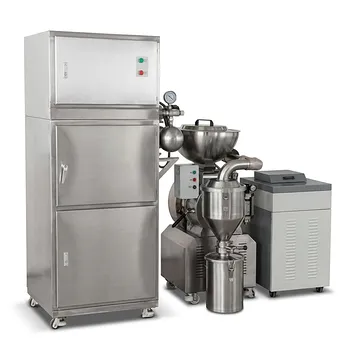
Water-Cooled Pulse Dust Removal Air Classifying Ultrafine Grinder
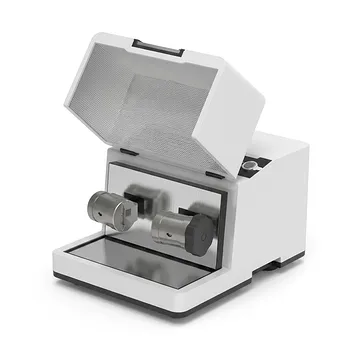
Heating Temperature Controlled High Energy Vibratory Ball Mill