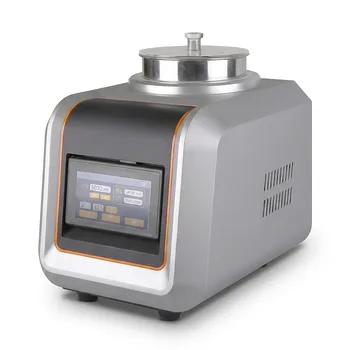
What is the purpose of using a vibratory sieve shaker to classify natural fibers? Optimize PSD & Material Performance
Updated 4 months ago
The vibratory sieve shaker serves as a precision instrument to quantify particle size distribution (PSD) and ensure the physical uniformity of mechanically ground natural fibers. It uses a stack of standard test sieves and controlled high-frequency vibrations to stratify fibers into specific size fractions, typically ranging from 75 to 1000 microns. This process is critical for evaluating milling efficiency and establishing a baseline for predictable mechanical performance in end-products like bio-composites.
The primary purpose of a vibratory sieve shaker is to provide a standardized, repeatable method for analyzing and controlling fiber dimensions. By ensuring dimensional uniformity, the equipment minimizes structural defects in composite materials and optimizes the efficiency of subsequent chemical treatments.
Quantifying Particle Size Distribution (PSD)
Analyzing Milling Efficiency
The vibratory sieve shaker allows researchers to determine the effectiveness of the mechanical grinding process. By measuring the proportion of fibers within specific size intervals, operators can adjust milling parameters to achieve the desired fiber fineness.
Identifying Fiber Fractions
The equipment utilizes multiple layers of standard test sieves to grade fibers into precise categories. This data is vital for identifying the presence of "fines" or oversized particles that could negatively impact the final product's structural integrity.
Eliminating Human Error
Unlike manual sieving, a vibratory shaker provides a constant frequency and amplitude. This mechanical consistency ensures that batch-to-batch analysis is objective and repeatable, which is a requirement for industrial quality control.
Optimizing Subsequent Processing
Controlling Chemical Reaction Kinetics
Uniform particle size is essential for the kinetics of alkali treatment and bleaching. When fibers are uniform, typically below 0.25 mm, chemicals can penetrate each particle at a consistent depth.
Preventing Incomplete Reactions
Oversized particles often result in incomplete chemical reactions, leaving the core of the fiber untreated. Using a sieve shaker to remove these outliers ensures that the entire batch of fiber powder reacts predictably during processing.
Predicting Resin and Additive Requirements
In the production of fiberboard or composites, the total surface area of the fibers determines the resin dosage. Precise classification allows manufacturers to calculate the exact amount of bonding agent needed for optimal adhesion.
Enhancing Composite Performance
Eliminating Localized Stress Concentrations
Large, non-uniform fiber particles act as defects within a polymer matrix. By ensuring a uniform size—such as a strict 125 µm fraction—the sieve shaker helps prevent localized stress concentrations that lead to premature material failure.
Ensuring Even Dispersion
Uniform fibers disperse more easily within a matrix during the mixing stage. This even dispersion is critical for achieving consistent mechanical properties, such as tensile strength and impact resistance, throughout the entire composite part.
Predicting Engineering Behavior
By categorizing fibers into specific grain-size fractions, engineers can better predict how the material will behave under load. This is similar to soil texture analysis, where grain size directly correlates to stability and expansion characteristics.
Understanding the Trade-offs
Geometry vs. Aperture Size
Vibratory sieving classifies fibers based on their smallest cross-section (width), not necessarily their length. Because natural fibers are often needle-like, a long fiber may still pass through a small mesh if it hits the aperture vertically.
Material Degradation
High-frequency vibration and the resulting mechanical "tapping" forces can sometimes cause attrition. This means the sieving process itself could potentially break fragile natural fibers, slightly altering the PSD results if the test duration is too long.
Moisture Sensitivity
Natural fibers are hygroscopic and may clump together if they contain residual moisture. For accurate classification, fibers must be thoroughly dried; otherwise, the sieve mesh will blind (clog), leading to inaccurate data and poor separation.
How to Apply This to Your Project
Identifying the correct sieving strategy depends on the final application of your natural fiber.
- If your primary focus is mechanical reinforcement: Use the sieve shaker to isolate a narrow size fraction (e.g., 100-200 µm) to ensure uniform stress distribution in the polymer matrix.
- If your primary focus is chemical modification: Focus on removing all particles larger than 0.25 mm to ensure that alkali or bleaching treatments reach the fiber core consistently.
- If your primary focus is process optimization: Use the PSD data to correlate milling energy consumption with the resulting fiber fineness to find the most cost-effective grinding parameters.
Precise fiber classification transforms an inconsistent raw material into a standardized industrial filler, ensuring the reliability of the resulting bio-composite.
Summary Table:
| Key Application | Purpose of Sieving | Benefit to Final Product |
|---|---|---|
| Milling Analysis | Quantify particle size distribution (PSD) | Measures grinding efficiency and consistency |
| Chemical Treatment | Ensure uniform particle fineness (<0.25mm) | Enables even penetration of alkali/bleaching agents |
| Composite Design | Eliminate oversized fibers and "fines" | Prevents stress concentrations and structural defects |
| Process Control | Calculate total surface area | Predicts precise resin and bonding agent requirements |
Elevate Your Material Research with Precision Sample Preparation
Achieving superior mechanical properties in bio-composites requires uncompromising control over fiber dimensions. At [Insert Brand Name], we provide complete laboratory sample preparation solutions specifically designed for material science and powder processing.
From initial reduction to final compaction, our extensive equipment line supports your entire workflow:
- Size Reduction: High-efficiency crushers and advanced mills (planetary ball, jet, and cryogenic grinders) for perfect fiber fineness.
- Classification: Precision vibratory and air-jet sieve shakers equipped with high-quality test sieves for accurate PSD analysis.
- Mixing & Homogenization: Industrial-grade powder and defoaming mixers for even fiber dispersion.
- Compaction: A full spectrum of hydraulic presses, including Cold/Warm Isostatic Presses (CIP/WIP) and vacuum hot presses for high-performance material synthesis.
Ready to transform your inconsistent raw materials into standardized industrial fillers? Contact our experts today to request a quote or technical consultation and see how our solutions can enhance your lab's productivity.
References
- Nicole Harder, Amar K. Mohanty. Hop natural fiber-reinforced poly(butylene succinate-<i>co</i>-butylene adipate) (PBSA) biodegradable plastics: effect of fiber length on the performance of biocomposites. DOI: 10.1039/d2ma00831a
Mentioned Products
- Vibratory Sieve Shaker Electromagnetic 3D Motion Powder Particle Size Analyzer for Dry and Wet Sieving
- Laboratory Dry and Wet Three Dimensional Vibratory Sieve Shaker for Particle Analysis
- Stainless Steel Laboratory Vibratory Test Sieve Shaker
- Heavy Duty Dry Three Dimensional Vibratory Sieve Shaker for Particle Separation
- Dry Three Dimensional Vibratory Sieve Shaker
People Also Ask
- How does a vibratory sieve shaker contribute to optimizing the performance of activated carbon? Enhance Adsorption Precision
- Why is a laboratory vibratory sieve shaker necessary for processing magnesium-based borate precursor powders? Boost Activity
- Why use a vibratory sieve shaker to verify coarse aggregate grading in rubberized concrete? Ensure Structural Integrity
- What function do vibratory sieve shakers and standard test sieves serve in the preparation of adsorbents? Key Guide
- What role does a vibratory sieve shaker play in the particle size analysis of ground corn products? Enhance QC Precision

Tech Team · PowderPreparation
Last updated on Jun 03, 2026
Related Products
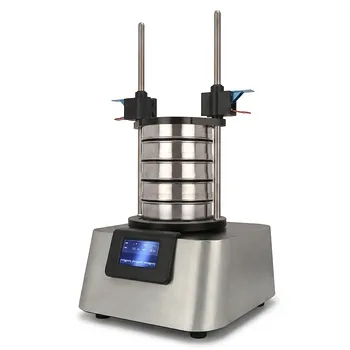
Vibratory Sieve Shaker Electromagnetic 3D Motion Powder Particle Size Analyzer for Dry and Wet Sieving
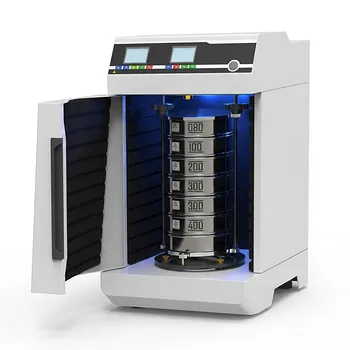
Laboratory Dry and Wet Three Dimensional Vibratory Sieve Shaker for Particle Analysis
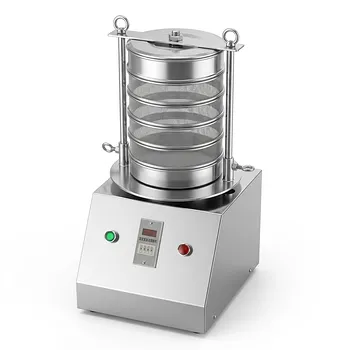
Stainless Steel Laboratory Vibratory Test Sieve Shaker

Heavy Duty Dry Three Dimensional Vibratory Sieve Shaker for Particle Separation

Dry Three Dimensional Vibratory Sieve Shaker
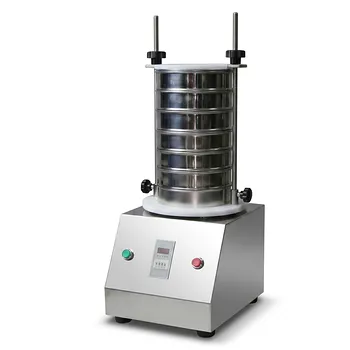
Small Laboratory Vibratory Sieve Shaker for Powder Gradation and Particle Size Analysis
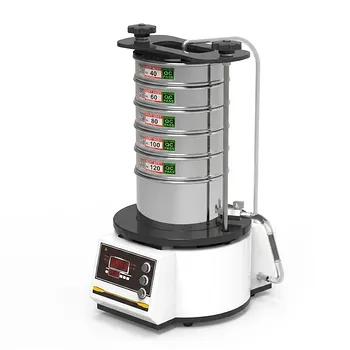
High Frequency Wet Three-Dimensional Vibrating Sieve Shaker for Dry and Wet Particle Size Analysis
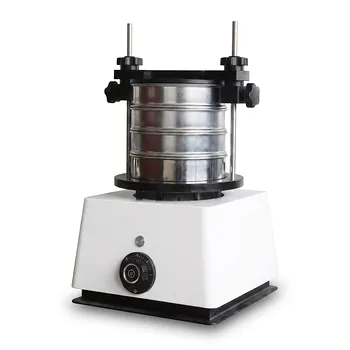
Small Laboratory Vibrating Sieve Shaker for Precise Particle Size Analysis
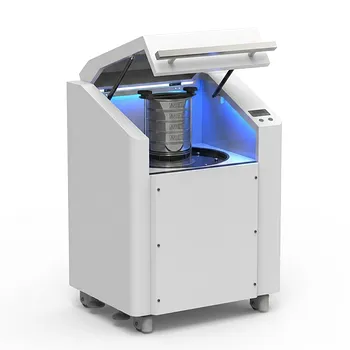
High Frequency Cabinet Type Three-Dimensional Rotary Vibrating Sieve Shaker for Dry Sieving and Particle Classification

Laboratory Vibratory Test Sieve Shaker for Precision Particle Size Analysis and Powder Grading
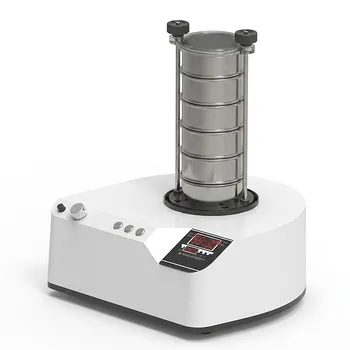
三维电磁微量振动筛分仪
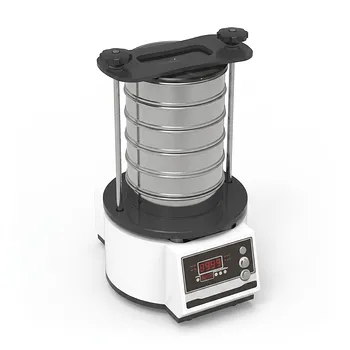
Tapping Oscillating Sieve Shaker for Dry and Wet Particle Size Analysis

Stainless Steel Rotary Vibrating Sieve High Precision Circular Vibratory Separator Industrial Powder Grading Machine Multi Layer Sifting Equipment
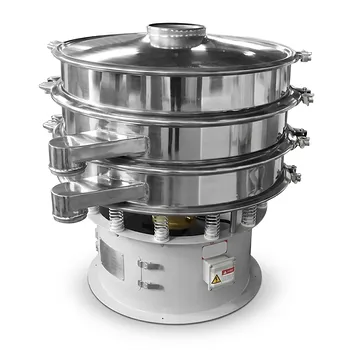
Three Dimensional Rotary Vibrating Sieve
Small Vibrating Ultrafine Grinder for Traditional Chinese Medicine
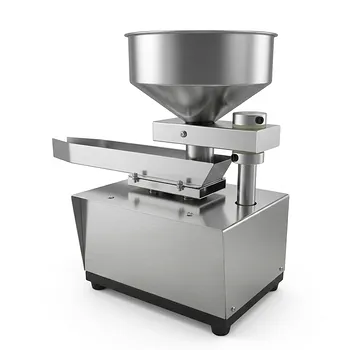
Automatic Vibrating Powder Feeder for Laboratory Material Processing Precision Vibratory Hopper Feeder for Granular and Powder Material Handling Industrial Grade Vibrating Tray Feeder for Consistent Material Sample Preparation
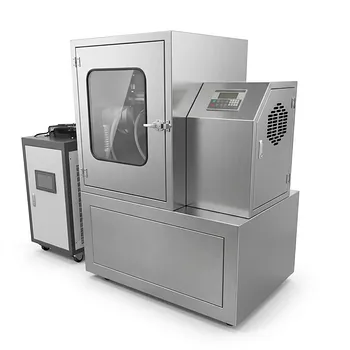
Vibratory Superfine Grinder for Ultra Fine Laboratory Powder Milling
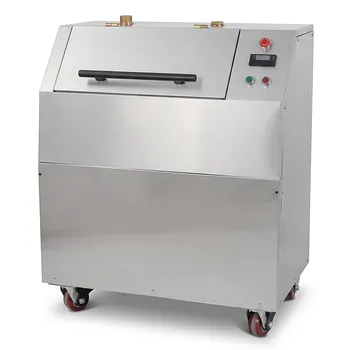
Vibratory Disc Mill for Rapid Fine Grinding and High Throughput Sample Preparation of Hard and Brittle Materials