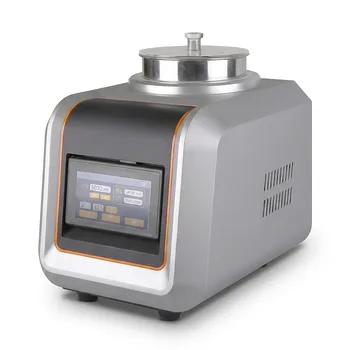
What is the purpose of using a vibratory sieve shaker in the pretreatment of zircon sand tailings? Boost HREE Recovery
Updated 5 months ago
The primary role of a vibratory sieve shaker in the pretreatment of zircon sand tailings is the precise classification of materials by particle size to facilitate the preliminary enrichment of Heavy Rare Earth Elements (HREEs). Because HREEs are naturally enriched within specific large particle size ranges in these tailings, mechanical sieving allows operators to isolate these valuable fractions. This targeted approach optimizes the feed quality for subsequent alkali fusion processes, which directly lowers overall energy consumption and improves mineral recovery rates.
Core Takeaway: The vibratory sieve shaker serves as a critical optimization tool that isolates rare-earth-rich fractions from bulk tailings, ensuring that downstream chemical and physical processing is both energy-efficient and highly productive.
Enhancing Mineral Enrichment and Feed Quality
Targeting Heavy Rare Earth Concentrations
In zircon sand tailings, Heavy Rare Earth Elements (HREEs) are not distributed uniformly across all particle sizes. Instead, they tend to cluster within specific large particle size ranges, making size-based classification a highly effective method for preliminary enrichment. By using standard test sieves, the shaker isolates these mineral-dense fractions, preventing the dilution of valuable elements during later stages.
Optimizing Downstream Chemical Reactions
Isolating the correct particle size is essential for the alkali fusion process, where the tailings are chemically treated to extract minerals. A refined feed ensures that chemical reagents interact more predictably and efficiently with the material. This precision reduces the volume of inert material entering the furnace, thereby minimizing energy waste and maximizing the yield of the chemical extraction.
Improving Process Efficiency and Consistency
Streamlining Physical Separation Stages
Beyond chemical processing, sieving provides a consistent feed size for gravity, magnetic, and electrostatic separation. When particles are uniform, these separation technologies can operate at peak stability and efficiency. This mechanical grading ensures that each particle responds predictably to physical forces, reducing the need for constant equipment recalibration.
High-Frequency Vibration and Repeatability
Vibratory sieve shakers utilize high-frequency, three-dimensional vibration to ensure particles jump and move across the entire sieve surface. This mechanical action is significantly more efficient than manual screening and ensures high repeatability in particle size distribution analysis. This standardization is vital for maintaining quality control across large volumes of industrial samples.
Scientific Modeling and Performance Prediction
Analyzing Filtration and Extraction Kinetics
The data gathered during the sieving stage is used to study how different particle size distributions affect filtration performance. Understanding these ratios allows engineers to build accurate predictive models for how the tailings will behave during liquid-solid separation. This foresight helps in designing more robust industrial filtration systems.
Breaking Down Weak Agglomerates
During the drying or storage of tailings and powders, weak agglomerates can form, which may skew particle size data or interfere with mold pressing. The high-frequency vibration of the shaker helps break down these clusters, ensuring the material possesses consistent flowability. This results in more uniform density in the final processed material or ceramic green body.
Understanding the Trade-offs
Mechanical Wear and Mesh Blinding
While highly effective, vibratory sieving is subject to mesh blinding, where particles become stuck in the sieve apertures, reducing accuracy over time. Constant vibration also leads to mechanical wear on the delicate mesh of standard test sieves. Operators must implement regular cleaning and calibration schedules to prevent data drift and maintain classification precision.
Limitations of Size-Based Enrichment
It is important to recognize that a sieve shaker classifies based on geometry, not chemistry. If HREEs in a specific deposit are not concentrated in specific size fractions, sieving will provide minimal enrichment benefits. Therefore, a thorough mineralogical characterization must be performed before relying on sieving as a primary enrichment strategy.
Applying This to Your Mineral Processing Goal
How to Apply This to Your Project
To maximize the utility of a vibratory sieve shaker in your tailings pretreatment workflow, consider your primary objective:
- If your primary focus is maximizing HREE yield: Focus on identifying the specific "sweet spot" size fractions where rare earths are concentrated and use the shaker to isolate these before alkali fusion.
- If your primary focus is reducing operational costs: Use the shaker to remove bulk inert fractions early in the process to lower the volume of material requiring high-heat chemical treatment.
- If your primary focus is process stability and modeling: Utilize multi-layer sieving to generate detailed particle size distribution curves to optimize your filtration and gravity separation equipment.
By integrating precise vibratory sieving into the pretreatment stage, you transform raw tailings into a high-value, standardized feedstock for advanced mineral extraction.
Summary Table:
| Purpose | Key Benefit | Operational Impact |
|---|---|---|
| HREE Enrichment | Isolates rare-earth-rich particle size fractions | Increases mineral yield & prevents dilution |
| Process Optimization | Refines feed for downstream alkali fusion | Minimizes energy waste & reagent consumption |
| Physical Separation | Ensures consistent feed for magnetic/gravity stages | Peak equipment stability & repeatability |
| Agglomerate Control | High-frequency vibration breaks down clusters | Improves material flowability & sample accuracy |
Optimize Your Mineral Recovery with Advanced Sample Prep Solutions
Are you looking to maximize HREE yields and reduce energy costs in your zircon sand processing? Our team specializes in providing complete laboratory sample preparation solutions for material science, focusing on precision powder processing and high-performance compaction.
From vibratory and air-jet sieve shakers for precise classification to planetary ball mills, cryogenic grinders, and jet mills for fine grinding, we offer the tools needed to refine your feedstock. We also manufacture a full spectrum of hydraulic presses, including standard lab presses and advanced Cold/Warm Isostatic Presses (CIP/WIP), ensuring your processed materials achieve uniform density and superior quality.
Ready to enhance your lab's efficiency and extraction rates? Contact our experts today to find the perfect equipment for your mineral processing and material science goals!
References
- Iga Trisnawati, Himawan Tri Bayu Murti Petrus. Sulfuric Acid Leaching of Heavy Rare Earth Elements (HREEs) from Indonesian Zircon Tailing. DOI: 10.14716/ijtech.v11i4.4037
Mentioned Products
- Vibratory Sieve Shaker Electromagnetic 3D Motion Powder Particle Size Analyzer for Dry and Wet Sieving
- Laboratory Dry and Wet Three Dimensional Vibratory Sieve Shaker for Particle Analysis
- Stainless Steel Laboratory Vibratory Test Sieve Shaker
- Heavy Duty Dry Three Dimensional Vibratory Sieve Shaker for Particle Separation
- Dry Three Dimensional Vibratory Sieve Shaker
People Also Ask
- How does a vibratory sieve shaker contribute to optimizing the performance of activated carbon? Enhance Adsorption Precision
- Why is a laboratory vibratory sieve shaker necessary for processing magnesium-based borate precursor powders? Boost Activity
- Why use a vibratory sieve shaker to verify coarse aggregate grading in rubberized concrete? Ensure Structural Integrity
- What function do vibratory sieve shakers and standard test sieves serve in the preparation of adsorbents? Key Guide
- What role does a vibratory sieve shaker play in the particle size analysis of ground corn products? Enhance QC Precision

Tech Team · PowderPreparation
Last updated on May 14, 2026
Related Products
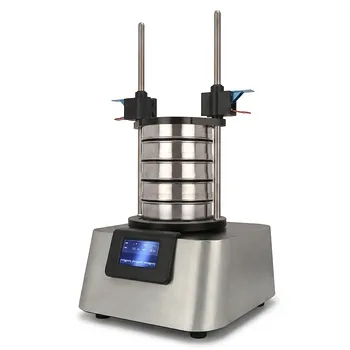
Vibratory Sieve Shaker Electromagnetic 3D Motion Powder Particle Size Analyzer for Dry and Wet Sieving
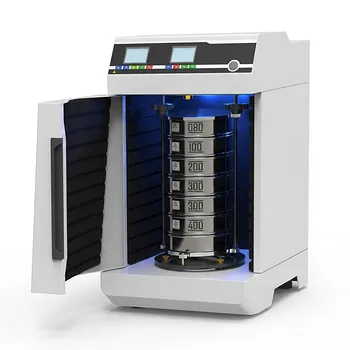
Laboratory Dry and Wet Three Dimensional Vibratory Sieve Shaker for Particle Analysis
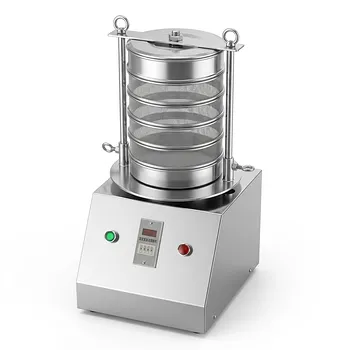
Stainless Steel Laboratory Vibratory Test Sieve Shaker
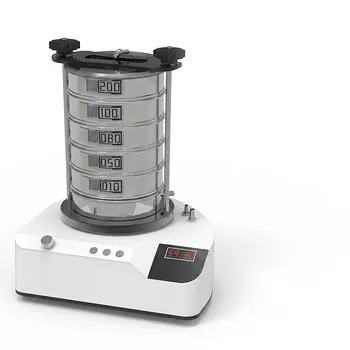
Heavy Duty Dry Three Dimensional Vibratory Sieve Shaker for Particle Separation
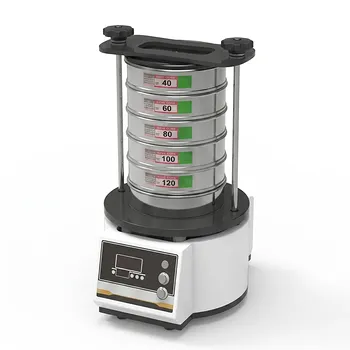
Dry Three Dimensional Vibratory Sieve Shaker
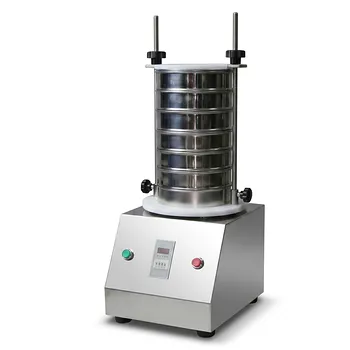
Small Laboratory Vibratory Sieve Shaker for Powder Gradation and Particle Size Analysis
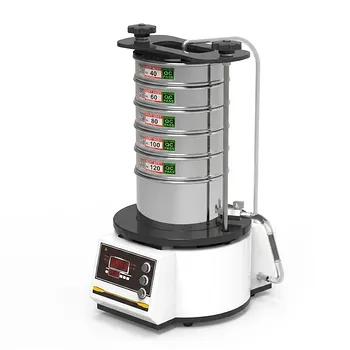
High Frequency Wet Three-Dimensional Vibrating Sieve Shaker for Dry and Wet Particle Size Analysis
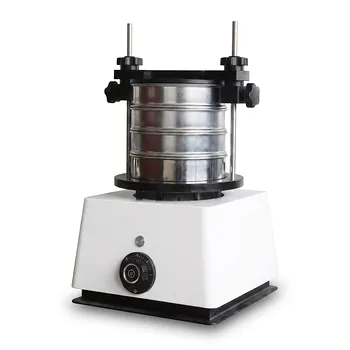
Small Laboratory Vibrating Sieve Shaker for Precise Particle Size Analysis
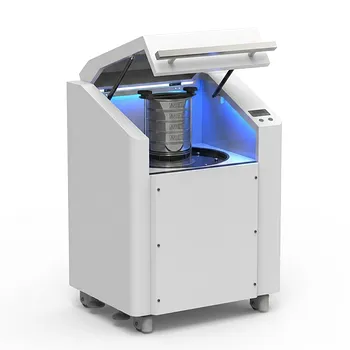
High Frequency Cabinet Type Three-Dimensional Rotary Vibrating Sieve Shaker for Dry Sieving and Particle Classification
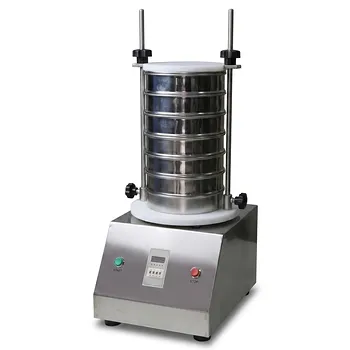
Laboratory Vibratory Test Sieve Shaker for Precision Particle Size Analysis and Powder Grading
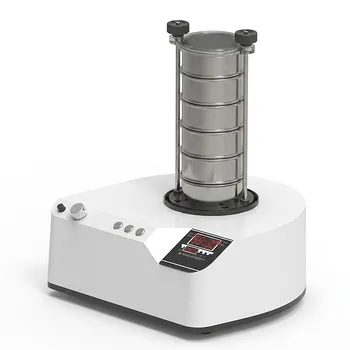
三维电磁微量振动筛分仪
Tapping Oscillating Sieve Shaker for Dry and Wet Particle Size Analysis
Stainless Steel Rotary Vibrating Sieve High Precision Circular Vibratory Separator Industrial Powder Grading Machine Multi Layer Sifting Equipment
Three Dimensional Rotary Vibrating Sieve
Small Vibrating Ultrafine Grinder for Traditional Chinese Medicine
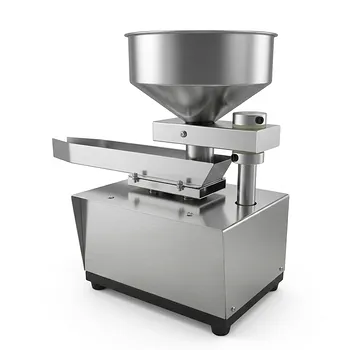
Automatic Vibrating Powder Feeder for Laboratory Material Processing Precision Vibratory Hopper Feeder for Granular and Powder Material Handling Industrial Grade Vibrating Tray Feeder for Consistent Material Sample Preparation
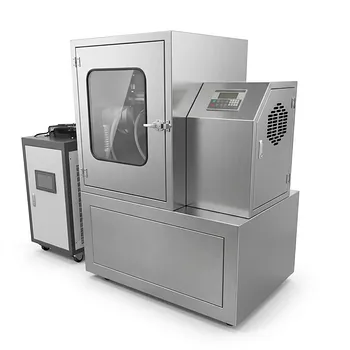
Vibratory Superfine Grinder for Ultra Fine Laboratory Powder Milling
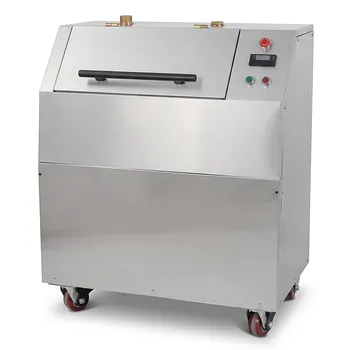
Vibratory Disc Mill for Rapid Fine Grinding and High Throughput Sample Preparation of Hard and Brittle Materials