What is the purpose of using a laboratory hydraulic press when characterizing the performance of ceramic powder compacts?
Updated 4 months ago
The primary purpose of a laboratory hydraulic press is to transform loose ceramic powder into a cohesive, geometrically defined "green body" through controlled axial pressure. This process allows researchers to evaluate crucial performance metrics such as green density, molding behavior, and structural integrity before the material undergoes high-temperature sintering. By applying uniform force, the press minimizes internal defects and provides the physical foundation necessary to study how the powder will react, shrink, and densify during final production.
A laboratory hydraulic press acts as the critical bridge between raw powder and a functional material, providing the precise compaction needed to study density, structural integrity, and sintering kinetics. It ensures uniform particle contact, which is essential for consistent solid-state reactions and the elimination of macroscopic defects that could lead to failure.
Achieving Structural Integrity and Geometric Precision
Formation of the Green Body
The hydraulic press is used to compress ceramic powders within a steel mold to create a green body. This is an unsintered ceramic compact that has enough mechanical strength to be handled and measured. Without this step, it would be impossible to evaluate the powder's ability to form stable shapes.
Standardizing Test Specimens
Researchers use the press to create standardized geometries, such as discs, cylinders, or "dog-bone" shapes. This uniformity is essential for downstream characterization, including microhardness measurements and fracture toughness (K1c) evaluations. Consistent dimensions ensure that performance data is comparable across different material batches.
Providing Mechanical Strength
Applying high-precision pressure increases the packing density of the powder particles. This eliminates internal voids and provides the necessary structural strength for the compact to withstand subsequent handling and the initial stages of the sintering process without crumbling or deforming.
Optimizing the Microstructure for Sintering
Increasing Particle Contact Area
The press significantly reduces the gaps between individual powder particles, maximizing the effective contact area between reactants. This is a fundamental requirement for accelerating diffusion and solid-state chemical reactions. Enhanced contact ensures the synthesis of materials with stable compositions and single-phase structures.
Reducing Internal Porosity
By applying constant pressures (often ranging from 35 MPa to as high as 390 MPa), the hydraulic press forces particles into a dense arrangement. This reduction in internal porosity is critical for achieving a high final density in the finished ceramic. It establishes the physical foundation required for effective densification mechanisms during heat treatment.
Preparing for Advanced Sintering
In processes like flash sintering, the hydraulic press ensures that internal particles are so closely packed that they establish a stable initial conductive path. This uniformity prevents localized current overloads or uneven discharges during the sintering cycle. Proper compaction is therefore a prerequisite for advanced ceramic processing techniques.
Evaluating Performance and Behavior
Measuring Green Density and Shrinkage
The press allows for the immediate measurement of green density, which is a key indicator of molding performance. By comparing the dimensions of the pressed compact before and after sintering, researchers can accurately calculate sintering shrinkage behavior. This data is vital for predicting the final dimensions of engineered ceramic components.
Minimizing Internal Stress Concentrations
Precise control over hydraulic pressure helps minimize internal stress concentrations within the compact. If pressure is applied unevenly, the resulting green body may contain "knit lines" or density gradients. These defects often lead to warping, cracking, or catastrophic failure during the high-temperature sintering stage.
Understanding the Trade-offs and Constraints
The Challenge of Pressure Gradients
While hydraulic presses provide precise axial force, they are subject to wall friction between the powder and the mold. This can create density gradients where the top of the compact is denser than the center. Engineers must account for these variations when characterizing large or complex specimens.
Risks of Over-Compaction
Applying excessive pressure can lead to capping or laminations, where the compact layers split upon release from the mold. This "springback" effect occurs when the elastic energy stored in the particles exceeds the strength of the green body. Finding the optimal pressure is a delicate balance between achieving density and maintaining structural integrity.
How to Apply This to Your Research
Making the Right Choice for Your Goal
- If your primary focus is evaluating sintering kinetics: Use the press to achieve maximum particle contact area to facilitate rapid diffusion and grain growth.
- If your primary focus is mechanical characterization: Prioritize geometric precision and surface finish to ensure accurate microhardness and fracture toughness results.
- If your primary focus is preventing deformation: Use high-precision pressure control to ensure uniform green density, which minimizes the risk of warping during the cooling phase.
- If your primary focus is chemical synthesis: Apply sufficient pressure to eliminate macroscopic gaps, ensuring solid-state reactions occur uniformly throughout the specimen.
By mastering the application of precise axial pressure, you can transform raw ceramic powders into highly predictable, high-performance materials.
Summary Table:
| Key Function | Core Benefit | Impact on Characterization |
|---|---|---|
| Green Body Formation | Creates cohesive specimens | Enables handling and initial density tests |
| Particle Compaction | Enhances contact area | Accelerates sintering kinetics and diffusion |
| Geometric Precision | Standardizes specimens | Ensures accurate K1c and hardness measurements |
| Porosity Control | Eliminates internal voids | Improves final density and reduces defects |
Elevate Your Material Research with Precision Compaction
Achieving the perfect ceramic compact requires more than just pressure; it requires precision. We specialize in providing complete laboratory sample preparation solutions tailored for material science. Whether you are characterizing powders or developing advanced ceramics, our equipment ensures reliable, repeatable results for every specimen.
Our extensive product range includes:
- Advanced Hydraulic Presses: Cold/Warm Isostatic Presses (CIP/WIP), standard lab presses, XRF pellet presses, hot presses, and vacuum hot presses.
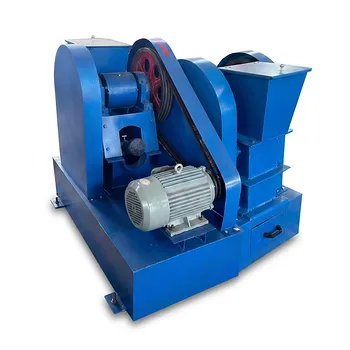
- Powder Processing: Jaw/roll crushers, liquid nitrogen cryogenic grinders, and high-energy mills (planetary, jet, sand, rotor).
- Sieving & Mixing: Vibratory/air-jet sieve shakers and high-efficiency powder or defoaming mixers.
Let us help you eliminate internal defects and optimize your sintering outcomes. Contact our technical experts today to find the ideal equipment for your laboratory needs!
References
- Shigeyuki Sōmiya, Rustum Roy. Ceramic Powders for Advanced Ceramics: What are Ideal Ceramic Powders for Advanced Ceramics?. DOI: 10.14723/tmrsj.35.473
Mentioned Products
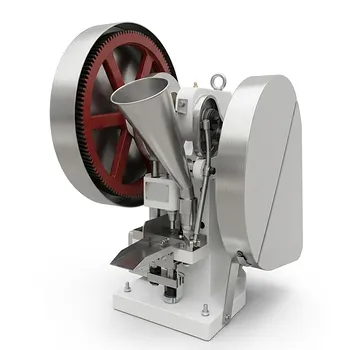
- 6-Ton Small Single-Punch Tablet Press — Laboratory Powder & Granule Tableting Equipment / Tablet Forming Machine
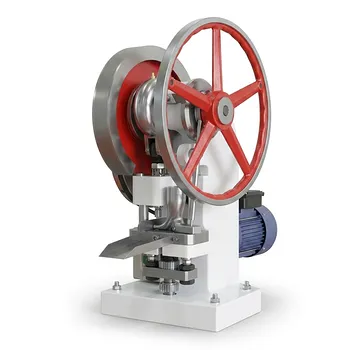
- 5 Ton Single Punch Tablet Press Laboratory Small Batch Production
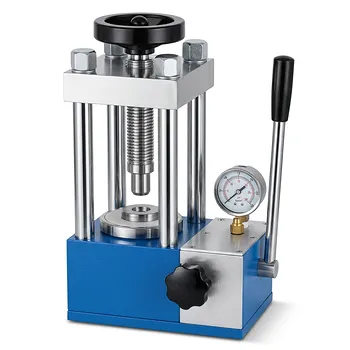
- Manual Tablet Press with Dual Scale Pressure Gauge for Pharmaceutical Food Chemical Laboratory Sample Preparation
- 6 Ton Variable Frequency Single Punch Tablet Press
- High Shear Laboratory Emulsifier for Mixing and Homogenization
People Also Ask
- What is the function of a laboratory press in Cr-Ti alloy evaluation? Quantify Fracture Stress & Strength
- What is the function of a laboratory press in assessing the hydrophobic performance of modified vermiculite fillers?
- What is the core function of a laboratory press in the forming of ceramic filter element green bodies? Maximize Density.
- What is the function of a laboratory press in the preparation of ceramic feed rods? Master Density and Precision
- Why is vacuum sealing and flexible packaging necessary for Aluminum Titanate powders during CIP? Ensure Peak Density

Tech Team · PowderPreparation
Last updated on Jun 03, 2026
Related Products
6-Ton Small Single-Punch Tablet Press — Laboratory Powder & Granule Tableting Equipment / Tablet Forming Machine
5 Ton Single Punch Tablet Press Laboratory Small Batch Production
Manual Tablet Press with Dual Scale Pressure Gauge for Pharmaceutical Food Chemical Laboratory Sample Preparation
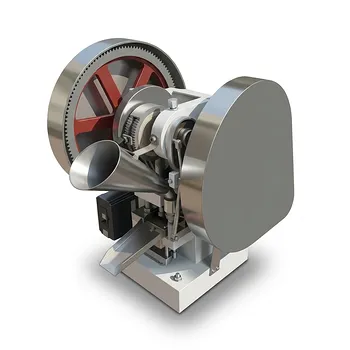
6 Ton Variable Frequency Single Punch Tablet Press
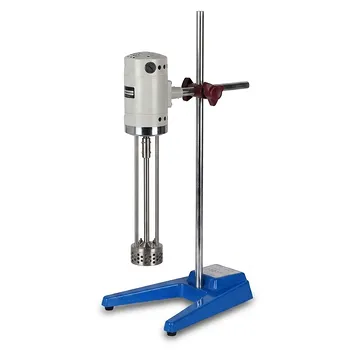
High Shear Laboratory Emulsifier for Mixing and Homogenization
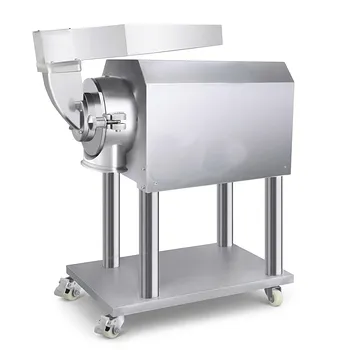
High Speed Small Laboratory Crusher for Dry Material Sample Preparation
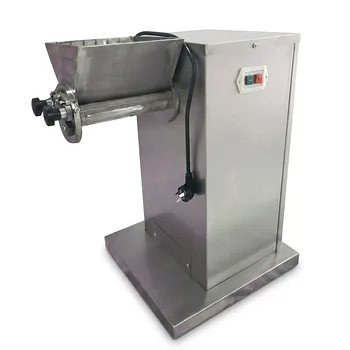
Small Laboratory Oscillating Granulator for Wet and Dry Granulation Processing
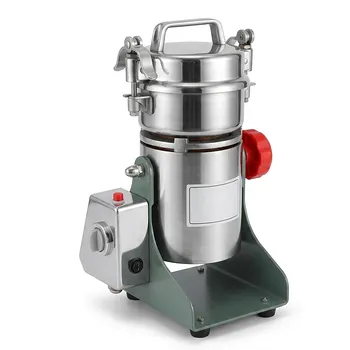
High Speed Swing Type Laboratory Pulverizer for Fine Powder Grinding and Sample Preparation