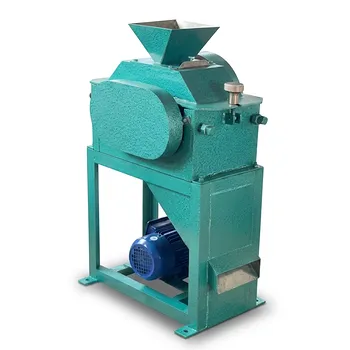
What is the purpose of using a lab hydraulic press in catalyst preparation for ammonia synthesis? Expert Guide
Updated 4 months ago
The laboratory hydraulic press is the critical bridge between loose catalyst powder and a stable reactor bed. Its primary purpose is to compress raw catalyst powders into high-density "green bodies" that possess the mechanical strength required for subsequent processing and survival in high-pressure reactor environments.
The laboratory hydraulic press ensures catalyst particles achieve the necessary mechanical integrity and packing density to withstand the extreme conditions of ammonia synthesis. By consolidating powders into structured solids, it prevents bed fragmentation and maintains stable gas flow.
Achieving Structural Integrity and Processability
The Formation of Green Bodies
A hydraulic press applies high-tonnage pressure to catalyst powders to mold them into cylindrical green bodies. These consolidated forms act as the precursor to the final catalyst shape, providing a manageable solid state for further refinement.
Facilitating Crushing and Sieving
Once the green bodies are formed, they must be crushed and sieved to achieve a specific particle size distribution. Without the initial compression from the hydraulic press, the catalyst would lack the mechanical strength to undergo this processing without reverting to useless fine dust.
Controlling Packing Density
The press allows researchers to dictate the packing density of the catalyst within the reactor. Proper density is essential for maximizing the volume of active material while ensuring there is enough interstitial space for gas to move through the bed.
Optimizing Reactor Performance and Longevity
Resistance to High-Pressure Flow
Ammonia synthesis occurs under extreme temperatures and high-pressure gas flows. The hydraulic press ensures that catalyst particles are robust enough to resist fragmentation, which would otherwise lead to "fines" that clog the system.
Maintaining Stable Pressure Drop
Consistent particle shape and strength, facilitated by the pressing process, prevent the catalyst bed from settling unevenly or compacting further during operation. This stability is vital for maintaining a constant pressure drop, which directly impacts the energy efficiency of the synthesis process.
Enhancing Thermal and Kinetic Properties
By increasing the physical contact between particles, the hydraulic press can improve the thermal conductivity of the catalyst bed. This ensures even heat distribution, preventing "hot spots" that can deactivate the catalyst or lead to runaway reactions.
Understanding the Trade-offs
Pore Structure vs. Mechanical Strength
While high pressure increases mechanical strength, excessive force can collapse the internal pore structure of the catalyst. Reducing the pore volume limits the surface area available for the reaction, potentially decreasing the overall catalytic activity.
Optimal Pressure Selection
Choosing the wrong pressure—such as 5 MPa versus 15 tons—can lead to vastly different outcomes in bulk density and structural integrity. Under-pressing leads to fragile particles that block reactors, while over-pressing can hinder gas diffusion into the catalyst interior.
How to Apply This to Your Project
Recommendations for Catalyst Preparation
- If your primary focus is reactor longevity: Prioritize higher compaction pressures to ensure maximum mechanical integrity against high-velocity gas flows.
- If your primary focus is catalytic activity: Use the minimum pressure required to form a stable green body to preserve the internal pore network and surface area.
- If your primary focus is experimental accuracy: Ensure standardized pressing cycles (constant tonnage and dwell time) to maintain consistent density across all test batches.
The laboratory hydraulic press is not merely a shaping tool, but a fundamental instrument for defining the mechanical and operational limits of an ammonia synthesis catalyst.
Summary Table:
| Key Function | Benefit for Catalyst | Impact on Reactor Performance |
|---|---|---|
| Green Body Formation | Provides mechanical strength for processing | Prevents reversion to dust during sieving |
| Density Control | Optimizes packing of active materials | Ensures balanced gas flow and interstitial space |
| Structural Integrity | Resists high-pressure fragmentation | Prevents 'fines' from clogging the system |
| Thermal Management | Improves particle-to-particle contact | Ensures even heat distribution; avoids hot spots |
Elevate Your Material Research with Precise Compaction Solutions
Ready to optimize your catalyst stability and reactor efficiency? [Our Brand Name] provides complete laboratory sample preparation solutions for material science, specializing in high-performance powder processing and compaction equipment.
Whether you are refining ammonia synthesis catalysts or developing new materials, our extensive product line is designed to meet the most rigorous standards. We offer:
- Advanced Hydraulic Presses: Cold/Warm Isostatic Presses (CIP/WIP), standard lab presses, XRF pellet presses, hot presses, and vacuum hot presses.
- Powder Processing: Jaw/roll crushers, liquid nitrogen cryogenic grinders, and high-energy mills (planetary ball, jet, sand/bead, disc, rotor).
- Analysis & Mixing: Vibratory/air-jet sieve shakers and high-efficiency powder or defoaming mixers.
Achieve consistent density, superior structural integrity, and experimental accuracy with equipment built for professionals. Contact us today to discuss your project requirements!
References
- Hubert Ronduda, Wioletta Raróg‐Pilecka. Boosting the Catalytic Performance of Co/Mg/La Catalyst for Ammonia Synthesis by Selecting a Pre-Treatment Method. DOI: 10.3390/catal11080941
Mentioned Products
- 6-Ton Small Single-Punch Tablet Press — Laboratory Powder & Granule Tableting Equipment / Tablet Forming Machine
- 5 Ton Single Punch Tablet Press Laboratory Small Batch Production
- Manual Tablet Press with Dual Scale Pressure Gauge for Pharmaceutical Food Chemical Laboratory Sample Preparation
- 6 Ton Variable Frequency Single Punch Tablet Press
- High Shear Laboratory Emulsifier for Mixing and Homogenization
People Also Ask
- What is the function of a laboratory press in Cr-Ti alloy evaluation? Quantify Fracture Stress & Strength
- What is the function of a laboratory press in assessing the hydrophobic performance of modified vermiculite fillers?
- What is the core function of a laboratory press in the forming of ceramic filter element green bodies? Maximize Density.
- What is the function of a laboratory press in the preparation of ceramic feed rods? Master Density and Precision
- Why is vacuum sealing and flexible packaging necessary for Aluminum Titanate powders during CIP? Ensure Peak Density

Tech Team · PowderPreparation
Last updated on Jun 03, 2026
Related Products
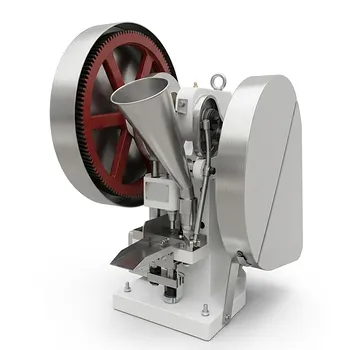
6-Ton Small Single-Punch Tablet Press — Laboratory Powder & Granule Tableting Equipment / Tablet Forming Machine
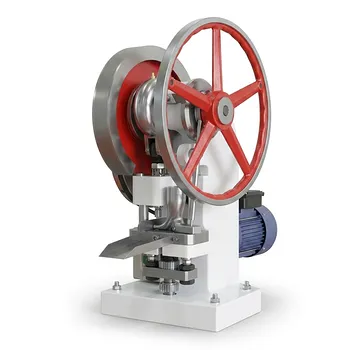
5 Ton Single Punch Tablet Press Laboratory Small Batch Production
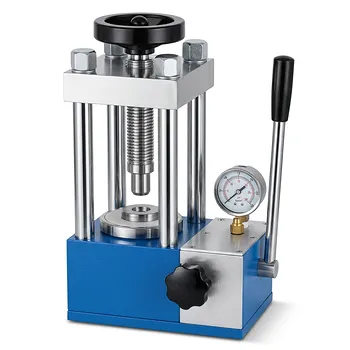
Manual Tablet Press with Dual Scale Pressure Gauge for Pharmaceutical Food Chemical Laboratory Sample Preparation
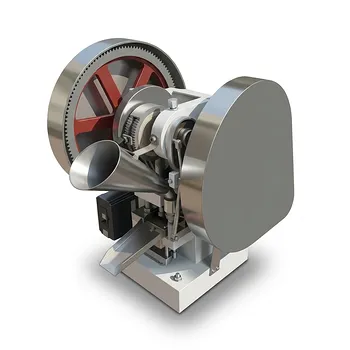
6 Ton Variable Frequency Single Punch Tablet Press
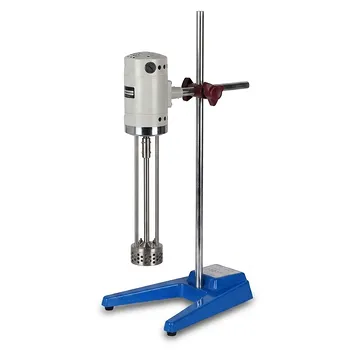
High Shear Laboratory Emulsifier for Mixing and Homogenization
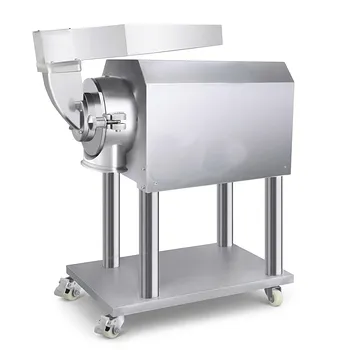
High Speed Small Laboratory Crusher for Dry Material Sample Preparation
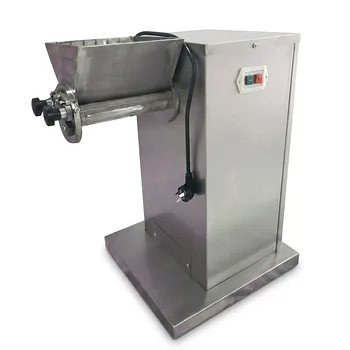
Small Laboratory Oscillating Granulator for Wet and Dry Granulation Processing
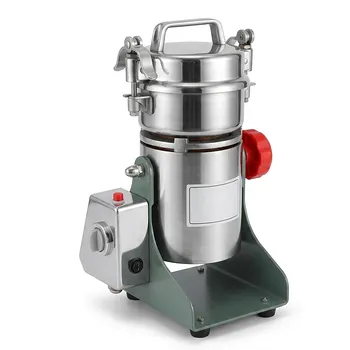
High Speed Swing Type Laboratory Pulverizer for Fine Powder Grinding and Sample Preparation
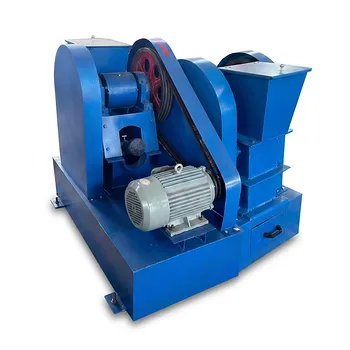
Horizontal Jaw Crusher Medium Hard Material Crushing Laboratory Sample Preparation Equipment