What is the purpose of using a laboratory hydraulic press during the assembly of coin cell batteries? Optimize Performance
Updated 5 months ago
The laboratory hydraulic press is a critical instrument in coin cell assembly because it provides the controlled, high-magnitude pressure necessary to ensure uniform physical contact between internal components, densify electrode materials, and achieve airtight encapsulation. By applying precise mechanical force, the press minimizes internal resistance and establishes the structural integrity required for reliable electrochemical testing.
The hydraulic press serves as the fundamental mechanical bridge between loose battery components and a functioning cell, optimizing internal interfaces and material density to ensure efficient ion transport and long-term cycling stability.
Maximizing Performance through Interfacial Contact
Reducing Interfacial Contact Resistance
The primary role of the press is to ensure that current collectors, electrodes, and separators maintain tight, uniform physical contact. This proximity is essential for reducing contact resistance, which allows electrons and ions to flow more freely across the different layers of the cell.
Ensuring Uniform Stress Distribution
Active materials naturally expand and contract during charge-discharge cycles, creating internal stress. A hydraulic press helps distribute this stress uniformly across the cell, preventing localized hot spots or mechanical failures that could degrade the battery prematurely.
Preventing Delamination and Peeling
By applying specific pressures—often around 55 kg per square centimeter—the press executes a "cold-pressing" step that secures the bond between layers. This prevents the solid-state cathode or metallic lithium anode from delaminating or peeling during the physical rigors of cycling.
Enhancing Material Density and Ion Transport
Eliminating Internal Porosity
In solid-state and powder-based batteries, the press applies ultra-high pressure, sometimes exceeding 360 MPa, to compress composite powders into a dense structure. This process eliminates internal pores and voids, which is vital for achieving high volumetric energy density.
Establishing Effective Ion Transport Paths
High axial pressure densifies the electrolyte and electrode layers, forcing particles into intimate contact. This creates continuous lithium-ion transport channels, which are necessary for maintaining high rate performance and minimizing interfacial impedance.
Increasing Adhesion to Current Collectors
Applying uniform pressure to cut electrode discs significantly enhances the adhesion between the active material and the metal current collector. This improved bond ensures that the electrode remains structurally sound and electronically conductive throughout the life of the battery.
Precision Sealing and Encapsulation
Achieving an Airtight Seal
When equipped with specialized dies, a hydraulic press provides the consistent force required to crimp and seal button batteries like the CR2032. This encapsulation is vital to prevent electrolyte evaporation and to block the infiltration of external air or moisture.
Maintaining Internal Compression
The sealing process does more than just close the cell; it locks in a state of internal compression. This persistent pressure keeps the lithium metal anode and separator in tight contact, which is a prerequisite for successful high-voltage cycling tests.
Understanding the Trade-offs
Risks of Excessive Pressure
While high pressure is necessary for densification, exceeding the material's limits can lead to internal short circuits or the mechanical failure of the separator. Over-compression may also cause the electrolyte to be squeezed out of the electrode pores, leading to a loss of ionic conductivity.
Pressure Calibration Challenges
Manual hydraulic presses require careful operator calibration to ensure repeatability across different batches. Inconsistent pressure application can lead to variations in cell impedance and capacity, making it difficult to achieve scientifically valid comparisons between test samples.
Making the Right Choice for Your Research Goal
How to Apply This to Your Project
Depending on your specific battery chemistry and form factor, your use of the hydraulic press will vary:
- If your primary focus is solid-state battery development: Use ultra-high pressure (300+ MPa) to eliminate voids and establish the dense interfaces necessary for ion transport without liquid electrolytes.
- If your primary focus is standard liquid-electrolyte coin cells: Prioritize the sealing stage to ensure an airtight environment and stable internal contact between the electrodes and the separator.
- If your primary focus is high-rate performance: Use the press to increase the compaction density of your coated electrodes, which minimizes electronic resistance and improves energy density.
By mastering the application of pressure, you ensure that your laboratory results are a true reflection of your chemistry rather than a symptom of poor mechanical assembly.
Summary Table:
| Key Function | Benefit to Battery Assembly | Impact on Performance |
|---|---|---|
| Interfacial Contact | Reduces contact resistance between layers | Improved ion and electron flow |
| Densification | Eliminates internal porosity and voids | Higher volumetric energy density |
| Airtight Sealing | Prevents electrolyte evaporation and contamination | Enhanced long-term cycling stability |
| Material Adhesion | Secures active material to current collectors | Increased structural and mechanical integrity |
| Ion Transport | Creates continuous conductive pathways | Better high-rate performance |
Precision Compaction Solutions for Your Battery Research
Achieving consistent results in coin cell assembly requires more than just chemistry—it requires mechanical precision. We provide complete laboratory sample preparation solutions for material science, specializing in high-performance powder processing and compaction equipment designed to meet the rigorous demands of battery research.
Our extensive product lines include:
- Hydraulic Presses: A full spectrum including Cold/Warm Isostatic Presses (CIP/WIP), standard lab presses, XRF pellet presses, hot presses, and vacuum hot presses.
- Size Reduction: Crushers (jaw/roll), liquid nitrogen cryogenic grinders, and advanced mills (planetary ball, jet, sand/bead, disc, rotor).
- Processing & Analysis: Sieve shakers (vibratory/air-jet), powder mixers, and defoaming mixers.
Whether you are refining solid-state interfaces or optimizing standard electrode density, our equipment ensures your laboratory results are accurate and repeatable. Contact us today to find your perfect equipment match and elevate your material processing capabilities!
References
- Joshua Cruddos, Alexander J. E. Rettie. Toward zero-excess lithium sulfur batteries: a systematic cell parameter study. DOI: 10.1088/2515-7655/ada700
Mentioned Products
- 6-Ton Small Single-Punch Tablet Press — Laboratory Powder & Granule Tableting Equipment / Tablet Forming Machine
- 5 Ton Single Punch Tablet Press Laboratory Small Batch Production
- Manual Tablet Press with Dual Scale Pressure Gauge for Pharmaceutical Food Chemical Laboratory Sample Preparation
- 6 Ton Variable Frequency Single Punch Tablet Press
- High Shear Laboratory Emulsifier for Mixing and Homogenization
People Also Ask
- What is the function of a laboratory press in Cr-Ti alloy evaluation? Quantify Fracture Stress & Strength
- What is the function of a laboratory press in assessing the hydrophobic performance of modified vermiculite fillers?
- What is the core function of a laboratory press in the forming of ceramic filter element green bodies? Maximize Density.
- What is the function of a laboratory press in the preparation of ceramic feed rods? Master Density and Precision
- Why is vacuum sealing and flexible packaging necessary for Aluminum Titanate powders during CIP? Ensure Peak Density

Tech Team · PowderPreparation
Last updated on May 14, 2026
Related Products
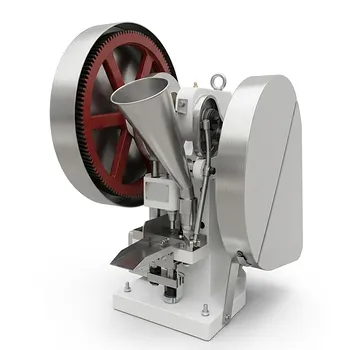
6-Ton Small Single-Punch Tablet Press — Laboratory Powder & Granule Tableting Equipment / Tablet Forming Machine
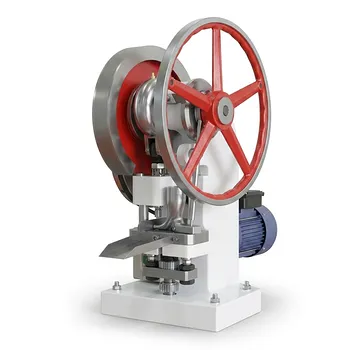
5 Ton Single Punch Tablet Press Laboratory Small Batch Production
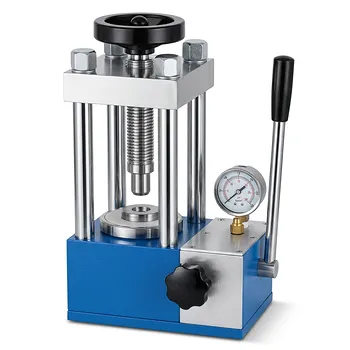
Manual Tablet Press with Dual Scale Pressure Gauge for Pharmaceutical Food Chemical Laboratory Sample Preparation
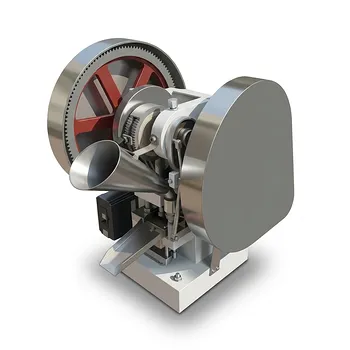
6 Ton Variable Frequency Single Punch Tablet Press
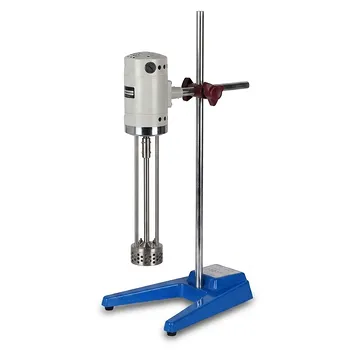
High Shear Laboratory Emulsifier for Mixing and Homogenization
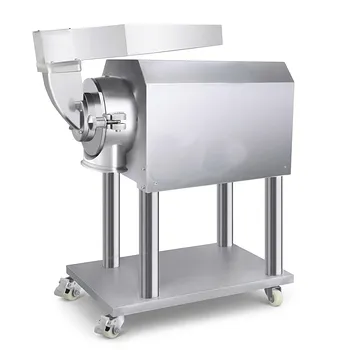
High Speed Small Laboratory Crusher for Dry Material Sample Preparation
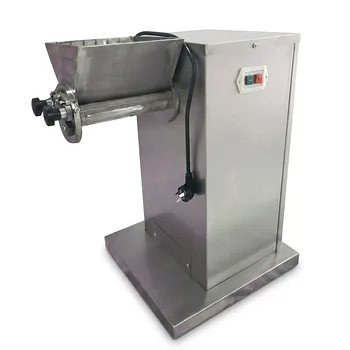
Small Laboratory Oscillating Granulator for Wet and Dry Granulation Processing
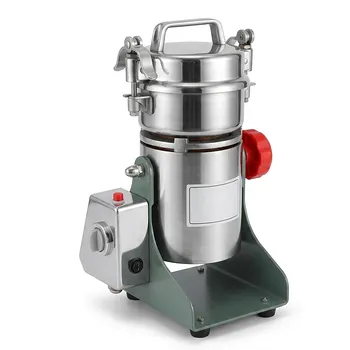
High Speed Swing Type Laboratory Pulverizer for Fine Powder Grinding and Sample Preparation