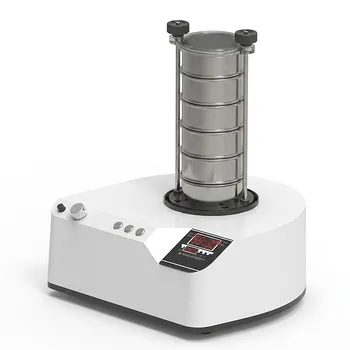
What is the purpose of using a fine-aperture analysis sieve to filter slurry before film casting? Ensure Flawless Films
Updated 4 months ago
The primary purpose of using a fine-aperture analysis sieve is to ensure slurry homogeneity by removing uncrushed particles, large aggregates, and foreign debris. This filtration step is critical for preventing surface defects such as protrusions or scratches during the film-casting process. By maintaining a uniform liquid state, the sieve protects the material's structural integrity and functional properties.
Core Takeaway: Filtration acts as a final quality control gate that eliminates physical contaminants larger than the intended film thickness, directly ensuring the optical clarity, barrier performance, and geometric precision of the final product.
Preventing Surface and Structural Defects
Eliminating Large Aggregates and Uncrushed Particles
During the preparation of slurries, such as clay-lignin or ceramic mixtures, raw materials may not fully disperse. Analysis sieves capture these uncrushed clusters before they reach the casting stage. This ensures that the coating liquid remains a consistent, fine-grained suspension.
Reducing Surface Protrusions and Scratches
If large particles remain in the slurry, they can become lodged under the casting blade or doctor blade. These particles create surface protrusions or drag across the substrate, causing permanent scratches. Such defects compromise the aesthetic and functional quality of the thin film.
Separating Grinding Media
In processes involving ball milling, fragments of grinding media (like alumina balls) can contaminate the slurry. A sieve physically intercepts these fragments while allowing the homogenized liquid to pass through. This separation is vital before the slurry moves to sensitive stages like ultrasonic degassing.
Optimizing Functional Material Properties
Guaranteeing Light Transmittance
For films where transparency is a requirement, internal uniformity is non-negotiable. Large aggregates act as scattering centers for light, reducing the overall transmittance of the material. Effective filtration ensures the film remains clear and free from internal optical obstructions.
Securing Barrier Integrity
Thin films often serve as barriers against moisture or gases. Particles larger than the film thickness can create micro-voids or weak points in the structure. By removing these oversized elements, the sieve helps maintain a continuous, high-density barrier layer.
Ensuring Resolution in Precision Manufacturing
In applications like 3D printing or high-resolution casting, the sieve aperture must match or be smaller than the layer thickness. For instance, using a 50 µm sieve for a 50 µm printing layer ensures that no particle can interfere with the precise formation of complex geometries.
Understanding the Trade-offs and Pitfalls
The Risk of Mesh Blinding
Using an excessively fine sieve with a high-viscosity slurry can lead to mesh blinding, where particles clog the apertures. This slows down production and may require specialized equipment, such as vibratory or ultrasonic sieving, to maintain flow.
Potential for Material Loss
If the slurry is not properly dispersed before filtration, a fine sieve may remove significant amounts of active raw materials. This can unintentionally alter the chemical composition or solids loading of the final slurry, leading to inconsistent batch results.
Maintenance and Contamination
Sieves must be meticulously cleaned and inspected for wire fatigue or tears. A damaged sieve provides a false sense of security, allowing large particles to pass through, while a dirty sieve can introduce cross-contamination from previous batches.
How to Apply This to Your Process
Choosing the Right Sieve for Your Goal
To maximize the effectiveness of your filtration step, you must align the sieve specifications with your final product requirements.
- If your primary focus is Optical Clarity: Select a sieve with an aperture significantly smaller than the wavelength of light or the total film thickness to eliminate scattering centers.
- If your primary focus is Geometric Precision: Ensure the sieve aperture is equal to or smaller than your minimum layer height (e.g., 50 µm for DLP printing) to prevent mechanical interference.
- If your primary focus is Structural Integrity: Use a precision micro-aperture sieve to remove all un-dispersed aggregates that could act as stress concentrators or barrier leaks.
Strategic filtration is the most cost-effective method for ensuring that the microscopic quality of a slurry translates into the macroscopic performance of the final film.
Summary Table:
| Key Benefit | Description | Impact on Final Film |
|---|---|---|
| Homogeneity | Removes uncrushed clusters and aggregates | Ensures uniform thickness and structural integrity |
| Surface Quality | Eliminates particles that cause scratches | Prevents surface protrusions and aesthetic defects |
| Purity | Filters out grinding media (e.g., alumina balls) | Protects material properties and downstream equipment |
| Functionality | Removes light-scattering centers and micro-voids | Optimizes optical clarity and gas/moisture barriers |
| Precision | Matches particle size to layer height | Critical for high-resolution casting and 3D printing |
Optimize Your Material Preparation Workflow
Achieving superior film quality starts with precise powder processing and filtration. At our core, we provide complete laboratory sample preparation solutions tailored for material science professionals. Whether you need to achieve the perfect particle size or ensure a defect-free slurry, our equipment is designed for precision and reliability.
Our extensive product line includes:
- Size Reduction: Jaw/roll crushers and advanced mills (planetary ball, jet, sand/bead, disc, and rotor).
- Sieving & Mixing: Vibratory and air-jet sieve shakers with a wide range of test sieves, plus high-efficiency powder and defoaming mixers.
- Compaction & Thermal Processing: A full spectrum of hydraulic presses, including Cold/Warm Isostatic Presses (CIP/WIP), XRF pellet presses, and vacuum hot presses.
Ready to elevate your lab's performance? Contact our experts today to find the right equipment for your specific application and ensure your materials meet the highest standards.
References
- Kazuhiro Shikinaka, Yuichiro Otsuka. Nonflammable UV protective films consisting of clay and lignin with tunable light/gas transparency. DOI: 10.1039/d1ra04096k
Mentioned Products
- Laboratory Air Jet Sieving Machine for Fine Powder Particle Size Analysis and Deagglomeration
- Tapping Oscillating Sieve Shaker for Dry and Wet Particle Size Analysis
- Small Laboratory Vibrating Sieve Shaker for Precise Particle Size Analysis
- Laboratory Dry and Wet Three Dimensional Vibratory Sieve Shaker for Particle Analysis
- Laboratory Vibratory Test Sieve Shaker for Precision Particle Size Analysis and Powder Grading
People Also Ask
- What role do laboratory test sieves play in the nanocrystallization process of iron powder? Ensure Uniform Refinement
- What is the function of a laboratory test sieve in the river sediment sample preparation process? Ensure Precise Data
- What is the purpose of using 0.038 mm sieves in magnetite grinding? Quantify Kinetics and Boost Grinding Efficiency
- How do laboratory test sieves contribute to the analysis of soil texture composition? Optimize Particle Grading Accuracy
- Why is a 0.08mm standard sieve required for testing the fineness of cement? Optimize Recycled Pervious Concrete Quality

Tech Team · PowderPreparation
Last updated on Jun 03, 2026
Related Products
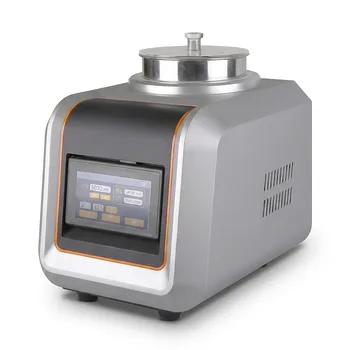
Laboratory Air Jet Sieving Machine for Fine Powder Particle Size Analysis and Deagglomeration
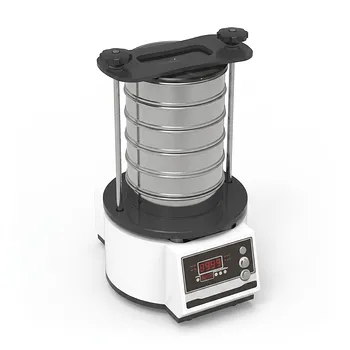
Tapping Oscillating Sieve Shaker for Dry and Wet Particle Size Analysis
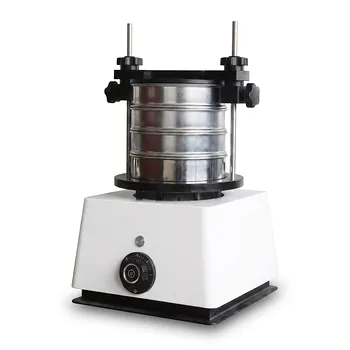
Small Laboratory Vibrating Sieve Shaker for Precise Particle Size Analysis
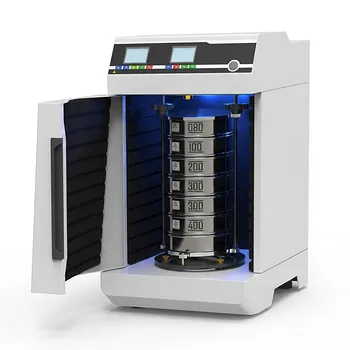
Laboratory Dry and Wet Three Dimensional Vibratory Sieve Shaker for Particle Analysis

Laboratory Vibratory Test Sieve Shaker for Precision Particle Size Analysis and Powder Grading
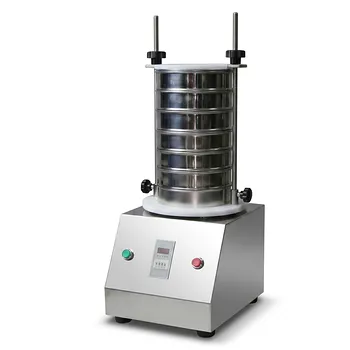
Small Laboratory Vibratory Sieve Shaker for Powder Gradation and Particle Size Analysis
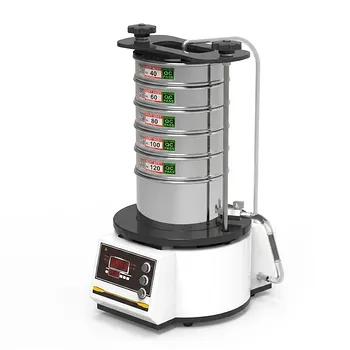
High Frequency Wet Three-Dimensional Vibrating Sieve Shaker for Dry and Wet Particle Size Analysis
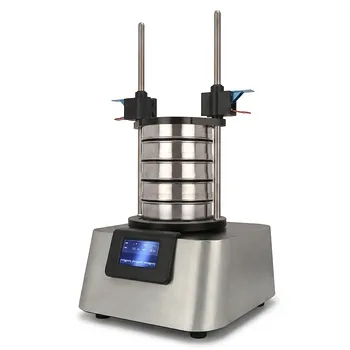
Vibratory Sieve Shaker Electromagnetic 3D Motion Powder Particle Size Analyzer for Dry and Wet Sieving

Dry Three Dimensional Vibratory Sieve Shaker
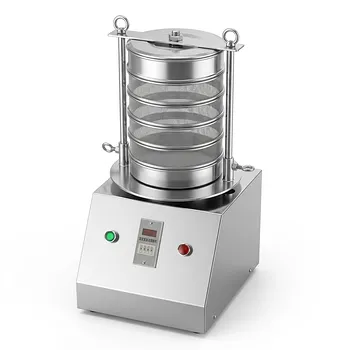
Stainless Steel Laboratory Vibratory Test Sieve Shaker