What is the purpose of the pre-pressing step for Steatite-Based Ceramics? Build Stronger Green Bodies
Updated 5 months ago
The pre-pressing step is essential for establishing the structural foundation of Steatite-Based Ceramic components. By applying a controlled pressure of 2.5 to 3.0 MPa, a laboratory hydraulic press transforms loose powder into a stable geometric entity, such as a 20mm diameter disc or rectangular block. This initial consolidation provides the powder with the necessary structural integrity and shape required for subsequent high-pressure densification via processes like cold isostatic pressing (CIP).
Pre-pressing acts as a bridge between loose raw material and a functional "green body," ensuring the powder is sufficiently compacted to handle further processing without losing its geometric form. It establishes the initial density and particle contact necessary for uniform final densification.
Establishing Structural Integrity for Handling
Creating a Stable Geometric Entity
Loose ceramic powder lacks the cohesion necessary to maintain a specific shape. Pre-pressing utilizes a laboratory hydraulic press to force particles into a defined mold, creating a "green body" that can be handled and transported.
Providing Mechanical Strength
The application of 2.5 to 3.0 MPa of pressure initiates particle rearrangement and initial bonding. This provides the green body with the mechanical strength needed to withstand the transition to high-pressure stages like cold isostatic pressing.
Facilitating Downstream Processing
Without this step, loading loose powder into subsequent molds or isostatic bags would be imprecise. Pre-pressed discs or blocks serve as a stable physical foundation, ensuring that high-pressure densification is applied to a uniform, pre-defined volume.
Optimizing Densification and Material Quality
Reducing Internal Porosity
Even at low pressures, pre-pressing begins the process of eliminating internal voids. Reducing the initial gaps between raw material particles is vital for achieving a high final green density.
Improving Pressure Transmission
A consolidated pre-pressed block allows for more uniform pressure transmission during final densification. This prevents localized density variations that could lead to structural weaknesses or warping in the final ceramic product.
Shortening Diffusion Paths
By increasing the initial contact area between powder particles, pre-pressing establishes the groundwork for atomic diffusion. This is critical during the subsequent sintering stage, as it ensures a more efficient and complete densification process.
Controlling Final Product Dimensions
Managing Shrinkage Rates
The pressure applied during the pre-pressing stage directly influences the green density of the ceramic. Since green density determines how much a part will shrink during sintering, precise pre-pressing is key to maintaining dimensional tolerances.
Preventing Deformation and Cracking
Uniform densification achieved through pre-pressing helps ensure that heat generation is symmetric during sintering. This reduces the risk of thermal gradients that cause the final product to crack or deform.
Ensuring Mold Symmetry
When using precision steel molds, pre-pressing ensures that the upper and lower punches are symmetrically positioned. This alignment is critical for achieving a balanced distribution of material within the mold cavity.
Understanding the Trade-offs
Pressure Sensitivity
Applying too little pressure during pre-pressing results in a fragile green body that may crumble during handling. Conversely, exceeding the recommended 3.0 MPa for steatite at this stage may lead to lamination defects or "capping," where the compact splits into layers.
Tooling and Precision
The success of pre-pressing is highly dependent on the quality of the precision steel molds. Any imperfections in the mold will be mirrored in the green body, potentially causing stress concentrations that manifest as cracks during the high-temperature sintering phase.
Applying Pre-Pressing to Your Workflow
Recommendations for Implementation
- If your primary focus is dimensional accuracy: Ensure pre-pressing pressure is strictly maintained within the 2.5 to 3.0 MPa range to keep shrinkage rates predictable.
- If your primary focus is structural durability: Use the pre-pressing step to maximize particle contact area, which provides the green body with the strength to survive complex handling.
- If your primary focus is high-volume consistency: Standardize the dimensions of your pre-pressed discs (e.g., 20mm) to ensure uniform results during subsequent cold isostatic pressing.
Correctly executing the pre-pressing stage ensures that your Steatite-Based Ceramics transition from loose powder to high-performance components with minimal defects.
Summary Table:
| Stage/Feature | Purpose & Impact | Key Parameter/Tool |
|---|---|---|
| Structural Foundation | Transforms loose powder into a stable "green body" for handling. | 2.5 - 3.0 MPa Pressure |
| Densification | Reduces internal porosity and improves pressure transmission. | Hydraulic Lab Press |
| Quality Control | Manages shrinkage rates and prevents cracks/deformation. | Precision Steel Molds |
| Downstream Prep | Prepares the sample for Cold Isostatic Pressing (CIP). | 20mm Disc/Block Form |
Elevate Your Material Research with Precision Powder Solutions
Achieving the perfect green body requires more than just technique—it demands high-precision equipment. At [Brand Name], we provide complete laboratory sample preparation solutions tailored for material science.
Whether you are processing Steatite-Based Ceramics or advanced composites, our extensive product line supports your entire workflow:
- Powder Processing: High-efficiency crushers, cryogenic grinders, and planetary ball/jet mills.
- Compaction & Pressing: A full spectrum of hydraulic lab presses, including manual/electric versions and XRF pellet presses.
- Advanced Densification: Industry-leading Cold/Warm Isostatic Presses (CIP/WIP) and vacuum hot presses for superior material density.
- Mixing & Sizing: Specialized powder mixers, defoaming mixers, and precision sieve shakers.
Ready to optimize your sample preparation and reduce material defects? Contact our technical experts today to find the ideal equipment for your laboratory's specific needs.
References
- H. Kelvin, W.D. Teng. Phase Analysis and Densification of Steatite-based Ceramics. DOI: 10.15282/ijame.1.2010.1.0004
Mentioned Products
- 6-Ton Small Single-Punch Tablet Press — Laboratory Powder & Granule Tableting Equipment / Tablet Forming Machine
- Enhanced 9 Punch Rotary Tablet Press for Powder Compaction
- 6 Ton Variable Frequency Single Punch Tablet Press
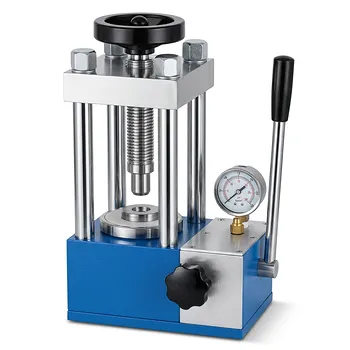
- Manual Tablet Press with Dual Scale Pressure Gauge for Pharmaceutical Food Chemical Laboratory Sample Preparation
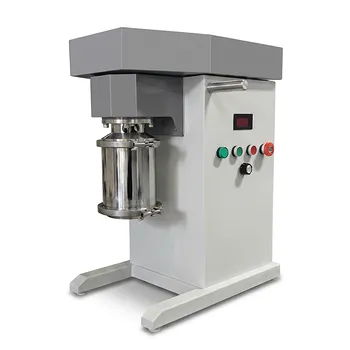
- Nano Laboratory Bead Mill Desktop Sub Micron Sand Mill Screenless Seal Less Powder Grinder
People Also Ask
- What is the function of a laboratory press in Cr-Ti alloy evaluation? Quantify Fracture Stress & Strength
- What is the function of a laboratory press in assessing the hydrophobic performance of modified vermiculite fillers?
- What is the core function of a laboratory press in the forming of ceramic filter element green bodies? Maximize Density.
- What is the function of a laboratory press in the preparation of ceramic feed rods? Master Density and Precision
- Why is vacuum sealing and flexible packaging necessary for Aluminum Titanate powders during CIP? Ensure Peak Density

Tech Team · PowderPreparation
Last updated on May 14, 2026
Related Products
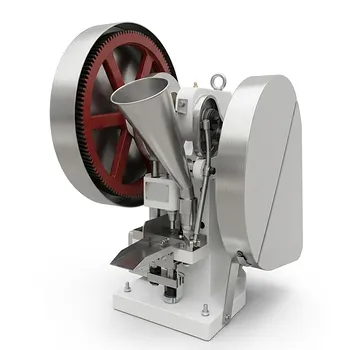
6-Ton Small Single-Punch Tablet Press — Laboratory Powder & Granule Tableting Equipment / Tablet Forming Machine
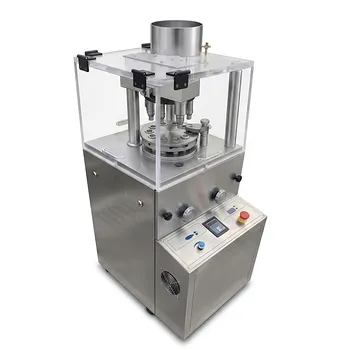
Enhanced 9 Punch Rotary Tablet Press for Powder Compaction
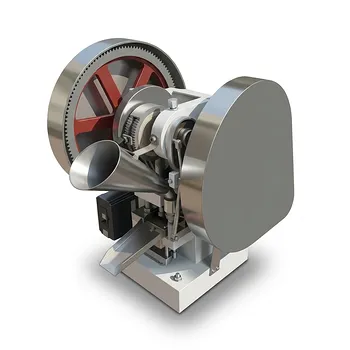
6 Ton Variable Frequency Single Punch Tablet Press
Manual Tablet Press with Dual Scale Pressure Gauge for Pharmaceutical Food Chemical Laboratory Sample Preparation
Nano Laboratory Bead Mill Desktop Sub Micron Sand Mill Screenless Seal Less Powder Grinder
5 Ton Single Punch Tablet Press Laboratory Small Batch Production

Vertical Production Planetary Ball Mill for High Throughput Powder Processing
Small Ceramic Structure Laboratory Sand Mill Nanoscale Grinding Dispersion Equipment Seal-less Screen-less Design
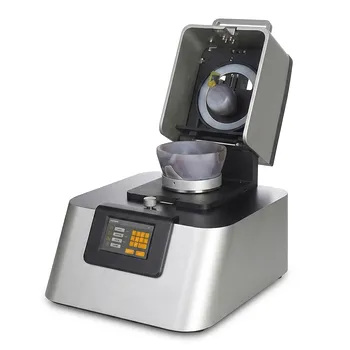
Laboratory Mortar Grinder for Sample Preparation and Cryogenic Powder Homogenization

Automatic Vibrating Powder Feeder for Laboratory Material Processing Precision Vibratory Hopper Feeder for Granular and Powder Material Handling Industrial Grade Vibrating Tray Feeder for Consistent Material Sample Preparation