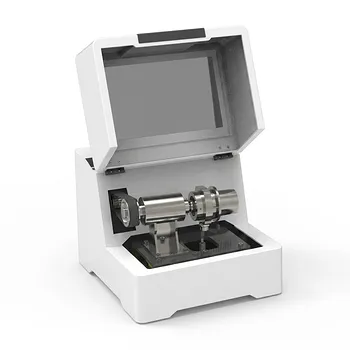
What is the purpose of secondary mixing using a planetary ball mill after drying Al-Gr? Optimize Composite Homogeneity
Updated 4 months ago
Secondary planetary ball milling is the critical bridge between powder synthesis and final consolidation. It serves primarily to break down soft agglomerates that form during the drying process and to ensure a highly uniform distribution of graphene nanosheets within the aluminum matrix. This uniformity is essential for achieving consistent, isotropic mechanical properties in the final sintered material.
The core purpose of secondary milling is to use high-energy impact and shear forces to eliminate particle clusters and mechanically anchor graphene to the aluminum surfaces. This homogenization prevents localized material weaknesses and ensures the reinforcement phase remains stable during subsequent thermal processing.
Breaking Down Soft Agglomerates
The Impact of the Drying Phase
During the initial synthesis and drying of aluminum-graphene (Al-Gr) powders, particles often stick together to form soft agglomerates. These clusters act as defects in the powder, preventing the graphene from making intimate contact with the metal matrix.
Mechanical Disruption of Clusters
The planetary ball mill generates high-frequency impact and shear forces through the combined revolution and rotation of the milling jars. These forces physically pull agglomerates apart, returning the composite to a free-flowing, homogenized powder state.
Achieving Isotropic Mechanical Properties
Ensuring Microscopic Uniformity
For a composite to exhibit high performance, the reinforcement phase must be distributed evenly at the microscopic scale. Secondary milling, even for short durations like 30 minutes, ensures that graphene nanosheets are not concentrated in "islands" but are spread throughout the aluminum matrix.
The Role of Isotropic Performance
If graphene is poorly distributed, the final material will have directional weaknesses. Achieving a highly uniform distribution is a prerequisite for isotropic mechanical properties, meaning the material's strength and durability are consistent regardless of the direction of the applied load.
Mechanical Alloying and Interface Enhancement
Plastic Deformation and Embedding
The high-energy environment causes plastic deformation, where aluminum particles transition from spherical to flake-like shapes. This process mechanically anchors and embeds graphene layers into the surface of the aluminum particles, creating a robust physical bond.
Improving Physical Wettability
Secondary milling improves the physical wettability between the graphene and the aluminum alloy. This mechanical bonding ensures that the graphene remains stable and well-dispersed even during high-temperature stages like casting or sintering.
Understanding the Trade-offs
Balancing Duration and Damage
While extended milling can improve dispersion, it carries the risk of damaging the graphene structure. Over-milling can lead to a reduction in the number of graphene layers or introduce structural defects that lower the overall reinforcement potential.
Energy Input vs. Particle Morphology
High rotation speeds increase energy input but can cause excessive work hardening of the aluminum powder. This can make subsequent compaction and sintering more difficult, requiring a careful balance between mixing energy and powder ductility.
Applying This to Your Material Process
Recommendations Based on Production Goals
To achieve the best results with secondary planetary ball milling, consider your specific material requirements:
- If your primary focus is maximum tensile strength: Prioritize a milling duration that ensures graphene is fully embedded into the Al surface to maximize interface bonding.
- If your primary focus is isotropic reliability: Use higher rotation speeds to ensure the breakdown of all soft agglomerates, providing a perfectly homogeneous mixture.
- If your primary focus is preserving graphene integrity: Limit secondary milling to the shortest duration possible (e.g., 30 minutes) to prevent the fracturing of the graphene nanosheets.
Effective secondary milling transforms a simple mixture into a high-performance precursor ready for advanced manufacturing.
Summary Table:
| Key Objective | Mechanism of Action | Benefit to Final Material |
|---|---|---|
| Break Agglomerates | High-frequency impact and shear forces | Eliminates defects; ensures free-flowing powder. |
| Uniform Distribution | Microscopic-scale homogenization | Provides consistent, isotropic mechanical properties. |
| Interface Bonding | Plastic deformation and embedding | Improves physical wettability and structural stability. |
| Structural Integrity | Optimized milling duration | Prevents graphene damage while maximizing reinforcement. |
Elevate Your Material Science Research with Precision Powder Processing
Achieving superior Al-Gr composites requires equipment that balances high-energy mixing with structural preservation. At our facility, we provide complete laboratory sample preparation solutions specifically designed for material science and advanced powder processing.
Whether you are focusing on the initial synthesis or the final consolidation, our extensive product line supports every stage of your workflow:
- Advanced Milling: High-energy planetary ball mills, jet mills, and cryogenic grinders for perfect homogenization.
- Precision Sizing: Sieve shakers (vibratory/air-jet) and high-quality test sieves.
- Superior Consolidation: A full spectrum of hydraulic presses, including Cold/Warm Isostatic Presses (CIP/WIP), vacuum hot presses, and XRF pellet presses.
- Homogeneous Mixing: Specialized powder and defoaming mixers for consistent precursors.
Ready to optimize your composite performance? Contact us today to discover how our specialized equipment and technical expertise can enhance your lab's efficiency and material outcomes.
References
- V.K. Jain, Ajay Dhar. Microscopic and spectroscopic evaluation of SPS sintered aluminium-graphene (Al-Gr) nanocomposites. DOI: 10.5185/amp.2017/303
Mentioned Products
- Vertical Semi Circular Planetary Ball Mill for Laboratory Precision Grinding
- High Energy Planetary Ball Mill for Nano Scale Grinding and Mechanical Alloying
- Vertical Production Planetary Ball Mill for High Throughput Powder Processing
- Heavy Duty Horizontal Planetary Ball Mill for Efficient Industrial Grinding and Sample Preparation
- 360° Rotating Omnidirectional Laboratory Planetary Ball Mill for Homogeneous Ultra-Fine Grinding and Mixing
People Also Ask
- What role does a planetary ball mill play in the synthesis of Li6PS5Cl (LPSCl)? Unlock High Ionic Conductivity
- Why is a planetary ball mill essential for SiBCN-rGO wet-spinning? Achieve Superior Dispersion and Spinnability
- Why is an intermittent grinding process required for perovskites in a planetary ball mill? Ensure Stability & Purity
- Why is a planetary ball mill required for PET micronization? Ensure Accurate Chemical Analysis of Reprocessed PET
- How does mechanized planetary ball milling compare to manual agate grinding? Optimize sulfide standard material precision.

Tech Team · PowderPreparation
Last updated on Jun 03, 2026
Related Products
Vertical Semi Circular Planetary Ball Mill for Laboratory Precision Grinding
High Energy Planetary Ball Mill for Nano Scale Grinding and Mechanical Alloying

Vertical Production Planetary Ball Mill for High Throughput Powder Processing
Heavy Duty Horizontal Planetary Ball Mill for Efficient Industrial Grinding and Sample Preparation
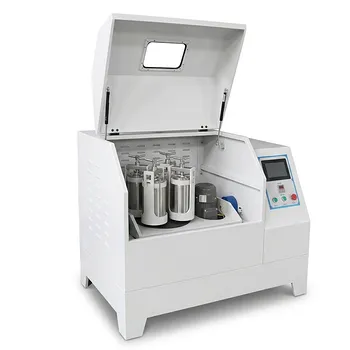
360° Rotating Omnidirectional Laboratory Planetary Ball Mill for Homogeneous Ultra-Fine Grinding and Mixing

Vertical Square Planetary Ball Mill for Laboratory Sample Preparation and Nanoscale Grinding

Miniature Planetary Ball Mill with Vacuum Grinding and High Efficiency for Laboratory Sample Preparation

High Energy Laboratory Planetary Ball Mill for Nano Grinding and Material Science Sample Preparation
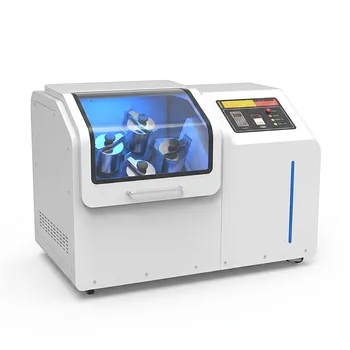
High Energy Omnidirectional Planetary Ball Mill 16L
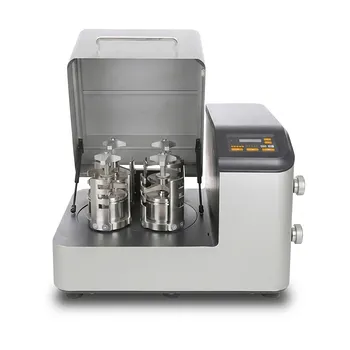
High Energy Planetary Ball Mill for Nano Scale Grinding and Colloidal Mixing in Material Science Research
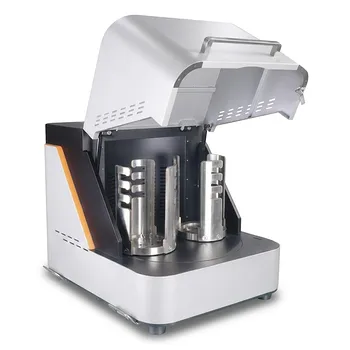
High Energy Laboratory Planetary Ball Mill for Nano Grinding and Colloidal Mixing of Hard and Brittle Materials
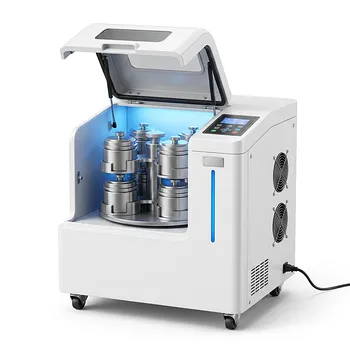
High Energy Omnidirectional Planetary Ball Mill 20L
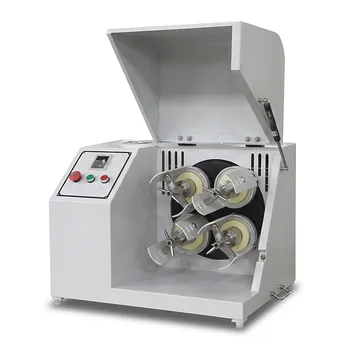
Horizontal Light Duty Planetary Ball Mill for Laboratory Sample Preparation
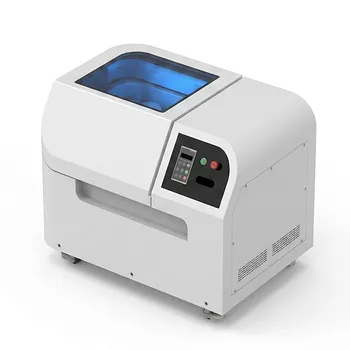
8L Planetary Ball Mill for Laboratory Grinding and Sample Preparation
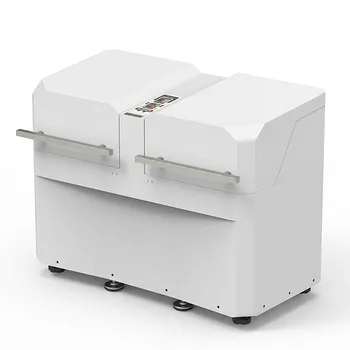
Dual Station Planetary Ball Mill 24L
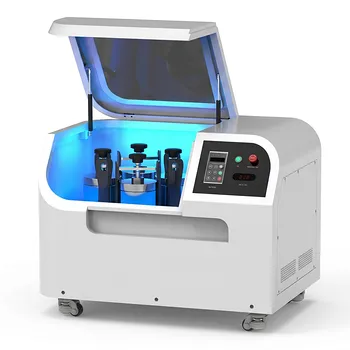
Planetary Ball Mill 12L

Nano High Energy Vibratory Ball Mill for Laboratory Sample Preparation
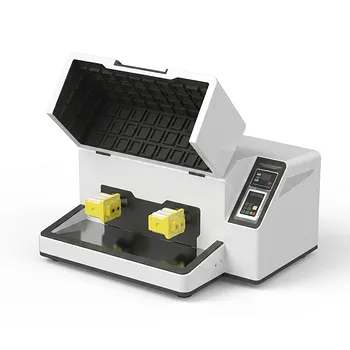
Multi-Platform Nanoscale High-Energy Vibratory Ball Mill
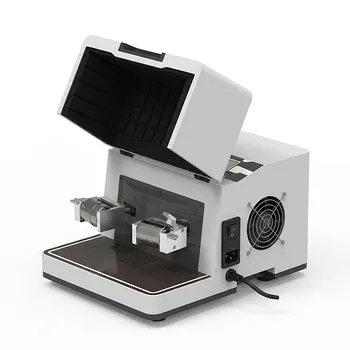
High Energy Hybrid Vibratory Ball Mill for Grinding Mixing and Cell Disruption