What is the purpose of secondary ball milling for thermoelectric thick films? Optimize Paste Homogeneity & Rheology
Updated 5 months ago
Secondary ball milling is the essential refinement process used to ensure a screen-printing paste behaves as a single, homogenous fluid rather than a collection of separate particles. It is primarily employed to de-agglomerate functional powders, ensure complete wetting of solids by the organic vehicle, and calibrate the paste’s rheological properties to ensure defect-free thick-film deposition.
The core purpose of secondary ball milling is to resolve mechanical and chemical inconsistencies within the mixture, transforming raw thermoelectric powders and binders into a stable, printable medium with the precise viscosity required for high-performance coatings.
Achieving Homogeneity through De-agglomeration
Breaking Down Particle Clusters
During the initial mixing or pre-sintering phases, thermoelectric powders often form agglomerates—small clusters of particles that stick together. Secondary ball milling uses mechanical shear and impact forces to break these clusters apart, ensuring that the powder is finely and evenly distributed throughout the matrix.
Uniform Distribution of Modifiers
Thermoelectric performance often relies on the precise distribution of additives, such as dopants or modifiers like manganese dioxide (MnO2). This milling step ensures these trace elements are uniformly integrated into the main crystalline phase, which is critical for optimizing electrical properties and defect behavior during final sintering.
Integration of Conductive Fillers
When working with high-performance materials like single-walled carbon nanotubes (SWCNTs), secondary milling provides the high-energy mixing required to embed these fillers into a viscoelastic matrix. This deep mixing is necessary to create the conductive networks required for active thermoelectric slurries.
Optimizing Rheology for Screen Printing
Calibrating Viscosity and Flow
The success of screen printing depends on the paste’s rheological properties, or how it flows under pressure. Secondary ball milling adjusts the viscosity of the paste, ensuring it is thick enough to hold its shape after printing but fluid enough to pass smoothly through the mesh of a screen.
Ensuring Ideal Wetting
For a paste to be stable, the solid particles must be completely "wetted" by the organic vehicle, which typically consists of binders like polyvinyl butyral (PVB) and solvents like terpineol. Secondary milling forces the organic liquid into the pores of the powder, eliminating air pockets and ensuring a smooth, defect-free coating.
Eliminating Structural Defects
By removing bubbles and micro-agglomerates, the milling process prevents common printing failures such as pinholes or uneven thickness. This results in a smooth, uniform thick-film that maintains its structural integrity throughout the drying and firing cycles.
Understanding the Trade-offs and Risks
The Risk of Over-Milling
While milling is necessary for dispersion, excessive milling time or energy can lead to particle size degradation beyond the desired range. If the particles become too small, the surface area increases dramatically, which may require higher solvent loads and negatively impact the final density of the thermoelectric film.
Contamination from Milling Media
A common pitfall in secondary ball milling is the introduction of impurities from the milling balls or the jar itself. As the media wears down, microscopic fragments of ceramic or metal can mix into the paste, potentially degrading the thermoelectric figure of merit (ZT) by altering the material's purity.
Thermal Heat Build-up
High-energy planetary milling generates significant heat, which can prematurely evaporate volatile solvents or degrade photosensitive resins. Careful monitoring of milling cycles and cooling periods is required to maintain the chemical balance of the organic vehicle.
How to Apply This to Your Project
Making the Right Choice for Your Goal
- If your primary focus is Maximum Electrical Conductivity: Prioritize longer secondary milling cycles to ensure dopants and conductive fillers are distributed at the molecular level without clusters.
- If your primary focus is Surface Finish and Print Definition: Focus on the wetting phase of milling to ensure the organic vehicle fully encapsulates the powder, preventing clogs in the screen mesh.
- If your primary focus is Material Purity: Utilize chemically inert milling media, such as zirconia, and limit milling duration to the minimum required for de-agglomeration to avoid contamination.
By mastering the secondary ball milling process, you ensure that your thermoelectric pastes possess the stability and consistency required for high-yield manufacturing and superior device performance.
Summary Table:
| Key Purpose | Impact on Final Thick Film | Mechanism of Action |
|---|---|---|
| De-agglomeration | Uniform particle distribution | Mechanical shear breaks clusters |
| Rheology Control | Precise print definition & viscosity | Calibration of flow properties |
| Complete Wetting | Defect-free surface (no pinholes) | Elimination of air pockets in pores |
| Dopant Integration | Enhanced electrical performance (ZT) | Homogeneous molecular distribution |
Achieve Superior Paste Consistency with Precision Milling Solutions
Perfecting thermoelectric thick films requires precision at the micron level. At our core, we provide complete laboratory sample preparation solutions for material science, ensuring your powders and pastes meet the highest standards of homogeneity.
Whether you are refining pastes or compacting final materials, our extensive equipment line supports every stage of your workflow:
- Advanced Milling: Planetary ball mills, jet mills, and cryogenic grinders for perfect de-agglomeration and particle size control.
- Mixing Excellence: Specialized powder and defoaming mixers to ensure stable, air-free screen-printing pastes.
- High-Performance Compaction: A full spectrum of hydraulic presses, including Cold/Warm Isostatic Presses (CIP/WIP), vacuum hot presses, and XRF pellet presses.
Don't let inconsistent mixing compromise your device performance. Contact our technical experts today to discuss the ideal equipment configuration for your thermoelectric research and production needs.
References
- Xiaodong Liu, Robert Freer. High Power Factor Nb-Doped TiO<sub>2</sub> Thermoelectric Thick Films: Toward Atomic Scale Defect Engineering of Crystallographic Shear Structures. DOI: 10.1021/acsami.2c16587
Mentioned Products
- Heavy Duty Horizontal Planetary Ball Mill for Efficient Industrial Grinding and Sample Preparation
- Vertical Semi Circular Planetary Ball Mill for Laboratory Precision Grinding
- Vertical Production Planetary Ball Mill for High Throughput Powder Processing
- Vertical Square Planetary Ball Mill for Laboratory Sample Preparation and Nanoscale Grinding
- High Energy Planetary Ball Mill for Nano Scale Grinding and Mechanical Alloying
People Also Ask
- Why grind lime-pozzolan specimens for TG/DTA for 3 mins? Master sample prep for high-precision thermal analysis.
- What is the role of a planetary ball mill in the mechanical activation of ZTA powder? Boost Sintering Performance
- What is the function of a planetary ball mill in wollastonite ceramic prep? Achieve Molecular Homogenization & Reactivity
- How does a planetary ball mill contribute to the homogenization of trace elements? Achieve Sub-Micron Uniformity
- What is the function of a high-performance planetary ball mill in AMZ laminates? Master Ceramic Homogenization.

Tech Team · PowderPreparation
Last updated on May 14, 2026
Related Products
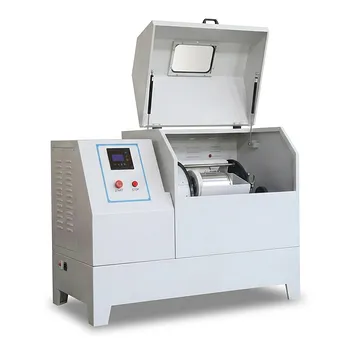
Heavy Duty Horizontal Planetary Ball Mill for Efficient Industrial Grinding and Sample Preparation

Vertical Semi Circular Planetary Ball Mill for Laboratory Precision Grinding
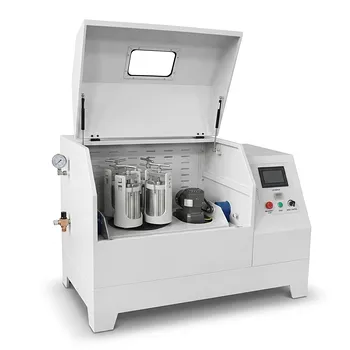
Vertical Production Planetary Ball Mill for High Throughput Powder Processing

Vertical Square Planetary Ball Mill for Laboratory Sample Preparation and Nanoscale Grinding

High Energy Planetary Ball Mill for Nano Scale Grinding and Mechanical Alloying
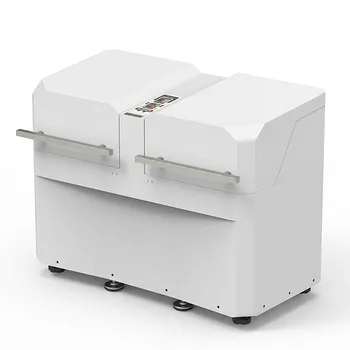
Dual Station Planetary Ball Mill 24L

Single Tank High Energy Vibratory Ball Mill for Laboratory Grinding and Mixing

Miniature Planetary Ball Mill with Vacuum Grinding and High Efficiency for Laboratory Sample Preparation

High Energy Laboratory Planetary Ball Mill for Nano Grinding and Material Science Sample Preparation

High Energy Omnidirectional Planetary Ball Mill 16L
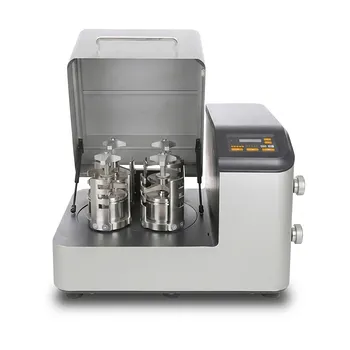
High Energy Planetary Ball Mill for Nano Scale Grinding and Colloidal Mixing in Material Science Research
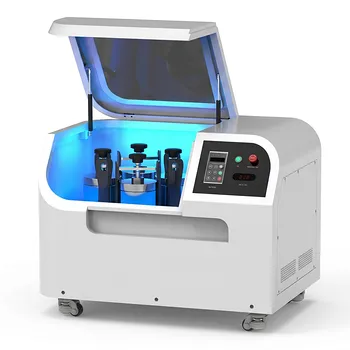
Planetary Ball Mill 12L
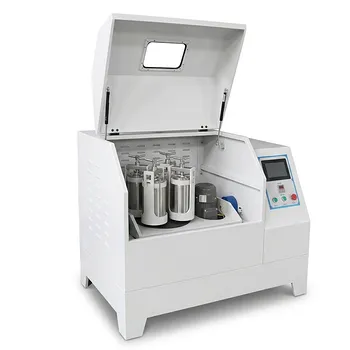
360° Rotating Omnidirectional Laboratory Planetary Ball Mill for Homogeneous Ultra-Fine Grinding and Mixing

High Energy Laboratory Planetary Ball Mill for Nano Grinding and Colloidal Mixing of Hard and Brittle Materials
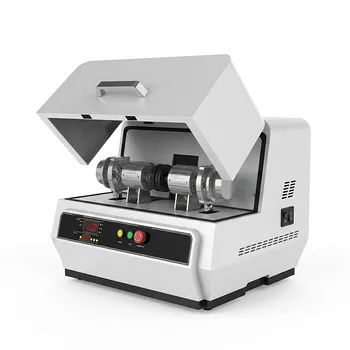
Dual Jar High Energy Vibratory Ball Mill

Multi-Platform Nanoscale High-Energy Vibratory Ball Mill

Nano High Energy Vibratory Ball Mill for Laboratory Sample Preparation
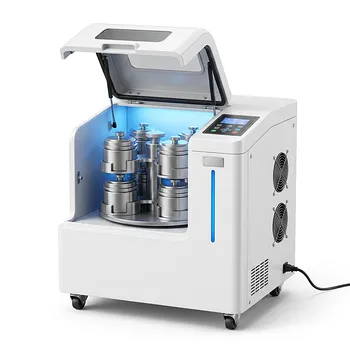
High Energy Omnidirectional Planetary Ball Mill 20L

8L Planetary Ball Mill for Laboratory Grinding and Sample Preparation