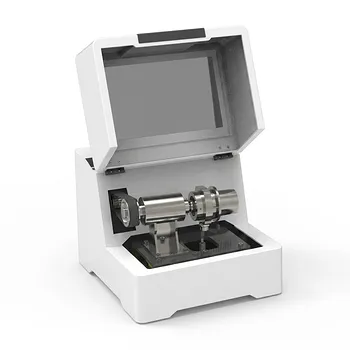
What is the purpose of operating a planetary ball mill at a low speed following high-energy grinding? Degassing Guide
Updated 4 months ago
The transition to low-speed operation in a planetary ball mill is a vital stabilization phase. Operating the mill at a reduced speed, typically around 300 rpm, serves to degas the slurry and perform secondary mixing after the intense high-energy grinding phase. This step is essential to ensure the slurry is physically optimized for downstream applications like screen printing by removing entrapped air that could compromise the final structure.
This low-speed "stirring" phase allows air bubbles trapped during high-energy impact to rise and escape the slurry surface. By eliminating these gaseous inclusions, manufacturers prevent the formation of pinholes and structural defects, ensuring the high density and insulation strength required for zirconia layers.
The Role of Degassing in Slurry Quality
Eliminating Trapped Air Pockets
High-energy milling utilizes intense centrifugal and impact forces to deagglomerate zirconia particles, but this turbulence inevitably introduces micro-bubbles into the mixture. If these bubbles remain, they create voids in the slurry matrix that persist through the application process.
Preventing Structural Defects
During processes such as screen printing, any residual air bubbles will burst or settle, leaving behind pinholes in the zirconia spacer layer. These microscopic gaps act as points of mechanical failure or electrical leakage, directly undermining the insulation strength of the ceramic component.
Secondary Mixing and Slurry Homogenization
Stabilizing the Organic-Inorganic Matrix
Zirconia slurries often contain organic binders like ethyl cellulose and solvents like terpineol that require uniform distribution to maintain stable viscosity. Low-speed operation provides a gentle shear that ensures these organic components remain perfectly integrated with the sub-micron zirconia particles without introducing new air.
Ensuring Uniform Density
By allowing the slurry to settle into a consistent state at a lower RPM, the solid loading (often as high as 75-78 mass%) becomes more uniform throughout the volume. This consistency is critical for achieving a predictable "shrinkage" rate during the subsequent high-temperature sintering process.
Understanding the Trade-offs
Processing Time vs. Degassing Efficiency
While low-speed stirring is effective, it increases the total processing time; however, bypassing this step to save time often results in a higher rejection rate due to surface imperfections. Technical teams must balance the duration of the low-speed phase against the viscosity of the slurry, as thicker slurries require longer degassing times.
Risk of Sedimentation
If the speed is too low or the duration too long, there is a risk of particle sedimentation, especially with high-density zirconia. The speed must be high enough to keep the sub-micron particles in suspension while being low enough to allow air buoyancy to overcome the fluid's surface tension.
How to Apply This to Your Process
Recommendations for Optimal Slurry Preparation
To achieve the highest quality zirconia layers, the milling protocol must be adjusted based on the specific goal of the production run.
- If your primary focus is maximizing insulation strength: Prioritize a longer low-speed degassing phase to ensure the complete removal of pinhole-inducing micro-bubbles.
- If your primary focus is achieving sub-micron particle size: Focus your energy on the high-speed revolution phase, but never skip the 300 rpm finishing step to stabilize the dispersion.
- If your primary focus is screen printing consistency: Ensure the secondary mixing phase is long enough to fully homogenize the organic binders, which controls the "flow" and "leveling" of the slurry on the substrate.
The strategic shift from high-energy grinding to low-speed stirring is the difference between a raw dispersion and a high-performance industrial slurry.
Summary Table:
| Milling Phase | Typical Action | Primary Purpose | Key Benefit |
|---|---|---|---|
| High-Energy Grinding | High RPM Impact | Particle deagglomeration | Achieves sub-micron particle size |
| Low-Speed Stirring | ~300 RPM Rotation | Degassing & Secondary Mixing | Eliminates air bubbles and pinholes |
| Stabilization | Gentle Shear | Homogenizing organic binders | Ensures uniform viscosity and density |
Elevate Your Material Preparation Precision
Achieving the perfect zirconia slurry requires more than just high-energy grinding; it demands precision control and the right equipment. At [Company Name], we provide complete laboratory sample preparation solutions for material science, specializing in high-performance powder processing and compaction.
Whether you are looking to optimize your slurry homogenization or require high-density ceramic components, our extensive product line has you covered:
- Advanced Milling: Planetary ball mills, jet mills, and cryogenic grinders for sub-micron precision.
- Expert Mixing: Powder and defoaming mixers to ensure air-free dispersions.
- Compaction Excellence: A full spectrum of hydraulic presses, including Cold/Warm Isostatic Presses (CIP/WIP) and vacuum hot presses.
Don't let micro-bubbles or non-uniform density compromise your research or production. Contact our technical team today to find the ideal equipment solution for your laboratory needs!
References
- Takaya Shioki, Seigo Ito. Insulation Ability and Morphological Effect of ZrO2 Spacer Layer in Carbon-Based Multiporous Layered Electrode Perovskite Solar Cells. DOI: 10.3390/pr13072264
Mentioned Products
- Vertical Semi Circular Planetary Ball Mill for Laboratory Precision Grinding
- High Energy Planetary Ball Mill for Nano Scale Grinding and Mechanical Alloying
- Vertical Production Planetary Ball Mill for High Throughput Powder Processing
- Heavy Duty Horizontal Planetary Ball Mill for Efficient Industrial Grinding and Sample Preparation
- 360° Rotating Omnidirectional Laboratory Planetary Ball Mill for Homogeneous Ultra-Fine Grinding and Mixing
People Also Ask
- What role does a planetary ball mill play in the synthesis of Li6PS5Cl (LPSCl)? Unlock High Ionic Conductivity
- Why is a planetary ball mill essential for SiBCN-rGO wet-spinning? Achieve Superior Dispersion and Spinnability
- Why is an intermittent grinding process required for perovskites in a planetary ball mill? Ensure Stability & Purity
- Why is a planetary ball mill required for PET micronization? Ensure Accurate Chemical Analysis of Reprocessed PET
- How does mechanized planetary ball milling compare to manual agate grinding? Optimize sulfide standard material precision.

Tech Team · PowderPreparation
Last updated on Jun 03, 2026
Related Products
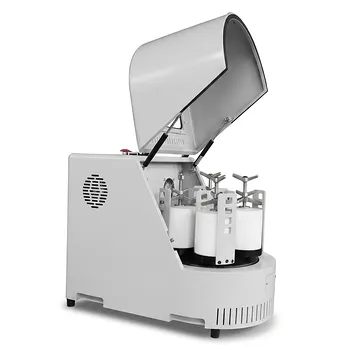
Vertical Semi Circular Planetary Ball Mill for Laboratory Precision Grinding
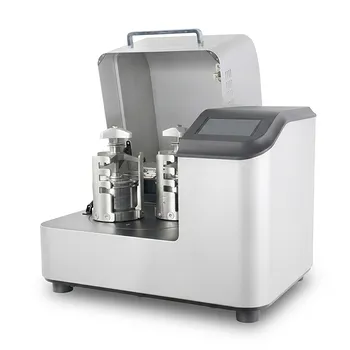
High Energy Planetary Ball Mill for Nano Scale Grinding and Mechanical Alloying

Vertical Production Planetary Ball Mill for High Throughput Powder Processing
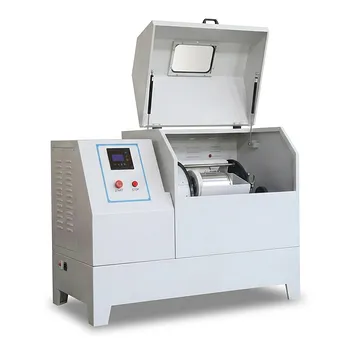
Heavy Duty Horizontal Planetary Ball Mill for Efficient Industrial Grinding and Sample Preparation
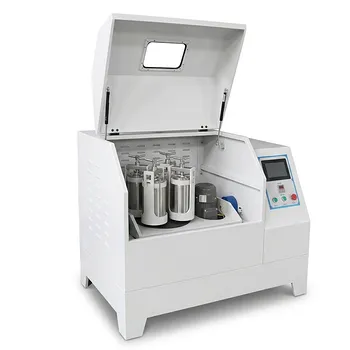
360° Rotating Omnidirectional Laboratory Planetary Ball Mill for Homogeneous Ultra-Fine Grinding and Mixing

Vertical Square Planetary Ball Mill for Laboratory Sample Preparation and Nanoscale Grinding

Miniature Planetary Ball Mill with Vacuum Grinding and High Efficiency for Laboratory Sample Preparation

High Energy Laboratory Planetary Ball Mill for Nano Grinding and Material Science Sample Preparation
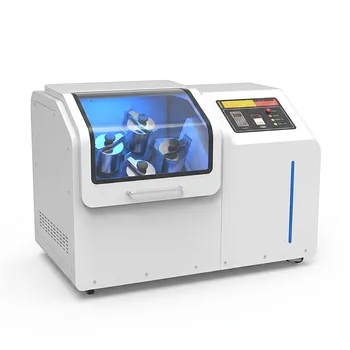
High Energy Omnidirectional Planetary Ball Mill 16L
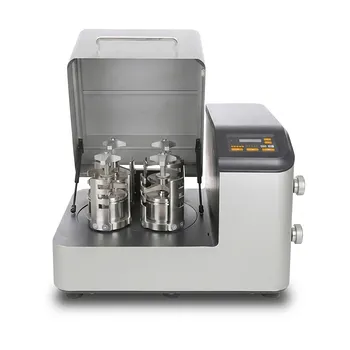
High Energy Planetary Ball Mill for Nano Scale Grinding and Colloidal Mixing in Material Science Research
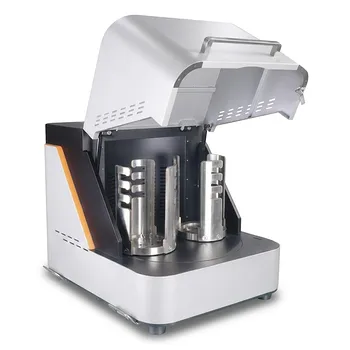
High Energy Laboratory Planetary Ball Mill for Nano Grinding and Colloidal Mixing of Hard and Brittle Materials
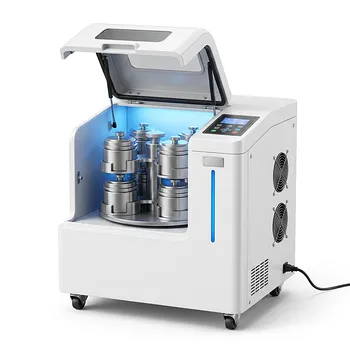
High Energy Omnidirectional Planetary Ball Mill 20L
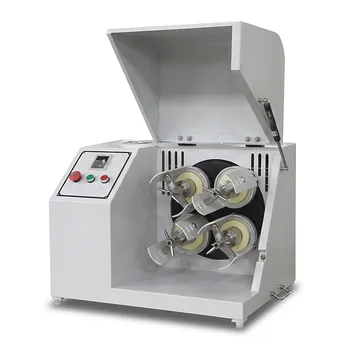
Horizontal Light Duty Planetary Ball Mill for Laboratory Sample Preparation
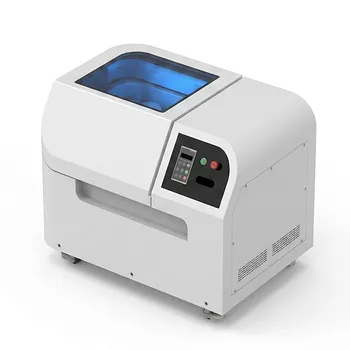
8L Planetary Ball Mill for Laboratory Grinding and Sample Preparation
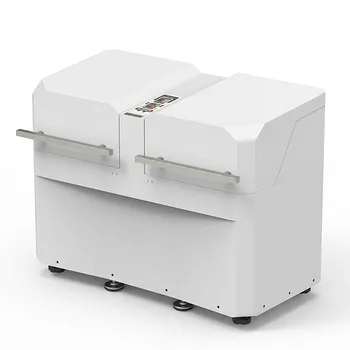
Dual Station Planetary Ball Mill 24L
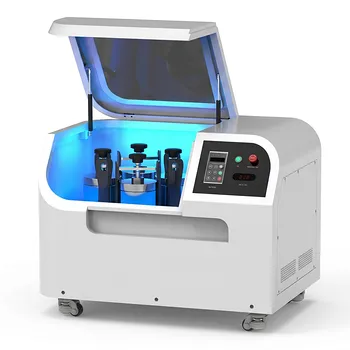
Planetary Ball Mill 12L

Nano High Energy Vibratory Ball Mill for Laboratory Sample Preparation
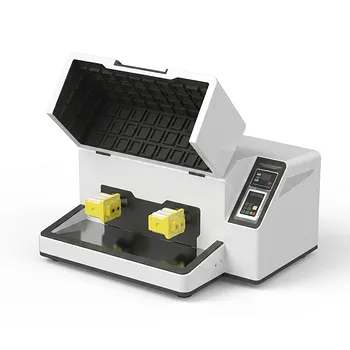
Multi-Platform Nanoscale High-Energy Vibratory Ball Mill

High Energy Hybrid Vibratory Ball Mill for Grinding Mixing and Cell Disruption