What is the primary role of the pre-mixing ball milling process in PA6/PF composites? Optimize fiber dispersion & strength.
Updated 4 months ago
The primary role of the pre-mixing ball milling process is to achieve a high-energy, microscopic uniform distribution of pulp fibers (PF) within the Polyamide 6 (PA6) matrix. By utilizing intense mechanical force, this stage ensures that reinforcing fibers are thoroughly integrated with the polymer at a scale that simple stirring cannot reach. Furthermore, it serves as a critical control mechanism for adjusting the fiber aspect ratio, which fundamentally dictates the composite's final mechanical and thermal properties.
Core Takeaway: Pre-mixing ball milling acts as a high-energy preparatory step that transforms raw PA6 and pulp fibers into a homogeneous mixture, allowing for precise control over fiber geometry to optimize the resulting material's stiffness and thermal stability.
Achieving Microscopic Homogeneity
Mechanical Dispersal of Reinforcements
The ball milling process uses high-speed rotation and grinding media to generate powerful centrifugal, impact, and shear forces. These forces are essential for breaking down fiber bundles and ensuring that each individual pulp fiber is separated and surrounded by the polymer matrix.
Integration of Matrix and Fiber
Unlike standard mixing, high-energy ball milling can embed or attach reinforcing fibers directly onto the surface of the polymer powder. This creates a physical bond and a dense "pre-mix" that prevents the fibers from separating or settling during subsequent processing steps like melt extrusion.
Prevention of Secondary Agglomeration
By achieving a highly dispersed state early on, the process establishes a physical foundation that resists the natural tendency of fibers to clump together. This uniformity is vital for ensuring that the final manufactured part has consistent physical properties throughout its entire structure.
Morphological Control and Fiber Geometry
Adjusting the Fiber Aspect Ratio
The duration of the milling process—often referred to as milling time—is a primary lever for engineers to control the length and thickness of the pulp fibers. By calibrating this time, the mechanical force can "trim" fibers to a specific aspect ratio that is ideal for the desired reinforcement level.
Increasing Surface Area for Bonding
The intense impacts within the milling jars refine coarse raw materials into finer components, significantly increasing the surface area of the fillers. This increased surface area enhances the potential for interfacial bonding between the pulp fibers and the PA6 matrix, leading to better load transfer.
Creating Thermal Protective Layers
In some composite systems, the milling process creates a physical protective layer of polymer powder around the fibers. This layer can act as a thermal buffer, delaying the degradation of organic fibers when they are eventually exposed to the high temperatures of injection molding or extrusion.
Understanding the Trade-offs
The Risk of Excessive Fiber Breakage
While reducing fiber size can improve dispersion, over-milling can lead to excessive fiber breakage, which drastically lowers the aspect ratio. If fibers become too short, they lose their ability to effectively reinforce the matrix, resulting in a decrease in the composite's overall tensile strength.
Energy Consumption and Processing Time
High-energy ball milling is a time-intensive and energy-demanding process compared to simple dry blending. Manufacturers must carefully balance the performance gains achieved through better dispersion against the increased production costs and potential for material contamination from the grinding media.
How to Apply This to Your Composite Project
Making the Right Choice for Your Goal
To maximize the benefits of pre-mixing ball milling, the processing parameters must be aligned with the specific performance requirements of your final application.
- If your primary focus is Maximum Stiffness (Young's Modulus): Optimize milling time to ensure uniform dispersion while maintaining the highest possible fiber aspect ratio to facilitate load transfer.
- If your primary focus is Thermal Stability: Use a planetary ball mill setting that encourages the formation of a dense polymer coating around the fibers to protect them from heat during extrusion.
- If your primary focus is Surface Finish and Consistency: Prioritize the breakdown of all fiber agglomerates through high-shear milling to ensure a smooth, homogeneous melt during the final molding phase.
Strategic control of the ball milling stage allows you to move beyond simple mixing to true molecular-level material engineering.
Summary Table:
| Key Function | Impact on Composite Quality | Primary Control Variable |
|---|---|---|
| Microscopic Dispersion | Eliminates fiber clumping for uniform mechanical properties | Mill Speed & Shear Force |
| Morphological Control | Optimizes fiber aspect ratio for maximum reinforcement | Milling Duration (Time) |
| Interfacial Bonding | Increases surface area for better matrix-to-fiber load transfer | Grinding Media Type |
| Thermal Protection | Creates polymer coating to prevent fiber degradation | Milling Energy Level |
Elevate Your Composite Material Engineering
Achieving the perfect balance of stiffness and thermal stability requires precision at the preparatory stage. We provide complete laboratory sample preparation solutions tailored for material science research and industrial development.
Specializing in high-performance powder processing, our extensive product line includes:
- Advanced Milling: Planetary ball mills, jet mills, and cryogenic grinders for superior fiber dispersal.
- Compaction Excellence: A full spectrum of hydraulic presses, including Cold/Warm Isostatic Presses (CIP/WIP), vacuum hot presses, and XRF pellet presses.
- Material Refining: Sieve shakers, powder mixers, and high-efficiency defoaming mixers.
Whether you are optimizing PA6/PF composites or developing new advanced materials, our equipment ensures microscopic homogeneity and reliable results.
Ready to upgrade your lab's capabilities? Contact our experts today to find the right solution for your project!
References
- Adel Jalaee, E. Johan Foster. Improvement in the Thermomechanical Properties and Adhesion of Wood Fibers to the Polyamide 6 Matrix by Sequential Ball Milling Technique. DOI: 10.1021/acssuschemeng.3c06351
Mentioned Products
- Heavy Duty Horizontal Planetary Ball Mill for Efficient Industrial Grinding and Sample Preparation
- Vertical Semi Circular Planetary Ball Mill for Laboratory Precision Grinding
- Vertical Production Planetary Ball Mill for High Throughput Powder Processing
- Vertical Square Planetary Ball Mill for Laboratory Sample Preparation and Nanoscale Grinding
- High Energy Planetary Ball Mill for Nano Scale Grinding and Mechanical Alloying
People Also Ask
- Why grind lime-pozzolan specimens for TG/DTA for 3 mins? Master sample prep for high-precision thermal analysis.
- What is the role of a planetary ball mill in the mechanical activation of ZTA powder? Boost Sintering Performance
- What is the function of a planetary ball mill in wollastonite ceramic prep? Achieve Molecular Homogenization & Reactivity
- How does a planetary ball mill contribute to the homogenization of trace elements? Achieve Sub-Micron Uniformity
- What is the function of a high-performance planetary ball mill in AMZ laminates? Master Ceramic Homogenization.

Tech Team · PowderPreparation
Last updated on Jun 03, 2026
Related Products
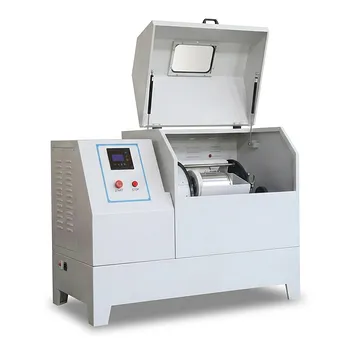
Heavy Duty Horizontal Planetary Ball Mill for Efficient Industrial Grinding and Sample Preparation
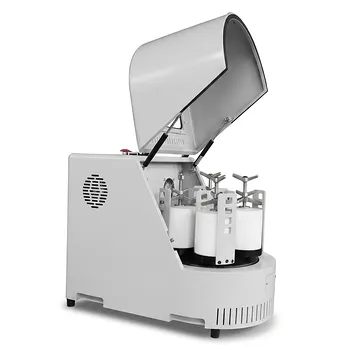
Vertical Semi Circular Planetary Ball Mill for Laboratory Precision Grinding
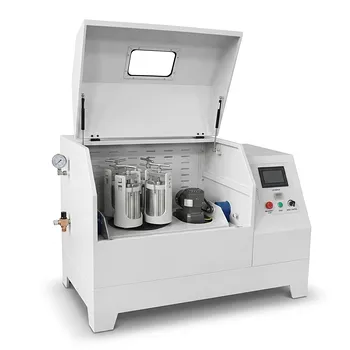
Vertical Production Planetary Ball Mill for High Throughput Powder Processing
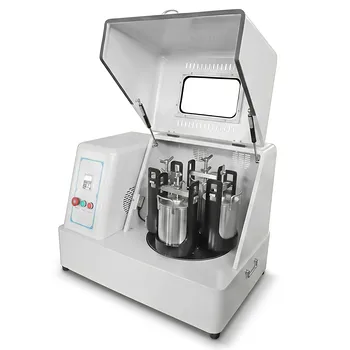
Vertical Square Planetary Ball Mill for Laboratory Sample Preparation and Nanoscale Grinding

High Energy Planetary Ball Mill for Nano Scale Grinding and Mechanical Alloying
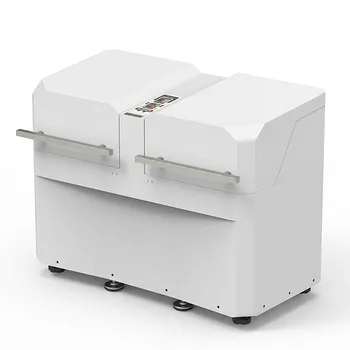
Dual Station Planetary Ball Mill 24L
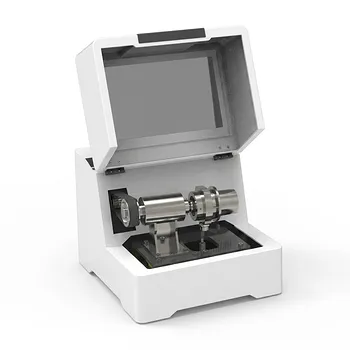
Single Tank High Energy Vibratory Ball Mill for Laboratory Grinding and Mixing
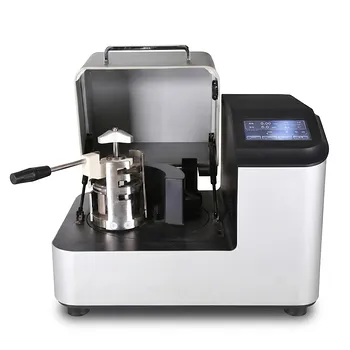
High Energy Laboratory Planetary Ball Mill for Nano Grinding and Material Science Sample Preparation
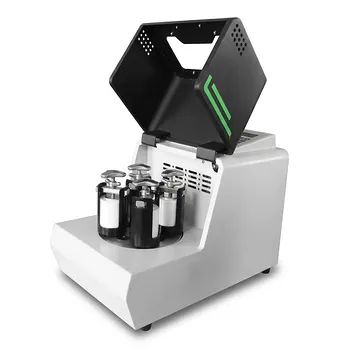
Miniature Planetary Ball Mill with Vacuum Grinding and High Efficiency for Laboratory Sample Preparation
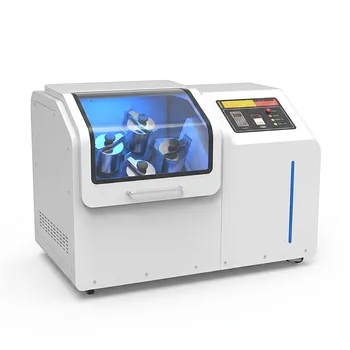
High Energy Omnidirectional Planetary Ball Mill 16L
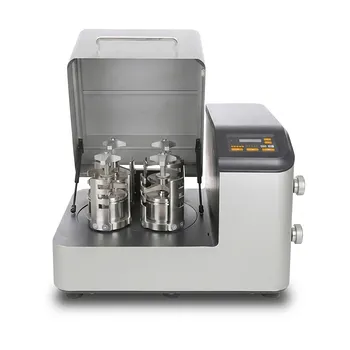
High Energy Planetary Ball Mill for Nano Scale Grinding and Colloidal Mixing in Material Science Research
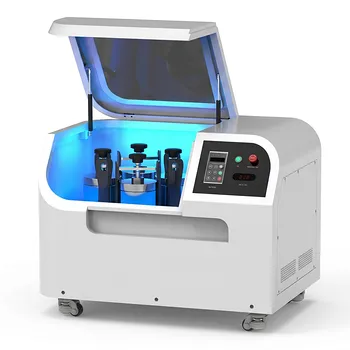
Planetary Ball Mill 12L
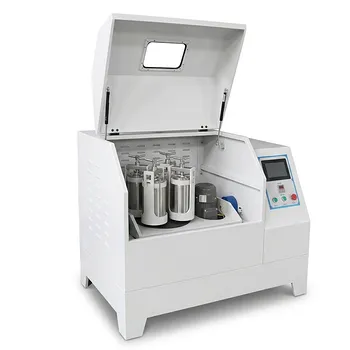
360° Rotating Omnidirectional Laboratory Planetary Ball Mill for Homogeneous Ultra-Fine Grinding and Mixing
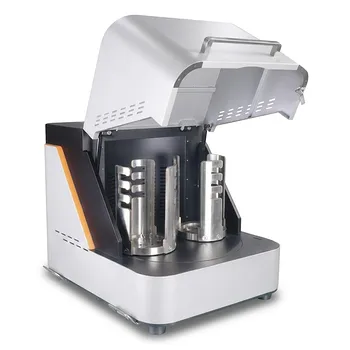
High Energy Laboratory Planetary Ball Mill for Nano Grinding and Colloidal Mixing of Hard and Brittle Materials
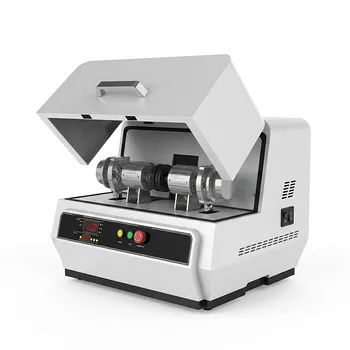
Dual Jar High Energy Vibratory Ball Mill

Multi-Platform Nanoscale High-Energy Vibratory Ball Mill
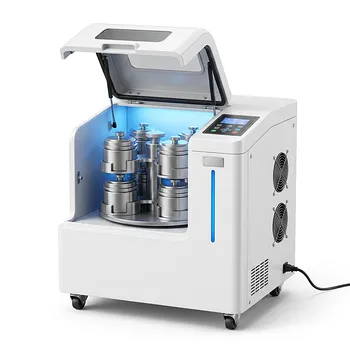
High Energy Omnidirectional Planetary Ball Mill 20L

Nano High Energy Vibratory Ball Mill for Laboratory Sample Preparation

8L Planetary Ball Mill for Laboratory Grinding and Sample Preparation