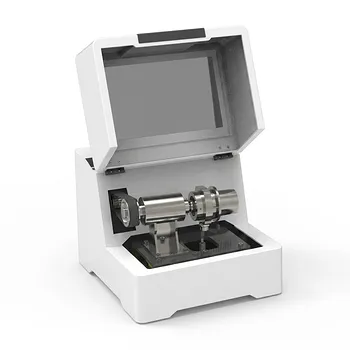
What is the primary role of a planetary ball mill in AlZrTi alloying? Achieve Nanocrystalline Refinement
Updated 3 months ago
The primary role of a planetary ball mill in the mechanical alloying of AlZrTi alloy powders is to deliver high-energy impact and shear forces that drive a continuous cycle of powder flattening, cold welding, and fracturing. This mechanical-chemical action reduces powder particle size to approximately 20 μm, refines internal grain structures to the nanoscale (about 70 nm), and forces Zr and Ti atoms into a supersaturated solid solution within the aluminum matrix—a state often impossible to achieve through traditional melting.
Core Takeaway: A planetary ball mill acts as a high-energy reactor that uses mechanical force to bypass traditional thermodynamic limits, enabling the production of nanocrystalline AlZrTi powders with uniform atomic distribution and enhanced solid solubility.
The Mechanics of High-Energy Milling
Generation of Impact and Shear Forces
The planetary ball mill operates through the combined high-speed motions of revolution and rotation.
This dual-axis movement imparts massive kinetic energy to the grinding balls, which collide with the Al, Zr, and Ti raw powders at high frequencies.
The Cycle of Deformation and Welding
As the balls collide, they subject the metallic particles to severe plastic deformation.
The powder particles are repeatedly flattened into flakes, fractured into smaller pieces, and then cold-welded back together, ensuring a constant exchange of material between particles.
Particle and Grain Refinement
This relentless mechanical action eventually reaches a steady state where fracturing and welding balance out.
In the AlZrTi system, this results in a significant reduction of particle size to an average of 20 μm, while the internal crystalline grains are refined down to roughly 70 nm.
Achieving Atomic-Level Homogeneity
Forced Solid Solution
Traditional alloying relies on melting, where different densities and melting points can lead to segregation.
The planetary ball mill facilitates solid-state diffusion by creating a high density of lattice defects and dislocations, which serve as "short-circuit" paths for atomic movement.
Overcoming Solubility Limits
The high-intensity processing induces a supersaturated solid solution of Zr and Ti solute atoms within the aluminum matrix.
This allows for the creation of metastable phases and compositions that would normally be rejected from the aluminum lattice during slow cooling from a melt.
Micro-scale Uniform Mixing
The mill ensures that elements with varying physical properties—such as the high-density Zirconium and Titanium—are distributed uniformly.
This atomic-level mixing is critical for preventing local compositional segregation, providing a stable foundation for subsequent processes like rapid sintering.
Understanding the Trade-offs
Thermal Management Challenges
The intense kinetic energy generated during milling can lead to a significant rise in local temperature within the milling vial.
If not managed, this heat can trigger premature recovery, grain growth, or unwanted phase transformations that reverse the grain refinement achieved.
Contamination Risks
The high-frequency impacts also cause wear on the grinding balls and the vial walls.
This can introduce impurities (such as iron or carbon) into the AlZrTi powder, which may negatively impact the mechanical properties and purity of the final alloy.
Processing Time vs. Stability
While longer milling times generally improve alloying and refinement, excessive milling can lead to "over-milling."
Over-milling may result in powder cake formation on the vial walls or the excessive accumulation of lattice strain, making the powder difficult to handle during consolidation.
How to Apply This to Your Project
Selecting Parameters for Your Goal
- If your primary focus is Nanocrystalline Refinement: Utilize higher rotation speeds and longer milling times to maximize the density of lattice defects and drive grain sizes toward the 70 nm threshold.
- If your primary focus is Maximum Solid Solubility: Prioritize a high ball-to-powder weight ratio to increase the frequency of high-energy collisions, forcing solute atoms into the matrix more efficiently.
- If your primary focus is Powder Purity: Use milling media made of the same material as your target alloy (or high-hardness ceramics) and implement process control agents to minimize cold welding to the vial surfaces.
By precisely controlling the mechanical energy of the planetary ball mill, you can engineer AlZrTi powders with tailored microstructures and chemical properties that surpass the capabilities of conventional metallurgy.
Summary Table:
| Process Phase | Key Mechanism | Resulting Outcome |
|---|---|---|
| Particle Refinement | High-energy impact & shear | Particle size reduced to ~20 μm |
| Structural Refinement | Severe plastic deformation | Nanoscale grains (~70 nm) |
| Mechanical Alloying | Repeated cold welding & fracturing | Supersaturated solid solution |
| Homogenization | Solid-state diffusion | Atomic-level uniform mixing |
Ready to achieve atomic-level homogeneity in your alloy powders? Contact us today to discover how our advanced laboratory solutions can transform your material research.
We provide a complete range of sample preparation equipment designed for precision, including high-energy planetary ball mills, jet mills, and cryogenic grinders for superior powder refinement. To support your entire workflow, we also offer specialized powder mixers and a full spectrum of hydraulic presses—from XRF pellet presses to Cold/Warm Isostatic Presses (CIP/WIP) and vacuum hot presses. Let our expertise in powder processing and material science help you push the boundaries of nanocrystalline development.
References
- Orsolya Molnárová, P. Málek. Bimodal Microstructure in an AlZrTi Alloy Prepared by Mechanical Milling and Spark Plasma Sintering. DOI: 10.3390/ma13173756
Mentioned Products
- Vertical Semi Circular Planetary Ball Mill for Laboratory Precision Grinding
- High Energy Planetary Ball Mill for Nano Scale Grinding and Mechanical Alloying
- Vertical Production Planetary Ball Mill for High Throughput Powder Processing
- Heavy Duty Horizontal Planetary Ball Mill for Efficient Industrial Grinding and Sample Preparation
- 360° Rotating Omnidirectional Laboratory Planetary Ball Mill for Homogeneous Ultra-Fine Grinding and Mixing
People Also Ask
- Why is a planetary ball mill essential for SiBCN-rGO wet-spinning? Achieve Superior Dispersion and Spinnability
- What role does a planetary ball mill play in the synthesis of Li6PS5Cl (LPSCl)? Unlock High Ionic Conductivity
- Why is a planetary ball mill required for PET micronization? Ensure Accurate Chemical Analysis of Reprocessed PET
- How does mechanized planetary ball milling compare to manual agate grinding? Optimize sulfide standard material precision.
- Why is a planetary ball mill required during the synthesis of sodium zeolite from coal gangue? Achieve High Reactivity

Tech Team · PowderPreparation
Last updated on Jun 03, 2026
Related Products
Vertical Semi Circular Planetary Ball Mill for Laboratory Precision Grinding
High Energy Planetary Ball Mill for Nano Scale Grinding and Mechanical Alloying
Vertical Production Planetary Ball Mill for High Throughput Powder Processing
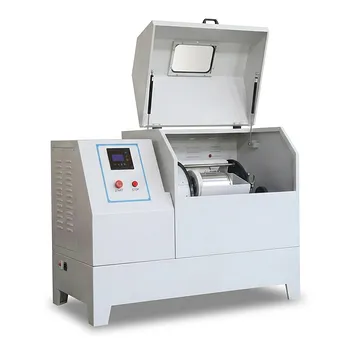
Heavy Duty Horizontal Planetary Ball Mill for Efficient Industrial Grinding and Sample Preparation
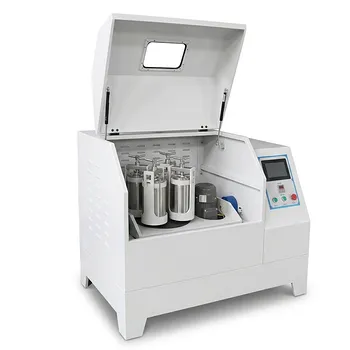
360° Rotating Omnidirectional Laboratory Planetary Ball Mill for Homogeneous Ultra-Fine Grinding and Mixing
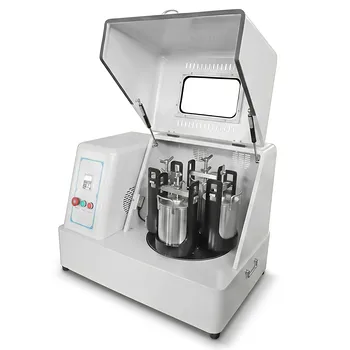
Vertical Square Planetary Ball Mill for Laboratory Sample Preparation and Nanoscale Grinding
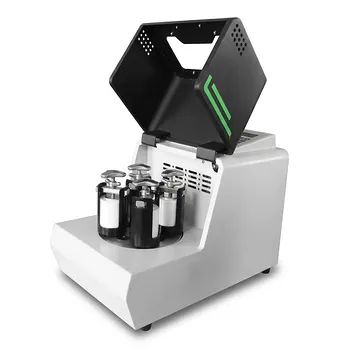
Miniature Planetary Ball Mill with Vacuum Grinding and High Efficiency for Laboratory Sample Preparation
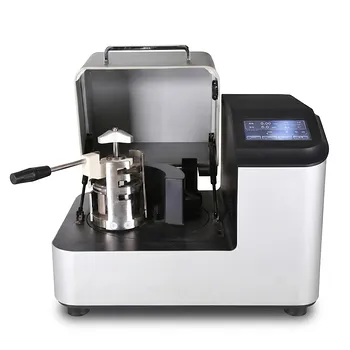
High Energy Laboratory Planetary Ball Mill for Nano Grinding and Material Science Sample Preparation
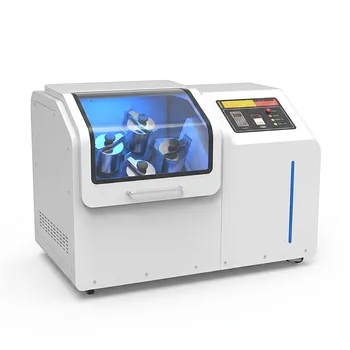
High Energy Omnidirectional Planetary Ball Mill 16L
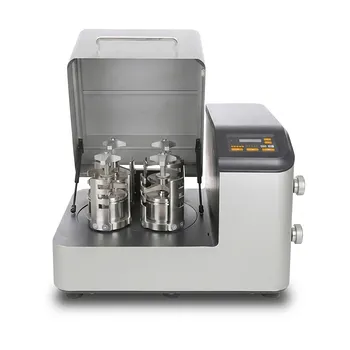
High Energy Planetary Ball Mill for Nano Scale Grinding and Colloidal Mixing in Material Science Research
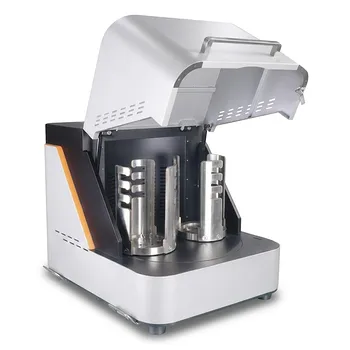
High Energy Laboratory Planetary Ball Mill for Nano Grinding and Colloidal Mixing of Hard and Brittle Materials
High Energy Omnidirectional Planetary Ball Mill 20L
Horizontal Light Duty Planetary Ball Mill for Laboratory Sample Preparation
8L Planetary Ball Mill for Laboratory Grinding and Sample Preparation
Dual Station Planetary Ball Mill 24L
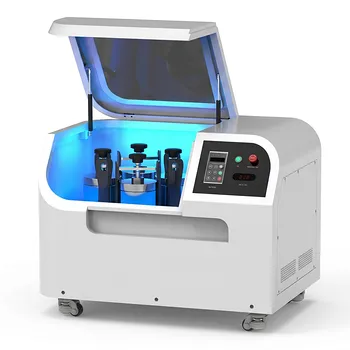
Planetary Ball Mill 12L

Nano High Energy Vibratory Ball Mill for Laboratory Sample Preparation
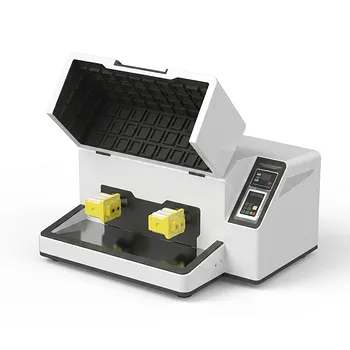
Multi-Platform Nanoscale High-Energy Vibratory Ball Mill

High Energy Hybrid Vibratory Ball Mill for Grinding Mixing and Cell Disruption