What is the primary purpose of using standard test sieves in RSA processing? Enhance Pozzolanic Reactivity & Strength
Updated 3 months ago
The primary purpose of using standard test sieves in the processing of Rice Straw Ash (RSA) is to ensure material fineness by removing coarse, incompletely burned particles. This screening process is essential to transform raw incinerated ash into a high-quality pozzolanic material capable of filling internal pores within cement mortar.
By standardizing the particle size of Rice Straw Ash, engineers can ensure the material reacts fully with calcium hydroxide during cement hydration, leading to a denser and more durable finished product.
Enhancing Pozzolanic Reactivity and Material Integrity
Eliminating Incompletely Burned Fractions
During the incineration of rice straw, uneven heat distribution often results in unburned large particles and black carbon residues. Standard test sieves act as a mechanical filter to remove these impurities, which would otherwise weaken the chemical bond within the cement matrix.
Optimizing Internal Pore-Filling Capabilities
To improve the strength of cement mortar, the ash must be fine enough to act as a micro-filler. Sieving ensures that the RSA particles are small enough to occupy the microscopic voids between cement grains, increasing the overall density of the composite.
Standardizing Surface Area for Chemical Reaction
The effectiveness of a pozzolanic material depends heavily on its specific surface area. By using specific mesh sizes, technicians can ensure a consistent particle size distribution that promotes a rapid and uniform reaction with the calcium hydroxide released during hydration.
Ensuring Structural Stability and Quality
Preventing Stress Concentration
In any composite material, oversized particles can act as "flaws" that lead to stress concentration. Using standard sieves to maintain a particle size below specific thresholds (often under 106 micrometers in related ash applications) prevents these weak points from compromising the mechanical properties of the final structure.
Improving Powder Flowability and Dispersion
Sieving is critical for removing powder agglomerates that naturally form during the storage or grinding of fine ash. Ensuring high flowability allows the RSA to disperse evenly throughout a mixture, preventing "clumping" that could lead to inconsistent material performance.
Facilitating Research and Standardization
The use of standard aperture sieves allows for quantitative evaluation and reproducibility in laboratory settings. This ensures that different batches of RSA meet official agricultural and construction standardization protocols, allowing for reliable comparisons across different studies or projects.
Understanding the Trade-offs
The Risk of Excessive Fineness
While finer particles generally improve reactivity, over-processing RSA can lead to agglomeration issues. Extremely fine particles may clump together due to electrostatic forces, making it more difficult to achieve a uniform mix without specialized high-shear equipment.
Material Waste vs. Purity
Strict sieving protocols can result in a higher rejection rate of material. If the initial incineration process was inefficient, a significant portion of the RSA may be retained on the sieve as coarse waste, increasing the cost and reducing the yield of the final product.
Sieve Blinding and Maintenance
Fine ash particles have a tendency to clog the mesh of standard sieves, a phenomenon known as blinding. This requires frequent cleaning and careful maintenance of the sieves to ensure that the grading process remains accurate and does not result in false particle size readings.
How to Apply This to Your Project
Recommendations Based on Project Goals
- If your primary focus is Maximizing Compressive Strength: Use high-precision sieves to ensure the RSA is extremely fine, maximizing its pozzolanic reaction and pore-filling capacity.
- If your primary focus is Industrial Scalability: Balance the mesh size to remove only the coarsest unburned particles, reducing processing time and material waste while maintaining acceptable reactivity.
- If your primary focus is Analytical Consistency: Utilize a motorized sieve shaker and a standardized series of mesh sizes (e.g., ranging from 0.075mm to 0.5mm) to generate a precise particle size distribution curve.
Properly calibrated sieving is the bridge between raw agricultural waste and a high-performance engineering additive.
Summary Table:
| Key Processing Goal | Role of Standard Test Sieves | Benefit to Final Material |
|---|---|---|
| Impurity Removal | Filters unburned particles and carbon residue | Prevents stress concentration and structural flaws |
| Pore-Filling | Ensures particles are small enough to act as micro-fillers | Increases density and durability of cement mortar |
| Reactivity Optimization | Increases specific surface area for chemical reaction | Promotes rapid and uniform pozzolanic hydration |
| Dispersion Quality | Removes powder agglomerates and clumps | Improves flowability and ensures consistent mixing |
| Standardization | Enables quantitative evaluation and reproducibility | Ensures compliance with agricultural/building protocols |
Elevate Your Material Research with Precision Powder Solutions
High-performance materials like Rice Straw Ash require rigorous preparation to achieve maximum structural integrity. At [Company Name], we provide complete laboratory sample preparation solutions for material science, specializing in advanced powder processing and compaction equipment.
Our extensive product line includes:
- Sieving Excellence: Vibratory and air-jet sieve shakers with a wide range of high-precision test sieves and meshes.
- Milling & Grinding: Planetary ball mills, jet mills, and cryogenic grinders for achieving ideal fineness.
- Compaction Systems: A full spectrum of hydraulic presses, including Cold/Warm Isostatic Presses (CIP/WIP), vacuum hot presses, and XRF pellet presses.
- Mixing Technology: Specialized powder and defoaming mixers for uniform dispersion.
Whether you are refining agricultural waste for green construction or developing advanced ceramics, our equipment ensures the consistency your research demands.
Contact our experts today to find the perfect equipment for your lab!
References
- Surajit Munshi, Richi Prasad Sharma. Use of Rice Straw Ash as Pozzolanic Material in Cement Mortar. DOI: 10.7763/ijet.2013.v5.626
Mentioned Products
- Stainless Steel Laboratory Vibratory Test Sieve Shaker
- Laboratory Vibratory Test Sieve Shaker for Precision Particle Size Analysis and Powder Grading
- Small Laboratory Vibrating Sieve Shaker for Precise Particle Size Analysis
- Small Laboratory Vibratory Sieve Shaker for Powder Gradation and Particle Size Analysis
- 三维电磁微量振动筛分仪
People Also Ask
- What function does a laboratory vibratory sieve shaker serve in the production process of metakaolin? Optimize Reactivity
- Why is a precision laboratory vibratory sieve shaker necessary for particle size control? Optimize Biomass Carbonization
- What is the function of a laboratory vibratory sieve shaker? Enhance Coal Particle Size Distribution (PSD) Analysis
- What role do laboratory vibratory sieve shakers and test sieves play before the molding of Nb-Cu composite powders?
- What is the primary function of a laboratory vibratory sieve shaker in the evaluation of sand liquefaction potential?

Tech Team · PowderPreparation
Last updated on Jun 03, 2026
Related Products
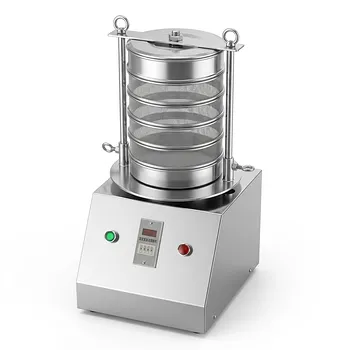
Stainless Steel Laboratory Vibratory Test Sieve Shaker

Laboratory Vibratory Test Sieve Shaker for Precision Particle Size Analysis and Powder Grading

Small Laboratory Vibrating Sieve Shaker for Precise Particle Size Analysis
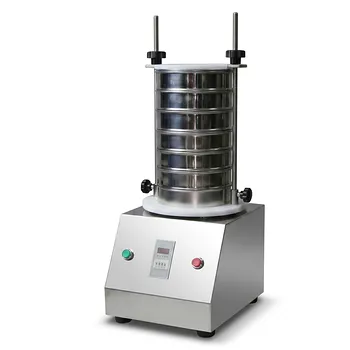
Small Laboratory Vibratory Sieve Shaker for Powder Gradation and Particle Size Analysis
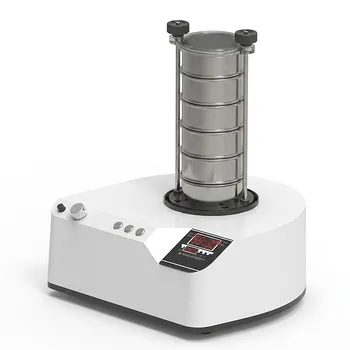
三维电磁微量振动筛分仪
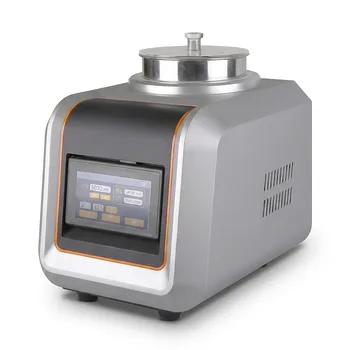
Laboratory Air Jet Sieving Machine for Fine Powder Particle Size Analysis and Deagglomeration

Stainless Steel Rotary Vibrating Sieve High Precision Circular Vibratory Separator Industrial Powder Grading Machine Multi Layer Sifting Equipment
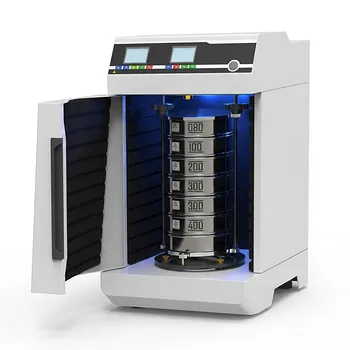
Laboratory Dry and Wet Three Dimensional Vibratory Sieve Shaker for Particle Analysis
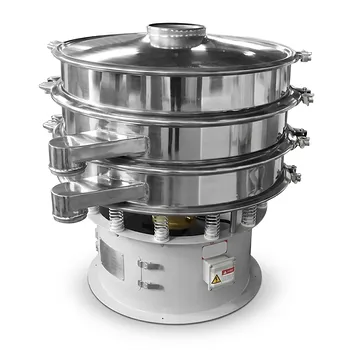
Three Dimensional Rotary Vibrating Sieve
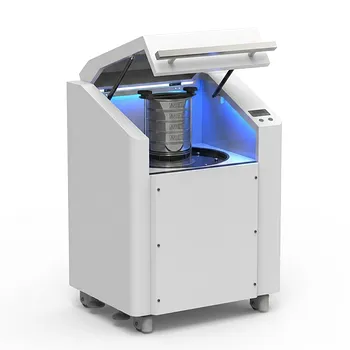
High Frequency Cabinet Type Three-Dimensional Rotary Vibrating Sieve Shaker for Dry Sieving and Particle Classification
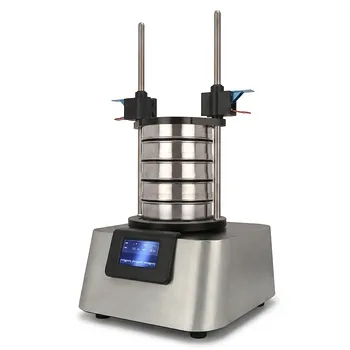
Vibratory Sieve Shaker Electromagnetic 3D Motion Powder Particle Size Analyzer for Dry and Wet Sieving
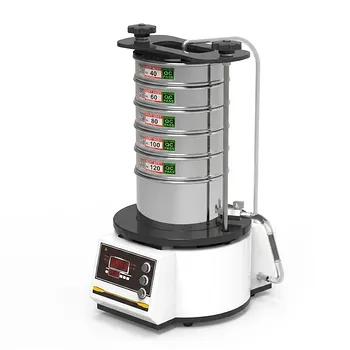
High Frequency Wet Three-Dimensional Vibrating Sieve Shaker for Dry and Wet Particle Size Analysis
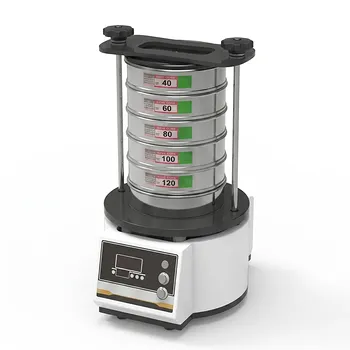
Dry Three Dimensional Vibratory Sieve Shaker
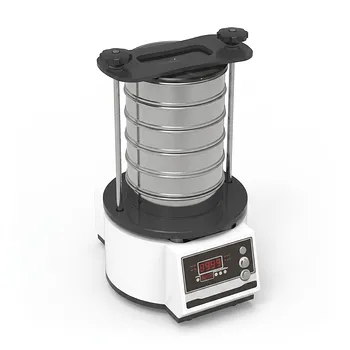
Tapping Oscillating Sieve Shaker for Dry and Wet Particle Size Analysis
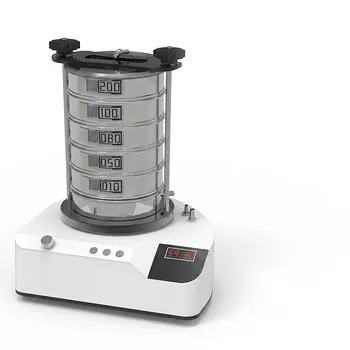
Heavy Duty Dry Three Dimensional Vibratory Sieve Shaker for Particle Separation
Small High-Speed Grinder for Efficient Laboratory Sample Preparation
Small High-Speed Laboratory Grinder for Rapid Sample Preparation
Small High-Speed Swing Grinder for Laboratory Sample Preparation
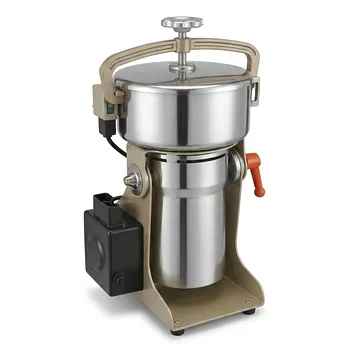
Multifunctional High Efficiency High Speed Laboratory Grinder