What is the primary purpose of using standard test sieves? Optimize Flowability & Consistency in Powder Prep
Updated 4 months ago
Standard test sieves are the primary mechanism for ensuring particle size uniformity and flowability in composite powder preparation. By screening powders after processes like cryogenic ball milling or drying, these sieves remove agglomerates, aggregates, and mechanical impurities that naturally form during high-energy processing. This refinement is critical for achieving stable powder feeding in applications like cold spraying and ensuring a consistent internal structure in sintered or pressed components.
The primary purpose of standard test sieves is to eliminate powder clusters and unify particle size distribution to optimize flowability. This step prevents downstream defects, such as uneven coating thickness, density gradients in green bodies, and inconsistent chemical distribution in complex mixtures.
Eliminating Structural Defects Through Agglomerate Removal
Breaking Down Clusters Post-Processing
During stages like cryogenic ball milling or thermal drying, fine particles often bond together to form agglomerates or lumps. These clusters effectively change the functional particle size of the powder, which can disrupt the precision of the manufacturing workflow.
Preventing Mechanical Impurities
Standard sieves act as a final filtration layer to remove residual mechanical impurities or unground materials. Ensuring that only particles within the target aperture range pass through protects the integrity of the final composite and prevents equipment clogging.
Enhancing Powder Flowability
Flowability is the ability of a powder to move consistently through feeders, hoppers, and nozzles. By removing irregular aggregates, sieving ensures a stable and continuous powder feed, which is particularly vital for high-velocity processes like cold spraying.
Achieving Uniformity in Final Product Quality
Consistency in Coating and Thickness
In thermal and cold spray processes, the uniformity of the powder directly dictates the thickness uniformity of the resulting coating. Inconsistent particle sizes lead to irregular deposition rates, compromising the protective or functional qualities of the surface layer.
Optimizing Mold Filling and Density
For processes like Spark Plasma Sintering (SPS) or dry pressing, sieving ensures that powders fill molds uniformly. This uniformity eliminates density gradients and porosity irregularities, leading to "green bodies" with a stable, predictable internal structure.
Facilitating Even Component Distribution
In multi-component composites, such as pharmaceutical granules or composite flours, standardized particle sizes prevent component segregation. When all particles are of a similar size, they distribute more evenly during mixing, ensuring the final product is chemically and physically homogenous.
Understanding the Trade-offs and Limitations
The Risk of Sieve Blinding
Extremely fine or cohesive powders can lead to sieve blinding, where particles lodge in the mesh and block the passage of material. This requires specialized equipment, such as ultrasonic vibrators or air-jet sifters, to maintain throughput and accuracy.
Material Loss and Yield Considerations
While sieving ensures high quality, it inherently results in some material loss as over-sized aggregates are discarded. In high-value composite manufacturing, researchers must balance the strictness of the mesh size with the required production yield.
Potential for Secondary Contamination
If the sieve mesh material is softer than the powder being screened, there is a risk of abrasive wear introducing metallic impurities into the composite. It is essential to select sieve materials (such as stainless steel or nylon) that are compatible with the hardness of the powder.
Applying Sieving Standards to Your Workflow
Recommendations Based on Production Goals
To maximize the effectiveness of your screening process, align your sieve selection with your specific manufacturing objective:
- If your primary focus is surface coating (Cold Spray): Utilize sieves to ensure a narrow particle size distribution, as this directly determines the stability of the powder feed and the final coating thickness.
- If your primary focus is structural integrity (SPS/Pressing): Prioritize the removal of all loose lumps and aggregates after drying to prevent voids and density variations in the sintered body.
- If your primary focus is analytical uniformity (Lab Research): Use precision sieves to isolate a specific micron range (e.g., 150-200 µm) to eliminate variables caused by particle surface area differences during thermal or gas experiments.
Standardizing your powder through precise sieving transforms a raw, irregular mixture into a high-performance industrial feedstock.
Summary Table:
| Key Benefit | Description | Industrial Impact |
|---|---|---|
| Agglomerate Removal | Eliminates clusters and lumps formed during milling/drying | Prevents density gradients and voids |
| Flowability Boost | Ensures consistent movement through feeders and nozzles | Stabilizes cold spray and coating rates |
| Size Uniformity | Filters out oversized impurities and unground materials | Ensures chemical and physical homogeneity |
| Quality Control | Isolates specific micron ranges for analytical research | Enhances repeatability of experiments |
Elevate Your Powder Preparation with Precision Lab Equipment
Achieving material excellence starts with the right preparation. We provide complete laboratory sample preparation solutions for material science, specializing in high-performance powder processing and compaction equipment.
Our extensive line includes everything from jaw/roll crushers and liquid nitrogen cryogenic grinders to planetary, jet, and rotor mills. For precise classification, we offer vibratory and air-jet sieve shakers with a full range of test sieves and meshes. To complete your workflow, we manufacture a full spectrum of hydraulic presses, including Cold/Warm Isostatic Presses (CIP/WIP), standard lab presses, XRF pellet presses, and vacuum hot presses.
Whether you are focusing on advanced research or industrial-scale production, our equipment ensures your composite powders meet the highest standards of uniformity and performance.
Contact our experts today to optimize your workflow
References
- Matthew S. Schwenger, Joseph F. Stanzione. Mixed-Material Feedstocks for Cold Spray Additive Manufacturing of Metal–Polymer Composites. DOI: 10.1007/s11666-024-01752-0
Mentioned Products
- Stainless Steel Laboratory Vibratory Test Sieve Shaker
- Laboratory Vibratory Test Sieve Shaker for Precision Particle Size Analysis and Powder Grading
- Small Laboratory Vibrating Sieve Shaker for Precise Particle Size Analysis
- Small Laboratory Vibratory Sieve Shaker for Powder Gradation and Particle Size Analysis
- 三维电磁微量振动筛分仪
People Also Ask
- What function does a laboratory vibratory sieve shaker serve in the production process of metakaolin? Optimize Reactivity
- Why is a precision laboratory vibratory sieve shaker necessary for particle size control? Optimize Biomass Carbonization
- What is the function of a laboratory vibratory sieve shaker? Enhance Coal Particle Size Distribution (PSD) Analysis
- What role do laboratory vibratory sieve shakers and test sieves play before the molding of Nb-Cu composite powders?
- What is the primary function of a laboratory vibratory sieve shaker in the evaluation of sand liquefaction potential?

Tech Team · PowderPreparation
Last updated on Jun 03, 2026
Related Products
Stainless Steel Laboratory Vibratory Test Sieve Shaker
Laboratory Vibratory Test Sieve Shaker for Precision Particle Size Analysis and Powder Grading
Small Laboratory Vibrating Sieve Shaker for Precise Particle Size Analysis
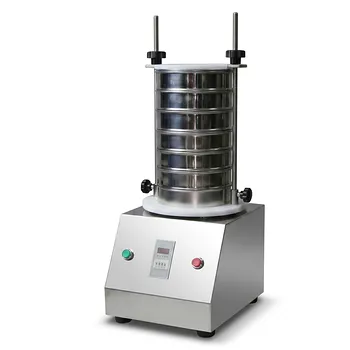
Small Laboratory Vibratory Sieve Shaker for Powder Gradation and Particle Size Analysis
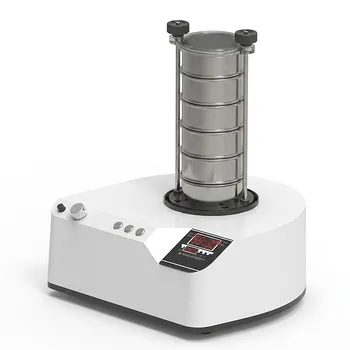
三维电磁微量振动筛分仪
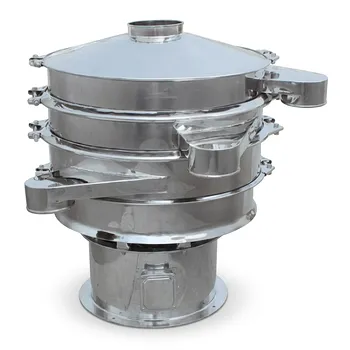
Stainless Steel Rotary Vibrating Sieve High Precision Circular Vibratory Separator Industrial Powder Grading Machine Multi Layer Sifting Equipment
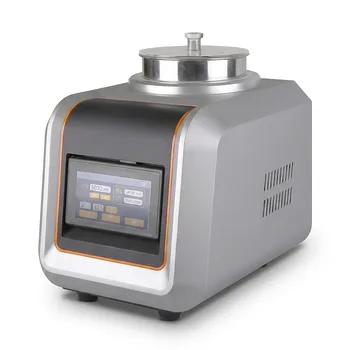
Laboratory Air Jet Sieving Machine for Fine Powder Particle Size Analysis and Deagglomeration
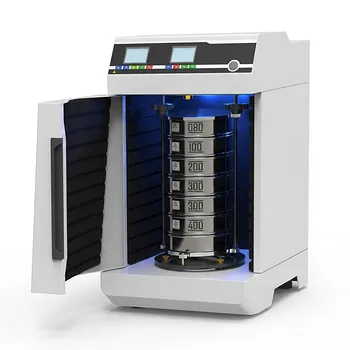
Laboratory Dry and Wet Three Dimensional Vibratory Sieve Shaker for Particle Analysis
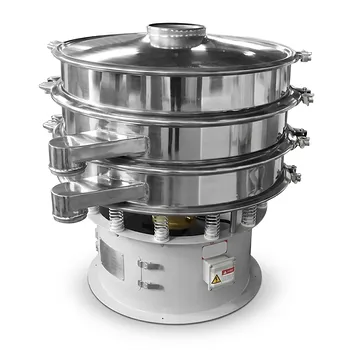
Three Dimensional Rotary Vibrating Sieve
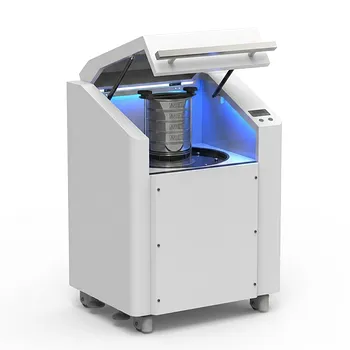
High Frequency Cabinet Type Three-Dimensional Rotary Vibrating Sieve Shaker for Dry Sieving and Particle Classification
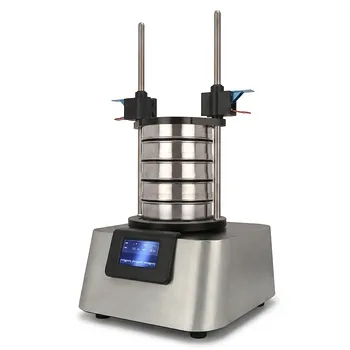
Vibratory Sieve Shaker Electromagnetic 3D Motion Powder Particle Size Analyzer for Dry and Wet Sieving
High Frequency Wet Three-Dimensional Vibrating Sieve Shaker for Dry and Wet Particle Size Analysis
Dry Three Dimensional Vibratory Sieve Shaker
Heavy Duty Dry Three Dimensional Vibratory Sieve Shaker for Particle Separation
Tapping Oscillating Sieve Shaker for Dry and Wet Particle Size Analysis
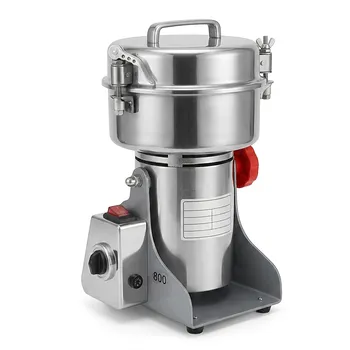
Small High-Speed Laboratory Grinder for Rapid Sample Preparation
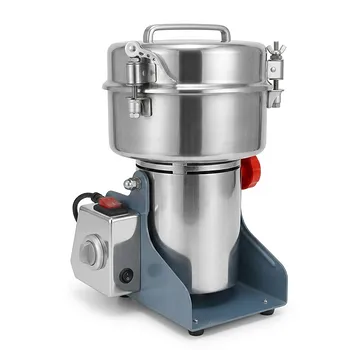
Small High-Speed Grinder for Efficient Laboratory Sample Preparation
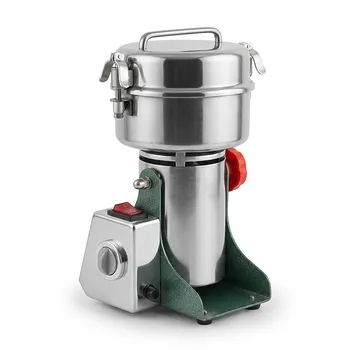
Small High-Speed Swing Grinder for Laboratory Sample Preparation
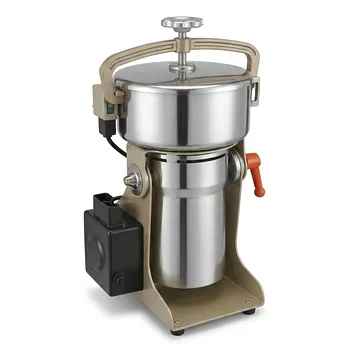
Multifunctional High Efficiency High Speed Laboratory Grinder