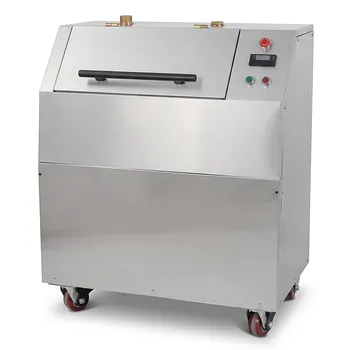
What is the primary purpose of using a vibratory sieve shaker in fly ash pretreatment? Optimize Zeolite Synthesis.
Updated 5 months ago
The primary purpose of using a vibratory sieve shaker and standard test sieves in the pretreatment of fly ash is to remove coarse impurities and ensure a uniform particle size distribution. This mechanical classification process isolates specific material fractions, which is critical for stabilizing the subsequent chemical reactions required to transform fly ash into high-quality zeolite.
Core Takeaway: By precisely controlling the particle size of raw fly ash, researchers and manufacturers can maximize the efficiency of alkali fusion reactions and ensure the structural consistency of the final synthesized zeolite product.
Removing Impurities and Ensuring Uniformity
Eliminating Coarse Contaminants
Fly ash is a byproduct containing various particle sizes and unwanted debris. Using a vibratory sieve shaker equipped with an 80-mesh standard test sieve effectively removes these coarse impurities at the start of the process.
Isolating Specific Particle Fractions
Standard test sieves allow for the classification of raw material into precise ranges, such as 63 to 125 micrometers. Isolating these specific fractions ensures that the raw material is physically and chemically consistent before synthesis begins.
Narrowing Particle Size Distribution (PSD)
A narrow PSD is essential for predictable material behavior. High-frequency vibration helps separate large-particle impurities and ensures the fineness consistency of precursor particles, which is vital for high-quality outcomes.
Enhancing Chemical Reactivity and Conversion
Optimizing the Alkali Fusion Reaction
Zeolite synthesis often involves an alkali fusion step where the fly ash reacts with a base. Smaller, uniform particles provide a more consistent reaction environment, leading to higher conversion efficiency and more thorough chemical transformations.
Increasing Specific Surface Area
Particle size directly influences the specific surface area available for chemical interaction. By using precision sieves to obtain finer particles (e.g., below 75 µm), you increase the reactive surface area, which accelerates the synthesis process.
Improving Reaction Activity
Consistent particle sizing ensures that the activation energy required for the reaction is applied uniformly. This prevents "pockets" of unreacted material and leads to a more homogenous zeolite matrix.
Optimizing Final Product Quality
Achieving Quality Stability
The stability of the synthesized zeolite depends heavily on the uniformity of the input material. Removing oversized particles prevents structural defects in the final product, ensuring it meets specific performance standards.
Enhancing Micro-Density and Immobilization
In applications like geopolymer or zeolite production, precise sizing results in a denser matrix. This improved density enhances the material's ability to immobilize heavy metals and resist environmental degradation.
Predicting Performance through Fineness Modulus
Vibratory sieving allows for the calculation of the Fineness Modulus, a key metric for optimizing the mixture’s packing density. This ensures the final material has the necessary stiffness and durability for its intended application.
Understanding the Trade-offs
Equipment Wear and Maintenance
Vibratory shakers and precision sieves are subject to mechanical wear over time. Mesh screens can become blinded or clogged with fine particles, requiring regular cleaning and calibration to maintain accuracy.
Processing Time vs. Precision
While finer sieving produces a more reactive precursor, it also increases the pretreatment duration. Balancing the need for extreme particle fineness with the required throughput is a common operational challenge.
Material Loss
The classification process inherently rejects material that does not meet the size criteria. Depending on the quality of the raw fly ash, this can result in a lower yield of usable precursor material, impacting overall cost-efficiency.
Making the Right Choice for Your Synthesis Goal
- If your primary focus is maximum chemical reactivity: Utilize high-frequency vibration with micron-level sieves (e.g., 45 µm) to isolate the finest possible fractions.
- If your primary focus is industrial scale-up and cost-control: Aim for a broader but clean fraction, such as that provided by an 80-mesh sieve, to balance purity with processing speed.
- If your primary focus is heavy metal immobilization: Ensure strict control of particles below 75 µm to facilitate a denser, more secure geopolymer or zeolite structure.
Precise particle size classification is the foundational step that transforms raw industrial waste into a high-performance, specialized chemical product.
Summary Table:
| Pretreatment Goal | Impact on Zeolite Synthesis | Recommended Equipment/Size |
|---|---|---|
| Impurity Removal | Stabilizes chemical reactions & removes debris | 80-mesh Standard Test Sieve |
| PSD Narrowing | Ensures physical/chemical consistency | 63μm to 125μm fractions |
| Surface Area Increase | Accelerates alkali fusion & conversion rate | Precision sieves (< 75μm) |
| Matrix Optimization | Improves micro-density & metal immobilization | High-frequency vibratory shaker |
Elevate Your Material Research with Precision Powder Solutions
Achieving the perfect particle size distribution is the first step toward high-performance materials. At [Brand Name], we specialize in providing complete laboratory sample preparation solutions tailored for material science and industrial R&D.
Whether you are synthesizing zeolites or developing advanced ceramics, our extensive product line ensures absolute consistency:
- Sieving & Classification: Vibratory and air-jet sieve shakers with high-precision test sieves.
- Milling & Grinding: Planetary ball mills, jet mills, and cryogenic grinders for ultra-fine powders.
- Compaction & Forming: A full spectrum of hydraulic presses, including Cold/Warm Isostatic Presses (CIP/WIP), vacuum hot presses, and XRF pellet presses.
- Mixing: High-efficiency powder and defoaming mixers for homogenous precursors.
Ready to optimize your lab's efficiency and product quality? Contact our technical experts today to find the ideal equipment for your specific application.
References
- Aini Herpi, Asep Saefumillah. Synthesized Zeolite from Coal Fly Ash: Effect of Furnace and Acidic Pretreatment on the Characteristic. DOI: 10.4108/eai.19-12-2020.2309115
Mentioned Products
- Vibratory Sieve Shaker Electromagnetic 3D Motion Powder Particle Size Analyzer for Dry and Wet Sieving
- Laboratory Dry and Wet Three Dimensional Vibratory Sieve Shaker for Particle Analysis
- Dry Three Dimensional Vibratory Sieve Shaker
- Stainless Steel Laboratory Vibratory Test Sieve Shaker
- Heavy Duty Dry Three Dimensional Vibratory Sieve Shaker for Particle Separation
People Also Ask
- How does a vibratory sieve shaker contribute to optimizing the performance of activated carbon? Enhance Adsorption Precision
- Why is a laboratory vibratory sieve shaker necessary for processing magnesium-based borate precursor powders? Boost Activity
- Why use a vibratory sieve shaker to verify coarse aggregate grading in rubberized concrete? Ensure Structural Integrity
- What function do vibratory sieve shakers and standard test sieves serve in the preparation of adsorbents? Key Guide
- What role does a vibratory sieve shaker play in the particle size analysis of ground corn products? Enhance QC Precision

Tech Team · PowderPreparation
Last updated on May 14, 2026
Related Products
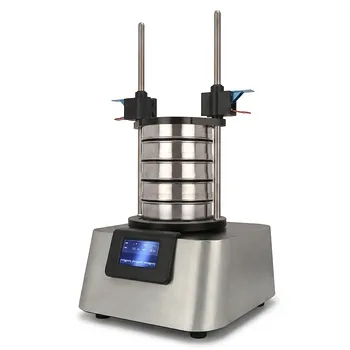
Vibratory Sieve Shaker Electromagnetic 3D Motion Powder Particle Size Analyzer for Dry and Wet Sieving
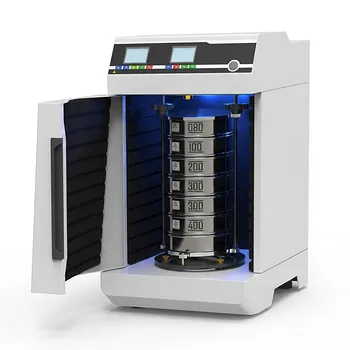
Laboratory Dry and Wet Three Dimensional Vibratory Sieve Shaker for Particle Analysis
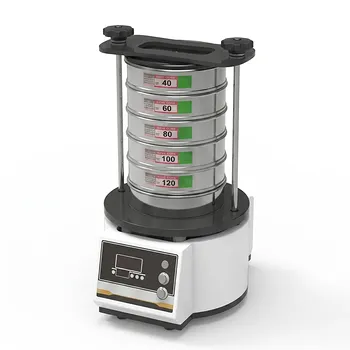
Dry Three Dimensional Vibratory Sieve Shaker
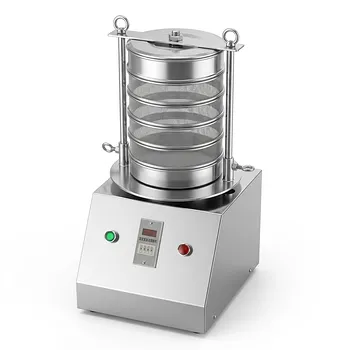
Stainless Steel Laboratory Vibratory Test Sieve Shaker
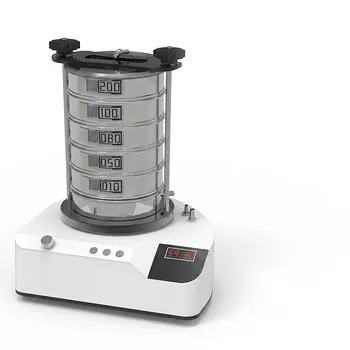
Heavy Duty Dry Three Dimensional Vibratory Sieve Shaker for Particle Separation
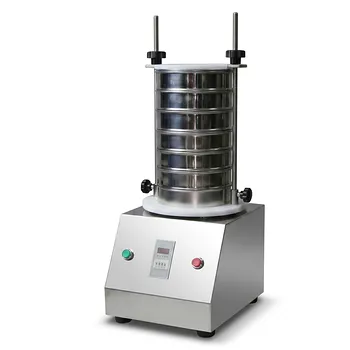
Small Laboratory Vibratory Sieve Shaker for Powder Gradation and Particle Size Analysis
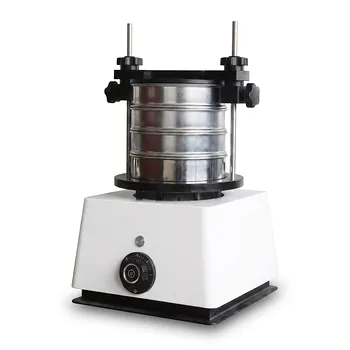
Small Laboratory Vibrating Sieve Shaker for Precise Particle Size Analysis
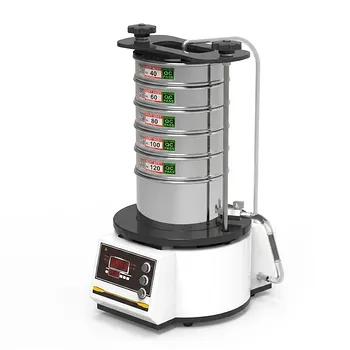
High Frequency Wet Three-Dimensional Vibrating Sieve Shaker for Dry and Wet Particle Size Analysis
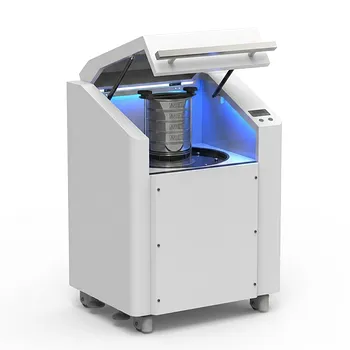
High Frequency Cabinet Type Three-Dimensional Rotary Vibrating Sieve Shaker for Dry Sieving and Particle Classification
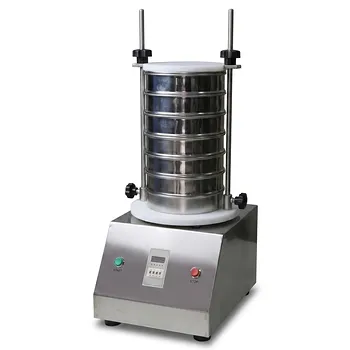
Laboratory Vibratory Test Sieve Shaker for Precision Particle Size Analysis and Powder Grading
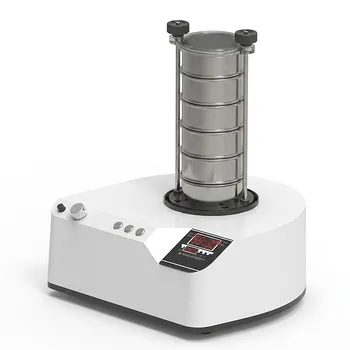
三维电磁微量振动筛分仪
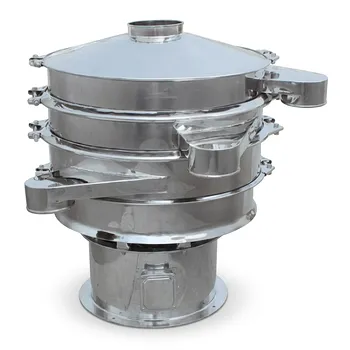
Stainless Steel Rotary Vibrating Sieve High Precision Circular Vibratory Separator Industrial Powder Grading Machine Multi Layer Sifting Equipment
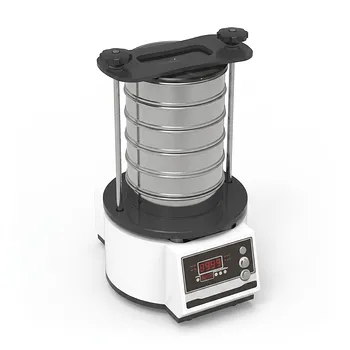
Tapping Oscillating Sieve Shaker for Dry and Wet Particle Size Analysis
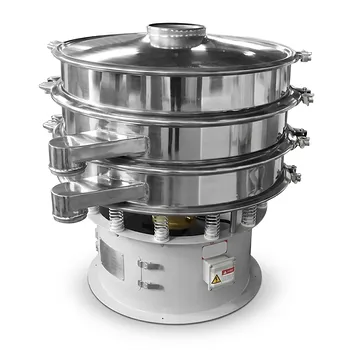
Three Dimensional Rotary Vibrating Sieve
Vibratory Superfine Grinder for Ultra Fine Laboratory Powder Milling
Small Vibrating Ultrafine Grinder for Traditional Chinese Medicine

Automatic Vibrating Powder Feeder for Laboratory Material Processing Precision Vibratory Hopper Feeder for Granular and Powder Material Handling Industrial Grade Vibrating Tray Feeder for Consistent Material Sample Preparation