What is the primary purpose of using a mechanical sieve shaker? Standardize Soil Grading & Ensure Data Accuracy
Updated 5 months ago
The primary purpose of a mechanical sieve shaker is to standardize the separation of soil particles by size.
It ensures that dry soil samples pass completely through a series of test sieves with specific apertures—typically ranging from 4.76mm to 0.075mm—using controlled mechanical vibration. This process is critical for determining the grain size distribution of a sample and isolating specific fine-grained components required for advanced testing, such as Atterberg limits or strength analysis.
By replacing manual agitation with uniform mechanical oscillation, a sieve shaker eliminates human bias and ensures that every sample is processed under identical conditions. This standardization is the foundation for accurate soil classification and reliable engineering data.
Ensuring Data Integrity through Controlled Vibration
Standardizing the Separation Process
Manual sieving is inherently inconsistent, as the force and frequency of agitation vary between operators. A mechanical sieve shaker provides standardized, continuous, and uniform oscillation, which ensures that particles are moved sufficiently to pass through the mesh.
Achieving Complete Particle Passage
The shaker uses specific vibration frequencies to move particles across the sieve surface until they either pass through the aperture or are retained. This mechanical efficiency ensures that the sample is fully graded within a specific timeframe, often around 10 minutes, which is nearly impossible to achieve consistently by hand.
Isolating Key Soil Fractions
In many engineering applications, the goal is to isolate a specific fraction, such as the material passing through a 0.425mm sieve. This isolated "fine" material is essential for subsequent standardized tests that determine how the soil will behave under moisture or structural load.
The Role in Soil Classification and Engineering
Establishing Particle Size Distribution Curves
By measuring the mass of soil retained on each sieve level, technicians can establish a particle size distribution curve. This curve is the primary tool used to distinguish between sand, silt, and clay, allowing engineers to determine if a soil is suitable for road subgrades or building foundations.
Enhancing Chemical and Analytical Homogeneity
For specialized testing like Neutron Activation Analysis (NAA) or chemical reaction efficiency, a uniform particle size is mandatory. The mechanical shaker ensures a homogenized sample, eliminating density gradients and ensuring that reactants have sufficient contact during laboratory processes.
Improving Scientific Repeatability
Because the mechanical shaker operates with fixed parameters, it significantly improves the repeatability and scientific validity of test results. This allows different laboratories to achieve comparable data on the same soil type, which is vital for large-scale construction and research projects.
Understanding the Trade-offs
Mechanical Wear and Sieve Damage
While highly efficient, the high-frequency vibration of a mechanical shaker can cause accelerated wear on the delicate wire mesh of standard test sieves. Over time, this can lead to aperture distortion, requiring regular calibration and replacement of the sieves to maintain accuracy.
Risk of Particle Degradation
For very friable or soft soil types, the aggressive vibration of a mechanical shaker can inadvertently break down larger particles into smaller ones. This "particle degradation" can artificially shift the distribution curve, potentially leading to an inaccurate classification of the soil's natural state.
Maximizing Results in Soil Analysis
How to Apply This to Your Project
To get the most accurate results from your soil pretreatment phase, tailor your use of the mechanical sieve shaker to your specific engineering or research goals.
- If your primary focus is engineering classification: Use a full stack of sieves to build a comprehensive distribution curve, ensuring you capture the exact percentage of fines passing the No. 200 (0.075mm) sieve.
- If your primary focus is scientific repeatability: Set a strict, documented vibration frequency and duration for every sample to eliminate human operational bias from your data set.
- If your primary focus is sample homogenization: Utilize a specific, single-sieve aperture (such as 0.5mm or 63μm) to ensure a consistent grain size for subsequent chemical or fluorescence testing.
Selecting the right mechanical sieving protocol ensures that your soil pretreatment is both efficient and technically sound.
Summary Table:
| Key Feature | Primary Benefit | Application in Soil Testing |
|---|---|---|
| Uniform Vibration | Eliminates human bias and operator inconsistency | Standardized engineering classification |
| Controlled Timing | Ensures 100% particle passage within 10 minutes | Establishing particle size distribution curves |
| Precision Meshing | Isolates specific fractions (e.g., <0.425mm) | Atterberg limits and strength analysis |
| Mechanical Consistency | Improves scientific repeatability across labs | Large-scale construction and R&D projects |
Elevate Your Material Analysis with Precision Sample Prep Solutions
Precision in soil pretreatment is the foundation of reliable engineering data. At [Brand Name], we provide complete laboratory sample preparation solutions for material science, specializing in high-performance powder processing and compaction equipment.
From vibratory and air-jet sieve shakers equipped with high-accuracy test sieves to robust crushers (jaw/roll) and advanced grinding mills (planetary, jet, rotor), our range is designed to meet the strictest laboratory standards. We also offer a full spectrum of hydraulic presses, including Cold/Warm Isostatic Presses (CIP/WIP) and vacuum hot presses for advanced material research.
Ready to optimize your lab’s efficiency and achieve repeatable results?
Contact Our Experts Today to find the perfect equipment solution for your specific application requirements!
References
- Ibrahim Adewuyi Oyediran, Oladunni Olufunmi Ayeni. Comparative effect of microbial induced calcite precipitate, cement and rice husk ash on the geotechnical properties of soils. DOI: 10.1007/s42452-020-2956-0
Mentioned Products
- Laboratory Vibratory Test Sieve Shaker for Precision Particle Size Analysis and Powder Grading
- Small Laboratory Vibrating Sieve Shaker for Precise Particle Size Analysis
- Stainless Steel Laboratory Vibratory Test Sieve Shaker
- 三维电磁微量振动筛分仪
- Vibratory Sieve Shaker Electromagnetic 3D Motion Powder Particle Size Analyzer for Dry and Wet Sieving
People Also Ask
- What role does a laboratory sieve shaker play in determining PDI? Achieve Precision in Biomass Quality Testing
- What are the functions of sieve shakers for coconut shell powder? Achieve Precise Particle Size & Quality Control.
- What function does a laboratory sieve shaker perform in the PSD analysis of residual soil? Ensure Precise Grading
- What is the role of a laboratory sieve shaker in the preparation of plantain peel adsorbents? Standardize Particle Size
- What is the function of a laboratory vibratory sieve shaker? Enhance Coal Particle Size Distribution (PSD) Analysis

Tech Team · PowderPreparation
Last updated on May 14, 2026
Related Products

Laboratory Vibratory Test Sieve Shaker for Precision Particle Size Analysis and Powder Grading

Small Laboratory Vibrating Sieve Shaker for Precise Particle Size Analysis

Stainless Steel Laboratory Vibratory Test Sieve Shaker

三维电磁微量振动筛分仪

Vibratory Sieve Shaker Electromagnetic 3D Motion Powder Particle Size Analyzer for Dry and Wet Sieving

Laboratory Dry and Wet Three Dimensional Vibratory Sieve Shaker for Particle Analysis

Small Laboratory Vibratory Sieve Shaker for Powder Gradation and Particle Size Analysis

Tapping Oscillating Sieve Shaker for Dry and Wet Particle Size Analysis

Heavy Duty Dry Three Dimensional Vibratory Sieve Shaker for Particle Separation

High Frequency Wet Three-Dimensional Vibrating Sieve Shaker for Dry and Wet Particle Size Analysis

Dry Three Dimensional Vibratory Sieve Shaker

High Frequency Cabinet Type Three-Dimensional Rotary Vibrating Sieve Shaker for Dry Sieving and Particle Classification

Three Dimensional Rotary Vibrating Sieve
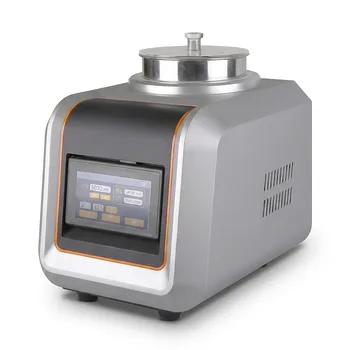
Laboratory Air Jet Sieving Machine for Fine Powder Particle Size Analysis and Deagglomeration
