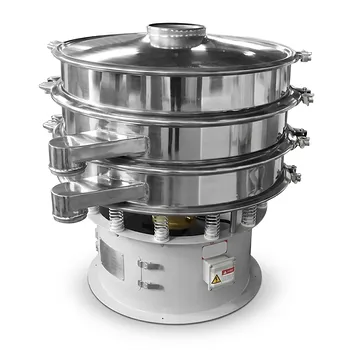
Primary Purpose of Sieve Shakers in Coastal Sand Pretreatment: Particle Size Consistency
Updated 5 months ago
The primary purpose of using a mechanical sieve shaker and standard test sieves is to achieve a highly consistent particle size distribution. In the context of coastal geomorphic sand samples, this homogenization is essential for maintaining stable chemical reaction efficiency during subsequent processes, such as silicon separation, by ensuring sufficient contact between reactants.
By standardizing the physical dimensions of sand grains through mechanical vibration, researchers can eliminate variables related to surface area and density. This provides a uniform foundation for chemical analysis, mineral processing, and physical modeling.
Enhancing Chemical and Analytical Precision
Optimizing Reaction Kinetics
Using a 63μm standard test sieve allows for the isolation of specific grain sizes that react predictably with chemical agents. When particle sizes are uniform, the surface area available for chemical contact remains constant across different samples.
Ensuring Sample Homogeneity
Mechanical sieving eliminates density gradients caused by irregular grain sizes within a raw sample. This high level of homogeneity is vital for advanced testing methods like Neutron Activation Analysis (NAA), where repeatability depends on a uniform sample matrix.
Stabilizing Silicon Separation
In geomorphic studies, consistent particle distribution is critical for the silicon separation process. Without this standardization, the efficiency of the reaction can fluctuate, leading to inaccurate data regarding the sample's chemical composition.
Standardizing Physical and Mineralogical Data
Determining Grain Size Distribution
A mechanical shaker ensures that dry samples pass completely through a stack of sieves with apertures ranging from 4.76mm to 0.075mm. This controlled vibration provides an accurate "fingerprint" of the sand’s physical characteristics, known as the grain size distribution.
Calculating the Fineness Modulus
By screening sand through multiple layers, researchers can calculate the fineness modulus (Mf). This value identifies the grain size characteristics necessary to determine if a sand source is suitable for specialized applications, such as high-performance mortars or concrete aggregates.
Isolating Components for Adsorption
Standardized screening—using meshes like 300 µm or 75 µm—isolates specific fine-grained components. This ensures a stable specific surface area, which is a primary requirement for maintaining consistent adsorption kinetics in heavy metal removal experiments.
Understanding the Trade-offs
Mechanical vs. Manual Error
Mechanical sieve shakers are preferred because they eliminate the human error inherent in manual shaking. Manual methods often lack the consistent frequency and duration required to achieve true standardization across different experimental groups.
Limitations of Mesh Size
While sieving provides precise grading, it is limited by the physical apertures of the mesh. Very fine particles can sometimes "blind" or clog the sieve, potentially skewing results if the equipment is not maintained or if the vibration intensity is incorrectly calibrated.
Sample Degradation Risks
Extended periods of high-intensity vibration can cause attrition, where sand grains rub against each other and break down into smaller fragments. It is crucial to balance the duration of the shaking with the fragility of the geomorphic material to avoid altering the original distribution.
Applying Sieving Methods to Your Objectives
Effective pretreatment requires selecting the right sieve configuration and shaker settings based on your analytical goals.
- If your primary focus is Chemical Reactivity or Silicon Separation: Use a 63μm sieve to maximize reactant contact and ensure stable reaction efficiency.
- If your primary focus is Mineral Processing or Extraction: Utilize multiple layers of sieves to calculate weight percentages for subsequent gravity or magnetic separation.
- If your primary focus is Physical Modeling and Porosity: Focus on obtaining a specific average particle diameter to accurately calculate the pore surface-area-to-volume (S/V) ratio.
- If your primary focus is Soil Mechanics and Strength: Target the isolation of fine-grained components passing through a 0.425mm sieve to perform standardized Atterberg limits tests.
Mechanical sieving transforms raw, heterogeneous coastal sand into a standardized technical medium ready for rigorous scientific inquiry.
Summary Table:
| Application Goal | Required Sieve/Process | Key Benefit |
|---|---|---|
| Chemical Analysis | 63μm Standard Sieve | Optimizes reaction kinetics and silicon separation |
| Mineral Processing | Multi-layer Stack (4.76mm-0.075mm) | Accurately maps grain size distribution & fingerprints |
| Physical Modeling | Average Particle Diameter | Precise calculation of pore surface-area-to-volume ratio |
| Soil Mechanics | 0.425mm Sieve Isolation | Enables standardized Atterberg limits and strength tests |
Enhance Your Analytical Precision with KINTEK
At KINTEK, we understand that accurate scientific inquiry starts with flawless sample preparation. Whether you are conducting geomorphic studies or advanced material science research, our vibratory and air-jet sieve shakers—paired with our precision test sieves—ensure the exact particle size consistency your project demands.
Beyond screening, we provide a complete spectrum of powder processing and compaction solutions tailored for researchers and distributors:
- Crushing & Milling: High-performance jaw/roll crushers and planetary, jet, or cryogenic grinders.
- Mixing Solutions: Specialized powder and defoaming mixers for achieving perfect sample homogeneity.
- Advanced Compaction: A full range of hydraulic presses, including Cold/Warm Isostatic Presses (CIP/WIP), vacuum hot presses, and XRF pellet presses.
Ready to standardize your coastal sand pretreatment and optimize your laboratory workflow with reliable, high-quality equipment? Contact our experts today to find the perfect solution for your specific application!
References
- S. S. Oluyamo, M. O. Olasoji. Isolation and Characterisation of High Grade Nanosilicon from Coastal Landform in Ilaje Local Government Area of Ondo State, Nigeria.. DOI: 10.46481/asr.2023.2.1.82
Mentioned Products
- Vibratory Sieve Shaker Electromagnetic 3D Motion Powder Particle Size Analyzer for Dry and Wet Sieving
- 三维电磁微量振动筛分仪
- Small Laboratory Vibrating Sieve Shaker for Precise Particle Size Analysis
- Stainless Steel Laboratory Vibratory Test Sieve Shaker
- Laboratory Dry and Wet Three Dimensional Vibratory Sieve Shaker for Particle Analysis
People Also Ask
- How does a vibratory sieve shaker contribute to optimizing the performance of activated carbon? Enhance Adsorption Precision
- Why is a laboratory vibratory sieve shaker necessary for processing magnesium-based borate precursor powders? Boost Activity
- Why use a vibratory sieve shaker to verify coarse aggregate grading in rubberized concrete? Ensure Structural Integrity
- What function do vibratory sieve shakers and standard test sieves serve in the preparation of adsorbents? Key Guide
- What role does a vibratory sieve shaker play in the particle size analysis of ground corn products? Enhance QC Precision

Tech Team · PowderPreparation
Last updated on May 14, 2026
Related Products
Vibratory Sieve Shaker Electromagnetic 3D Motion Powder Particle Size Analyzer for Dry and Wet Sieving
三维电磁微量振动筛分仪
Small Laboratory Vibrating Sieve Shaker for Precise Particle Size Analysis
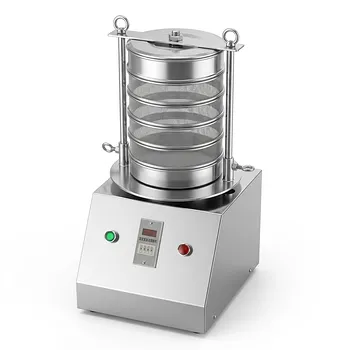
Stainless Steel Laboratory Vibratory Test Sieve Shaker
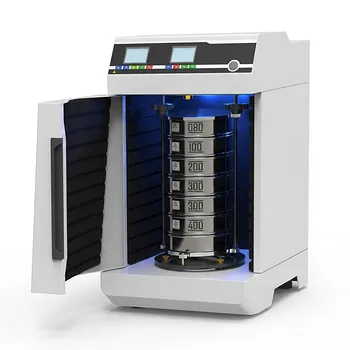
Laboratory Dry and Wet Three Dimensional Vibratory Sieve Shaker for Particle Analysis
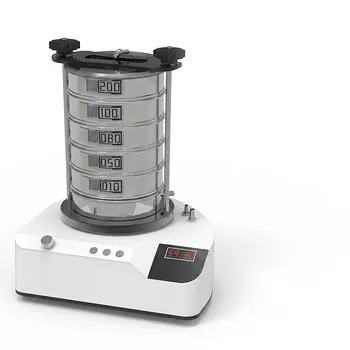
Heavy Duty Dry Three Dimensional Vibratory Sieve Shaker for Particle Separation
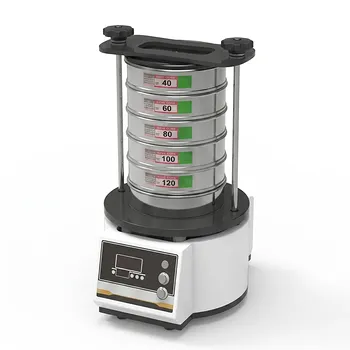
Dry Three Dimensional Vibratory Sieve Shaker
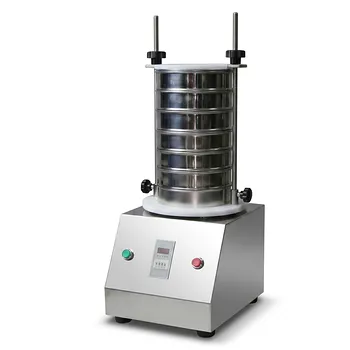
Small Laboratory Vibratory Sieve Shaker for Powder Gradation and Particle Size Analysis
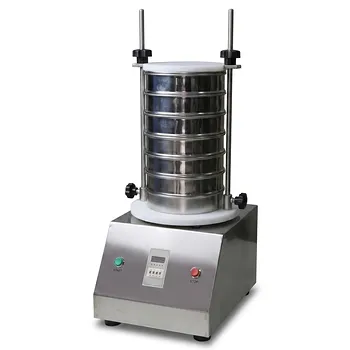
Laboratory Vibratory Test Sieve Shaker for Precision Particle Size Analysis and Powder Grading
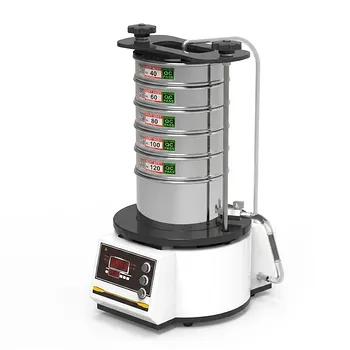
High Frequency Wet Three-Dimensional Vibrating Sieve Shaker for Dry and Wet Particle Size Analysis
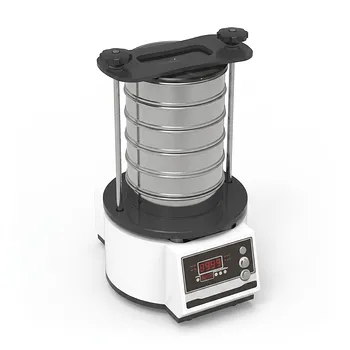
Tapping Oscillating Sieve Shaker for Dry and Wet Particle Size Analysis
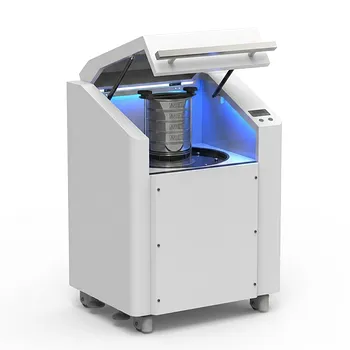
High Frequency Cabinet Type Three-Dimensional Rotary Vibrating Sieve Shaker for Dry Sieving and Particle Classification
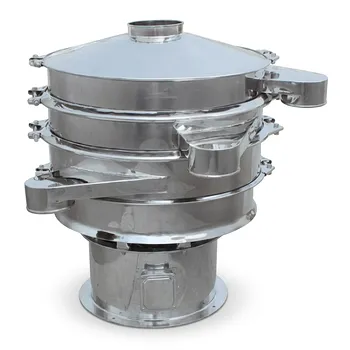
Stainless Steel Rotary Vibrating Sieve High Precision Circular Vibratory Separator Industrial Powder Grading Machine Multi Layer Sifting Equipment
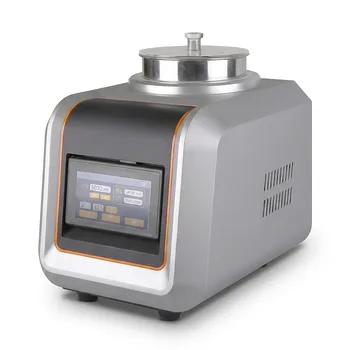
Laboratory Air Jet Sieving Machine for Fine Powder Particle Size Analysis and Deagglomeration