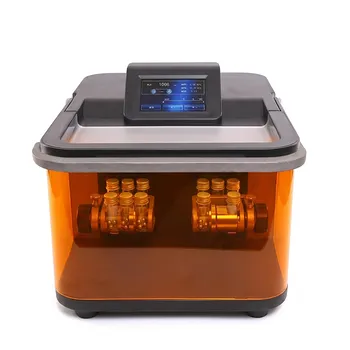
Why use a planetary ball mill for ZnAl2O4 wet grinding? Achieve High-Purity & Homogeneity
Updated 4 months ago
The primary purpose is to activate and homogenize the raw powders to ensure a successful chemical reaction. In the initial preparation of Zinc Aluminate ($ZnAl_2O_4$), a laboratory planetary ball mill uses wet grinding to simultaneously refine the particle size of alumina ($Al_2O_3$) and zinc oxide ($ZnO$) while ensuring they are perfectly mixed. This process significantly increases the specific surface area and surface energy of the powders, which provides the necessary kinetic conditions for a phase-pure spinel to form during subsequent heat treatment.
This high-energy milling stage is critical because it converts raw, low-reactivity oxides into an ultra-fine, homogenized precursor. By maximizing the contact points between particles at the sub-micron level, the process ensures that the solid-state reaction occurs completely and uniformly during calcination.
Enhancing Chemical Reactivity through Mechanical Energy
Increasing Specific Surface Area and Surface Energy
The planetary ball mill uses high-speed rotation and revolution to generate intense impact and shear forces. These forces break down coarse raw materials into micron or sub-micron scales, exponentially increasing the surface area available for reaction. This higher surface energy acts as a driver for the chemical transformation that occurs later in the furnace.
Optimizing Kinetic Conditions for Solid-Phase Reactions
For $ZnAl_2O_4$ to form, ions must diffuse across the boundaries of the $ZnO$ and $Al_2O_3$ particles. By refining the powder, the ball mill shortens the diffusion distance and increases the number of contact points between the two components. This ensures that the solid-phase reaction is efficient and results in a phase-pure spinel powder.
Breaking Down Powder Agglomerates
Raw ceramic powders often contain clusters or "agglomerates" that can lead to uneven reactions or structural defects. The mechanical action of the grinding media effectively de-agglomerates the powders, ensuring a consistent particle size distribution. This consistency is vital for achieving a uniform microstructure in the final ceramic body.
Ensuring Material Purity and Homogeneity
Achieving Atomic-Scale Mixing
Wet grinding in a medium like ethanol facilitates a much more thorough distribution of components than dry mixing. This ensures the $ZnO$ and $Al_2O_3$ are uniformly combined at a near-atomic scale. Without this level of homogenization, the final ceramic might contain "pockets" of unreacted oxides, compromising its properties.
Preventing Impurity Contamination
To maintain the high performance of Zinc Aluminate ceramics, the grinding environment must be strictly controlled. Using alumina grinding jars and balls prevents the introduction of metallic impurities that could interfere with the ceramic's electrical or thermal properties. This allows the material to retain the high purity required for precision technical applications.
Understanding the Trade-offs
Media Wear and Contamination
While planetary ball milling is effective, the high-energy impact inevitably leads to some wear of the grinding balls and jars. If the media material is not identical to the ceramic being processed (e.g., using zirconia media for alumina-based ceramics), minor cross-contamination can occur. Researchers must choose media that either matches the chemistry or does not negatively impact the final application.
Processing Time vs. Particle Size
There is a point of diminishing returns where extended milling time no longer significantly reduces particle size but increases the risk of contamination and energy costs. Finding the optimal milling duration is a delicate balance between achieving the desired reactivity and maintaining the structural integrity of the powder.
Thermal Management During Milling
The high-speed mechanical action generates significant heat within the grinding jar. In some cases, this can cause the liquid medium (like ethanol) to expand or the powders to undergo unintended phase changes. Proper cooling periods or controlled rotational speeds are necessary to manage the temperature and ensure a stable process.
How to Apply This to Your Project
When preparing Zinc Aluminate or similar spinel ceramics, your choice of milling parameters should align with your final material requirements.
- If your primary focus is phase purity: Utilize grinding media and jars made of alumina to ensure that any minor wear from the equipment does not introduce foreign chemical species into the $ZnAl_2O_4$ system.
- If your primary focus is rapid reaction kinetics: Increase the milling energy and duration to achieve sub-micron particle sizes, which will lower the required calcination temperature for spinel formation.
- If your primary focus is suspension stability: Use a planetary ball mill to ensure that dispersants and binders are uniformly distributed within the slurry, preventing sedimentation during subsequent shaping processes.
By mastering the initial wet-grinding stage, you establish the foundational chemical and physical uniformity required to produce high-performance Zinc Aluminate ceramics.
Summary Table:
| Key Function | Mechanical Mechanism | Benefit to ZnAl2O4 Synthesis |
|---|---|---|
| Particle Refinement | High-speed impact & shear | Increases surface energy; lowers calcination temp |
| Homogenization | Atomic-scale wet mixing | Ensures complete solid-state reaction (Phase-pure) |
| De-agglomeration | Mechanical breakdown of clusters | Improves microstructure uniformity and density |
| Purity Control | Use of matched media (Alumina) | Prevents metallic contamination in technical ceramics |
Elevate Your Material Research with Precision Powder Solutions
Achieving the perfect spinel structure in Zinc Aluminate ceramics requires uncompromising control over particle size and homogeneity. At [Company Name], we provide complete laboratory sample preparation solutions for material science, specializing in high-performance powder processing and compaction equipment.
From planetary ball mills, jet mills, and rotor mills for sub-micron refinement to our advanced Cold/Warm Isostatic Presses (CIP/WIP) and vacuum hot presses for superior compaction, we support your entire workflow. Our equipment is designed to prevent contamination and ensure the highest phase purity for your technical applications.
Ready to optimize your ceramic precursors? Contact our technical team today to discuss how our crushing, milling, and pressing solutions can enhance your lab's efficiency and material performance.
References
- Yan YANG, Zhifu LIU. Low Temperature Sintering of ZnAl2O4 Ceramics with CuO-TiO2-Nb2O5 Composite Oxide Sintering Aid. DOI: 10.15541/jim20240517
Mentioned Products
- Vertical Square Planetary Ball Mill for Laboratory Sample Preparation and Nanoscale Grinding
- 8L Planetary Ball Mill for Laboratory Grinding and Sample Preparation
- Vertical Semi Circular Planetary Ball Mill for Laboratory Precision Grinding
- 360° Rotating Omnidirectional Laboratory Planetary Ball Mill for Homogeneous Ultra-Fine Grinding and Mixing
- Miniature Planetary Ball Mill with Vacuum Grinding and High Efficiency for Laboratory Sample Preparation
People Also Ask
- What is the function of a planetary ball mill in wollastonite ceramic prep? Achieve Molecular Homogenization & Reactivity
- How does a planetary ball mill contribute to the homogenization of trace elements? Achieve Sub-Micron Uniformity
- Why grind lime-pozzolan specimens for TG/DTA for 3 mins? Master sample prep for high-precision thermal analysis.
- What role does a planetary ball mill play in the synthesis of Li6PS5Cl (LPSCl)? Unlock High Ionic Conductivity
- What role does a planetary ball mill play in KNTO ceramic refinement? Optimize Homogeneity & Reactivity

Tech Team · PowderPreparation
Last updated on Jun 03, 2026
Related Products
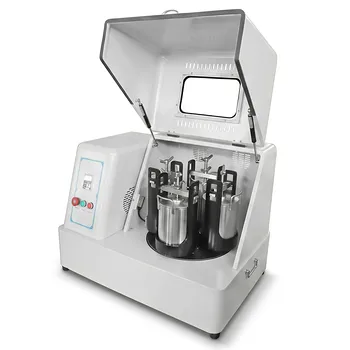
Vertical Square Planetary Ball Mill for Laboratory Sample Preparation and Nanoscale Grinding
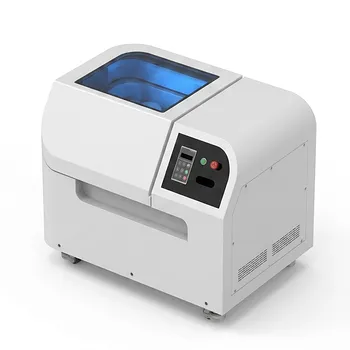
8L Planetary Ball Mill for Laboratory Grinding and Sample Preparation
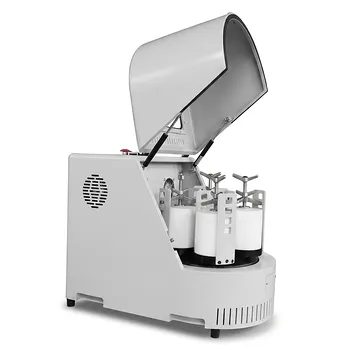
Vertical Semi Circular Planetary Ball Mill for Laboratory Precision Grinding
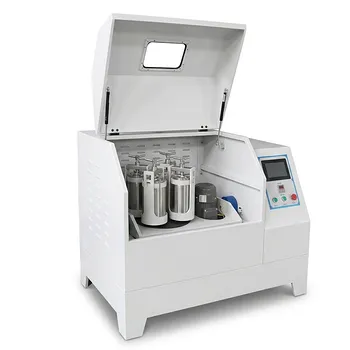
360° Rotating Omnidirectional Laboratory Planetary Ball Mill for Homogeneous Ultra-Fine Grinding and Mixing
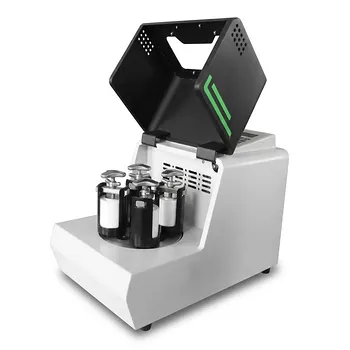
Miniature Planetary Ball Mill with Vacuum Grinding and High Efficiency for Laboratory Sample Preparation
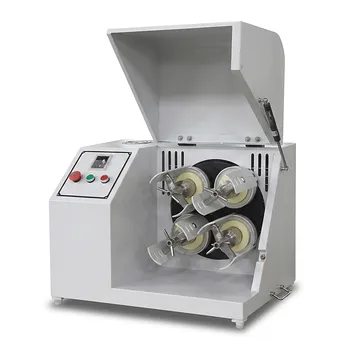
Horizontal Light Duty Planetary Ball Mill for Laboratory Sample Preparation
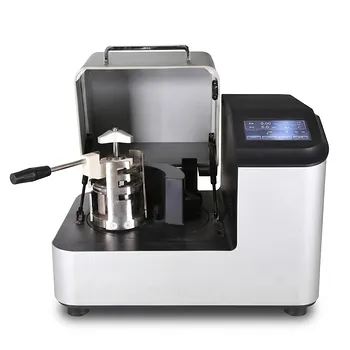
High Energy Laboratory Planetary Ball Mill for Nano Grinding and Material Science Sample Preparation
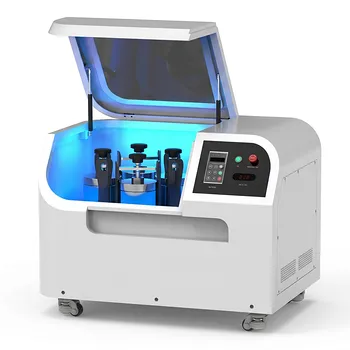
Planetary Ball Mill 12L
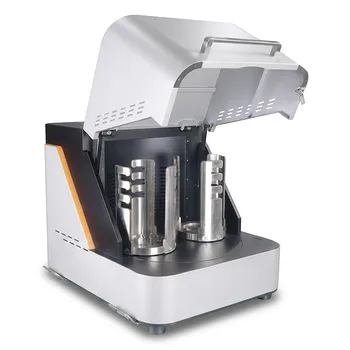
High Energy Laboratory Planetary Ball Mill for Nano Grinding and Colloidal Mixing of Hard and Brittle Materials
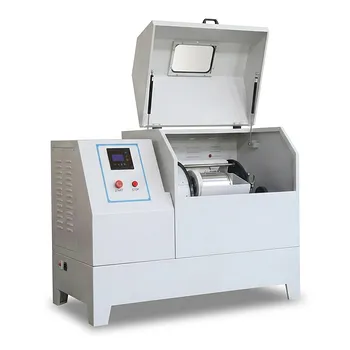
Heavy Duty Horizontal Planetary Ball Mill for Efficient Industrial Grinding and Sample Preparation
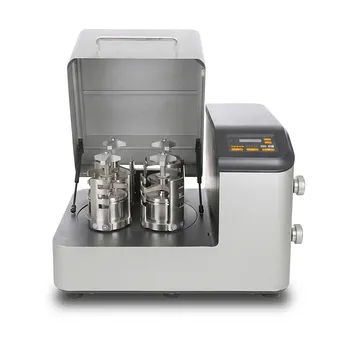
High Energy Planetary Ball Mill for Nano Scale Grinding and Colloidal Mixing in Material Science Research
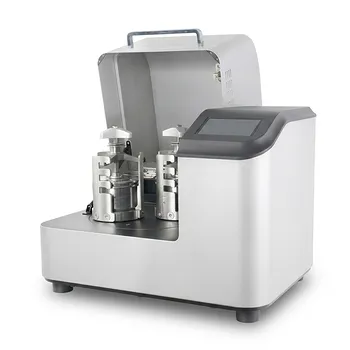
High Energy Planetary Ball Mill for Nano Scale Grinding and Mechanical Alloying
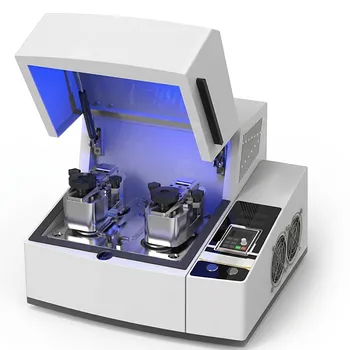
Laboratory Nano High Energy Ball Mill Ultrafine Grinding Mechanical Alloying
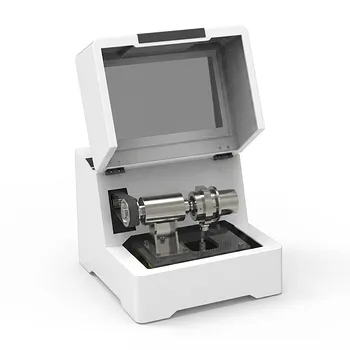
Single Tank High Energy Vibratory Ball Mill for Laboratory Grinding and Mixing
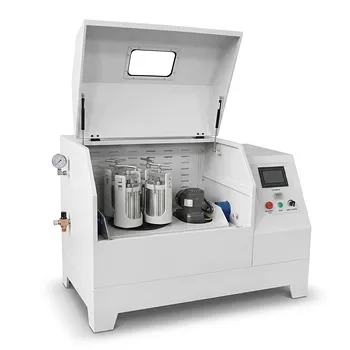
Vertical Production Planetary Ball Mill for High Throughput Powder Processing
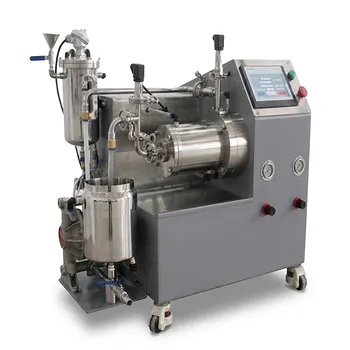
Laboratory Horizontal Bead Mill for Nanomaterial Wet Grinding and Material Science Research
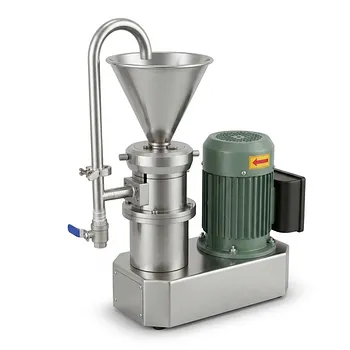
Small Laboratory Colloid Mill for Ultra-Fine Wet Grinding and Emulsification
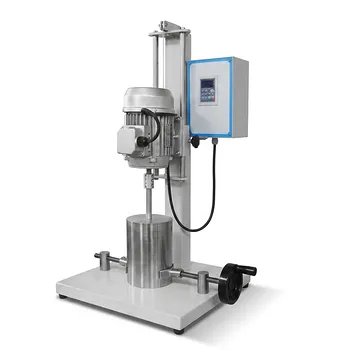
Laboratory Sand Mill Grinding Dispersing Machine for Wet Particle Size Reduction
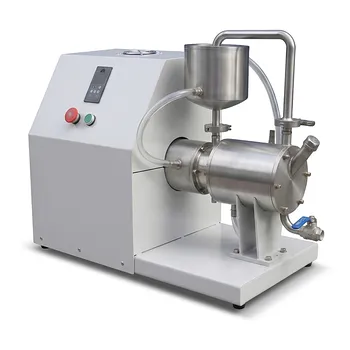
Laboratory Small Horizontal Sand Mill for Nano Materials Wet Grinding