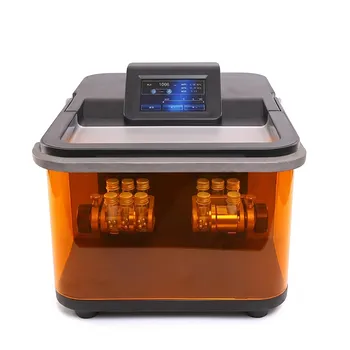
What is the primary purpose of using a ball mill for Al2O3/PVA slurries? Ensure Uniform Dispersion & Slurry Stability
Updated 4 months ago
The primary purpose of a ball mill in this process is to ensure the uniform dispersion of alumina particles and additives. By applying mechanical impact and shear forces, the ball mill breaks down powder agglomerates and facilitates the thorough mixing of ultrafine alumina with the polyvinyl alcohol (PVA) binder and other chemical agents. This results in a precursor slurry with a stable physical state and a highly consistent chemical composition.
The ball mill acts as a high-energy mixing and de-agglomeration tool that transforms raw powders into a homogeneous suspension. This step is critical for achieving the precise viscosity and material uniformity required for high-quality ceramic film production.
Achieving Homogeneous Dispersion
Breaking Down Particle Agglomerates
Alumina powders naturally tend to form clusters or agglomerates that can ruin the consistency of a thin film. The mechanical impact of the grinding balls strikes these clusters, while shear forces tear them apart. This reduction to individual particles is essential for creating a smooth, defect-free precursor slurry.
Ensuring Uniform Chemical Distribution
A precursor slurry contains more than just powder; it includes dispersants, defoamers, and surfactants that must be distributed perfectly. The ball milling process ensures these trace additives reach every part of the mixture. This prevents "rich" or "lean" zones that could lead to structural weaknesses during the drying or sintering phases.
Surface Engineering and Micro-Coating
Coating Particles with PVA Binders
One of the most critical roles of the ball mill is to ensure that the polyvinyl alcohol (PVA) effectively coats the alumina particles. The continuous mechanical action forces the polymer chains into contact with the particle surfaces at a microscopic level. This uniform coating provides the "green strength" necessary for the film to hold its shape after the solvent evaporates.
Enhancing Slurry Stability and Flowability
By refining the particle size and ensuring a uniform distribution of dispersants, the ball mill creates a stable suspension. This stability prevents the alumina from settling out of the liquid over time. A well-milled slurry maintains a consistent viscosity, which is vital for downstream processes like slip casting or tape casting.
Understanding the Trade-offs
The Risk of Media Contamination
While ball milling is effective, the wear and tear on the grinding balls can introduce impurities into the slurry. Using alumina grinding media that matches the chemistry of the powder is a common strategy to minimize foreign contamination. However, even with matched media, excessive milling time can still alter the final material properties.
Balancing Time and Energy
Milling for too short a duration results in poor dispersion and "clumpy" slurries, while over-milling can lead to excessive heat or unwanted particle size reduction. Finding the optimal milling window—often ranging from 15 to 24 hours—is a delicate balance between achieving homogeneity and maintaining the structural integrity of the additives.
How to Apply This to Your Project
When preparing your Al2O3/PVA slurry, your milling parameters should align with your final performance requirements.
- If your primary focus is high purity: Use high-purity alumina grinding jars and balls to ensure that any wear from the media does not introduce metallic or foreign impurities into your film.
- If your primary focus is maximum solid loading: Extend the milling time to ensure dispersants are fully activated, allowing you to increase the powder-to-solvent ratio without compromising viscosity.
- If your primary focus is film flexibility: Ensure the PVA binder is added at a stage where it can be thoroughly integrated without being mechanically degraded by excessive high-energy milling.
Mastering the ball milling process is the foundational step in transforming raw ceramic powders into high-performance precursor films.
Summary Table:
| Key Function | Mechanism | Impact on Precursor Slurry |
|---|---|---|
| De-agglomeration | Mechanical impact & shear | Breaks clusters into individual particles for a defect-free film. |
| Homogenization | High-energy mixing | Ensures trace additives (dispersants/defoamers) are evenly distributed. |
| Binder Coating | Microscopic contact | Forces PVA chains to coat alumina surfaces, increasing "green strength." |
| Stability Control | Particle refinement | Prevents sedimentation and maintains consistent viscosity for casting. |
Elevate Your Material Preparation with Precision Equipment
Achieving the perfect Al2O3/PVA slurry requires more than just a process—it requires the right tools. We provide complete laboratory sample preparation solutions for material science, specializing in high-performance powder processing and compaction equipment.
Whether you need to optimize your dispersion with our planetary ball mills, jet mills, or rotor mills, or you are ready to transition from slurry to solid state, we offer a full spectrum of solutions including:
- Grinding & Sifting: Liquid nitrogen cryogenic grinders, jaw crushers, and vibratory sieve shakers.
- Mixing: High-efficiency powder mixers and vacuum defoaming mixers.
- Compaction & Pressing: Manual and automatic hydraulic presses, Cold/Warm Isostatic Presses (CIP/WIP), and vacuum hot presses.
Our equipment is designed to help researchers and manufacturers achieve superior material uniformity and structural integrity. Contact our technical team today to discuss your specific application and find the ideal solution for your laboratory or production line!
References
- Xiaoqin Yin, Jianqing Wu. A preparation method for the highly permeable ceramic microfiltration membrane – precursor film firing method. DOI: 10.1039/c7ra12314k
Mentioned Products
- Heavy Duty Horizontal Planetary Ball Mill for Efficient Industrial Grinding and Sample Preparation
- Vertical Semi Circular Planetary Ball Mill for Laboratory Precision Grinding
- Vertical Production Planetary Ball Mill for High Throughput Powder Processing
- Vertical Square Planetary Ball Mill for Laboratory Sample Preparation and Nanoscale Grinding
- High Energy Planetary Ball Mill for Nano Scale Grinding and Mechanical Alloying
People Also Ask
- Why grind lime-pozzolan specimens for TG/DTA for 3 mins? Master sample prep for high-precision thermal analysis.
- What is the role of a planetary ball mill in the mechanical activation of ZTA powder? Boost Sintering Performance
- What is the function of a planetary ball mill in wollastonite ceramic prep? Achieve Molecular Homogenization & Reactivity
- How does a planetary ball mill contribute to the homogenization of trace elements? Achieve Sub-Micron Uniformity
- What is the function of a high-performance planetary ball mill in AMZ laminates? Master Ceramic Homogenization.

Tech Team · PowderPreparation
Last updated on Jun 03, 2026
Related Products

Heavy Duty Horizontal Planetary Ball Mill for Efficient Industrial Grinding and Sample Preparation
Vertical Semi Circular Planetary Ball Mill for Laboratory Precision Grinding

Vertical Production Planetary Ball Mill for High Throughput Powder Processing

Vertical Square Planetary Ball Mill for Laboratory Sample Preparation and Nanoscale Grinding

High Energy Planetary Ball Mill for Nano Scale Grinding and Mechanical Alloying
Dual Station Planetary Ball Mill 24L
Single Tank High Energy Vibratory Ball Mill for Laboratory Grinding and Mixing

High Energy Laboratory Planetary Ball Mill for Nano Grinding and Material Science Sample Preparation

Miniature Planetary Ball Mill with Vacuum Grinding and High Efficiency for Laboratory Sample Preparation

High Energy Omnidirectional Planetary Ball Mill 16L
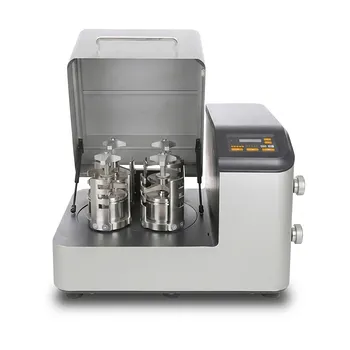
High Energy Planetary Ball Mill for Nano Scale Grinding and Colloidal Mixing in Material Science Research

360° Rotating Omnidirectional Laboratory Planetary Ball Mill for Homogeneous Ultra-Fine Grinding and Mixing
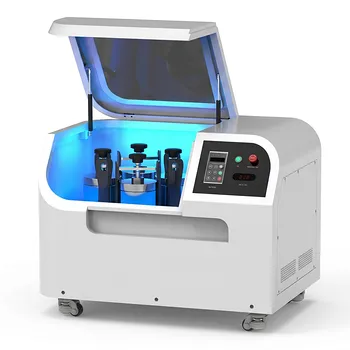
Planetary Ball Mill 12L
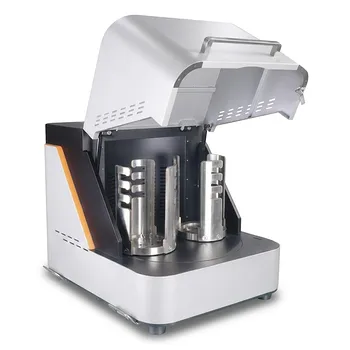
High Energy Laboratory Planetary Ball Mill for Nano Grinding and Colloidal Mixing of Hard and Brittle Materials
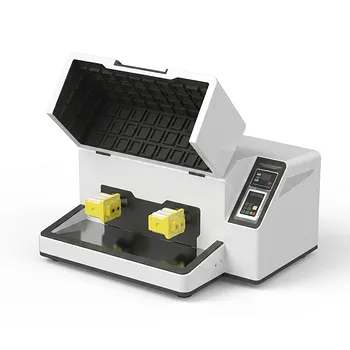
Multi-Platform Nanoscale High-Energy Vibratory Ball Mill
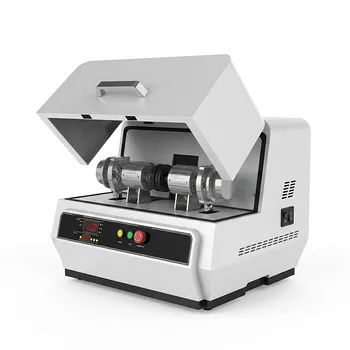
Dual Jar High Energy Vibratory Ball Mill
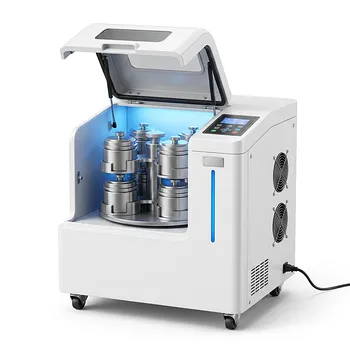
High Energy Omnidirectional Planetary Ball Mill 20L

8L Planetary Ball Mill for Laboratory Grinding and Sample Preparation
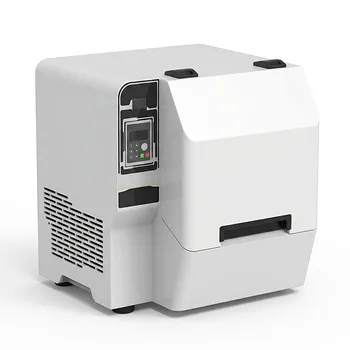
Nano High Energy Vibratory Ball Mill for Laboratory Sample Preparation