What is the primary purpose of a 75 μm test sieve for Class F fly ash? Optimize Reactivity and Concrete Strength
Updated 4 months ago
The primary purpose of a 75 μm precision test sieve is to ensure fineness consistency and maximize the chemical reactivity of Class F fly ash. By filtering out coarse, unburnt particles, the sieve increases the material's specific surface area, which is essential for accelerating the pozzolanic reaction. This process allows the fly ash to bond effectively with calcium hydroxide, resulting in denser, stronger concrete.
Core Takeaway: Utilizing a 75 μm sieve transforms raw fly ash into a high-performance additive by optimizing its particle size for maximum chemical reactivity and structural density.
Enhancing Chemical Reactivity and Pozzolanic Activity
Increasing Specific Surface Area
The 75 μm sieve serves as a gatekeeper that removes oversized particles that would otherwise remain inert. By reducing the average particle size, you significantly increase the specific surface area available for chemical interaction.
This increased surface area is the primary driver for faster reaction times when the fly ash is introduced to water and cement. It ensures that the powder is fine enough to participate fully in the hydration process rather than acting as a simple filler.
Promoting the Pozzolanic Reaction
Class F fly ash is valued for its ability to react with calcium hydroxide, a byproduct of cement hydration. When the ash is refined to sub-75 μm levels, it more readily generates additional cementitious compounds.
This chemical reaction leads to the formation of calcium silicate hydrate (C-S-H) gel. This gel fills the capillary pores within the concrete, which is the foundational mechanism for increasing long-term compressive strength.
Ensuring Material Consistency and Structural Integrity
Removal of Coarse and Unburnt Impurities
Raw fly ash often contains "clinkers" or incompletely burned coal particles that can compromise the concrete matrix. These coarse impurities create localized weak points and can lead to increased permeability.
Using a precision 75 μm (200 mesh) sieve ensures these contaminants are removed before the material is batched. This leads to a more uniform microstructure, which is critical for the stability of the final product's mechanical properties.
Achieving Parity with Portland Cement
To function effectively as a partial cement replacement, fly ash must mimic the fineness of Ordinary Portland Cement (OPC). Precise sieving allows the ash to reach a comparable particle size distribution.
When the fly ash particles are sized correctly, they improve the distribution uniformity throughout the cement matrix. This "filler effect" combined with chemical reactivity results in a much denser and more durable concrete or mortar.
Quality Management and Mix Ratio Accuracy
Monitoring Pre-mixed Mortar Proportions
In pre-mixed mortar applications, the 75 μm sieve is a vital tool for real-time quality monitoring. Because fly ash particles are significantly smaller than fine aggregates, sieving allows technicians to isolate the microparticles.
By measuring the weight of material passing through the sieve and subtracting the known micro-content of the aggregate, operators can accurately calculate the fly ash mixing ratio. This ensures the site is adhering to the specified technical design.
Facilitating Element Dissolution
In specialized applications like geopolymer preparation, fine sieving is mandatory for the dissolution of silicon and aluminum. Smaller particles dissolve more rapidly in alkali-activator solutions.
This rapid dissolution is the first step in creating a stable geopolymer matrix. Without the precise control provided by the sieve, the resulting material may suffer from inconsistent setting times and lower structural integrity.
Understanding the Trade-offs and Limitations
Processing Time vs. Fineness
While finer particles generally lead to better results, the sieving process can be time-consuming. Mechanical sieving of large volumes of Class F fly ash requires high-quality equipment to maintain throughput without compromising precision.
Sieve Blinding and Maintenance
Fine mesh sieves, particularly at the 75 μm level, are susceptible to "blinding" or clogging. This occurs when near-size particles become trapped in the openings, reducing the sieve's effective area and accuracy.
Cost of Over-Processing
There is a point of diminishing returns where the energy required to achieve extreme fineness outweighs the structural benefits. It is critical to balance the technical requirements of the project with the economic costs of extended processing.
How to Apply This to Your Project
When integrating a 75 μm sieving protocol into your workflow, consider your primary performance goal to determine the level of precision required.
- If your primary focus is long-term structural strength: Prioritize the removal of all particles over 75 μm to maximize the formation of C-S-H gel and improve matrix density.
- If your primary focus is cost-effective cement replacement: Use the sieve as a benchmark to ensure your fly ash source meets the minimum fineness standards comparable to Portland cement.
- If your primary focus is on-site quality control: Utilize the sieve specifically to verify mix ratios by measuring microparticle passage, ensuring the contractor is providing the correct fly ash percentage.
By strictly controlling particle fineness through 75 μm sieving, you ensure that Class F fly ash functions as a reactive binder rather than a passive impurity.
Summary Table:
| Key Feature | Impact on Fly Ash Processing | Benefit to Final Product |
|---|---|---|
| Particle Size Control | Filters out particles >75 μm | Achieves parity with Portland Cement |
| Surface Area Increase | Accelerates pozzolanic reaction | Faster C-S-H gel formation & bonding |
| Impurity Removal | Eliminates unburnt coal and clinkers | Denser microstructure & reduced permeability |
| Quality Monitoring | Accurate measurement of mix ratios | Consistency in mechanical properties |
Optimize Your Material Testing & Preparation with Laboratory Solutions
Achieving the perfect 75 μm fineness in Class F fly ash requires precision and reliability. We provide complete laboratory sample preparation solutions for material science, specializing in high-performance powder processing and compaction equipment.
Our extensive product line is designed to help you reach maximum material reactivity and structural integrity:
- Sieving Excellence: Vibratory and air-jet sieve shakers with a full range of precision test sieves and meshes.
- Advanced Milling: Planetary ball mills, jet mills, and cryogenic grinders for superior fineness.
- Sample Compaction: A full spectrum of hydraulic presses, including Cold/Warm Isostatic Presses (CIP/WIP), vacuum hot presses, and XRF pellet presses.
- Mixing & Processing: Efficient powder mixers, defoaming mixers, and robust jaw/roll crushers.
Whether you are a researcher aiming for high-performance geopolymers or a quality control manager ensuring mix consistency, our equipment delivers the accuracy you need.
Ready to enhance your laboratory efficiency?
Contact us today to find the right solution for your project!
References
- Universiti Tun Hussein Onn Malaysia, 86400 Parit Raja, Johor, MALAYSIA. Preliminary Experimental Work on Concrete-Fly Ash Compressive Strength Blended with Seawater as Mixing Water. DOI: 10.30880/ijie.2023.15.06.013
Mentioned Products
- Laboratory Vibratory Test Sieve Shaker for Precision Particle Size Analysis and Powder Grading
- Small Laboratory Vibrating Sieve Shaker for Precise Particle Size Analysis
- Stainless Steel Laboratory Vibratory Test Sieve Shaker
- Stainless Steel Rotary Vibrating Sieve High Precision Circular Vibratory Separator Industrial Powder Grading Machine Multi Layer Sifting Equipment
- 三维电磁微量振动筛分仪
People Also Ask
- What role does a laboratory sieve shaker play in determining PDI? Achieve Precision in Biomass Quality Testing
- What are the functions of sieve shakers for coconut shell powder? Achieve Precise Particle Size & Quality Control.
- What function does a laboratory sieve shaker perform in the PSD analysis of residual soil? Ensure Precise Grading
- What is the role of a laboratory sieve shaker in the preparation of plantain peel adsorbents? Standardize Particle Size
- What is the function of a laboratory vibratory sieve shaker? Enhance Coal Particle Size Distribution (PSD) Analysis

Tech Team · PowderPreparation
Last updated on Jun 03, 2026
Related Products
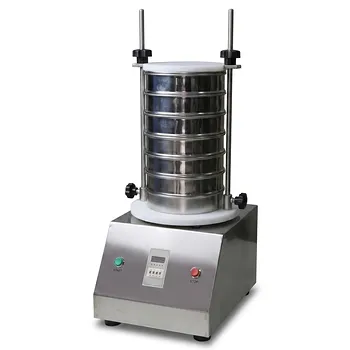
Laboratory Vibratory Test Sieve Shaker for Precision Particle Size Analysis and Powder Grading
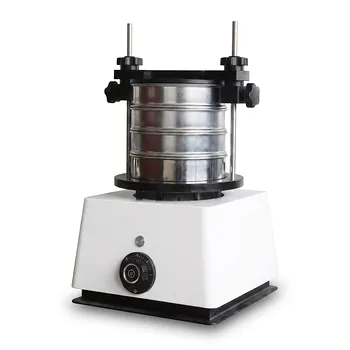
Small Laboratory Vibrating Sieve Shaker for Precise Particle Size Analysis
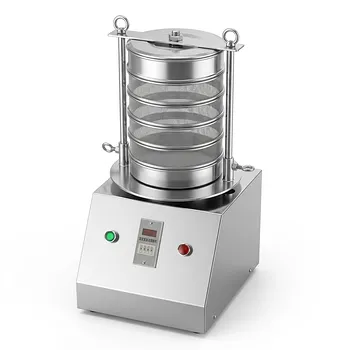
Stainless Steel Laboratory Vibratory Test Sieve Shaker
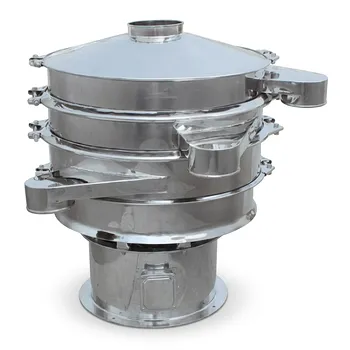
Stainless Steel Rotary Vibrating Sieve High Precision Circular Vibratory Separator Industrial Powder Grading Machine Multi Layer Sifting Equipment
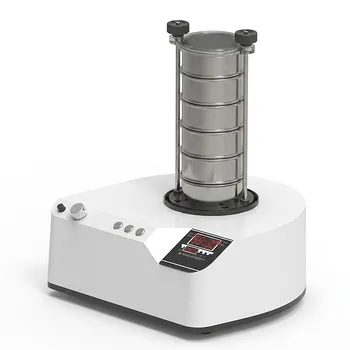
三维电磁微量振动筛分仪
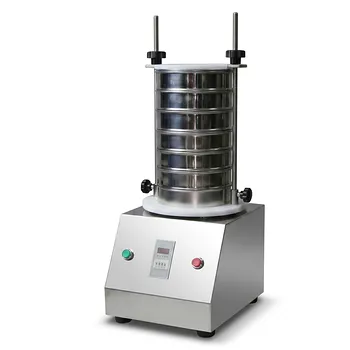
Small Laboratory Vibratory Sieve Shaker for Powder Gradation and Particle Size Analysis
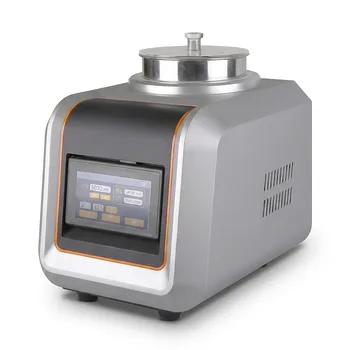
Laboratory Air Jet Sieving Machine for Fine Powder Particle Size Analysis and Deagglomeration
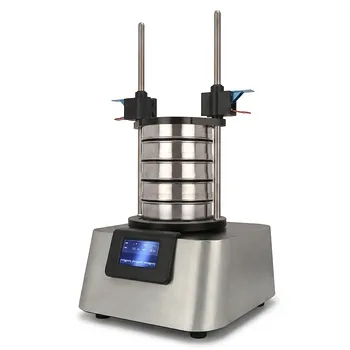
Vibratory Sieve Shaker Electromagnetic 3D Motion Powder Particle Size Analyzer for Dry and Wet Sieving
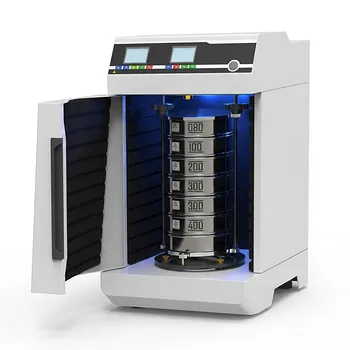
Laboratory Dry and Wet Three Dimensional Vibratory Sieve Shaker for Particle Analysis