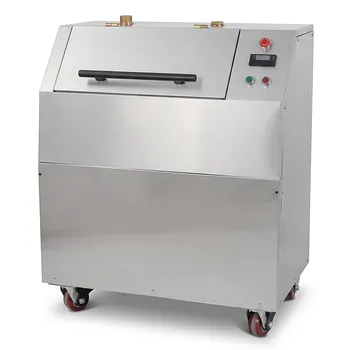
What is the primary function of an industrial electric vibratory sieve shaker in urea PSD analysis? Precision Guide
Updated 3 months ago
The primary function of an industrial electric vibratory sieve shaker in urea particle size distribution (PSD) analysis is to physically classify urea particles through automated, high-frequency vibration. By utilizing mechanical drives to generate a continuous and uniform motion, the device forces the urea sample to rearrange itself across a vertically stacked set of sieves. This process ensures that particles pass through specific mesh apertures based strictly on their physical dimensions, eliminating the human error and inconsistency associated with manual sieving.
The vibratory sieve shaker serves as a standardized tool that converts raw urea samples into quantifiable data by ensuring repeatable particle separation. Its main value lies in its ability to achieve a "constant state" where mass distribution across sieves is determined by physics rather than manual technique.
The Mechanics of Precision Classification
High-Frequency Vibration and Particle Rearrangement
The shaker employs a mechanical drive to create controlled, high-frequency reciprocating movements. This force causes urea particles to jump across the mesh surfaces, effectively "searching" for openings that match their size.
Achieving Constant State Equilibrium
In a professional analysis, the shaker typically operates for a set duration, often between 5 to 10 minutes. The process continues until the sample mass on each sieve reaches a constant state, meaning no further particles are passing through the mesh.
Vertical Stack Integration
By using a vertical stack of sieves with decreasing aperture sizes, the shaker enables the simultaneous separation of a single sample into multiple grades. This allows for the immediate calculation of mass percentages across the entire size spectrum.
Impact on Urea Quality and Process Efficiency
Validation of Ideal Size Ranges
For many urea applications, maintaining a specific particle range—often between 75-150 μm for certain industrial uses—is critical. The vibratory shaker validates that the majority of the production batch falls within these parameters to ensure consistent performance.
Predicting Material Flowability
The distribution data provided by the shaker is essential for predicting how urea will behave in feeding systems and fluidized beds. Consistent particle size distribution (PSD) ensures that the material flows predictably through industrial machinery without clogging.
Correlation Between Size and Performance
Precise classification allows researchers to establish a direct link between particle dimensions and material behavior. In urea production, this data helps optimize the manufacturing process to meet specific physical specifications for end-users.
Understanding the Trade-offs
Risk of Particle Attrition
Excessive vibration intensity or duration can lead to particle attrition, where urea granules break down into smaller fragments during the test. This results in "false fines," providing an inaccurate representation of the original batch quality.
The Challenge of Sieve Blinding
If the urea sample has high moisture content, particles may stick to the mesh, a phenomenon known as "blinding." This restricts the flow of smaller particles and requires specialized cleaning or the use of sieve aids like tapping balls to maintain accuracy.
Equipment Calibration Requirements
While mechanical sieving is superior to manual methods, it requires regular calibration. Discrepancies in vibration amplitude between different machines can lead to varying results for the same sample, necessitating strict standardized protocols.
Optimizing Your PSD Analysis
When integrating an industrial vibratory sieve shaker into your quality control workflow, consider your specific analytical objectives to determine the best configuration.
- If your primary focus is Regulatory Compliance: Ensure your shaker is calibrated to international standards and use certified test sieves to guarantee that your mass percentage reports are legally and technically defensible.
- If your primary focus is Manufacturing Throughput: Optimize your vibration amplitude and timer settings to reach the "constant state" as quickly as possible without inducing particle breakage.
- If your primary focus is Equipment Longevity: Implement a strict cleaning schedule using ultrasonic baths to prevent urea buildup and corrosion on the stainless steel mesh components.
By mastering the controlled vibration of the sieve shaker, you ensure that your urea particle analysis remains a reliable foundation for both product quality and process efficiency.
Summary Table:
| Feature | Primary Function & Benefit | Critical Consideration |
|---|---|---|
| High-Frequency Vibration | Forces particle rearrangement for automated size classification | Prevents manual inconsistency/human error |
| Vertical Sieve Stacking | Enables simultaneous grading of a sample into multiple mass percentages | Must use certified test sieves for accuracy |
| Constant State Timing | Ensures repeatable results by reaching mass equilibrium (5-10 mins) | Over-vibration may cause particle attrition |
| Flowability Prediction | Validates ideal size ranges (e.g., 75-150 μm) for industrial use | Prevents clogging in feeding systems |
Elevate Your Material Analysis with Industry-Leading Precision
Achieving accurate Urea Particle Size Distribution (PSD) requires more than just standard sieving; it demands high-performance equipment designed for consistency and durability. At [Brand Name], we provide complete laboratory sample preparation solutions tailored for material science professionals.
Our specialized range includes:
- Powder Processing: Advanced planetary ball mills, jet mills, and cryogenic grinders for ultra-fine results.
- Sieve Analysis: High-precision vibratory and air-jet sieve shakers equipped with a full range of certified test sieves.
- Compaction & Pressing: A full spectrum of hydraulic presses, including Cold/Warm Isostatic Presses (CIP/WIP), XRF pellet presses, and vacuum hot presses.
- Mixing Solutions: Specialized powder and defoaming mixers for uniform sample preparation.
Whether you are optimizing manufacturing throughput or ensuring strict regulatory compliance, our equipment delivers the reliability you need. Contact our technical experts today to find the perfect configuration for your laboratory and enhance your production quality.
References
- Vasu Kumar, SA Kanade. Comparative study of particle size distribution in Commercial urea fertilizers from India. DOI: 10.33545/2618060x.2025.v8.i7sa.3189
Mentioned Products
- Vibratory Sieve Shaker Electromagnetic 3D Motion Powder Particle Size Analyzer for Dry and Wet Sieving
- Laboratory Vibratory Test Sieve Shaker for Precision Particle Size Analysis and Powder Grading
- Small Laboratory Vibratory Sieve Shaker for Powder Gradation and Particle Size Analysis
- Laboratory Dry and Wet Three Dimensional Vibratory Sieve Shaker for Particle Analysis
- 三维电磁微量振动筛分仪
People Also Ask
- How does a vibratory sieve shaker contribute to optimizing the performance of activated carbon? Enhance Adsorption Precision
- Why is a laboratory vibratory sieve shaker necessary for processing magnesium-based borate precursor powders? Boost Activity
- Why use a vibratory sieve shaker to verify coarse aggregate grading in rubberized concrete? Ensure Structural Integrity
- What function do vibratory sieve shakers and standard test sieves serve in the preparation of adsorbents? Key Guide
- What role does a vibratory sieve shaker play in the particle size analysis of ground corn products? Enhance QC Precision

Tech Team · PowderPreparation
Last updated on Jun 03, 2026
Related Products
Vibratory Sieve Shaker Electromagnetic 3D Motion Powder Particle Size Analyzer for Dry and Wet Sieving
Laboratory Vibratory Test Sieve Shaker for Precision Particle Size Analysis and Powder Grading
Small Laboratory Vibratory Sieve Shaker for Powder Gradation and Particle Size Analysis
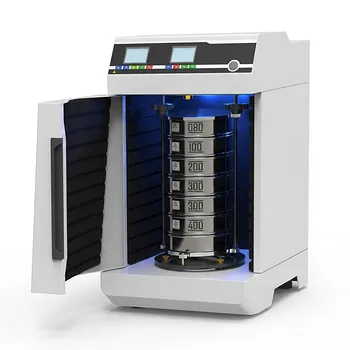
Laboratory Dry and Wet Three Dimensional Vibratory Sieve Shaker for Particle Analysis
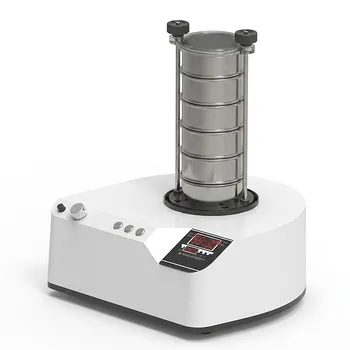
三维电磁微量振动筛分仪
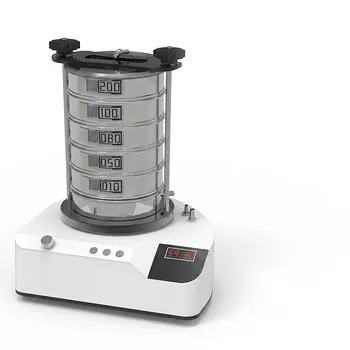
Heavy Duty Dry Three Dimensional Vibratory Sieve Shaker for Particle Separation
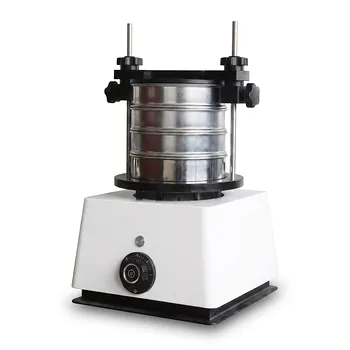
Small Laboratory Vibrating Sieve Shaker for Precise Particle Size Analysis
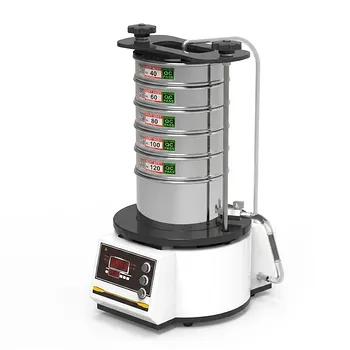
High Frequency Wet Three-Dimensional Vibrating Sieve Shaker for Dry and Wet Particle Size Analysis
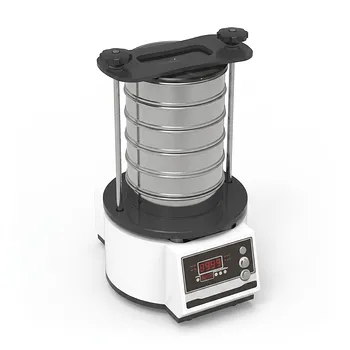
Tapping Oscillating Sieve Shaker for Dry and Wet Particle Size Analysis
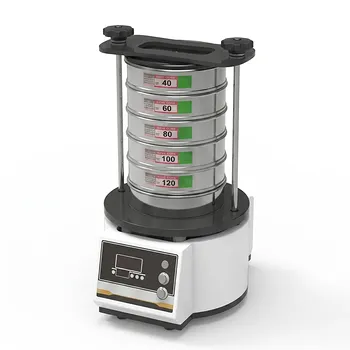
Dry Three Dimensional Vibratory Sieve Shaker
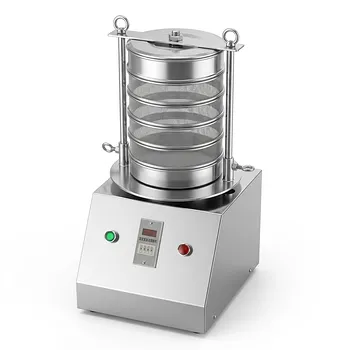
Stainless Steel Laboratory Vibratory Test Sieve Shaker
High Frequency Cabinet Type Three-Dimensional Rotary Vibrating Sieve Shaker for Dry Sieving and Particle Classification
Stainless Steel Rotary Vibrating Sieve High Precision Circular Vibratory Separator Industrial Powder Grading Machine Multi Layer Sifting Equipment
Three Dimensional Rotary Vibrating Sieve
Laboratory Air Jet Sieving Machine for Fine Powder Particle Size Analysis and Deagglomeration
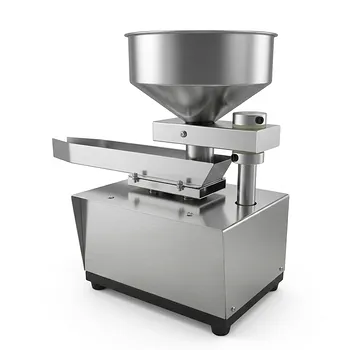
Automatic Vibrating Powder Feeder for Laboratory Material Processing Precision Vibratory Hopper Feeder for Granular and Powder Material Handling Industrial Grade Vibrating Tray Feeder for Consistent Material Sample Preparation
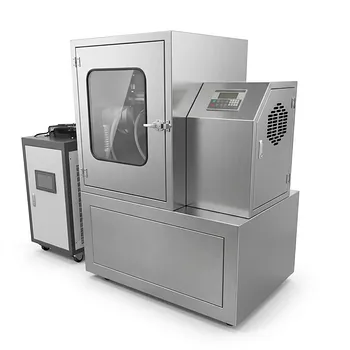
Vibratory Superfine Grinder for Ultra Fine Laboratory Powder Milling
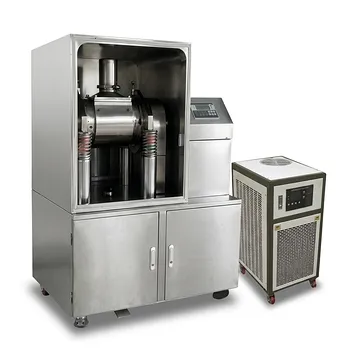
Small Vibrating Ultrafine Grinder for Traditional Chinese Medicine