What is the primary function of a planetary ball mill in the synthesis of nanostructured ZnFeS? Expert Insights
Updated 4 months ago
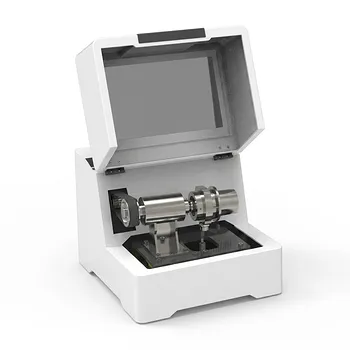
The primary function of a planetary ball mill in the synthesis of nanostructured Zinc Iron Sulfide (ZnFeS) is mechanical activation. This process utilizes high-energy centrifugal forces to break the chemical bonds of bulk materials, inducing particle fracture and plastic deformation to transform the substance from the micrometer scale to the nanometer scale.
Through the application of intense impact and shearing forces, the planetary ball mill acts as the physical engine for nanostructuring. It converts mechanical energy into internal chemical energy, facilitating the transition from bulk materials to highly reactive nanocrystalline structures.
The Mechanics of Size Reduction
The planetary ball mill operates on a principle of relative motion that generates extreme physical force. This is the fundamental driver behind the creation of nanostructured ZnFeS.
Centrifugal Force and Planetary Rotation
The equipment utilizes a "sun wheel" and grinding jars that rotate in opposite directions. This dual-rotation creates a powerful centrifugal field that accelerates grinding balls to high velocities.
Impact, Grinding, and Shearing
The kinetic energy of the grinding balls is transferred to the raw ZnFeS through high-frequency impacts. These collisions, combined with intense shearing forces, are what physically dismantle the bulk material's structure.
Mechanical Activation and Particle Transformation
Beyond simple crushing, the mill performs "mechanical activation," a process that alters the physical and chemical state of the ZnFeS.
Breaking Chemical Bonds
The energy delivered is sufficient to break the chemical bonds of large-sized bulk Zinc Iron Sulfide. This allows the material to be reorganized at the molecular level during the milling process.
Fracture and Plastic Deformation
As the balls strike the powder, the particles undergo repeated fracture and plastic deformation. This cycle continues until the material reaches a stable nanometer scale, often resulting in a more uniform distribution than traditional methods.
Inducing Structural Defects
The high-energy environment often triggers mechanochemical effects, such as the creation of surface defects or phase transformations. These defects increase the chemical reactivity of the resulting ZnFeS powder, which is vital for its performance in downstream applications.
Understanding the Trade-offs
While the planetary ball mill is highly effective for nanostructuring, it presents specific challenges that must be managed to ensure material quality.
Contamination Risks
The high-energy impacts that break down the ZnFeS also cause wear on the grinding jars and balls. This can introduce impurities (such as steel or zirconia) into the final nanostructured powder.
Heat Generation
Significant mechanical energy is converted into heat during the milling process. If not carefully controlled through cooling cycles, this temperature rise can cause unwanted grain growth or phase changes that reverse the nanostructuring.
Energy Efficiency
Planetary ball milling is an energy-intensive process. Achieving the nanometer scale requires long milling times and high rotational speeds, which may not always be cost-effective for large-scale industrial production compared to chemical synthesis.
How to Apply This to Your Synthesis Project
The way you configure your planetary ball mill should depend on the specific physical properties you require for your ZnFeS particles.
- If your primary focus is minimum particle size: Increase the milling duration and the ball-to-powder weight ratio to maximize the total energy delivered to the material.
- If your primary focus is high chemical reactivity: Prioritize higher rotational speeds to induce more surface defects and mechanical activation, even if the total milling time is shorter.
- If your primary focus is material purity: Utilize grinding jars and balls made of the same material as your sample (if possible) or high-density alumina to minimize metallic contamination.
By precisely controlling the mechanical energy of the planetary ball mill, you can tailor the structural and electrochemical properties of ZnFeS for advanced technological applications.
Summary Table:
| Aspect | Details of ZnFeS Synthesis |
|---|---|
| Core Function | Mechanical Activation & Nanostructuring |
| Physical Mechanism | High-energy centrifugal, impact, and shearing forces |
| Structural Change | Breaking chemical bonds & inducing plastic deformation |
| Material Transformation | Micrometer scale to highly reactive nanometer scale |
| Critical Controls | Cooling cycles, milling duration, and jar material selection |
Elevate Your Nanomaterial Synthesis with Precision Equipment
Ready to optimize your material research? At our core, we provide complete laboratory sample preparation solutions tailored for material science. We specialize in high-performance powder processing and compaction equipment designed to meet the rigorous demands of nanostructuring.
Our extensive product lines include:
- Advanced Milling: Planetary ball mills, jet mills, liquid nitrogen cryogenic grinders, and rotor mills.
- Preparation Tools: Jaw/roll crushers, sieve shakers (vibratory/air-jet), and precision powder mixers.
- Compaction Excellence: A full spectrum of hydraulic presses, including Cold/Warm Isostatic Presses (CIP/WIP), hot presses, vacuum hot presses, and XRF pellet presses.
Whether you are focusing on maximizing chemical reactivity or achieving ultra-fine particle sizes, our tools deliver the reliability and control you need. Contact our technical experts today to find the perfect solution for your laboratory's unique requirements!
References
- Production and characterization of Zinc Iron Sulphide (ZnFeS) nanoparticles sourced locally from Nigeria prepared by high energy ball-milling. DOI: 10.17148/imrjr.2025.020601
Mentioned Products
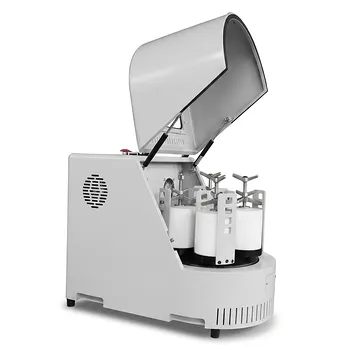
- Vertical Semi Circular Planetary Ball Mill for Laboratory Precision Grinding
- High Energy Planetary Ball Mill for Nano Scale Grinding and Mechanical Alloying
- Vertical Production Planetary Ball Mill for High Throughput Powder Processing
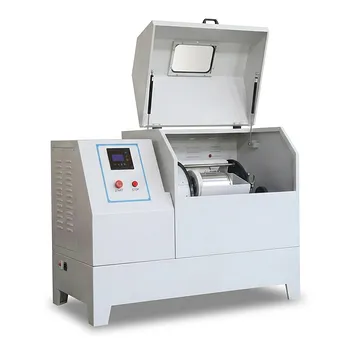
- Heavy Duty Horizontal Planetary Ball Mill for Efficient Industrial Grinding and Sample Preparation
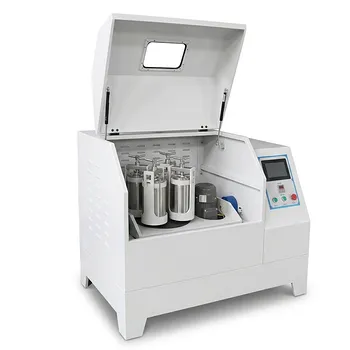
- 360° Rotating Omnidirectional Laboratory Planetary Ball Mill for Homogeneous Ultra-Fine Grinding and Mixing
People Also Ask
- What role does a planetary ball mill play in the synthesis of Li6PS5Cl (LPSCl)? Unlock High Ionic Conductivity
- Why is a planetary ball mill essential for SiBCN-rGO wet-spinning? Achieve Superior Dispersion and Spinnability
- Why is an intermittent grinding process required for perovskites in a planetary ball mill? Ensure Stability & Purity
- Why is a planetary ball mill required for PET micronization? Ensure Accurate Chemical Analysis of Reprocessed PET
- How does mechanized planetary ball milling compare to manual agate grinding? Optimize sulfide standard material precision.

Tech Team · PowderPreparation
Last updated on Jun 03, 2026
Related Products
Vertical Semi Circular Planetary Ball Mill for Laboratory Precision Grinding

High Energy Planetary Ball Mill for Nano Scale Grinding and Mechanical Alloying

Vertical Production Planetary Ball Mill for High Throughput Powder Processing
Heavy Duty Horizontal Planetary Ball Mill for Efficient Industrial Grinding and Sample Preparation
360° Rotating Omnidirectional Laboratory Planetary Ball Mill for Homogeneous Ultra-Fine Grinding and Mixing

Vertical Square Planetary Ball Mill for Laboratory Sample Preparation and Nanoscale Grinding

Miniature Planetary Ball Mill with Vacuum Grinding and High Efficiency for Laboratory Sample Preparation

High Energy Laboratory Planetary Ball Mill for Nano Grinding and Material Science Sample Preparation
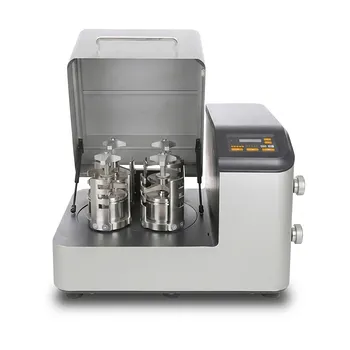
High Energy Planetary Ball Mill for Nano Scale Grinding and Colloidal Mixing in Material Science Research

High Energy Omnidirectional Planetary Ball Mill 16L

High Energy Laboratory Planetary Ball Mill for Nano Grinding and Colloidal Mixing of Hard and Brittle Materials

High Energy Omnidirectional Planetary Ball Mill 20L
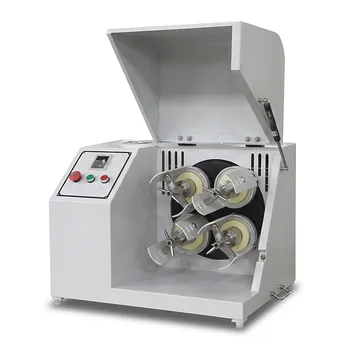
Horizontal Light Duty Planetary Ball Mill for Laboratory Sample Preparation

8L Planetary Ball Mill for Laboratory Grinding and Sample Preparation
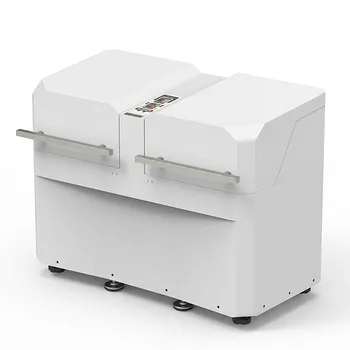
Dual Station Planetary Ball Mill 24L
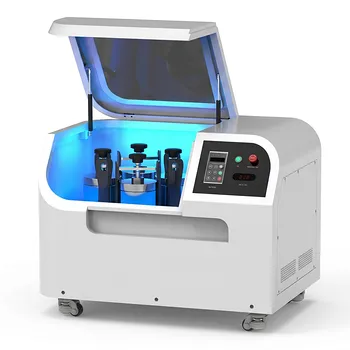
Planetary Ball Mill 12L

Nano High Energy Vibratory Ball Mill for Laboratory Sample Preparation

Multi-Platform Nanoscale High-Energy Vibratory Ball Mill

High Energy Hybrid Vibratory Ball Mill for Grinding Mixing and Cell Disruption