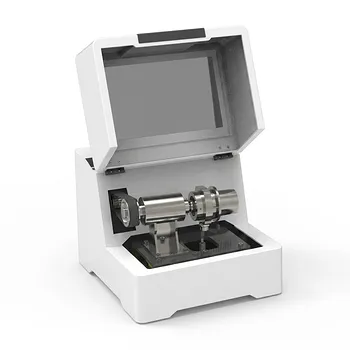
What is the primary function of a planetary ball mill in the preparation of kaolin and alumina mixed powders? Expert Guide
Updated 3 months ago
The primary function of a planetary ball mill in the preparation of kaolin and alumina mixed powders containing corn starch is to achieve deep, microscopic homogeneity and particle refinement. Through high-frequency rotation and friction-based collisions, the mill ensures that the corn starch—acting as a carbon source—is uniformly distributed throughout the inorganic powders. This process refines the raw materials to increase their specific surface area, providing the necessary physical foundation for efficient subsequent chemical reactions.
The planetary ball mill transforms a coarse mixture into a highly reactive, microscopic composite. By ensuring the carbon source is perfectly dispersed among the mineral oxides, it facilitates the precise conditions required for successful carbothermal reduction.
Achieving Microscopic Homogeneity
Uniform Dispersion of the Carbon Source
In this specific mixture, corn starch serves as the essential carbon source for future reactions. The planetary ball mill uses high-speed centrifugal and impact forces to ensure the starch is distributed at a microscopic level.
Without this level of dispersion, the subsequent carbothermal reduction would be uneven, leading to localized areas of unreacted material or poor structural integrity.
De-agglomeration of Raw Materials
Kaolin and alumina powders often contain aggregates that can hinder chemical uniformity. The mill’s high-energy collisions break down these clusters, ensuring each component is individually dispersed within the matrix.
This de-agglomeration is critical for creating a consistent aluminum hydroxide gel or precursor matrix during the later stages of processing.
Particle Refinement and Surface Activation
Increasing Chemical Reactivity
The mill significantly reduces the particle size of kaolin and alumina, which exponentially increases their specific surface area. A higher surface area provides more contact points for chemical interactions, effectively speeding up the reaction kinetics.
This refinement is a core technical stage that ensures the production of pure-phase ceramic powders during solid-phase reactions.
Mechanical Activation of the Powder
Beyond simple size reduction, the intense shear forces induce mechanical activation by creating structural defects on the powder surfaces. These defects lower the activation energy barrier, allowing chemical reactions and phase transitions to occur at lower temperatures.
This activation facilitates higher densification rates during the subsequent sintering process, leading to a more stable final microstructure.
Preparing for Carbothermal Reduction
Shortening Diffusion Paths
By refining particles to the micron or sub-micron scale, the mill effectively shortens the diffusion paths between the carbon source and the oxides. This proximity is vital for the solid-state reactions that occur during high-temperature processing.
Closer contact at the molecular level guarantees the chemical accuracy and homogeneity of the final synthesized material.
Establishing the Physical Foundation
The planetary ball mill is not just a mixer; it is the tool that establishes the physical foundation for the entire material synthesis. The uniformity it provides ensures that the mineralizers can consistently regulate crystal morphology and pore size distribution.
Understanding the Trade-offs
Potential for Material Contamination
The high-energy nature of planetary milling can lead to wear and tear of the milling jars and balls. This wear can introduce trace impurities (such as zirconia or alumina from the media) into the kaolin-starch mixture, potentially altering the final chemical properties.
Heat Generation and Starch Integrity
Extended milling times generate significant frictional heat, which can prematurely degrade or "cook" the corn starch. Care must be taken to manage milling cycles and cooling periods to preserve the starch's role as a stable carbon source.
Over-milling and Particle Re-agglomeration
If milled for too long, the extremely fine particles may begin to re-agglomerate due to Van der Waals forces. This can negate the benefits of refinement and lead to a loss of the microscopic uniformity achieved in the early stages.
How to Apply This to Your Process
Making the Right Choice for Your Goal
- If your primary focus is maximized reactivity: Prioritize higher rotation speeds and longer milling times to induce maximum mechanical activation and surface defects.
- If your primary focus is purity and starch integrity: Utilize interval milling with frequent cooling breaks and choose high-purity milling media to minimize contamination and thermal degradation.
- If your primary focus is uniform pore distribution: Ensure the corn starch is wet-milled in a suitable medium to prevent clumping and ensure a stable, microscopic dispersion.
Properly optimized planetary milling is the definitive factor in ensuring your kaolin and alumina precursors are physically prepared for high-performance ceramic synthesis.
Summary Table:
| Key Function | Mechanism of Action | Technical Benefit |
|---|---|---|
| Microscopic Homogeneity | High-speed centrifugal & impact forces | Uniform dispersion of corn starch carbon source |
| Particle Refinement | High-energy collisions & grinding | Increased specific surface area for faster kinetics |
| Mechanical Activation | Surface shear & structural defects | Lowered activation energy for phase transitions |
| Diffusion Optimization | Reduction to micron/sub-micron scale | Shortened diffusion paths for carbothermal reduction |
Elevate Your Material Synthesis with Professional Grinding Solutions
Achieving perfect microscopic homogeneity is the foundation of high-performance ceramic synthesis. At [Our Brand Name], we provide complete laboratory sample preparation solutions for material science, specializing in high-precision powder processing and compaction equipment.
Our extensive product line is designed to optimize every stage of your workflow:
- Advanced Milling: Planetary ball mills, jet mills, liquid nitrogen cryogenic grinders, and rotor mills for ultimate particle refinement.
- Sample Preparation: Precision crushers (jaw/roll), sieve shakers, and high-efficiency powder/defoaming mixers.
- High-Pressure Compaction: A full spectrum of hydraulic presses, including Cold/Warm Isostatic Presses (CIP/WIP), vacuum hot presses, and XRF pellet presses.
Whether you are a researcher focused on purity or a distributor looking for reliable OEM/ODM support and certified equipment, we offer the technical expertise to enhance your lab's efficiency.
Ready to refine your process? Contact our specialists today to find the perfect equipment for your application!
References
- Emese Kurovics, Emese Sebe. Phase composition and microstructure of ceramics made from kaolin mineral, alumina, and corn starch. DOI: 10.14382/epitoanyag-jsbcm.2022.34
Mentioned Products
- Vertical Semi Circular Planetary Ball Mill for Laboratory Precision Grinding
- High Energy Planetary Ball Mill for Nano Scale Grinding and Mechanical Alloying
- Vertical Production Planetary Ball Mill for High Throughput Powder Processing
- Heavy Duty Horizontal Planetary Ball Mill for Efficient Industrial Grinding and Sample Preparation
- 360° Rotating Omnidirectional Laboratory Planetary Ball Mill for Homogeneous Ultra-Fine Grinding and Mixing
People Also Ask
- What role does a planetary ball mill play in the synthesis of Li6PS5Cl (LPSCl)? Unlock High Ionic Conductivity
- Why is a planetary ball mill essential for SiBCN-rGO wet-spinning? Achieve Superior Dispersion and Spinnability
- Why is an intermittent grinding process required for perovskites in a planetary ball mill? Ensure Stability & Purity
- Why is a planetary ball mill required for PET micronization? Ensure Accurate Chemical Analysis of Reprocessed PET
- How does mechanized planetary ball milling compare to manual agate grinding? Optimize sulfide standard material precision.

Tech Team · PowderPreparation
Last updated on Jun 03, 2026
Related Products
Vertical Semi Circular Planetary Ball Mill for Laboratory Precision Grinding
High Energy Planetary Ball Mill for Nano Scale Grinding and Mechanical Alloying
Vertical Production Planetary Ball Mill for High Throughput Powder Processing
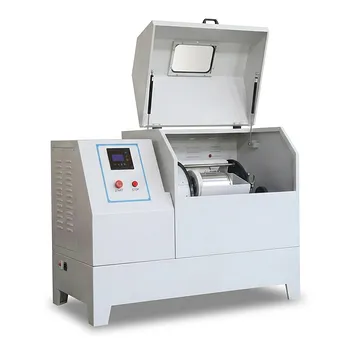
Heavy Duty Horizontal Planetary Ball Mill for Efficient Industrial Grinding and Sample Preparation
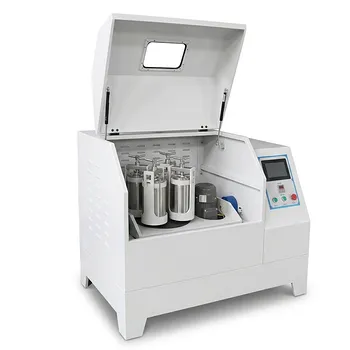
360° Rotating Omnidirectional Laboratory Planetary Ball Mill for Homogeneous Ultra-Fine Grinding and Mixing
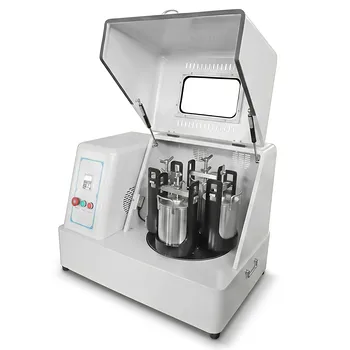
Vertical Square Planetary Ball Mill for Laboratory Sample Preparation and Nanoscale Grinding
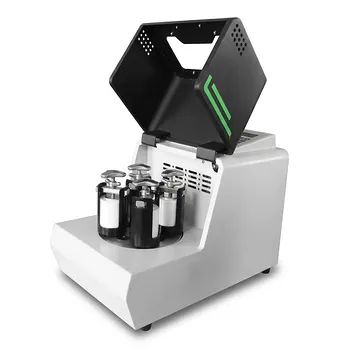
Miniature Planetary Ball Mill with Vacuum Grinding and High Efficiency for Laboratory Sample Preparation
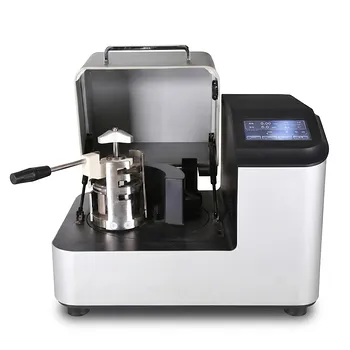
High Energy Laboratory Planetary Ball Mill for Nano Grinding and Material Science Sample Preparation
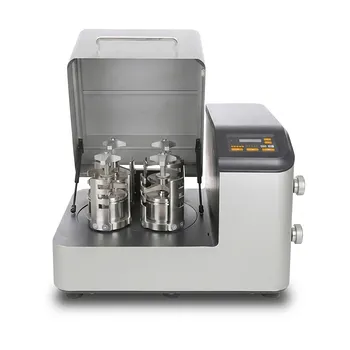
High Energy Planetary Ball Mill for Nano Scale Grinding and Colloidal Mixing in Material Science Research
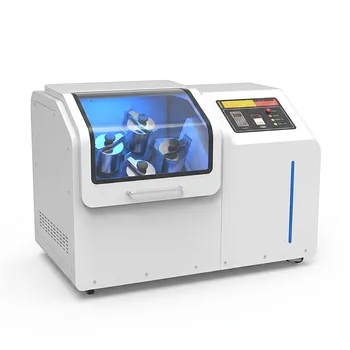
High Energy Omnidirectional Planetary Ball Mill 16L
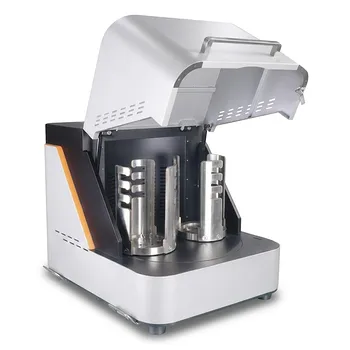
High Energy Laboratory Planetary Ball Mill for Nano Grinding and Colloidal Mixing of Hard and Brittle Materials
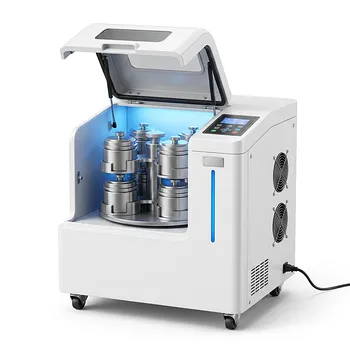
High Energy Omnidirectional Planetary Ball Mill 20L
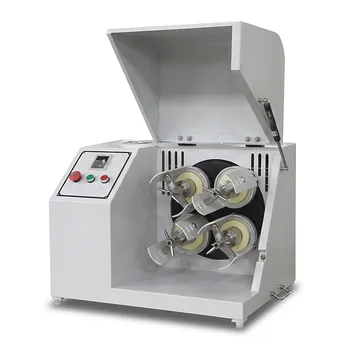
Horizontal Light Duty Planetary Ball Mill for Laboratory Sample Preparation
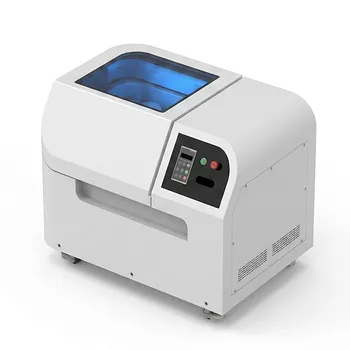
8L Planetary Ball Mill for Laboratory Grinding and Sample Preparation
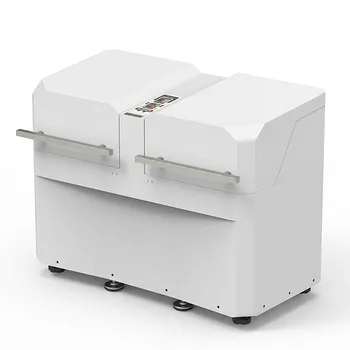
Dual Station Planetary Ball Mill 24L
Planetary Ball Mill 12L

Nano High Energy Vibratory Ball Mill for Laboratory Sample Preparation
Multi-Platform Nanoscale High-Energy Vibratory Ball Mill
High Energy Hybrid Vibratory Ball Mill for Grinding Mixing and Cell Disruption