What is the primary function of a planetary ball mill in mechanical alloying? Create Nanostructured Composites Fast.
Updated 5 months ago
The primary function of a planetary ball mill in mechanical alloying is to apply high-energy mechanical forces to raw powders to create a uniform, nanostructured composite. By subjecting the metal matrix and lubricating phases—such as graphite or molybdenum disulfide—to intense impact and shear, the mill induces lattice defects and microstructural refinement. This process ensures that the lubricating components are homogeneously embedded within the matrix, which is essential for achieving the desired self-lubricating properties.
The planetary ball mill serves as a high-energy reactor that facilitates solid-state alloying through continuous cycles of cold welding and fracturing. This process allows for the synthesis of advanced composites with a uniform distribution of reinforcement phases that would be impossible to achieve through conventional melting or low-energy mixing.
Driving Microstructural Refinement and Reactivity
Inducing Lattice Defects
The mill generates intense mechanical energy that produces point defects and dislocations within the powder’s crystal lattice. These defects are critical because they lower the thermodynamic stability of the raw materials, making them more reactive.
Nanometer-Scale Refinement
As the process continues, the high-energy impacts refine the microstructure down to the nanometer scale. This grain refinement significantly enhances the mechanical properties of the final composite, such as hardness and wear resistance.
Promoting Solid-State Diffusion
Because the mill operates at relatively low temperatures compared to melting, it relies on solid-state diffusion. The mechanical energy forces atoms to interdiffuse at the contact surfaces of the fractured particles, creating a true alloy without the need for liquid-phase processing.
The Mechanism of Mechanical Alloying
Impact and Shear Forces
The mill utilizes the counter-rotation between the milling jars and the supporting sun disk to create a high-gravity environment. This movement generates violent collisions between the grinding balls, the jar walls, and the powder particles.
The Cold Welding and Fracturing Cycle
The powder undergoes a repetitive cycle where particles are flattened, cold-welded together, and then fractured again. This cycle is the core driver for achieving a steady state where the particle size distribution becomes uniform and the components are mixed at an atomic level.
Embedding Lubricating Phases
For self-lubricating materials, the mill ensures that soft phases like graphite or molybdenum disulfide are forced into the ductile metal matrix. This prevents the lubricants from segregating, ensuring they are available at the material's surface during actual use to reduce friction.
Understanding the Trade-offs
Risk of Media Contamination
The high-energy nature of the process can lead to the wear of the grinding balls and jar liners. This wear can introduce impurities (such as iron or ceramic fragments) into the composite, which may negatively impact the material's purity and performance.
Process Time and Energy Intensity
Mechanical alloying is an energy-intensive process that often requires several hours or even days to reach a steady state. Prolonged milling can lead to excessive heat buildup, which might trigger unwanted phase transformations or oxidation if not properly managed.
Particle Agglomeration
In the case of very fine or ductile powders, the cold welding phase may dominate over fracturing. This can lead to the formation of large, irregular agglomerates that hinder the flowability of the powder in subsequent metallurgical steps like pressing or sintering.
How to Apply This to Your Project
When utilizing a planetary ball mill for composite synthesis, your operational parameters should be dictated by your specific material requirements.
- If your primary focus is Maximum Lubricity: Prioritize a lower ball-to-powder ratio and shorter milling times to ensure the lubricating phases (like graphite) are dispersed without being completely broken down or over-alloyed into the matrix.
- If your primary focus is Structural Strength: Focus on high-energy settings and longer durations to maximize nanocrystalline grain refinement and the density of lattice defects.
- If your primary focus is Material Purity: Utilize milling jars and media made from the same material as your matrix (e.g., zirconia or stainless steel) to minimize the impact of cross-contamination.
By mastering the balance between impact energy and processing time, you can engineer self-lubricating composites with precisely tuned tribological and mechanical properties.
Summary Table:
| Process Mechanism | Key Action | Benefit for Self-Lubricating Materials |
|---|---|---|
| High-Energy Impact | Induces lattice defects & reactivity | Enhances hardness and wear resistance |
| Cold Welding & Fracturing | Repetitive particle deformation | Ensures uniform distribution of lubricating phases |
| Nanoscale Refinement | Microstructural grain reduction | Prevents segregation of graphite/molybdenum disulfide |
| Solid-State Diffusion | Atomic-level mixing without heat | Creates stable alloys without liquid-phase processing |
Elevate Your Material Research with Expert Powder Solutions
Achieving the perfect balance of lubricity and structural strength requires more than just a mill—it requires a complete sample preparation ecosystem. We provide comprehensive laboratory solutions for material science, specializing in high-performance powder processing and compaction equipment.
Our extensive product line is designed to support every stage of your workflow:
- Advanced Milling: Planetary ball mills, jet mills, cryogenic grinders, and disc mills for superior microstructural refinement.
- Precision Mixing: Powder and defoaming mixers to ensure phase homogeneity.
- Professional Compaction: A full spectrum of hydraulic presses, including Cold/Warm Isostatic Presses (CIP/WIP), standard lab presses, and vacuum hot presses.
- Material Preparation: Crushers, sieve shakers, and air-jet sieves for precise particle size control.
Whether you are developing next-generation self-lubricating alloys or exploring nanocrystalline materials, our equipment delivers the reliability and precision your research demands.
Ready to optimize your composite synthesis? Contact our technical experts today!
References
- P. Sarma, Anil Borah. Solid Lubricants in Sustainable Manufacturing: A Review of Processing Techniques, Materials and Applications. DOI: 10.15282/ijame.22.4.2025.1.0978
Mentioned Products
- Vertical Semi Circular Planetary Ball Mill for Laboratory Precision Grinding
- High Energy Planetary Ball Mill for Nano Scale Grinding and Mechanical Alloying
- Vertical Production Planetary Ball Mill for High Throughput Powder Processing
- Heavy Duty Horizontal Planetary Ball Mill for Efficient Industrial Grinding and Sample Preparation
- 360° Rotating Omnidirectional Laboratory Planetary Ball Mill for Homogeneous Ultra-Fine Grinding and Mixing
People Also Ask
- What role does a planetary ball mill play in the synthesis of Li6PS5Cl (LPSCl)? Unlock High Ionic Conductivity
- Why is a planetary ball mill essential for SiBCN-rGO wet-spinning? Achieve Superior Dispersion and Spinnability
- Why is an intermittent grinding process required for perovskites in a planetary ball mill? Ensure Stability & Purity
- Why is a planetary ball mill required for PET micronization? Ensure Accurate Chemical Analysis of Reprocessed PET
- How does mechanized planetary ball milling compare to manual agate grinding? Optimize sulfide standard material precision.

Tech Team · PowderPreparation
Last updated on May 14, 2026
Related Products
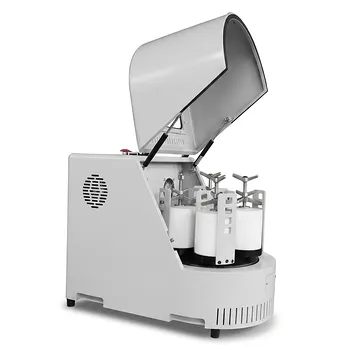
Vertical Semi Circular Planetary Ball Mill for Laboratory Precision Grinding

High Energy Planetary Ball Mill for Nano Scale Grinding and Mechanical Alloying
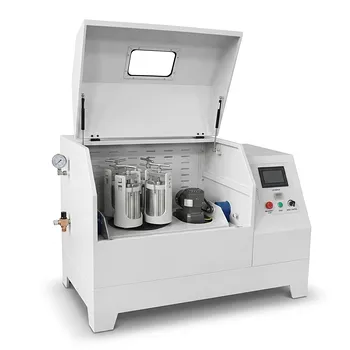
Vertical Production Planetary Ball Mill for High Throughput Powder Processing
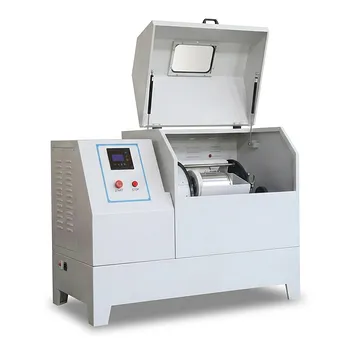
Heavy Duty Horizontal Planetary Ball Mill for Efficient Industrial Grinding and Sample Preparation
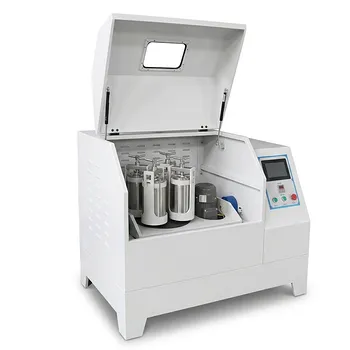
360° Rotating Omnidirectional Laboratory Planetary Ball Mill for Homogeneous Ultra-Fine Grinding and Mixing
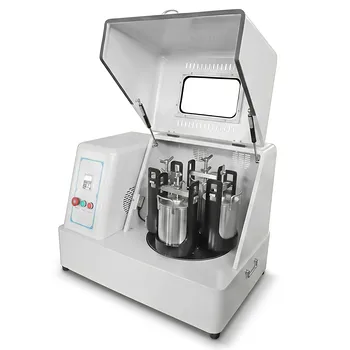
Vertical Square Planetary Ball Mill for Laboratory Sample Preparation and Nanoscale Grinding
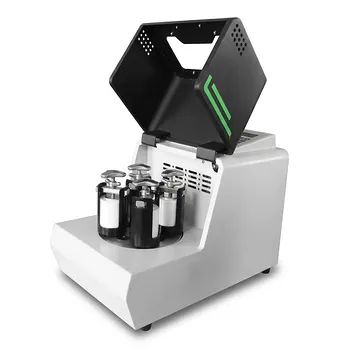
Miniature Planetary Ball Mill with Vacuum Grinding and High Efficiency for Laboratory Sample Preparation
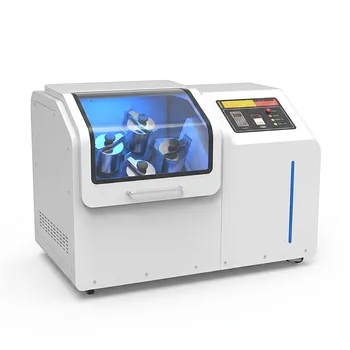
High Energy Omnidirectional Planetary Ball Mill 16L
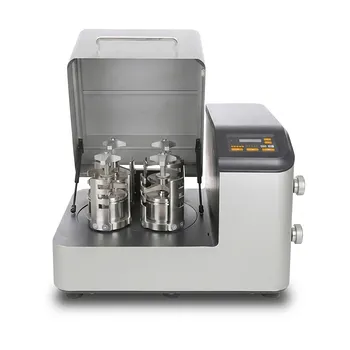
High Energy Planetary Ball Mill for Nano Scale Grinding and Colloidal Mixing in Material Science Research

High Energy Laboratory Planetary Ball Mill for Nano Grinding and Material Science Sample Preparation
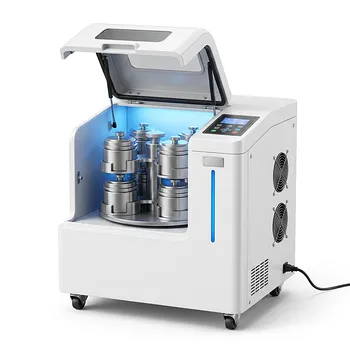
High Energy Omnidirectional Planetary Ball Mill 20L
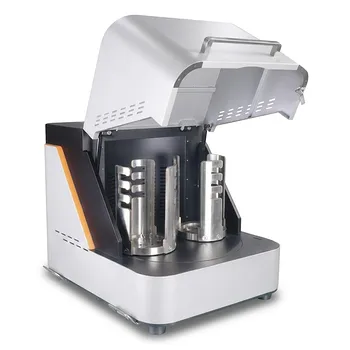
High Energy Laboratory Planetary Ball Mill for Nano Grinding and Colloidal Mixing of Hard and Brittle Materials
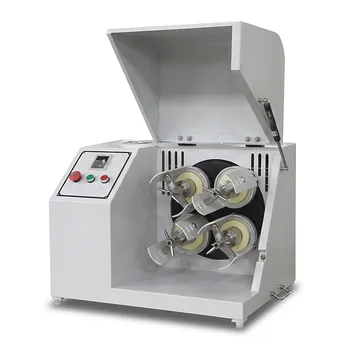
Horizontal Light Duty Planetary Ball Mill for Laboratory Sample Preparation

8L Planetary Ball Mill for Laboratory Grinding and Sample Preparation
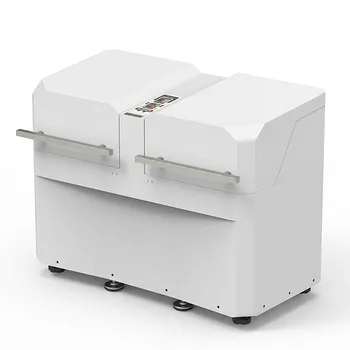
Dual Station Planetary Ball Mill 24L
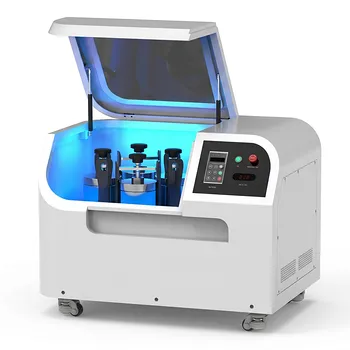
Planetary Ball Mill 12L

Multi-Platform Nanoscale High-Energy Vibratory Ball Mill

Nano High Energy Vibratory Ball Mill for Laboratory Sample Preparation
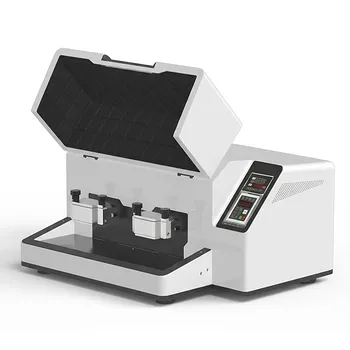
Nanoscale High-Energy Vibratory Ball Mill for Laboratory Sample Preparation, Mechanochemistry, and Mechanical Alloying