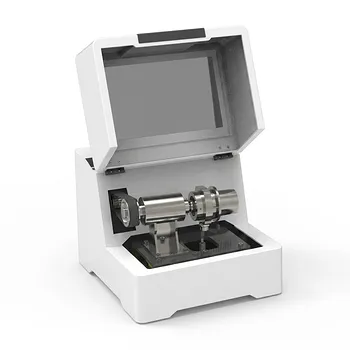
What is the role of planetary ball mills in PFOA degradation? Mechanical Activation & Ultra-Fine Refinement
Updated 4 months ago
The primary function of a planetary ball mill in preparing materials for PFOA degradation is the mechanical activation and ultra-fine refinement of reactant powders. By utilizing high-energy impact and shear forces, the mill increases the specific surface area and introduces surface defects into the materials. This process serves as a critical prerequisite for the rapid mineralization of Perfluorooctanoic acid (PFOA) by facilitating frequent contact between defluorinating agents and pollutants.
The planetary ball mill acts as a catalyst for "mechanochemical" transformation, converting mechanical energy into the chemical energy required to destabilize robust pollutants. This process is essential because it overcomes the extreme thermodynamic stability of carbon-fluorine bonds, allowing for degradation that would otherwise be impossible at ambient temperatures.
Mechanisms of Mechanical Activation
Ultra-Fine Particle Refinement
The mill utilizes high-speed rotation to generate intense centrifugal forces, driving grinding balls to collide with raw materials. These high-frequency impacts break down millimeter-scale particles into micro- or nano-scale dimensions.
This drastic reduction in size exponentially increases the specific surface area of the powder. A higher surface area provides more active sites for chemical interactions, which is vital for treating persistent organic pollutants like PFOA.
Induction of Lattice Defects
Beyond simple size reduction, high-energy ball milling induces lattice distortion and structural defects within the crystal matrix of the catalysts or reagents. These defects act as "hot spots" for chemical reactivity.
By disrupting the atomic arrangement, the mill lowers the energy barrier required for chemical reactions. This state of mechanical excitation allows the materials to engage in bond-breaking processes that inert powders cannot achieve.
Facilitating the Mineralization Process
Homogenization of Defluorinating Agents
For PFOA degradation to be effective, defluorinating agents must be perfectly distributed among the pollutants. The planetary ball mill achieves molecular-level uniform mixing through continuous shear and friction.
This homogeneity ensures that every PFOA molecule is in close proximity to a reactive agent. This maximizes the contact frequency, leading to more efficient and thorough mineralization during the treatment process.
C-F Bond Cleavage and Energy Transfer
PFOA is defined by the strength of its Carbon-Fluorine (C-F) bonds, which are among the strongest in organic chemistry. The planetary ball mill provides the mechanical activation energy necessary to trigger the cleavage of these bonds.
In some applications, this energy provides the necessary excitation for piezoelectric catalysts. The mill induces an instantaneous electrochemical potential in these materials, which directly drives the mineralization of the PFOA molecules into less harmful substances.
Understanding the Trade-offs
Thermal Management and Overheating
The intense friction and impact generated during high-speed milling (often reaching 800 rpm or more) produce significant thermal energy. Excessive heat can lead to the unwanted thermal decomposition of certain active agents or cause the powder to agglomerate.
To mitigate this, operators must often use intermittent milling cycles or liquid cooling media like ethanol. Balancing the energy input for activation against the risk of thermal degradation is a primary technical challenge.
Material Contamination
The high-energy environment can cause wear and tear on the milling jars and balls. Small amounts of material from the grinding media (such as zirconium or stainless steel) can leach into the active powder.
While often negligible, these impurities can sometimes interfere with the specific photocatalytic or electrochemical pathways intended for PFOA degradation. Selecting chemically inert milling media is essential for maintaining the purity of the reaction.
How to Apply This to Your Degradation Project
Strategic Recommendations
- If your primary focus is maximum mineralization speed: Prioritize high-speed milling (above 600 rpm) to maximize lattice defects and mechanical excitation energy.
- If your primary focus is preventing reagent degradation: Utilize wet milling with a solvent like ethanol to dissipate heat and ensure more uniform particle distribution.
- If your primary focus is cost-effective scaling: Optimize the "ball-to-powder" ratio to achieve the required surface area increase without excessive wear on the equipment.
By precisely controlling the mechanical energy of the planetary ball mill, you transform stable raw materials into the highly reactive agents necessary to dismantle the "forever chemicals" found in PFOA.
Summary Table:
| Key Function | Mechanism | Impact on PFOA |
|---|---|---|
| Ultra-Fine Refinement | High-speed impact/shear | Increases specific surface area for active sites |
| Mechanical Activation | Inducing lattice defects | Lowers energy barrier for C-F bond cleavage |
| Homogenization | Molecular-level mixing | Maximizes contact between reagents and pollutants |
| Energy Transfer | Mechanical to chemical energy | Facilitates mineralization at ambient temperatures |
Optimize Your Material Preparation for Environmental Research
Achieving the precise mechanical activation required for PFOA degradation demands high-performance equipment. As specialists in providing complete laboratory sample preparation solutions for material science, we provide the tools you need to push the boundaries of environmental remediation:
- Advanced Milling: Planetary ball mills, jet mills, and liquid nitrogen cryogenic grinders for ultra-fine refinement.
- Precision Compaction: A full spectrum of hydraulic presses, including Cold/Warm Isostatic Presses (CIP/WIP), vacuum hot presses, and XRF pellet presses.
- Powder Processing: High-efficiency powder mixers, defoaming mixers, and vibratory sieve shakers for molecular-level homogeneity.
Whether you are focusing on mechanochemical mineralization or piezoelectric catalysis, our equipment ensures the high energy input and material purity necessary for success.
Ready to elevate your lab's efficiency? Contact our experts today to find your solution!
References
- Chuan Wang, Kun Yang. How external forces affect the degradation properties of perfluorooctanoic acid in mechanochemical degradation: a DFT study. DOI: 10.1039/d5mr00048c
Mentioned Products
- Vertical Semi Circular Planetary Ball Mill for Laboratory Precision Grinding
- High Energy Planetary Ball Mill for Nano Scale Grinding and Mechanical Alloying
- Vertical Production Planetary Ball Mill for High Throughput Powder Processing
- Heavy Duty Horizontal Planetary Ball Mill for Efficient Industrial Grinding and Sample Preparation
- 360° Rotating Omnidirectional Laboratory Planetary Ball Mill for Homogeneous Ultra-Fine Grinding and Mixing
People Also Ask
- What role does a planetary ball mill play in the synthesis of Li6PS5Cl (LPSCl)? Unlock High Ionic Conductivity
- Why is a planetary ball mill essential for SiBCN-rGO wet-spinning? Achieve Superior Dispersion and Spinnability
- Why is an intermittent grinding process required for perovskites in a planetary ball mill? Ensure Stability & Purity
- Why is a planetary ball mill required for PET micronization? Ensure Accurate Chemical Analysis of Reprocessed PET
- How does mechanized planetary ball milling compare to manual agate grinding? Optimize sulfide standard material precision.

Tech Team · PowderPreparation
Last updated on Jun 03, 2026
Related Products
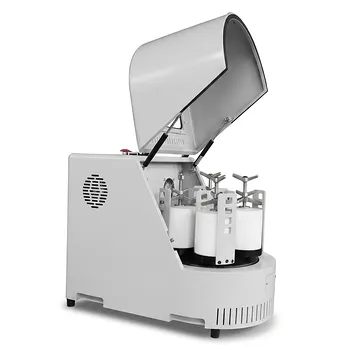
Vertical Semi Circular Planetary Ball Mill for Laboratory Precision Grinding

High Energy Planetary Ball Mill for Nano Scale Grinding and Mechanical Alloying

Vertical Production Planetary Ball Mill for High Throughput Powder Processing
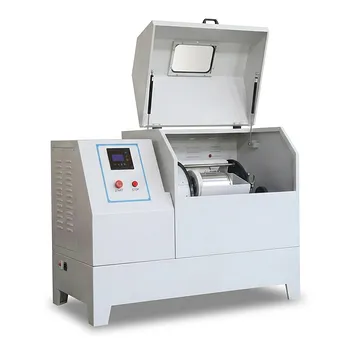
Heavy Duty Horizontal Planetary Ball Mill for Efficient Industrial Grinding and Sample Preparation
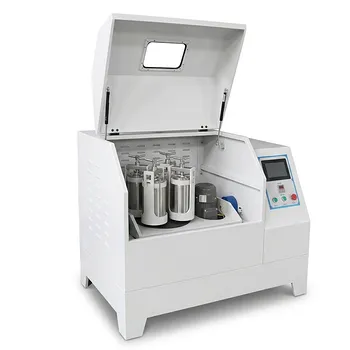
360° Rotating Omnidirectional Laboratory Planetary Ball Mill for Homogeneous Ultra-Fine Grinding and Mixing
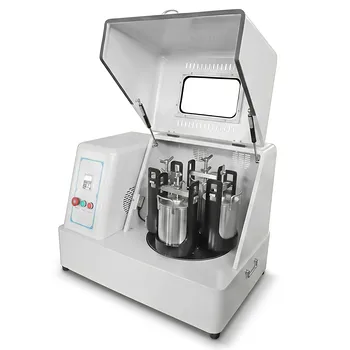
Vertical Square Planetary Ball Mill for Laboratory Sample Preparation and Nanoscale Grinding
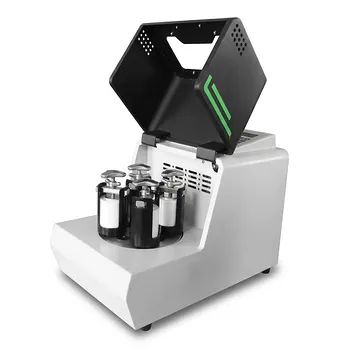
Miniature Planetary Ball Mill with Vacuum Grinding and High Efficiency for Laboratory Sample Preparation

High Energy Laboratory Planetary Ball Mill for Nano Grinding and Material Science Sample Preparation

High Energy Omnidirectional Planetary Ball Mill 16L
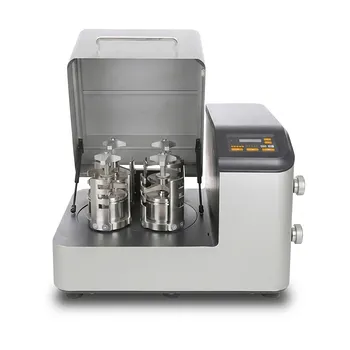
High Energy Planetary Ball Mill for Nano Scale Grinding and Colloidal Mixing in Material Science Research
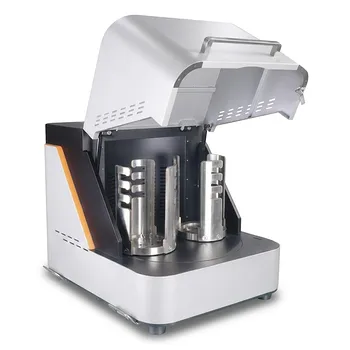
High Energy Laboratory Planetary Ball Mill for Nano Grinding and Colloidal Mixing of Hard and Brittle Materials
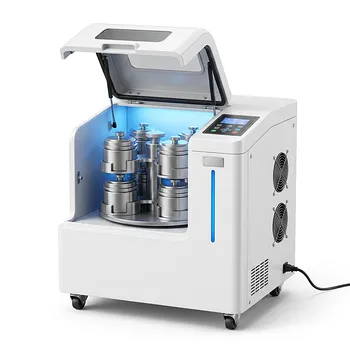
High Energy Omnidirectional Planetary Ball Mill 20L
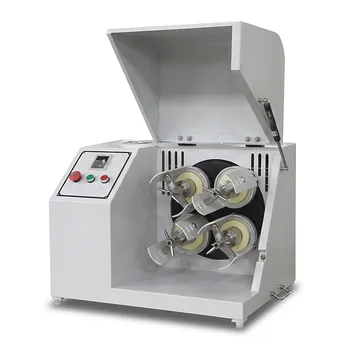
Horizontal Light Duty Planetary Ball Mill for Laboratory Sample Preparation

8L Planetary Ball Mill for Laboratory Grinding and Sample Preparation
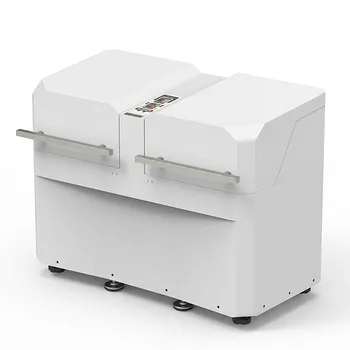
Dual Station Planetary Ball Mill 24L
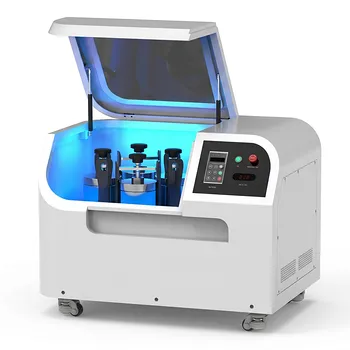
Planetary Ball Mill 12L

Nano High Energy Vibratory Ball Mill for Laboratory Sample Preparation

Multi-Platform Nanoscale High-Energy Vibratory Ball Mill

High Energy Hybrid Vibratory Ball Mill for Grinding Mixing and Cell Disruption