What is the primary function of a mechanical sieve shaker in the grading analysis of concrete aggregates? Expert Guide
Updated 4 months ago
A mechanical sieve shaker serves as the primary tool for particle size classification through mechanized vibration. It drives a vertical stack of standard test sieves to physically separate coarse and fine aggregates into distinct size fractions. This process is essential for ensuring that aggregate grading complies with engineering standards, which directly dictates the density, porosity, and structural integrity of the final concrete mix.
The mechanical sieve shaker provides a standardized, repeatable method for determining the particle size distribution of crushed stone and sand. By establishing accurate grading curves and fineness moduli, it enables engineers to optimize particle packing and ensure the workability of concrete composites.
Mechanisms of Mechanical Particle Classification
Standardized Sieve Stacking
The shaker utilizes a stack of standard test sieves arranged in descending order of aperture size. For concrete aggregates, these apertures typically range from coarse sizes (10mm to 25mm) down to fine particles as small as 150 microns.
High-Frequency Mechanical Vibration
The device employs high-frequency vibration to move the dry material across the sieve surfaces. This mechanical power ensures that particles are accurately separated according to their physical dimensions, a task that is difficult to perform consistently by hand.
Differentiation of Fine and Coarse Aggregates
The shaker is critical for isolating aggregates within specific ranges, such as the 2.38 mm to 4.75 mm interval. This precision allows engineers to redefine specific fractions as coarse or fine, ensuring the material meets criteria like the IS 4.75 mm sieve residue standard.
The Impact of Grading on Concrete Performance
Optimizing Particle Packing Density
Accurate grading through sieve analysis helps maximize the packing density of the physical structure. When particles are well-distributed, smaller grains fill the voids between larger ones, which significantly reduces the porosity of the concrete.
Enhancing Workability and Strength
Properly graded aggregates ensure a uniform distribution within the concrete matrix, which is a prerequisite for optimizing workability. This uniformity is fundamental for achieving the desired density and accuracy in subsequent strength modeling for various mix ratios.
Mitigating Thermal and Microstructural Stress
In specialized applications, strictly controlling grading curves limits the thermal shrinkage of the cement matrix. By maximizing packing density, the shaker helps preserve the microstructural integrity of the concrete, especially when exposed to high-temperature environments.
Technical Parameters Derived from Sieve Analysis
Calculating the Fineness Modulus (FM)
The sieve shaker provides the data necessary to calculate the Fineness Modulus, a numerical index of the coarseness or fineness of the material. This value is vital for confirming that fine aggregates fall within specific grading intervals, such as Zone II.
Establishing Uniformity and Curvature
The process allows for the determination of the coefficient of uniformity (Cu) and the coefficient of curvature (Cc). These parameters are essential for verifying that an aggregate is "well-graded," which is required for producing high-strength concrete.
Supporting Advanced Design Methods
Data from the mechanical shaker facilitates the drawing of grading curves required for the Dreux design method. This high-precision separation is also applied to alternative materials, such as crushed PET plastic, to ensure they are distributed uniformly within the concrete matrix.
Understanding the Trade-offs
Consistency vs. Particle Degradation
While mechanical shakers provide a stable vibration frequency that manual sieving cannot match, excessive shaking time can lead to particle degradation. Softer aggregates may break down into smaller fractions during the process, leading to inaccurate grading results.
Efficiency vs. Sieve Blinding
Mechanical shakers are highly efficient for processing large samples, but they are susceptible to sieve blinding, where particles become lodged in the mesh. This requires regular maintenance and the use of proper cleaning techniques to ensure the apertures remain accurate for subsequent tests.
How to Apply This to Your Project
Recommendations for Aggregate Analysis
Effective grading analysis depends on aligning your sieve shaker protocols with your specific project requirements.
- If your primary focus is high-strength concrete: Prioritize the calculation of the coefficient of uniformity (Cu) and curvature (Cc) to ensure a "well-graded" mix that minimizes voids.
- If your primary focus is concrete workability: Monitor the Fineness Modulus (FM) closely to ensure fine aggregates remain within the optimal grading intervals for your specific mix ratio.
- If your primary focus is specialized material integration: Use the shaker to strictly control grading curves for non-traditional materials, like crushed PET, to maintain microstructural integrity under thermal stress.
Precise mechanical sieving is the technical foundation upon which predictable, high-performance concrete is built.
Summary Table:
| Feature | Function in Grading Analysis | Impact on Concrete Performance |
|---|---|---|
| Mechanized Vibration | Ensures consistent, high-frequency particle separation | Repeatable grading curves and reliable data |
| Standard Sieve Stacking | Classifies aggregates from coarse (25mm) to fine (150μm) | Compliance with engineering & IS standards |
| Data Parameters | Calculates Fineness Modulus (FM), Cu, and Cc | Optimizes workability and packing density |
| Void Reduction | Identifies optimal grain distribution | Enhances strength and reduces thermal stress |
Elevate Your Material Testing Precision with Our Laboratory Solutions
Achieving accurate aggregate grading is just the beginning of high-performance material science. At [Brand Name], we provide complete laboratory sample preparation solutions tailored for material science professionals and powder processing industries.
Our extensive product line is designed to handle every stage of your workflow:
- Particle Size Reduction: High-efficiency jaw/roll crushers, liquid nitrogen cryogenic grinders, and advanced mills (planetary ball, jet, sand/bead, disc, rotor).
- Classification & Mixing: Precision vibratory and air-jet sieve shakers with a full range of test sieves, plus high-performance powder and defoaming mixers.
- Compaction & Forming: A full spectrum of hydraulic presses, including Cold/Warm Isostatic Presses (CIP/WIP), XRF pellet presses, and vacuum hot presses.
Whether you are refining concrete composites or developing advanced ceramics, our equipment ensures consistency, durability, and technical accuracy.
Ready to optimize your lab's efficiency? Contact our experts today to find the perfect solution for your specific application!
References
- Masroor Ali Jatoi, Shabir Ahmed. Effect of Lakhra Fly Ash as Partial Replacement of Cement in Traditional Concrete. DOI: 10.22581/muet1982.1904.16
Mentioned Products
- Vibratory Sieve Shaker Electromagnetic 3D Motion Powder Particle Size Analyzer for Dry and Wet Sieving
- Laboratory Vibratory Test Sieve Shaker for Precision Particle Size Analysis and Powder Grading
- Small Laboratory Vibratory Sieve Shaker for Powder Gradation and Particle Size Analysis
- Stainless Steel Laboratory Vibratory Test Sieve Shaker
- 三维电磁微量振动筛分仪
People Also Ask
- How does a vibratory sieve shaker contribute to optimizing the performance of activated carbon? Enhance Adsorption Precision
- Why is a laboratory vibratory sieve shaker necessary for processing magnesium-based borate precursor powders? Boost Activity
- Why use a vibratory sieve shaker to verify coarse aggregate grading in rubberized concrete? Ensure Structural Integrity
- What function do vibratory sieve shakers and standard test sieves serve in the preparation of adsorbents? Key Guide
- What role does a vibratory sieve shaker play in the particle size analysis of ground corn products? Enhance QC Precision

Tech Team · PowderPreparation
Last updated on Jun 03, 2026
Related Products

Vibratory Sieve Shaker Electromagnetic 3D Motion Powder Particle Size Analyzer for Dry and Wet Sieving

Laboratory Vibratory Test Sieve Shaker for Precision Particle Size Analysis and Powder Grading

Small Laboratory Vibratory Sieve Shaker for Powder Gradation and Particle Size Analysis

Stainless Steel Laboratory Vibratory Test Sieve Shaker

三维电磁微量振动筛分仪

Small Laboratory Vibrating Sieve Shaker for Precise Particle Size Analysis
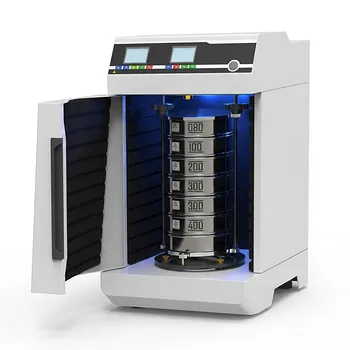
Laboratory Dry and Wet Three Dimensional Vibratory Sieve Shaker for Particle Analysis
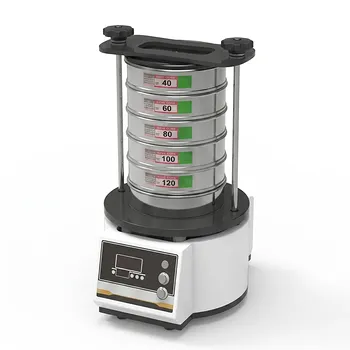
Dry Three Dimensional Vibratory Sieve Shaker
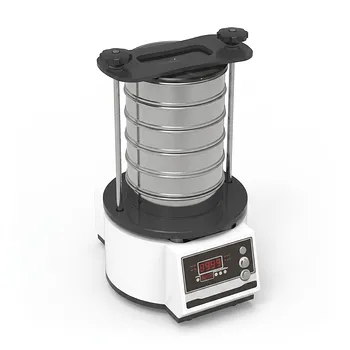
Tapping Oscillating Sieve Shaker for Dry and Wet Particle Size Analysis

Heavy Duty Dry Three Dimensional Vibratory Sieve Shaker for Particle Separation

High Frequency Wet Three-Dimensional Vibrating Sieve Shaker for Dry and Wet Particle Size Analysis
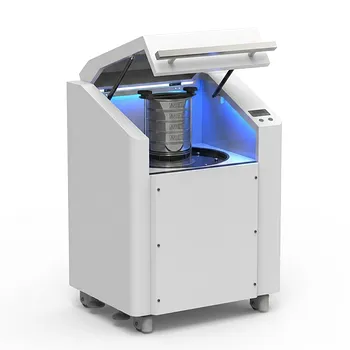
High Frequency Cabinet Type Three-Dimensional Rotary Vibrating Sieve Shaker for Dry Sieving and Particle Classification
