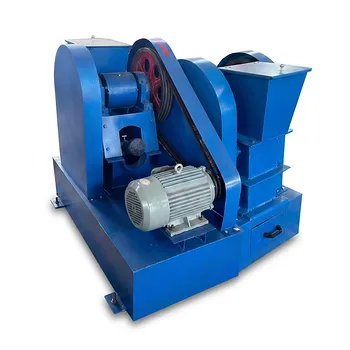
What is the primary function of a laboratory hydraulic press during the green body forming stage? Achieve Peak Density
Updated 3 months ago
The primary function of a laboratory hydraulic press in the production of brass-doped cobalt antimonide is the mechanical compaction of ball-milled powder into a high-density "green body." By applying high uniaxial pressure, the press reduces the gaps between powder particles and maximizes their contact area, which is essential for facilitating atomic diffusion during subsequent solid-state reactions. This initial densification provides the structural integrity needed to prevent volume shrinkage, cracking, or internal voids during the vacuum-sealed sintering process.
The laboratory hydraulic press serves as the bridge between loose powder and a solid material, providing the necessary initial density and mechanical strength to ensure successful chemical reactions and structural stability during high-temperature processing.
Establishing Structural Integrity Through Compaction
Mechanical Interlocking and Particle Rearrangement
The hydraulic press forces loose, ball-milled powder particles to undergo rearrangement and deformation within a precision mold. This process causes the particles to physically interlock, transforming a fluid-like powder into a solid cylindrical block known as a green body.
Providing Essential Handling Strength
Without compaction, the powder mixture would lack the cohesion required for processing. The press provides the green body with the initial handling strength necessary to undergo further steps, such as cold isostatic pressing or placement into a vacuum-sealed sintering environment, without fracturing.
Precise Geometric Shaping
By using specialized steel dies, the hydraulic press ensures the material takes a defined geometric shape, such as a 10mm or 20mm diameter cylinder. This uniformity is critical for consistent heat distribution and predictable material behavior during the final stages of production.
Optimizing the Material for Atomic Diffusion
Maximizing Inter-Particle Contact Area
High-pressure compaction significantly increases the contact tightness between individual powder grains. This is a fundamental requirement for brass-doped cobalt antimonide, as a high contact area facilitates the atomic migration and grain growth necessary for solid-state reactions.
Minimizing Internal Voids and Porosity
The press eliminates air trapped between particles, effectively minimizing large pores and internal voids. Reducing these gaps at the green body stage directly improves the breakdown strength and final density of the sintered ceramic.
Controlling Volume Shrinkage
By achieving high initial green density, the hydraulic press limits the amount of volume shrinkage that occurs during sintering. This precision prevents the formation of micro-cracks and structural defects that could compromise the material's thermoelectric or mechanical properties.
Understanding the Trade-offs and Constraints
Pressure Sensitivity and Material Defects
While high pressure is necessary for densification, excessive pressure can lead to delamination defects or internal stresses. If the pressure is not controlled precisely (e.g., maintained at a specific level like 50 MPa), the green body may suffer from non-uniform density distribution.
Limitations of Uniaxial Pressing
Laboratory hydraulic presses typically apply uniaxial pressure, which can lead to friction between the powder and the die walls. This occasionally results in a density gradient, where the center of the pellet is less dense than the ends, potentially requiring supplementary processing like isostatic pressing to achieve total uniformity.
How to Optimize Your Forming Process
Making the Right Choice for Your Goal
To achieve the best results when forming green bodies for cobalt antimonide, consider the following technical priorities:
- If your primary focus is maximizing atomic diffusion: Ensure the compaction pressure is high enough (often 20–50 MPa) to eliminate visible gaps and maximize particle surface contact.
- If your primary focus is preventing structural cracks: Use a high-precision press to apply pressure slowly and steadily, allowing air to escape and reducing the risk of internal delamination.
- If your primary focus is achieving maximum final density: Use the hydraulic press to create a uniform preliminary shape before transferring the green body to a cold isostatic press for multi-directional reinforcement.
By mastering the mechanical compaction stage, you ensure the structural and chemical foundation required for high-performance ceramic materials.
Summary Table:
| Functional Stage | Primary Benefit | Impact on Final Material |
|---|---|---|
| Powder Compaction | Mechanical Interlocking | Provides essential handling strength & structural integrity |
| Void Reduction | Minimizes Porosity | Prevents volume shrinkage and internal cracks during sintering |
| Contact Optimization | Maximizes Surface Contact | Facilitates atomic diffusion for efficient solid-state reactions |
| Geometric Shaping | Uniform Dimensions | Ensures consistent heat distribution and predictable behavior |
Optimize Your Material Synthesis with Precision Compaction Solutions
Achieving the perfect green body is the foundation of high-performance material science. Whether you are working on brass-doped cobalt antimonide or advanced ceramics, our equipment provides the precision and reliability your research demands.
We provide complete laboratory sample preparation solutions, specializing in powder processing and compaction equipment. Our extensive lines include:
- Advanced Compaction: A full spectrum of hydraulic presses, including standard lab presses, XRF pellet presses, and Cold/Warm Isostatic Presses (CIP/WIP) for superior density uniformity.
- Powder Processing: High-performance planetary ball mills, jet mills, and crushers (jaw/roll) to achieve the ideal particle size.
- Precision Mixing: Specialized powder and defoaming mixers for homogeneous material doping.
- Sizing & Analysis: Vibratory and air-jet sieve shakers with a wide range of test sieves.
Ready to enhance your lab's efficiency and material structural integrity? Contact us today to find the perfect solution for your application!
References
- Dan Zhao, Run Huang. Unveiling Brass-Doped CoSb3-Based Thermoelectric Materials Using Solid-State Reaction. DOI: 10.3390/ma18173928
Mentioned Products
- 6-Ton Small Single-Punch Tablet Press — Laboratory Powder & Granule Tableting Equipment / Tablet Forming Machine
- 5 Ton Single Punch Tablet Press Laboratory Small Batch Production
- Manual Tablet Press with Dual Scale Pressure Gauge for Pharmaceutical Food Chemical Laboratory Sample Preparation
- 6 Ton Variable Frequency Single Punch Tablet Press
- High Shear Laboratory Emulsifier for Mixing and Homogenization
People Also Ask
- What is the function of a laboratory press in Cr-Ti alloy evaluation? Quantify Fracture Stress & Strength
- What is the function of a laboratory press in assessing the hydrophobic performance of modified vermiculite fillers?
- What is the core function of a laboratory press in the forming of ceramic filter element green bodies? Maximize Density.
- What is the function of a laboratory press in the preparation of ceramic feed rods? Master Density and Precision
- Why is vacuum sealing and flexible packaging necessary for Aluminum Titanate powders during CIP? Ensure Peak Density

Tech Team · PowderPreparation
Last updated on Jun 03, 2026
Related Products
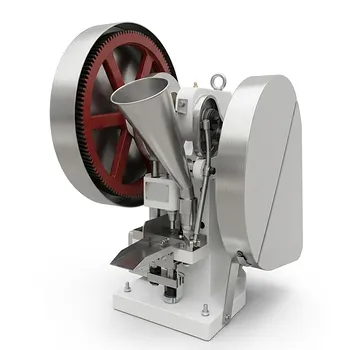
6-Ton Small Single-Punch Tablet Press — Laboratory Powder & Granule Tableting Equipment / Tablet Forming Machine
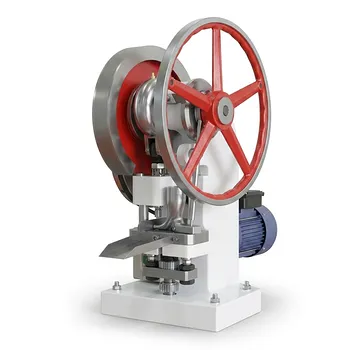
5 Ton Single Punch Tablet Press Laboratory Small Batch Production
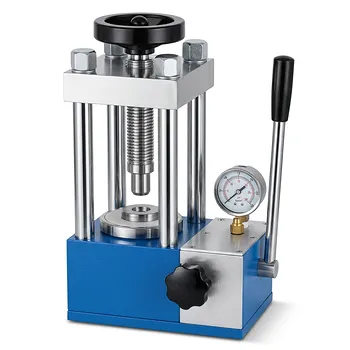
Manual Tablet Press with Dual Scale Pressure Gauge for Pharmaceutical Food Chemical Laboratory Sample Preparation
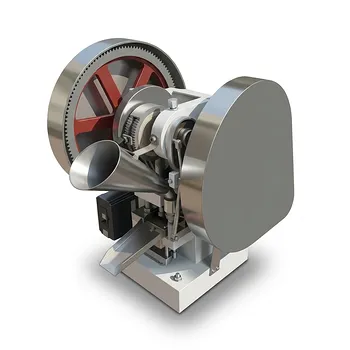
6 Ton Variable Frequency Single Punch Tablet Press
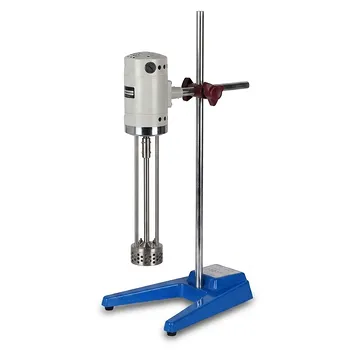
High Shear Laboratory Emulsifier for Mixing and Homogenization
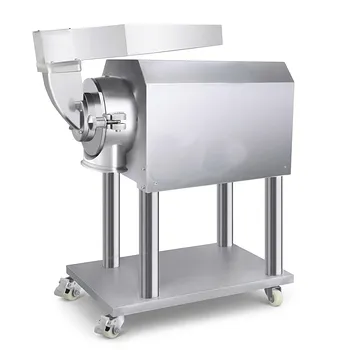
High Speed Small Laboratory Crusher for Dry Material Sample Preparation
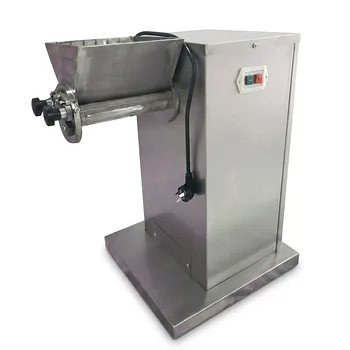
Small Laboratory Oscillating Granulator for Wet and Dry Granulation Processing
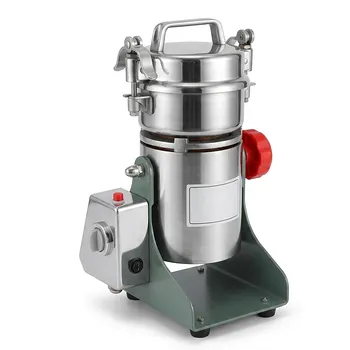
High Speed Swing Type Laboratory Pulverizer for Fine Powder Grinding and Sample Preparation