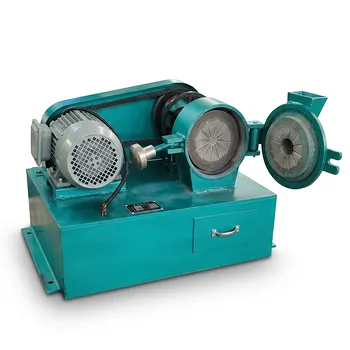
What is the primary function of a laboratory ball mill in processing volcanic ash for geopolymer synthesis? Key Roles.
Updated 4 months ago
The laboratory ball mill serves as the critical mechanical activator in the synthesis of geopolymers. Its primary function is to pulverize raw volcanic ash into an ultra-fine powder—typically below 63μm—to drastically increase its specific surface area. This physical transformation is essential because it exposes the internal chemistry of the ash, allowing it to react efficiently with alkaline activators.
The ball mill acts as a catalyst for geopolymerization by converting inert volcanic fragments into a highly reactive precursor. By reducing particle size and disrupting the material's mineral structure, the mill ensures that the silicon and aluminum components are readily available for chemical bonding.
The Mechanics of Particle Refinement
Achieving Micron-Sized Precision
The ball mill utilizes high-energy impact and attrition forces to break down volcanic ash fragments. By controlling parameters like rotational speed and media filling rates, the mill refines the material into a specific particle size distribution.
Consistent particle size is vital because it dictates the flowability and compaction of the final geopolymer paste. A finer powder ensures a more homogenous mix, which directly translates to higher structural integrity in the finished product.
Increasing Specific Surface Area
The transition from raw fragments to fine powder results in a massive increase in specific surface area. This means more "active sites" are available on the surface of each particle.
In geopolymer synthesis, the reaction happens at the interface of the solid ash and the liquid activator. A higher surface area allows the alkaline solution to attack the particles more aggressively, speeding up the setting time and improving strength.
Enhancing Chemical Reactivity
Disrupting the Glassy Structure
Volcanic ash often possesses a stable, glassy (amorphous) structure that resists chemical change. The mechanical energy from the ball mill helps disrupt these glassy phases, making the material inherently less stable.
This structural disruption is a form of "mechanical activation." It lowers the energy barrier required for the silicon (Si) and aluminum (Al) ions to dissolve into the alkaline solution.
Accelerating the Dissolution Process
For a geopolymer to form, the aluminosilicate components in the ash must first dissolve. The fine particles produced by the mill facilitate the rapid dissolution of these elements.
Without this refined particle size, the dissolution process would be too slow or incomplete. This would lead to a weak geopolymer matrix with unreacted ash fragments acting as points of failure.
Understanding the Trade-offs
Balancing Energy and Agglomeration
Extended milling times can lead to particle agglomeration, where ultra-fine particles begin to stick together due to electrostatic forces. This effectively reduces the surface area you worked to increase.
Finding the "sweet spot" in milling duration is critical to avoid wasting energy and losing reactivity. Over-milling can also generate excessive heat, which may prematurely alter the mineralogy of certain sensitive volcanic precursors.
Managing Media Contamination
The choice of grinding media—such as high-hardness alumina or steel balls—introduces the risk of minor contamination. Small amounts of the grinding media can wear down and integrate into the ash powder.
For high-purity research, ceramic or alumina media are preferred to minimize the introduction of iron or other metallic impurities. These impurities can sometimes interfere with the delicate alkaline-activation chemistry.
How to Apply This to Your Project
Making the Right Choice for Your Goal
To achieve the best results in your geopolymer synthesis, tailor your milling strategy to your specific technical requirements.
- If your primary focus is maximum compressive strength: Target the smallest possible particle size (well below 63μm) to maximize dissolution and matrix density.
- If your primary focus is process efficiency: Optimize the milling duration to reach the 63-75μm threshold, which provides a balance between reactivity and energy consumption.
- If your primary focus is chemical purity: Utilize high-density alumina grinding media to prevent metallic contamination during the pulverization process.
Properly executed mechanical milling transforms volcanic ash from a raw geological byproduct into a high-performance engineering precursor.
Summary Table:
| Process Aspect | Impact on Volcanic Ash | Resulting Benefit |
|---|---|---|
| Particle Refinement | Reduces fragments to <63μm | Improves paste homogeneity & structural integrity |
| Surface Area | Drastic increase in active sites | Accelerates chemical reaction with alkaline activators |
| Structural Change | Disrupts stable glassy phases | Lowers energy barrier for Si and Al dissolution |
| Mechanical Activation | Converts inert ash into reactive precursor | Ensures faster setting times and higher compressive strength |
Elevate Your Material Research with KINTEK SOLUTION
Achieving the perfect geopolymer matrix requires precision at the micro-scale. At KINTEK SOLUTION, we provide complete laboratory sample preparation solutions tailored for material science professionals. We specialize in high-performance powder processing and compaction equipment designed to transform raw volcanic precursors into reactive engineering materials.
Our Comprehensive Product Line Includes:
- Advanced Milling: Planetary ball mills, jet mills, sand/bead mills, and rotor mills for ultra-fine grinding.
- Preparation & Sizing: Jaw/roll crushers and vibratory/air-jet sieve shakers with precision test sieves.
- Mixing Excellence: High-efficiency powder mixers and defoaming mixers for uniform sample preparation.
- Compaction Solutions: A full spectrum of hydraulic presses, including Cold/Warm Isostatic Presses (CIP/WIP), standard lab presses, and vacuum hot presses.
Ready to optimize your geopolymer synthesis or material processing workflow? Contact our technical team today to find the ideal equipment solution for your laboratory’s specific needs!
References
- Khadija Felaous, Abdellah Benzaouak. Optimizing Alkaline Activation of Natural Volcanic Pozzolan for Eco-Friendly Materials Production: An Investigation of NaOH Molarity and Na2SiO3-to-NaOH Ratio. DOI: 10.3390/su15054453
Mentioned Products
- 360° Rotating Omnidirectional Laboratory Planetary Ball Mill for Homogeneous Ultra-Fine Grinding and Mixing
- Vertical Semi Circular Planetary Ball Mill for Laboratory Precision Grinding
- High Energy Laboratory Planetary Ball Mill for Nano Grinding and Material Science Sample Preparation
- Laboratory Nano High Energy Ball Mill Ultrafine Grinding Mechanical Alloying
- Vertical Square Planetary Ball Mill for Laboratory Sample Preparation and Nanoscale Grinding
People Also Ask
- What role does an omni-directional planetary ball mill play in brass/cobalt antimonide pretreatment? Achieve Nano-Scale Homogeneity.
- What is the function of an omni-directional planetary ball mill? Achieve Streak-Free Glass Homogenization
- Why is an intermittent grinding process required for perovskites in a planetary ball mill? Ensure Stability & Purity
- Why is a planetary ball mill essential for SiBCN-rGO wet-spinning? Achieve Superior Dispersion and Spinnability
- What role does a planetary ball mill play in the synthesis of Li6PS5Cl (LPSCl)? Unlock High Ionic Conductivity

Tech Team · PowderPreparation
Last updated on Jun 03, 2026
Related Products
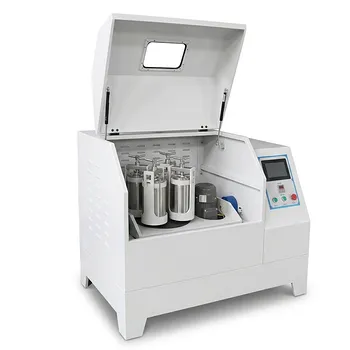
360° Rotating Omnidirectional Laboratory Planetary Ball Mill for Homogeneous Ultra-Fine Grinding and Mixing
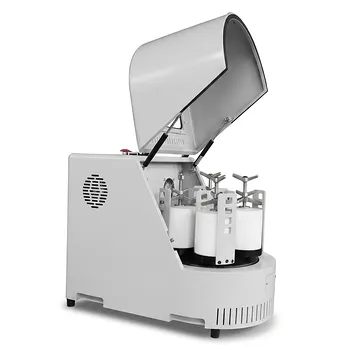
Vertical Semi Circular Planetary Ball Mill for Laboratory Precision Grinding
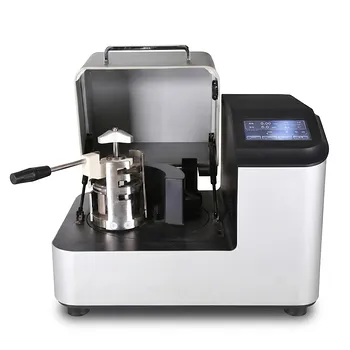
High Energy Laboratory Planetary Ball Mill for Nano Grinding and Material Science Sample Preparation
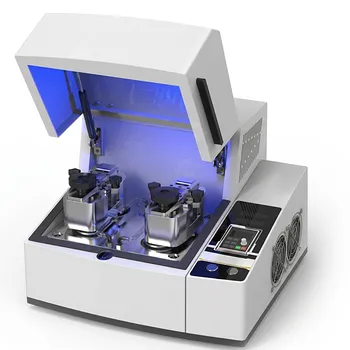
Laboratory Nano High Energy Ball Mill Ultrafine Grinding Mechanical Alloying
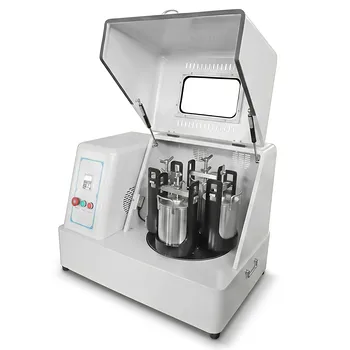
Vertical Square Planetary Ball Mill for Laboratory Sample Preparation and Nanoscale Grinding
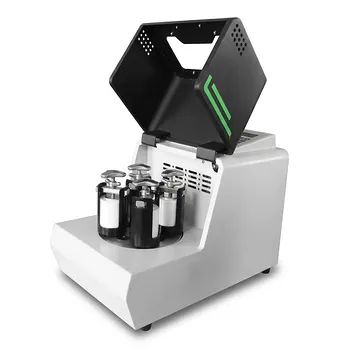
Miniature Planetary Ball Mill with Vacuum Grinding and High Efficiency for Laboratory Sample Preparation
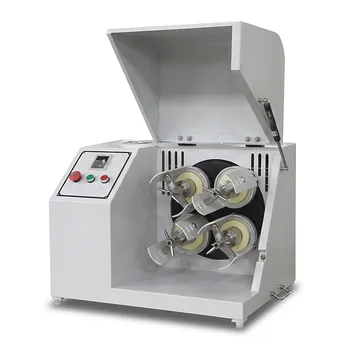
Horizontal Light Duty Planetary Ball Mill for Laboratory Sample Preparation
Single Tank High Energy Vibratory Ball Mill for Laboratory Grinding and Mixing

Nano High Energy Vibratory Ball Mill for Laboratory Sample Preparation
8L Planetary Ball Mill for Laboratory Grinding and Sample Preparation
Nanoscale High-Energy Vibratory Ball Mill for Laboratory Sample Preparation, Mechanochemistry, and Mechanical Alloying
Planetary Ball Mill 12L
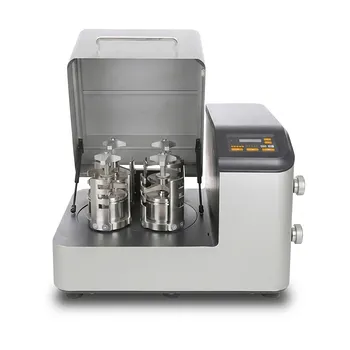
High Energy Planetary Ball Mill for Nano Scale Grinding and Colloidal Mixing in Material Science Research

High Throughput Micro Ball Mill for Cryogenic Grinding and Laboratory Cell Disruption
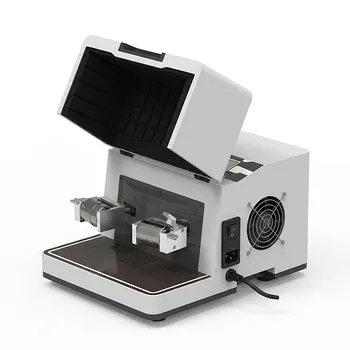
High Energy Hybrid Vibratory Ball Mill for Grinding Mixing and Cell Disruption
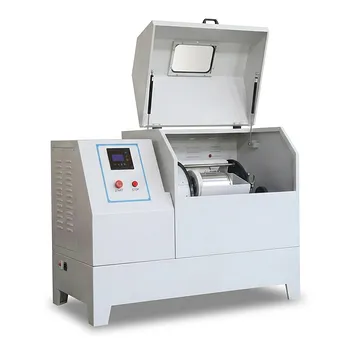
Heavy Duty Horizontal Planetary Ball Mill for Efficient Industrial Grinding and Sample Preparation
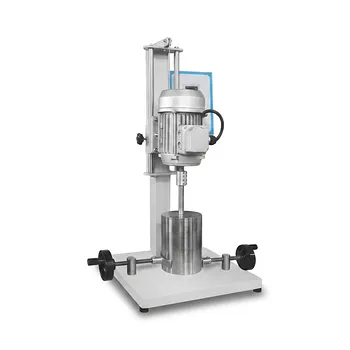
Laboratory Basket Sand Mill for Wet Grinding and Dispersion of Viscous Slurries

High Energy Planetary Ball Mill for Nano Scale Grinding and Mechanical Alloying

Vertical Production Planetary Ball Mill for High Throughput Powder Processing