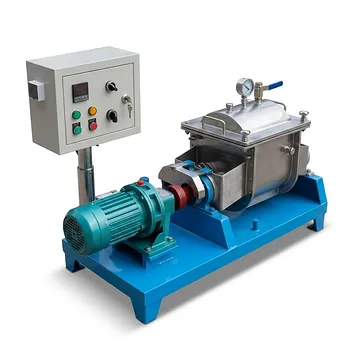
What is the primary function of a high-power mixer for AAC? Achieve Perfect Slurry Homogeneity & Pore Structure
Updated 5 months ago
The primary function of a high-power mixer in Autoclaved Aerated Concrete (AAC) production is to create a highly homogeneous slurry by utilizing intense shear forces to blend raw materials and water. This rapid mixing process ensures that cement, lime, sand, and additives are uniformly distributed, which is a critical prerequisite for the subsequent gas-evolution reaction and the formation of a stable, uniform pore structure.
Core Takeaway: A high-power mixer acts as the technical foundation for AAC quality; it uses high-speed rotation to eliminate material agglomeration and ensure that gas-forming agents, like aluminum powder, are perfectly dispersed to create a consistent cellular structure.
Achieving Chemical and Physical Homogeneity
Rapid Dispersion of Solid Components
High-power mixers use strong mechanical shear to break down clusters of dry materials such as cement, lime, and quartz sand. This ensures that every particle is fully wetted and integrated into the aqueous phase within a very short timeframe.
Uniform Distribution of Gas-Forming Agents
The mixer facilitates the even suspension of aluminum powder or other gas-forming agents throughout the viscous slurry. Without this level of precision, the gas-evolution reaction would be localized, leading to large, uneven voids or structural collapse during the rising process.
Prevention of Material Agglomeration
By operating at high rotational speeds—often ranging from 410 to 600 rpm—the equipment prevents the formation of "dead zones" where materials might clump. This forced mixing action is essential for maintaining a consistent rheological profile across the entire batch.
Optimizing the Microstructure and Performance
Foundation for a Stable Pore Structure
The homogeneity achieved during mixing directly dictates the uniformity of the pore structure in the final product. A well-mixed slurry allows bubbles to form and distribute evenly, which determines the thermal insulation properties and mechanical strength of the concrete.
Integration of Specialized Fillers
In modern AAC formulations, mixers must incorporate diverse materials such as fly ash, resin waste, or organic fibers. High-power mixing ensures these secondary materials remain uniformly suspended and do not stratify, which would otherwise create weak points in the concrete matrix.
Enhanced Wetting of Hydrophobic Surfaces
Certain additives, such as rice husk or specialized aerogels, possess hydrophobic surfaces that resist water integration. The intense centrifugal forces of a high-power impeller force these materials into the slurry, ensuring they are fully coated and functional within the mix.
Understanding the Trade-offs
Mechanical Wear and Maintenance
The high-speed rotation and abrasive nature of materials like quartz sand lead to significant wear on the mixer impellers and liners. Constant monitoring and frequent replacement of high-wear components are necessary to maintain mixing efficiency.
Energy Consumption and Heat Generation
Generating high shear forces requires substantial electrical input, making the mixer one of the more energy-intensive components of the preparation stage. Additionally, the mechanical energy can generate heat, which may inadvertently accelerate the hydration of lime or cement if not carefully managed.
Sensitivity to Mixing Sequences
While powerful, these mixers are sensitive to the timing and sequence of material addition. Introducing the gas-forming agent too early or mixing for too long after its addition can prematurely exhaust the chemical reaction, ruining the batch's ability to rise.
How to Optimize Mixing for Your Project
High-power mixing is not a "one-size-fits-all" process; it must be calibrated to your specific material load and desired density.
- If your primary focus is Thermal Insulation: Prioritize the uniform dispersion of aluminum powder at high speeds to ensure the smallest, most consistent pore sizes possible.
- If your primary focus is Structural Strength: Ensure the mixer is calibrated to eliminate all agglomerates of cement and lime, as unmixed clusters act as stress concentrators that reduce load-bearing capacity.
- If your primary focus is Utilizing Waste Materials: Adjust the mixing duration to account for the unique density and surface tension of additives like fly ash or crushed coconut shells to prevent stratification.
Properly calibrated high-power mixing is the definitive bridge between raw chemical components and a high-performance cellular concrete structure.
Summary Table:
| Key Function | Technical Mechanism | Impact on AAC Quality |
|---|---|---|
| Solid Dispersion | Intense mechanical shear | Eliminates material agglomeration and "dead zones." |
| Gas Distribution | High-speed rotation (410-600 rpm) | Ensures uniform pore size and thermal insulation. |
| Additive Integration | Centrifugal force | Incorporates hydrophobic fillers and waste materials. |
| Rheology Control | Rapid forced mixing | Maintains a consistent slurry profile for stable rising. |
Elevate Your Material Science Research with Precision Equipment
Achieving the perfect mix is just the beginning of high-performance material preparation. At [Company Name], we provide complete laboratory sample preparation solutions tailored for material science and industrial R&D. Whether you are developing advanced cellular concrete or high-tech ceramics, our specialized equipment ensures consistency and reliability.
Our Core Solutions Include:
- Advanced Mixing: Powder mixers and defoaming mixers for perfect homogeneity.
- Size Reduction: Jaw/roll crushers, liquid nitrogen cryogenic grinders, and planetary ball/jet/rotor mills.
- Classification: Vibratory and air-jet sieve shakers with precision test sieves.
- Compaction & Forming: A full spectrum of hydraulic presses, including Cold/Warm Isostatic Presses (CIP/WIP), vacuum hot presses, and XRF pellet presses.
Ready to optimize your powder processing workflow? Contact our technical experts today to find the ideal equipment for your laboratory needs!
References
- Nur Farisyah Hidayah Zambri, Akhtar Ali. The Effects of Direct Fire and Strength on Autoclaved Aerated Concrete Containing Semiconductor Electronic Molding Resin Waste (AAC-SEMRW) on Partition Panel Application. DOI: 10.37934/sijmr.2.1.2537a
Mentioned Products
- 非介入式材料均质机真空脱泡行星搅拌高粘度混合设备
- Horizontal Ribbon Mixer for Dry Powder and Slurry Blending
- Horizontal Ribbon Mixer for Uniform Powder and Slurry Mixing
- High-Speed Simple Disperser for Efficient Mixing, Dispersion, and Emulsification
- High Viscosity Planetary Centrifugal Vacuum Mixer for Material Defoaming and Uniform Mixing
People Also Ask
- How does a planetary vacuum defoaming mixer help magnesium calcium phosphate slurries? Achieve Flawless 3D Printed Bone
- Why is vacuum defoaming necessary for PDMS mixtures before microwave irradiation curing? Key to Structural Integrity
- What role does a vacuum defoaming mixer play in BNT MLCC slurry? Ensure High Dielectric Strength & Pinhole-Free Prep
- Why is a vacuum defoaming mixer essential for DLP 3D printing ceramic slurries? Key to Structural Integrity
- What is the purpose of using a high-vacuum defoaming mixer for SiC/Cf composites? Optimize Density and Strength

Tech Team · PowderPreparation
Last updated on May 14, 2026
Related Products
非介入式材料均质机真空脱泡行星搅拌高粘度混合设备
Horizontal Ribbon Mixer for Dry Powder and Slurry Blending
Horizontal Ribbon Mixer for Uniform Powder and Slurry Mixing
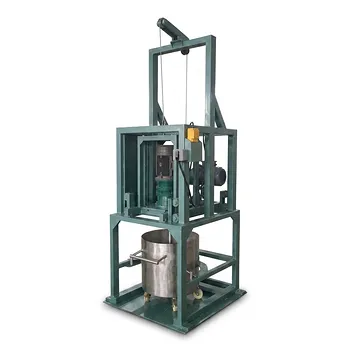
High-Speed Simple Disperser for Efficient Mixing, Dispersion, and Emulsification
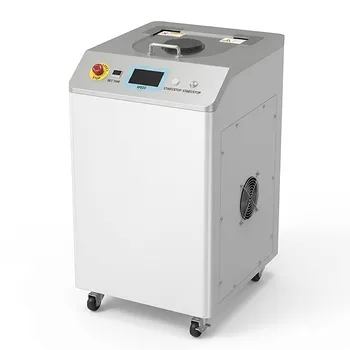
High Viscosity Planetary Centrifugal Vacuum Mixer for Material Defoaming and Uniform Mixing
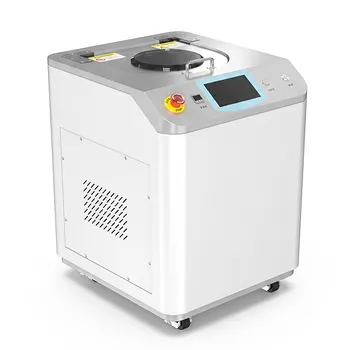
High Speed Vacuum Planetary Centrifugal Mixer and Defoamer for Industrial Paste Processing
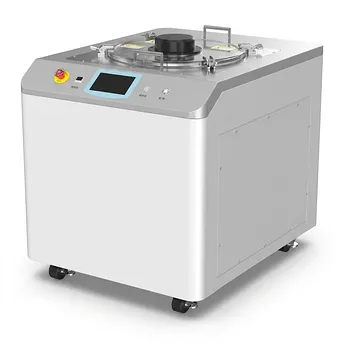
Industrial Planetary Centrifugal Vacuum Defoaming Mixer for High Viscosity Paste and Powder Homogenization
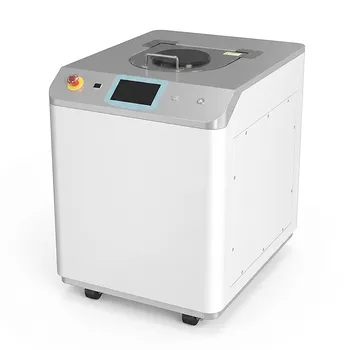
Industrial Planetary Centrifugal Vacuum Defoaming Mixer for High Viscosity Paste and Advanced Material Science
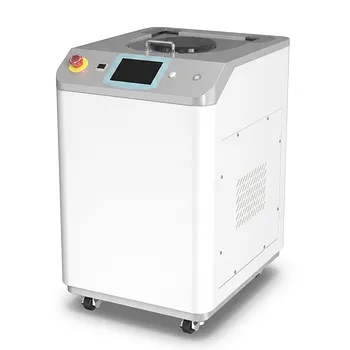
High Viscosity Planetary Centrifugal Mixing and Vacuum Defoaming Machine for Laboratory Material Preparation
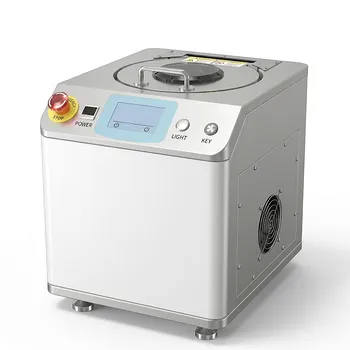
High Efficiency Vacuum Planetary Centrifugal Mixer and Defoaming Machine for Industrial Material Research and Precise Laboratory Powder Dispersion
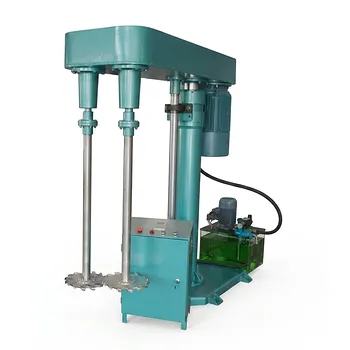
Hydraulic Double Shaft Disperser for High Viscosity Liquid Mixing and Dispersion
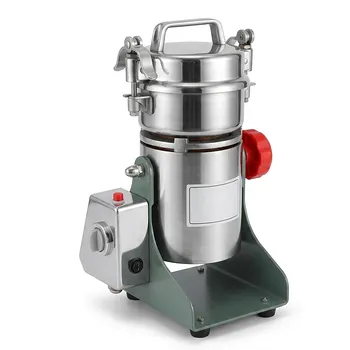
High Speed Swing Type Laboratory Pulverizer for Fine Powder Grinding and Sample Preparation

Vertical Production Planetary Ball Mill for High Throughput Powder Processing
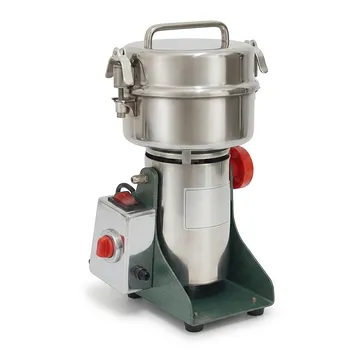
Small High Speed Grinder for Laboratory Sample Preparation
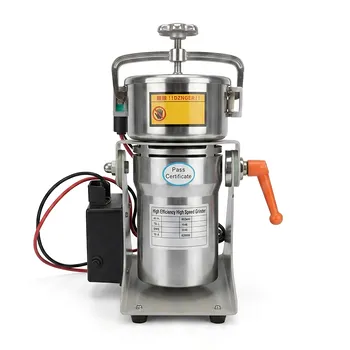
High Efficiency High Speed Grinder Laboratory Mill 1300W 25000rpm
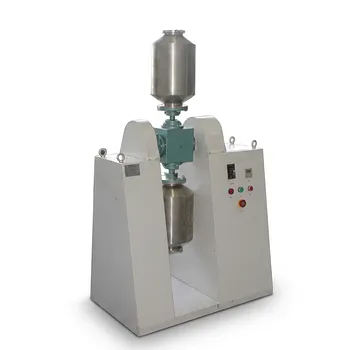
Multi Dimensional Universal Mixer for High Uniformity Powder Blending
Inclined Mixer for Homogeneous Powder Blending and Grinding
Industrial Double Cone Mixer for Powder Blending and Homogeneous Mixing
Dual Cup Vacuum Centrifugal Mixer Planetary Paste Defoaming Machine Industrial Material Processor