Why is Newtonian Silicone Oil used in Planetary Centrifugal Mixing? A Benchmark for Precise Fluid Dynamics
Updated 5 months ago
Newtonian silicone oil is the preferred benchmark because its rheological properties remain stable and predictable across a vast range of conditions, effectively isolating the physics of the mixing process from material-induced variables. By utilizing a wide viscosity spectrum—typically from 1,000 to 300,000 cSt—researchers can systematically quantify the competition between centrifugal and viscous forces to establish universal shear rate prediction correlations.
Newtonian silicone oil serves as a "pure" experimental control, allowing scientists to map the complex fluid dynamics of planetary mixing without the interference of non-Newtonian structural changes or unpredictable material behavior.
The Role of Rheological Stability
Eliminating Material Complexity
Unlike non-Newtonian fluids, silicone oil maintains a constant viscosity regardless of the shear rate applied. This characteristic is critical for research because it ensures that any observed changes in mixing efficiency are the result of the machine's mechanical forces rather than the fluid's internal structural breakdown.
Predictable Temperature Response
Planetary mixing can generate significant internal heat due to high-energy motion and viscous friction. Silicone oil follows well-documented temperature-dependent patterns, allowing researchers to mathematically account for thermal effects and maintain the integrity of their data.
Quantifying the Mechanics of Planetary Motion
The Competition of Forces
Planetary centrifugal mixing (PCM) relies on the interplay between centrifugal force, Coriolis force, and pressure gradients. By testing across a wide viscosity range, researchers can observe exactly how viscous drag begins to overpower centrifugal momentum, defining the "operating envelope" for different material classes.
Developing Predictive Correlations
The ultimate goal of using these benchmark fluids is to create universal shear rate models. Because the fluid's behavior is known and stable, the data gathered can be used to develop equations that predict how a mixer will perform with unknown, complex materials in industrial applications.
Advantages of the Planetary Mixing Environment
Non-Contact Fluid Dynamics
In a PCM system, fluid movement is driven entirely by the motion of the container rather than a physical blade. This non-contact method eliminates "shear dead zones" and prevents contamination from particles that might flake off traditional stirring paddles.
Simultaneous Mixing and Defoaming
The high-pressure environment created by centrifugal forces, often combined with a vacuum, allows for integrated defoaming. This process removes micron-sized bubbles while the material is being homogenized, which is essential for high-performance electronic adhesives and pharmaceuticals.
Understanding the Trade-offs
The Gap Between Models and Reality
While Newtonian oils provide a perfect baseline, most industrial materials—such as pastes and slurries—are non-Newtonian or thixotropic. This means that models developed using silicone oil may require significant adjustment when applied to materials that thin or thicken under stress.
Thermal Management in High Viscosity
Testing at the upper end of the range (near 300,000 cSt) introduces significant heat generation. If not carefully monitored, this heat can alter the fluid's properties mid-test, potentially skewing the results if the cooling system cannot keep pace with the viscous friction.
Applying These Findings to Process Design
Before selecting a mixing protocol or scaling up production, consider how benchmark data informs your specific operational goals:
- If your primary focus is process scale-up: Use the established shear rate correlations to ensure that moving to a larger planetary mixer maintains the same force balance and material consistency.
- If your primary focus is high-purity material production: Leverage the non-contact nature of PCM identified in benchmark studies to eliminate contamination risks associated with mechanical impellers.
- If your primary focus is air-sensitive formulation: Utilize the known interactions between centrifugal force and bubble migration to optimize vacuum cycles for complete micron-scale defoaming.
Understanding the fundamental behavior of benchmark fluids is the first step toward mastering the complex dynamics of high-precision centrifugal mixing.
Summary Table:
| Key Feature | Benefit as a Benchmark | Industrial Impact |
|---|---|---|
| Constant Viscosity | Eliminates non-Newtonian variables | Reliable shear rate modeling |
| Thermal Stability | Predictable temperature response | Mathematical error correction |
| Viscosity Spectrum | Quantifies force competition | Defines equipment operating limits |
| Non-Contact Motion | Pure fluid dynamic mapping | Contamination-free homogenization |
Achieve Unmatched Precision in Material Processing with Our Laboratory Solutions
At our core, we provide complete laboratory sample preparation solutions for material science, specializing in high-performance powder processing and compaction equipment. Whether you are conducting fundamental research with benchmark fluids or scaling up complex industrial formulations, our equipment is designed to deliver superior results.
Our extensive product line includes:
- Mixing & Homogenization: Advanced planetary mixers and defoaming mixers for bubble-free, high-purity results.
- Milling & Grinding: Planetary ball mills, jet mills, rotor mills, and liquid nitrogen cryogenic grinders.
- Crushing & Sieving: Jaw/roll crushers and vibratory/air-jet sieve shakers with precision test sieves.
- Compaction Excellence: A full spectrum of hydraulic presses, including Cold/Warm Isostatic Presses (CIP/WIP), hot presses, vacuum hot presses, and XRF pellet presses.
Leverage our expertise to eliminate contamination risks and optimize your material consistency. Contact us today to discuss your specific application and discover how our specialized solutions can enhance your lab's efficiency!
References
- Yoshiyuki Komoda, Naoto Ohmura. Estimation of mean shear rate in a vessel of a planetary centrifugal mixer based on the heat balance equation. DOI: 10.1016/j.cherd.2024.01.006
Mentioned Products
- High Viscosity Planetary Centrifugal Vacuum Mixer for Material Defoaming and Uniform Mixing
- High Efficiency Vacuum Planetary Centrifugal Mixer and Defoaming Machine for Industrial Material Research and Precise Laboratory Powder Dispersion
- High Speed Vacuum Planetary Centrifugal Mixer and Defoamer for Industrial Paste Processing
- Industrial Planetary Centrifugal Vacuum Defoaming Mixer for High Viscosity Paste and Powder Homogenization
- High Viscosity Planetary Centrifugal Mixing and Vacuum Defoaming Machine for Laboratory Material Preparation
People Also Ask
- What core functions does a planetary centrifugal mixer perform? Optimize Hard Carbon Anode Slurry & Degassing
- Why is a planetary centrifugal mixer recommended for geopolymer slurries? Achieve high-shear, air-free homogenization.
- Why is a planetary centrifugal mixer utilized for wood powder and HPMC? Achieve uniform dispersion & rapid defoaming.
- How does a planetary centrifugal mixer address key challenges in Tyr-CDs@EVA optical films? Ensure Optical Clarity.
- What is the role of a planetary centrifugal mixer in UHTC slurry preparation? Achieve Void-Free, High-Viscosity Mixing

Tech Team · PowderPreparation
Last updated on May 14, 2026
Related Products
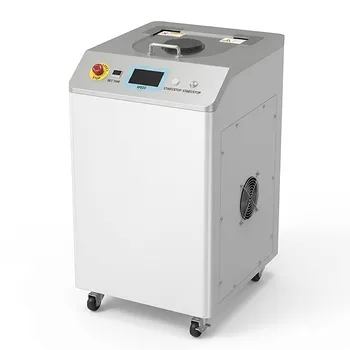
High Viscosity Planetary Centrifugal Vacuum Mixer for Material Defoaming and Uniform Mixing
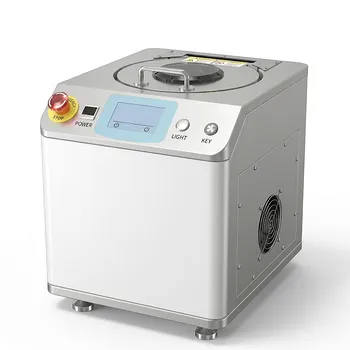
High Efficiency Vacuum Planetary Centrifugal Mixer and Defoaming Machine for Industrial Material Research and Precise Laboratory Powder Dispersion
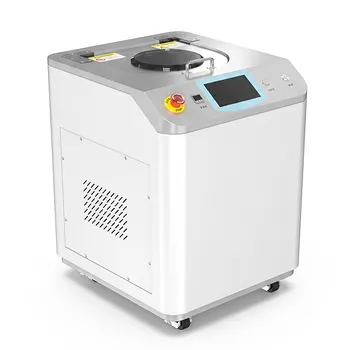
High Speed Vacuum Planetary Centrifugal Mixer and Defoamer for Industrial Paste Processing
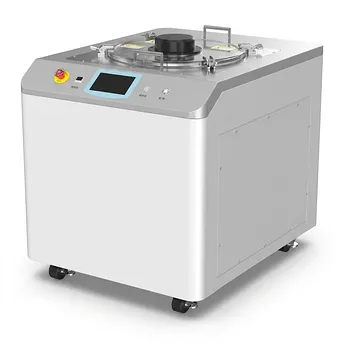
Industrial Planetary Centrifugal Vacuum Defoaming Mixer for High Viscosity Paste and Powder Homogenization
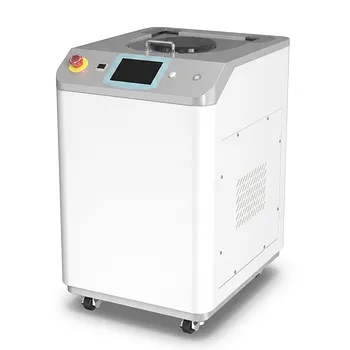
High Viscosity Planetary Centrifugal Mixing and Vacuum Defoaming Machine for Laboratory Material Preparation
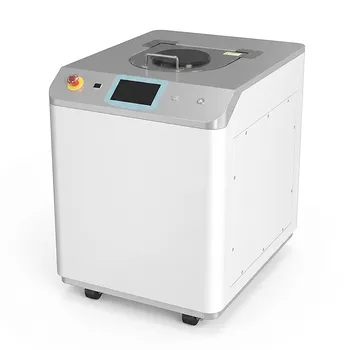
Industrial Planetary Centrifugal Vacuum Defoaming Mixer for High Viscosity Paste and Advanced Material Science
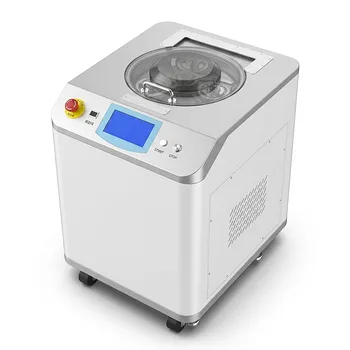
Dual Cup Vacuum Centrifugal Mixer Planetary Paste Defoaming Machine Industrial Material Processor
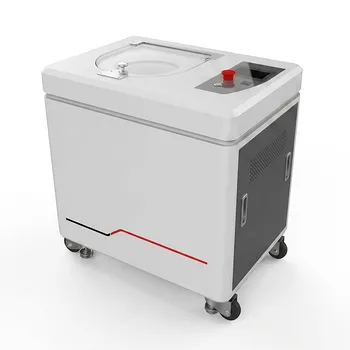
非介入式材料均质机真空脱泡行星搅拌高粘度混合设备
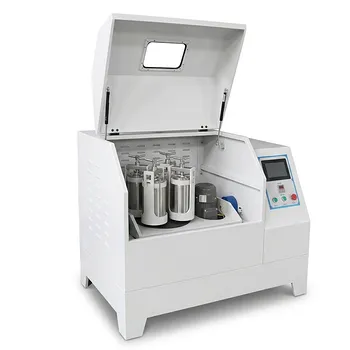
360° Rotating Omnidirectional Laboratory Planetary Ball Mill for Homogeneous Ultra-Fine Grinding and Mixing
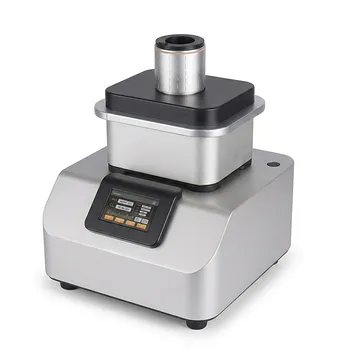
Ultra Centrifugal Mill High Speed Laboratory Grinder for Fibrous and Brittle Sample Preparation
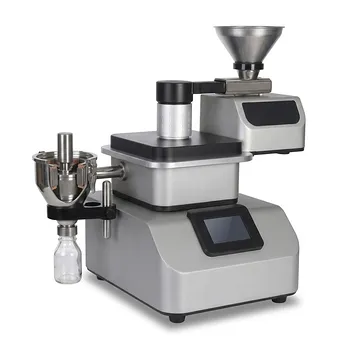
Ultra Centrifugal Mill for Rapid Laboratory Sample Preparation and Fine Powder Grinding
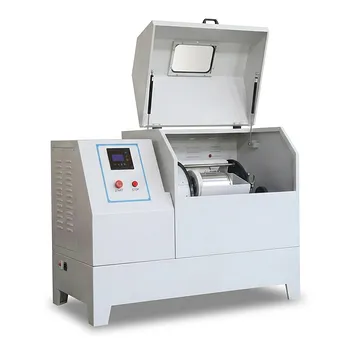
Heavy Duty Horizontal Planetary Ball Mill for Efficient Industrial Grinding and Sample Preparation
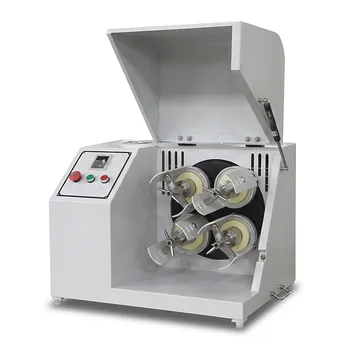
Horizontal Light Duty Planetary Ball Mill for Laboratory Sample Preparation
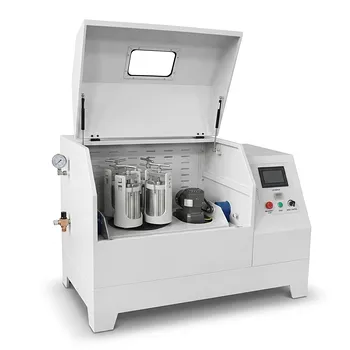
Vertical Production Planetary Ball Mill for High Throughput Powder Processing
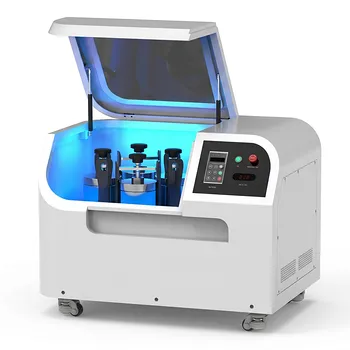
Planetary Ball Mill 12L
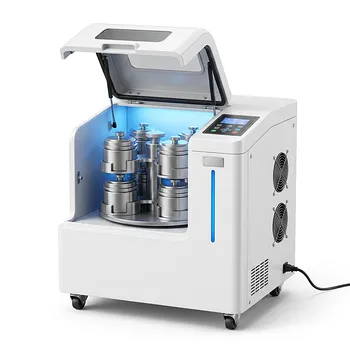
High Energy Omnidirectional Planetary Ball Mill 20L
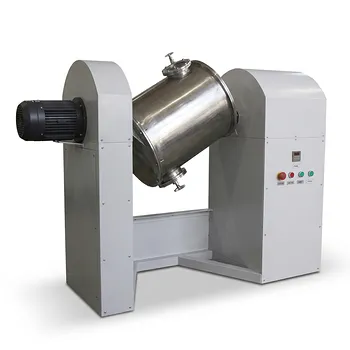
Inclined Mixer for Homogeneous Powder Blending and Grinding
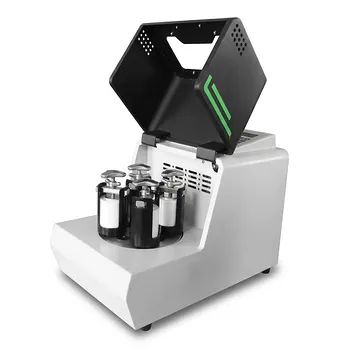
Miniature Planetary Ball Mill with Vacuum Grinding and High Efficiency for Laboratory Sample Preparation
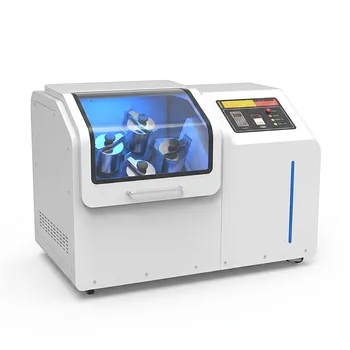
High Energy Omnidirectional Planetary Ball Mill 16L