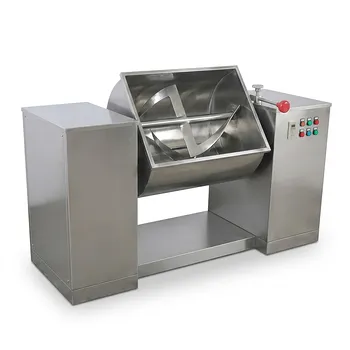
Why is a planetary centrifugal mixer used for mixing graphene oxide (GO) solutions with epoxy resin? Achieve Nano-Scale
Updated 5 months ago
The integration of Graphene Oxide (GO) into epoxy resin demands a unique balance of high-shear dispersion and structural preservation.
A planetary centrifugal mixer (PCM) is utilized for this process because it achieves molecular-level dispersion of GO into high-viscosity resins through simultaneous revolution and rotation. This bladeless mechanism generates the powerful shear forces required to break down nanoparticle agglomerates while performing synchronized degassing to ensure a void-free, high-performance composite.
Core Takeaway: The planetary centrifugal mixer is the preferred tool for GO-epoxy composites because it overcomes the extreme viscosity of the resin and the Van der Waals forces of the nanomaterial without damaging the fillers or introducing air bubbles.
Overcoming High Viscosity and Agglomeration
Powerful Shear Forces for Nanoscale Dispersion
Graphene oxide sheets naturally tend to agglomerate due to strong Van der Waals forces, which can compromise the mechanical properties of the final composite. The PCM utilizes the combined action of revolution and rotation to generate intense shear forces that effectively pull these sheets apart. This ensures that the GO is uniformly embedded into the resin matrix at the nano-scale.
Efficient Mixing of High-Viscosity Matrices
Epoxy resins are inherently viscous, making traditional stirring methods inefficient and prone to "dead zones." The PCM moves the entire container in a planetary motion, forcing the material to flow in a complex three-dimensional pattern. This achieves a homogeneous distribution of fillers, curing agents, and additives throughout the entire volume.
Breaking Down Molecular Aggregates
Beyond simple mixing, the high acceleration forces in a PCM are critical for promoting layer exfoliation of graphene structures. By applying energy at the molecular level, the mixer ensures that the resin fully wets the surface of each GO sheet. This maximizes the interfacial bonding required for a reinforced adhesive component.
Preserving Material Integrity and Density
Protecting the High-Aspect-Ratio Structure
Traditional mixing blades can cause significant mechanical damage to the delicate, high-aspect-ratio structure of graphene oxide. The bladeless, "non-contact" nature of planetary mixing prevents the shearing off of GO edges or the fracturing of sheets. Maintaining the original dimensions of the GO is essential for achieving the desired thermal and mechanical reinforcement.
Synchronized Degassing and Defoaming
Air bubbles introduced during mixing act as stress concentration points and micro-voids, which can lead to premature structural failure. The centrifugal forces in a PCM drive air bubbles to the surface while the material is being dispersed. This synchronized degassing results in a significantly higher density and a more uniform internal microstructure.
Prevention of Experimental Errors
By eliminating air-related defects and ensuring perfect homogeneity, the PCM provides a stable foundation for subsequent testing or processing. This consistency is vital for industrial-grade applications where superhydrophobic surface structures or precise thermosetting polymer monoliths are required.
Understanding the Trade-offs
Heat Management During High-Speed Cycles
The same friction and shear forces that enable dispersion also generate significant internal heat. In highly reactive epoxy systems, this temperature rise can potentially shorten the pot life or trigger premature curing. Users must carefully calibrate cycle times and speeds to manage thermal energy.
Batch Size and Scalability
PCMs are primarily batch-processing tools, meaning they may have lower throughput than continuous mixing systems like twin-screw extruders. While industrial-grade models exist, the volume is always limited by the size of the mixing container. This makes them ideal for high-value, high-precision components rather than bulk, low-cost commodities.
Optimizing Your Mixing Strategy
How to Apply This to Your Project
To achieve the best results when combining graphene oxide with epoxy resins, consider your primary performance requirements and adjust your mixing parameters accordingly.
- If your primary focus is maximum mechanical reinforcement: Prioritize lower speeds and longer durations to ensure complete exfoliation without risking thermal degradation of the resin.
- If your primary focus is void-free surface coatings: Utilize the maximum degassing capabilities of the PCM and consider a multi-stage mixing profile that includes a dedicated high-speed vacuum phase.
- If your primary focus is high-viscosity hybrid fillers: Ensure the PCM is rated for high-gravity acceleration to overcome the resistance of thick resin bases combined with powders like aluminum or silica.
By leveraging the unique mechanics of planetary centrifugal mixing, you can transform graphene oxide from a difficult-to-disperse additive into a transformative reinforcement for epoxy systems.
Summary Table:
| Mixing Challenge | Planetary Centrifugal Mixer (PCM) Solution | Benefit for GO-Epoxy Composites |
|---|---|---|
| High Viscosity | Simultaneous revolution and rotation (3D flow) | Eliminates "dead zones" and ensures homogeneity |
| Nanoparticle Agglomeration | Intense high-shear forces at the molecular level | Breaks Van der Waals forces for nano-scale dispersion |
| Air Voids/Bubbles | Synchronized centrifugal degassing | Increases density and prevents structural failure |
| Structural Damage | Bladeless, non-contact mixing mechanism | Preserves high-aspect-ratio GO sheets for reinforcement |
Elevate Your Material Research with MS Laboratory Solutions
Achieving the perfect composite requires precision at every stage of sample preparation. MS Laboratory Solutions provides complete laboratory sample preparation solutions for material science, specializing in high-performance powder processing and compaction equipment.
Our extensive product line includes:
- Advanced Mixing: Powder mixers and vacuum defoaming mixers for perfect homogeneity.
- Milling & Grinding: Planetary ball mills, jet mills, liquid nitrogen cryogenic grinders, and jaw/roll crushers.
- Sizing & Analysis: Vibratory and air-jet sieve shakers with a full range of test sieves.
- Compaction Excellence: A full spectrum of hydraulic presses, including Cold/Warm Isostatic Presses (CIP/WIP), XRF pellet presses, and vacuum hot presses.
Whether you are dispersing graphene oxide or preparing high-density ceramics, our equipment is designed to ensure repeatable, industrial-grade results.
Contact our technical experts today to find the right solution for your lab!
References
- Huiming Ning, Jianyu Zhang. Interlaminar mechanical properties of carbon fiber reinforced plastic laminates modified with graphene oxide interleaf. DOI: 10.1016/j.carbon.2015.04.054
Mentioned Products
- High Viscosity Planetary Centrifugal Vacuum Mixer for Material Defoaming and Uniform Mixing
- High Efficiency Vacuum Planetary Centrifugal Mixer and Defoaming Machine for Industrial Material Research and Precise Laboratory Powder Dispersion
- High Speed Vacuum Planetary Centrifugal Mixer and Defoamer for Industrial Paste Processing
- Industrial Planetary Centrifugal Vacuum Defoaming Mixer for High Viscosity Paste and Powder Homogenization
- High Viscosity Planetary Centrifugal Mixing and Vacuum Defoaming Machine for Laboratory Material Preparation
People Also Ask
- What core functions does a planetary centrifugal mixer perform? Optimize Hard Carbon Anode Slurry & Degassing
- Why is a planetary centrifugal mixer recommended for geopolymer slurries? Achieve high-shear, air-free homogenization.
- Why is a planetary centrifugal mixer utilized for wood powder and HPMC? Achieve uniform dispersion & rapid defoaming.
- How does a planetary centrifugal mixer address key challenges in Tyr-CDs@EVA optical films? Ensure Optical Clarity.
- What is the role of a planetary centrifugal mixer in UHTC slurry preparation? Achieve Void-Free, High-Viscosity Mixing

Tech Team · PowderPreparation
Last updated on May 14, 2026
Related Products
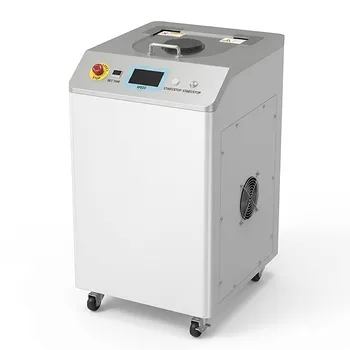
High Viscosity Planetary Centrifugal Vacuum Mixer for Material Defoaming and Uniform Mixing
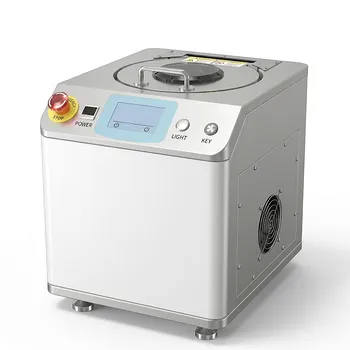
High Efficiency Vacuum Planetary Centrifugal Mixer and Defoaming Machine for Industrial Material Research and Precise Laboratory Powder Dispersion
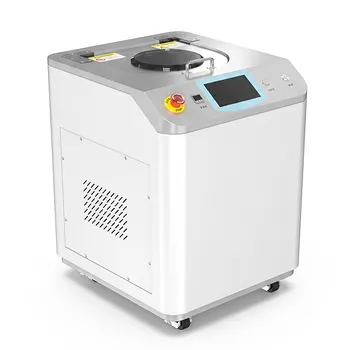
High Speed Vacuum Planetary Centrifugal Mixer and Defoamer for Industrial Paste Processing
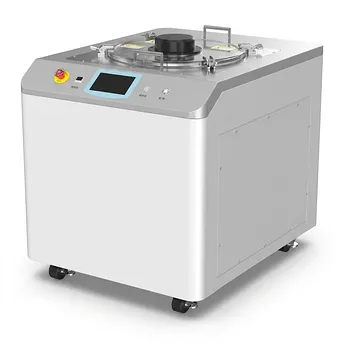
Industrial Planetary Centrifugal Vacuum Defoaming Mixer for High Viscosity Paste and Powder Homogenization
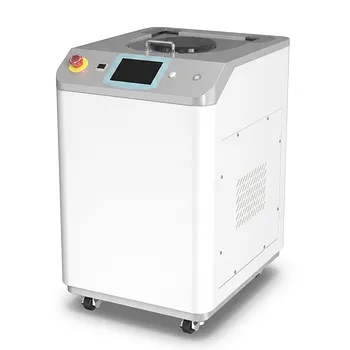
High Viscosity Planetary Centrifugal Mixing and Vacuum Defoaming Machine for Laboratory Material Preparation
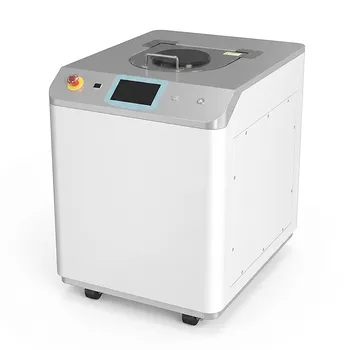
Industrial Planetary Centrifugal Vacuum Defoaming Mixer for High Viscosity Paste and Advanced Material Science
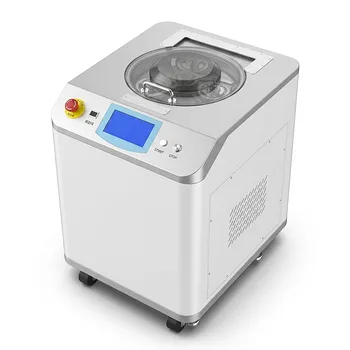
Dual Cup Vacuum Centrifugal Mixer Planetary Paste Defoaming Machine Industrial Material Processor
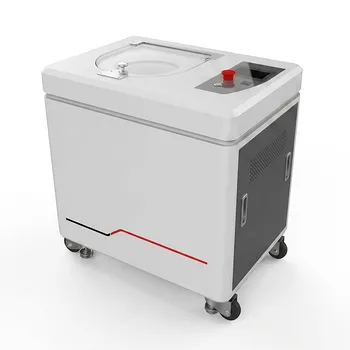
非介入式材料均质机真空脱泡行星搅拌高粘度混合设备
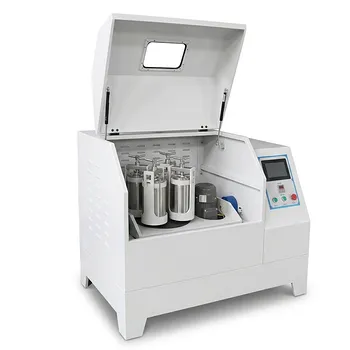
360° Rotating Omnidirectional Laboratory Planetary Ball Mill for Homogeneous Ultra-Fine Grinding and Mixing
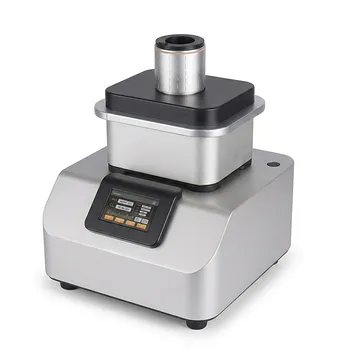
Ultra Centrifugal Mill High Speed Laboratory Grinder for Fibrous and Brittle Sample Preparation
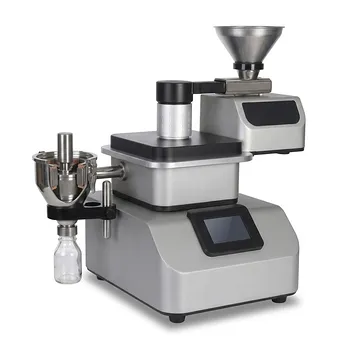
Ultra Centrifugal Mill for Rapid Laboratory Sample Preparation and Fine Powder Grinding
Heavy Duty Horizontal Planetary Ball Mill for Efficient Industrial Grinding and Sample Preparation
Horizontal Light Duty Planetary Ball Mill for Laboratory Sample Preparation
Vertical Production Planetary Ball Mill for High Throughput Powder Processing
Planetary Ball Mill 12L
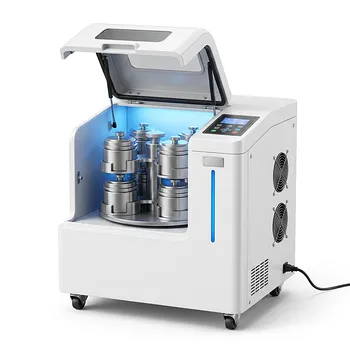
High Energy Omnidirectional Planetary Ball Mill 20L
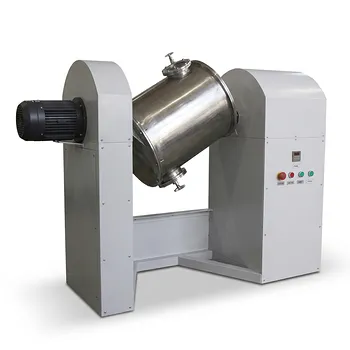
Inclined Mixer for Homogeneous Powder Blending and Grinding
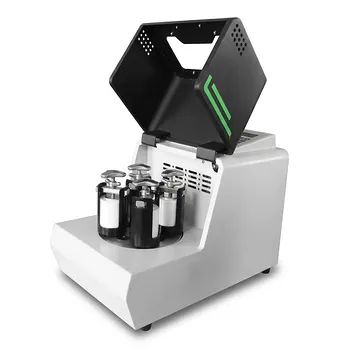
Miniature Planetary Ball Mill with Vacuum Grinding and High Efficiency for Laboratory Sample Preparation
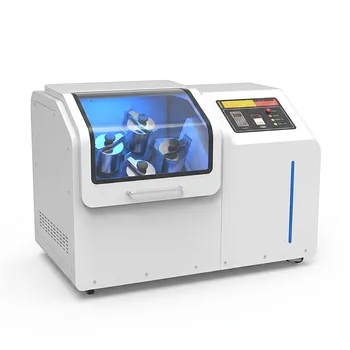
High Energy Omnidirectional Planetary Ball Mill 16L