What is the primary function of a high-frequency vibratory sieve shaker in the pretreatment of sawdust? Optimize Sizing
Updated 5 months ago
The primary function of a high-frequency vibratory sieve shaker in sawdust pretreatment is to standardize particle size and eliminate physical impurities. By strictly controlling the sawdust dimensions—specifically between 63.5 μm and 250 μm—the equipment ensures the biomass fibers can achieve uniform dispersion within a polymer matrix like Low-Density Polyethylene (LDPE).
The vibratory sieve shaker transforms raw, heterogeneous sawdust into a precise technical filler. Its role is fundamental in ensuring predictable mechanical reinforcement and preventing structural defects caused by inconsistent particle geometry or contaminants.
Standardizing Particle Geometry and Distribution
Achieving Matrix Uniformity
The sieve shaker utilizes multi-layer meshes to isolate a specific fraction of sawdust, typically targeting the 63.5 μm to 250 μm range. This precision is critical because uniform particle sizes prevent the formation of clumps, or agglomeration, which can weaken the final composite material.
Removing Structural Contaminants
Raw sawdust often contains non-fibrous impurities such as bark, stones, or viscous wood fibers. The high-frequency vibration effectively separates these materials, which would otherwise create voids or "weak spots" within a polymer or cement matrix.
Optimizing Specific Surface Area
By isolating a narrow particle size distribution, the shaker ensures a consistent specific surface area. This consistency is vital for the chemical bonding between the sawdust "bio-reinforcement" and the surrounding resin or matrix, leading to stable mechanical properties.
Enhancing Material Performance Through Classification
Improving Structural Density
In applications like sawdust-cement bricks, precise screening removes oversized particles that cause excessive porosity. Controlling the particle ratio improves the structural density and final compressive strength of the resulting composite.
Facilitating Mechanical Interlocking
Mechanical vibration classifies sawdust into fractions such as coarse grains and fine powders. Understanding this ratio allows engineers to optimize the mechanical interlocking strength and expansion stability during processes like biomass densification or briquetting.
Ensuring Experimental Repeatability
For technical professionals, the shaker provides a consistent physical foundation for kinetic studies and laboratory aerosolization. Standardizing the "input" material ensures that experimental data regarding reinforcement effects can be accurately replicated.
Understanding the Trade-offs
The Risk of Screen Blinding
Fine sawdust particles, particularly those near the mesh size limit, can become lodged in the screen openings, a phenomenon known as blinding. This reduces sieving efficiency and requires the use of specialized cleaning aids or specific 3D throwing motions to keep the mesh clear.
Particle Shape Limitations
While the shaker is excellent at classifying by size, it may struggle with aspect ratio. For example, long, needle-like particles may pass vertically through a mesh meant for smaller spherical grains, potentially impacting the homogeneity of the reinforcement.
Mechanical Wear and Heat
High-frequency vibration generates friction and mechanical stress. Over time, this can lead to mesh deformation or the degradation of the sawdust itself if the process duration is not strictly controlled, potentially altering the very fibers you intend to preserve.
How to Apply This to Your Project
Selecting the Right Approach
To achieve the best results with bio-reinforcements, your screening strategy must align with your specific material goals.
- If your primary focus is polymer reinforcement (e.g., LDPE): Prioritize a narrow fraction between 63 μm and 250 μm to ensure uniform fiber dispersion and prevent agglomeration.
- If your primary focus is structural density (e.g., cement bricks): Focus on removing oversized particles (typically >3.35mm) and viscous fibers to minimize internal porosity and increase strength.
- If your primary focus is biomass densification: Use a mechanical shaker to assess the ratio of coarse to fine particles, ensuring the mixture is optimized for interlocking without needing secondary grinding.
The vibratory sieve shaker is not merely a filter, but a precision instrument that dictates the mechanical integrity of the final bio-composite.
Summary Table:
| Key Function | Target Size Range | Impact on Bio-Reinforcements |
|---|---|---|
| Particle Standardization | 63.5 μm – 250 μm | Ensures uniform dispersion and prevents agglomeration |
| Impurity Removal | All Mesh Sizes | Eliminates bark and stones to prevent structural voids |
| Surface Area Control | Narrow Fractions | Stabilizes chemical bonding between filler and matrix |
| Classification | Coarse to Fine | Improves structural density and mechanical interlocking |
Elevate Your Material Research with Precision Pretreatment
Achieving the perfect bio-composite requires rigorous control over particle geometry. As specialists in material science laboratory sample preparation, we provide the high-performance tools needed to transform raw biomass into technical-grade fillers.
Whether you are working on LDPE bio-reinforcements, sawdust-cement bricks, or biomass densification, our extensive equipment line supports your entire workflow:
- Powder Processing: High-frequency vibratory and air-jet sieve shakers, planetary ball mills, jet mills, and crushers.
- Compaction & Forming: A full spectrum of hydraulic presses, including Cold/Warm Isostatic Presses (CIP/WIP), vacuum hot presses, and XRF pellet presses.
- Mixing: Advanced powder and defoaming mixers for homogeneous material blending.
Ready to optimize your sawdust pretreatment and enhance experimental repeatability? Contact our technical team today for a customized solution tailored to your research or production needs!
References
- Farhana Afroz, M. A. Gafur. Synthesis of Hybrid Composites from Bio-Based Fillers: Chicken Feather, Groundnut Shell, Sawdust. DOI: 10.37934/mjcsm.13.1.126135
Mentioned Products
- High Frequency Wet Three-Dimensional Vibrating Sieve Shaker for Dry and Wet Particle Size Analysis
- High Frequency Cabinet Type Three-Dimensional Rotary Vibrating Sieve Shaker for Dry Sieving and Particle Classification
- 三维电磁微量振动筛分仪
- Vibratory Sieve Shaker Electromagnetic 3D Motion Powder Particle Size Analyzer for Dry and Wet Sieving
- Heavy Duty Dry Three Dimensional Vibratory Sieve Shaker for Particle Separation
People Also Ask
- Why are vibrating sieve shakers used with standard test sieves? Ensure Precise Grading for Recycled Aggregates
- What is the function of high-frequency vibratory sieve shakers in AMC powders? Master Particle Grading & PSD Control
- How does a vibratory sieve shaker contribute to optimizing the performance of activated carbon? Enhance Adsorption Precision
- Why is it essential to use a vibrating sieve shaker for the final grading of dietary fiber products? Master Quality.
- What is the role of a high-frequency vibratory sieve shaker in Cold Mix asphalt design? Optimize RAP Gradation Accuracy

Tech Team · PowderPreparation
Last updated on May 14, 2026
Related Products

High Frequency Wet Three-Dimensional Vibrating Sieve Shaker for Dry and Wet Particle Size Analysis

High Frequency Cabinet Type Three-Dimensional Rotary Vibrating Sieve Shaker for Dry Sieving and Particle Classification

三维电磁微量振动筛分仪

Vibratory Sieve Shaker Electromagnetic 3D Motion Powder Particle Size Analyzer for Dry and Wet Sieving

Heavy Duty Dry Three Dimensional Vibratory Sieve Shaker for Particle Separation

Stainless Steel Laboratory Vibratory Test Sieve Shaker

Laboratory Dry and Wet Three Dimensional Vibratory Sieve Shaker for Particle Analysis

Dry Three Dimensional Vibratory Sieve Shaker

Laboratory Vibratory Test Sieve Shaker for Precision Particle Size Analysis and Powder Grading

Small Laboratory Vibratory Sieve Shaker for Powder Gradation and Particle Size Analysis

Small Laboratory Vibrating Sieve Shaker for Precise Particle Size Analysis

Stainless Steel Rotary Vibrating Sieve High Precision Circular Vibratory Separator Industrial Powder Grading Machine Multi Layer Sifting Equipment

Tapping Oscillating Sieve Shaker for Dry and Wet Particle Size Analysis
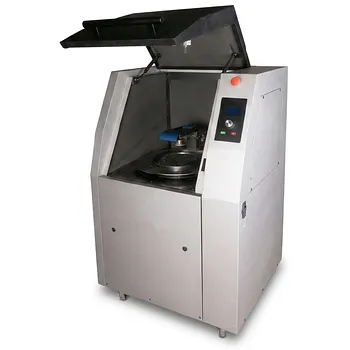
High Speed Vibratory Disc Mill for Spectral Analysis Sample Preparation and Rapid Powder Grinding

Three Dimensional Rotary Vibrating Sieve
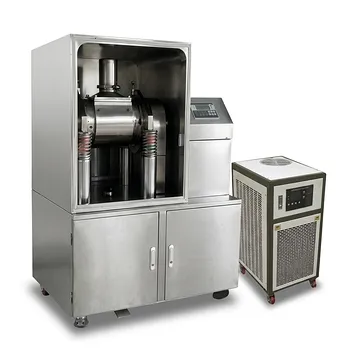
Small Vibrating Ultrafine Grinder for Traditional Chinese Medicine
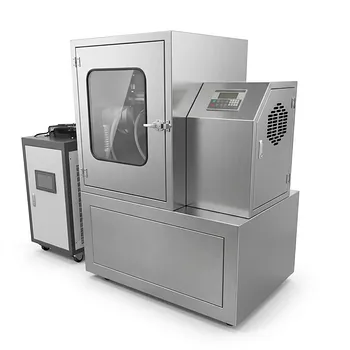
Vibratory Superfine Grinder for Ultra Fine Laboratory Powder Milling

Automatic Vibrating Powder Feeder for Laboratory Material Processing Precision Vibratory Hopper Feeder for Granular and Powder Material Handling Industrial Grade Vibrating Tray Feeder for Consistent Material Sample Preparation
Vibratory Disc Mill for Rapid Fine Grinding and High Throughput Sample Preparation of Hard and Brittle Materials