How does industrial-grade Spark Plasma Sintering (SPS) compare to traditional vacuum hot pressing in the preparation of W18O49?
Updated 5 months ago
Industrial-grade Spark Plasma Sintering (SPS) outperforms traditional vacuum hot pressing in $W_{18}O_{49}$ preparation by significantly reducing processing time and enabling precise phase control. While traditional methods rely on slow external heating, SPS utilizes pulsed direct current to achieve rapid in-situ synthesis and enhanced material density.
Core Takeaway: SPS technology leverages the Joule effect to transform tungsten oxides into single-phase $W_{18}O_{49}$ in under an hour, producing a material with superior grain orientation and thermoelectric properties that traditional hot pressing cannot easily replicate.
Speed and Thermal Efficiency
Rapid Heating and Short Cycles
Industrial SPS systems achieve heating rates of up to 100 K/min, which is substantially faster than the capabilities of traditional vacuum hot presses. This rapid ramp-up allows for holding times of less than one hour, drastically increasing production throughput.
Internal Heat Generation via the Joule Effect
Unlike traditional hot pressing, which heats samples externally via radiation, SPS passes pulsed electric currents directly through the graphite mold and the powder. This utilizes the Joule effect, generating internal heat that facilitates near-instantaneous temperature spikes at the particle contact points.
Particle Surface Activation
The pulsed current in SPS creates a spark discharge effect that removes adsorbed gases and oxide films from the powder surfaces. This activation of the particles allows for high-density consolidation at lower temperatures than those required by conventional methods.
Material Quality and Phase Control
In-Situ Chemical Synthesis
SPS allows for the in-situ reaction of $WO_3$ and $WO_2$ into single-phase $W_{18}O_{49}$ during the sintering process. This simultaneous reaction and densification ensure high chemical purity and phase stability in the final bulk material.
Suppression of Disordered Grain Growth
The extremely short sintering duration inherent to SPS effectively inhibits the growth of ultra-fine grain structures. By preventing excessive grain coarsening, the material retains a refined microstructure that is critical for high-performance applications.
Achieving High Theoretical Density
By combining rapid heating with high axial pressure, SPS achieves relative densities often exceeding 97-99%. This high-density consolidation is completed in a fraction of the time required by traditional vacuum hot pressing, which often struggles with grain coarsening during long dwell times.
Tailored Thermoelectric Performance
Induced Preferred Grain Orientation
The application of axial pressure during the SPS process induces a preferred orientation of the $W_{18}O_{49}$ grains. This structural alignment is difficult to achieve with traditional methods but is vital for optimizing the material's performance.
Enhanced Anisotropic Properties
Because the grains are oriented during the rapid sintering process, the resulting bulk material exhibits enhanced anisotropic thermoelectric properties. This makes SPS-prepared $W_{18}O_{49}$ more efficient for energy conversion and thermal management than its hot-pressed counterparts.
Understanding the Trade-offs
Equipment Complexity and Cost
While SPS offers superior speed and material properties, the initial capital investment for industrial-grade SPS equipment is typically higher than for traditional vacuum hot presses. The sophisticated pulsed power supplies and control systems require specialized maintenance and technical expertise.
Geometry and Scalability Constraints
SPS is primarily optimized for symmetrical or simple shapes due to the requirement of passing current through the mold and sample. Traditional vacuum hot pressing may offer more flexibility for complex geometries where uniform current distribution in an SPS setup would be difficult to maintain.
How to Apply This to Your Project
Choosing between SPS and traditional hot pressing depends on your specific requirements for material purity, microstructure, and production volume.
- If your primary focus is Phase Purity: Use industrial-grade SPS to leverage in-situ synthesis, ensuring a single-phase $W_{18}O_{49}$ composition that is free from unreacted precursors.
- If your primary focus is Microstructure Control: Select SPS to maintain a fine-grained or nanocrystalline structure, as the rapid cycle times prevent the grain coarsening common in slower processes.
- If your primary focus is Thermoelectric Efficiency: Prioritize SPS to take advantage of axial pressure-induced grain orientation, which maximizes the material's anisotropic performance.
- If your primary focus is High-Volume Throughput: Implement SPS to reduce holding times from several hours to under 60 minutes, significantly increasing your manufacturing capacity.
By adopting Spark Plasma Sintering, you can transform tungsten oxide powders into high-performance, single-phase $W_{18}O_{49}$ with unprecedented speed and structural precision.
Summary Table:
| Feature | Spark Plasma Sintering (SPS) | Traditional Vacuum Hot Pressing |
|---|---|---|
| Heating Mechanism | Internal Joule effect (Pulsed DC) | External radiation/conduction |
| Heating Rate | Rapid (up to 100 K/min) | Slow/Moderate |
| Processing Time | < 1 hour | Multiple hours |
| Microstructure | Refined grains (inhibits growth) | Coarse grains (long dwell times) |
| Phase Purity | High (In-situ synthesis) | Harder to control |
| Relative Density | 97%–99%+ | Variable |
Elevate Your Material Synthesis with Advanced Compaction Solutions
Precision in powder processing is the key to unlocking superior material properties. At KinTek, we provide complete laboratory sample preparation solutions for material science, specializing in high-performance powder processing and compaction equipment.
Whether you are synthesizing $W_{18}O_{49}$ or developing new ceramics, our extensive line includes everything from planetary ball mills and jet mills to a full spectrum of hydraulic presses, such as Cold/Warm Isostatic Presses (CIP/WIP), vacuum hot presses, and XRF pellet presses. We empower researchers and manufacturers to achieve high-density consolidation and precise phase control with ease.
Ready to optimize your lab's efficiency and material quality? Contact our technical experts today for a tailored equipment solution!
References
- Nhat Quang Minh Tran, Koichiro Suekuni. Rapid Synthesis of W_18O_49 via Reactive Spark Plasma Sintering with Controlled Anisotropic Thermoelectric Properties. DOI: 10.5109/4480715
Mentioned Products
- Heating Temperature Controlled High Energy Vibratory Ball Mill
- Water Cooled Pulse Jet Ultrafine Grinder
- Small Swing Granulator Efficient Powder Granulation for Pharmaceutical Chemical Food Industries
- Small Ceramic Structure Laboratory Sand Mill Nanoscale Grinding Dispersion Equipment Seal-less Screen-less Design
- Vertical Production Planetary Ball Mill for High Throughput Powder Processing
People Also Ask
- How does a high-energy vibratory ball mill improve the performance of MgH2? Optimize Hydrogen Storage Kinetics
- What is the primary purpose of using a vibratory ball mill in the preparation of respirable carbon fiber fragments?
- What is the purpose of using a vibratory ball mill for Al-Ni-Fe alloy ribbons? Achieve High Catalytic Activity
- Why is a vibratory ball mill preferred over a planetary ball mill for rapid powder particle refinement? High-Speed Impact
- What is the purpose of adding alcohol as a PCA during titanium ball milling? Prevent Cold Welding & Enhance Refinement

Tech Team · PowderPreparation
Last updated on May 14, 2026
Related Products
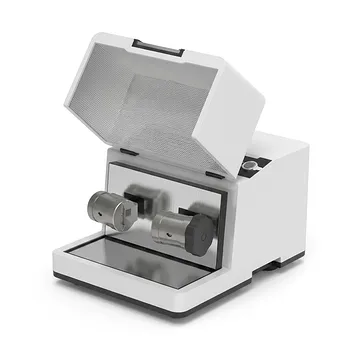
Heating Temperature Controlled High Energy Vibratory Ball Mill
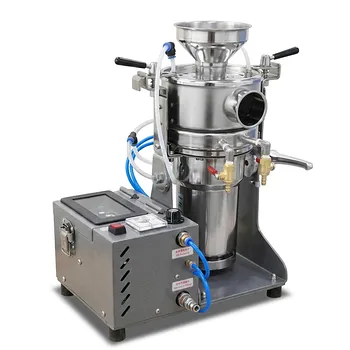
Water Cooled Pulse Jet Ultrafine Grinder
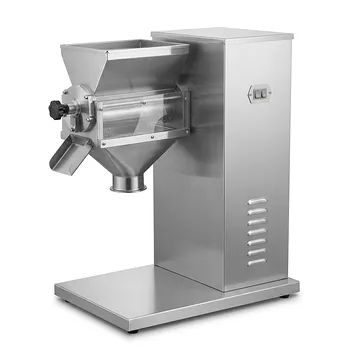
Small Swing Granulator Efficient Powder Granulation for Pharmaceutical Chemical Food Industries
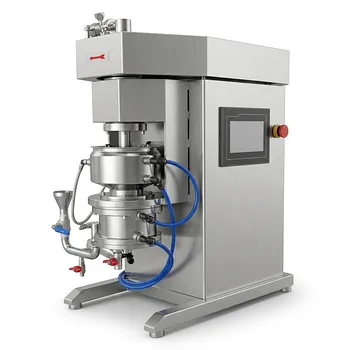
Small Ceramic Structure Laboratory Sand Mill Nanoscale Grinding Dispersion Equipment Seal-less Screen-less Design
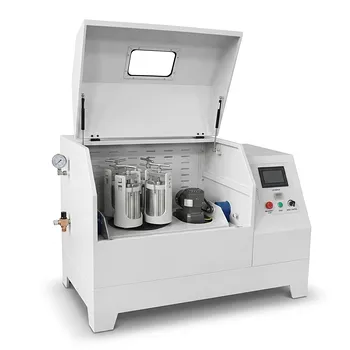
Vertical Production Planetary Ball Mill for High Throughput Powder Processing
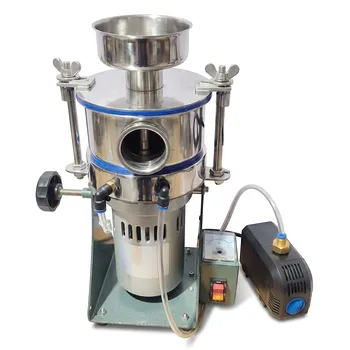
Water Cooled Airflow Ultra Fine Grinder for Low Temperature Material Processing
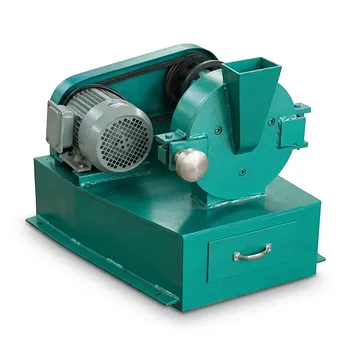
Medium Hardness Material Disc Pulverizer for Coal Ore Sample Preparation
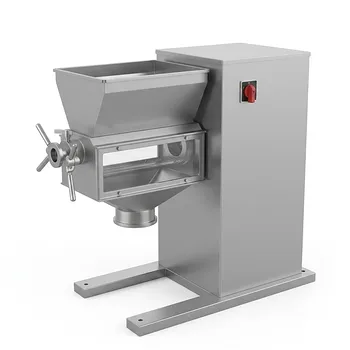
Industrial Swing Granulator for Powder Processing in Pharma Food and Chemical Industries
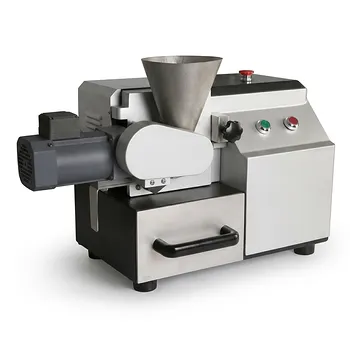
Laboratory Hammer Mill for Coal Quality Analysis and Brittle Mineral Grinding
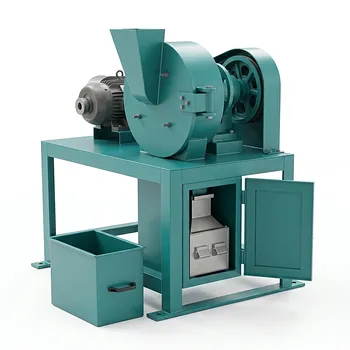
Sealed Disc Pulverizer Customized Model
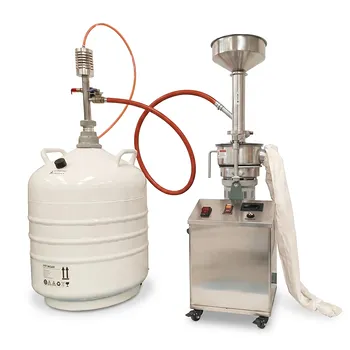
Laboratory Liquid Nitrogen Cryogenic Grinder Polymer Sample Preparation Pulverizer
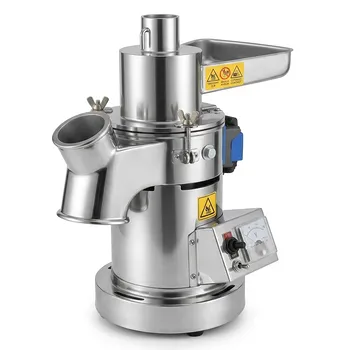
Continuous Feeding Grinder High Efficiency Pulverizer for Lab Sample Preparation
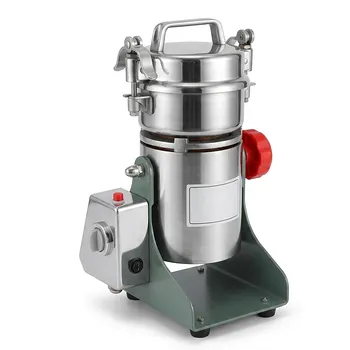
High Speed Swing Type Laboratory Pulverizer for Fine Powder Grinding and Sample Preparation
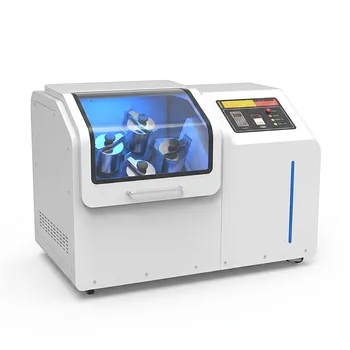
High Energy Omnidirectional Planetary Ball Mill 16L
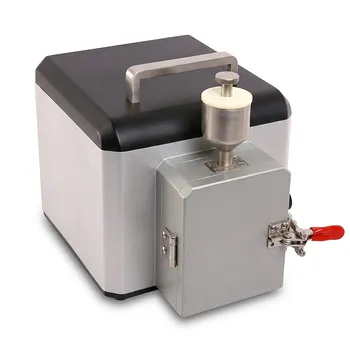
Portable Cutting Mill for Laboratory Sample Preparation and RoHS WEEE Compliance Testing
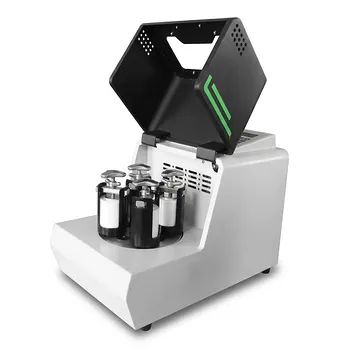
Miniature Planetary Ball Mill with Vacuum Grinding and High Efficiency for Laboratory Sample Preparation
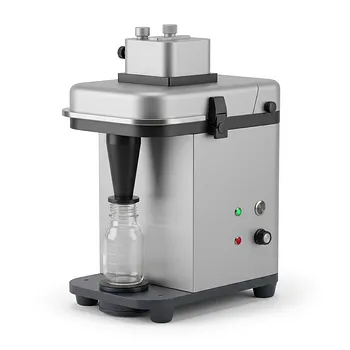
Cyclonic Laboratory Mill for NIR Spectroscopy Sample Preparation Food and Feed Grinding
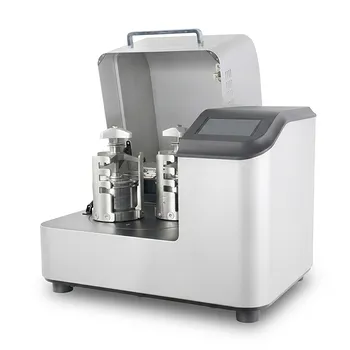
High Energy Planetary Ball Mill for Nano Scale Grinding and Mechanical Alloying

Automatic Vibrating Powder Feeder for Laboratory Material Processing Precision Vibratory Hopper Feeder for Granular and Powder Material Handling Industrial Grade Vibrating Tray Feeder for Consistent Material Sample Preparation